



English
Question 1:
Choose the correct verb to fill the gap.
By the end of the year, she ______ with a degree in business.
- already graduates
- already graduated
- will have already graduated
- has already graduated
Question 2:
Choose the synonym for the following word Hallowed
- Sacred
- Old
- Inactive
- Effective
Question 3:
As ______ cuts it as well as he does, I always have my hair cut at Johnson’s.
- anyone
- someone else’s
- no one else
- everyone
Question 4:
Mohit ______ his century before it is the end of the match.
- will score
- will have scored
- has scored
- scores
Question 5:
Which word is an adverb in this sentence?
“There are no interesting programmes tonight.”
- interesting
- programme
- there
- tonight
Computer Applications
Question 1:
Which of the following is true about Lock-compatibility matrix:
- Shared – shared True
- Shared – Exclusive True
- Exclusive - Shared True
- Exclusive – Exclusive True
Question 2:
Which of the following recovery scheme is also known as redo only scheme:
- Deferred Database Modification
- Immediate Database Modifications
- Shadow Paging
- None of these
Question 3:
When a derived class inherits from many base classes, this process is known as?
- Multiple Inheritance
- Multilevel Inheritance
- Hierarchical Inheritance
- Hybrid Inheritance
Question 4:
Switch is a Device of _________ Layer of OSI Model.
- Network Layer
- Data Link Layer
- Application Layer
- Session Layer
Question 5:
Which of following software process model suggests a systematic, sequential
approach to software development that begins at the system level and progresses
through analysis, design and other steps in sequence?
- Prototyping model
- Spiral model
- Waterfall model
- RAD model
Computer Science
Question 1:
ITG stands for
- Instantaneous Test Group
- Integration Testing Group
- Individual Testing Group
- Independent Test Group
Question 2:
Architecture of the database can be viewed as
- 2 Levels
- 4 Levels
- 3 Levels
- 1 Levels
Question 3:
Base 10 refers to which number system?
- Octal
- Binary Coded Decimal
- Decimal
- Hexadecimal
Question 4:
Resistance is measured in
- Volts
- Amps
- Watts
- Ohms
Question 5:
Operations of computer arithmetic and logic unit are directed by
- ALU itself
- Program
- Control unit
- Memory unit
Psychology
Question 1:
Doctrine of specific nerve energies is given by:
- Myers
- Aristotle
- Muller
- Miller
Question 2:
According to Broca’s observations which part is involved in speech?
- Cerebral cortex of left side of the brain
- Cerebral cortex of right side of the brain
- Cerebral cortex of centre of the brain
- The brain
Question 3:
Type(s) of validity is/ are:
- Content validity only
- Criterion – related validity only
- Construct validity only
- All of these
Question 4:
Which one of the following is a genetic disorder caused by the presence of all or part of a third copy of chromosome 21 is called:
- Schizophrenia
- Anxiety
- Trisomy 21
- None of these
Question 5:
Production and comprehension of language is found in:
- Left hemisphere
- Right hemisphere
- Spinal cord
- None of these
Physics
Question 1:
An earthquake emits both S-waves and P-waves which travel at different speeds through the Earth. A P-wave travels at 9,000 m/s and an S-wave travels at 5,000m/s. If P-waves are received at a seismic station 1.00 minute before an S-wave arrives, how far away is the earthquake center?
- 1,200 km
- 675 km
- 88.9 km
- 240 km
Question 2:
All people come very close to being able to float in water. What therefore is the volume (in cubic meters) of a 50-kg woman?
- 0.035
- 0.050
- 0.007
- 0.070
Question 3:
A horizontal meter stick supported at the 50-cm mark has a mass of 0.50 kg hanging from it at the 20-cm mark and a 0.30 kg mass hanging from it at the 60-cm mark. Determine the position on the meter stick at which one would hang a third mass of 0.60 kg to keep the meter stick balanced.
- 65 cm
- 70 cm
- 74 cm
- 86 cm
Question 4:
Two stars of masses M and 6M are separated by a distance "D". Determine the distance (measured from M) to a point at which the net gravitational force on a third mass would be zero.
- 0.41 D
- 0.37 D
- 0.33 D
- 0.29 D
Question 5:
What is the technique used to find the age of prehistoric fossils?
- Paleontology
- Radio Carbon dating
- Radio Isotope dating
- None of these
Chemistry
Question 1:
In terms of the "Collision Theory of Chemical Kinetics", the rate of a chemical reaction is proportional to:-
- The number of product molecules
- The number of collisions per second
- The change in free energy per second
- The change in temperature per second
Question 2:
If a system loses 250 kJ of heat at the same time that it is doing 500 kJ of work, what is the change in the internal energy of the system?
- +750 kJ
- +250 kJ
- -750 kJ
- -250 kJ
Question 3:
The compressibility factor for an ideal gas is:-
- 2.0
- 1.5
- 1.0
- Infinity
Question 4:
Which statement is incorrect about zeolites?
- No zeolites occur naturally
- A zeolite functions as an acid catalyst, e.g. in the alkylation of aromatic compounds
- Each zeolite contains channels of a specific size
- Zeolites are aluminosilicates
Question 5:
If a polymer sample has polydispersity index > 1, it indicates that:-
- The polymer chains are uniform in length
- The number average molecular weight is equal tothe weight average molecular weight ofthe polymer
- The polymer chain lengths vary over a wide range of molecular masses
- The polymer under consideration is a natural polymer
Mathematics
Question 1:
The number of elements in the power set P(S) of the set S = {2,{1,4}} is:-
- 8
- 4
- 2
- None of these
Question 2:
If A = {1,2,3,4} and R = {(1,3),(3,4),(1,4)}, then R is:-
- Symmetric
- Transitive
- Reflexive
- None of these
Question 3:
If |z| = |z - 1|, then:
- Re(z) = 1
- Im(z) = 1
- Re(z) = 1/2
- Im(z) = 1/2
Question 4:
If the system of equations x+2y-3z=1, (p+2) z=3, (2p+1) y+z=2 is inconsistent, then what is the value of p?
- -1/2
- 2
- -2
- 0
Question 5:
If f(x) = |x + 2|, then: -
- f(|x|) = |f(x)|
- f(x+y) = f(x) + f(y)
- f (x.y) = f(x). f(y)
- None of these
Biotech
Question 1:
What is a smear?
- A smear is a preparation process in which a specimen is dyed
- A smear is a process used to identify a specimen
- A smear is a process in which a specimen is moved beneath a microscope
- A smear is a preparation process in which a specimen is spread on a slide
Question 2:
Why is a bacterium called a prokaryotic organism?
- A bacterium is a multicell organism that does not have a distinct nucleus
- A bacterium is a multicell organism that has a distinct nucleus
- A bacterium is a one-cell organism that has a distinct nucleus
- A bacterium is a one-cell organism that does not have a distinct nucleus
Question 3:
What microorganisms can use oxygen when it is present and continue to grow without it?
- Obligate aerobes
- Obligate anaerobes
- Free radicals
- Facultative anaerobes
Question 4:
All of the following associations are true except one:-
- Poliovirus can cause paralytic disease
- Mumps virus can cause meningitis
- Astrovirus causes gastroenteritis only in adults
- EBV can cause nasopharyngeal carcinoma
Question 5:
Which of the following is most effective for sterilizing mattresses and plastic Petri plates?
- Ethylene oxide
- Ultraviolet radiation
- Autoclave
- Chlorine
Microbiology
Question 1:
Following person recognized the significance of microbes in disease for the first time:-
- Louis Pasteur
- Kircher
- Robert Koch
- None of these
Question 2:
Germ Theory is:-
- Germs cannot be killed
- Presence of pathogen in infected animals
- Spores
- None of these
Question 3:
Theory of fermentation says that fermentation is the:-
- Effect of a specific microbe
- Destruction of microbes
- Radiation
- None of these
Question 4:
One way to determine the size, cell morphology and grouping of bacterial cells is to:-
- Streak plate
- Phenol red
- Simple stain
- None of these
Question 5:
When many bacterial cells are embedded in a continuums matrix the material is called:-
- Capsule
- Microcapsule
- Slime
- Spore
Botany
Question 1:
A medullated protostele is
- Dictyostele
- Siphonostele
- Solenostele
- Protostele
Question 2:
The closed ascocarp is termed:-
- Apothecium
- Cleistothecium
- Perithecium
- Hysterothecium
Question 3:
In Gymnosperms the only mode of pollination is:-
- Anemophily
- Hydrophily
- Zoophily
- Entomophily
Question 4:
Double fertilization in angiosperms was discovered by:-
- J.C. Bose
- Strasburger
- Maheshwari
- Nawaschin
Question 5:
Before a carbohydrate is utilized as an energy source, it gets first converted into:-
- Oligosaccharide
- Triose sugars
- Monosaccharide
- Disaccharide
Biochemistry
Question 1:
Two sugars which differ from one another only in configuration around a single carbon atom are termed as: -
- Optical isomers
- Stereoisomers
- Epimers
- Anomers
Question 2:
In EM pathway enolase converts 2-phosphoglycerate to:-
- Phospho enol pyruvate
- Enol pyruvate
- 1,3 bisphosphoglycerate
- Dihydroxy acetone phosphate (DHAP)
Question 3:
The standard free energy of hydrolysis of terminal phosphate group of ATP is:-
- - 7,300 cal/mol
- +7,300 cal/mol
- 10,000 cal/mol
- - 8,300 cal/mol
Question 4:
Tertiary structure of a protein describes:-
- Loop regions of proteins
- The ways of protein folding
- Location of disulphide bonds
- The order of amino acids
Question 5:
The enzymes of urea synthesis are found in:-
- Both mitochondria and cytosol
- Mitochondria only
- Cytosol only
- Nucleus
Zoology
Question 1:
The Sol-gel nature of protoplasm is due to:-
- Its colloidal nature
- Presence of living cell inclusions
- Pressure of inorganic salts
- Presence of water
Question 2:
What is the latest model that is proposed to explain the structure of plasma membrane or the latest view of molecular organization of bio membrane is based on?
- Fluid mosaic model
- Unit membrane model
- Thin lipid layer concept
- Artificial model systems
Question 3:
The number of autosomes in a human male is: -
- 43
- 22
- 45
- 46
Question 4:
The snakes living in the deserts are mainly:-
- Aminotelic
- Uricotelic
- Ammonotelic
- Ureotelic
Question 5:
Genes are involved in turning on or off the transcription of set of structural genes are called:-
- Operator genes
- Redundant genes
- Polymorphic genes
- Regulatory genes
Environmental Sciences
Question 1:
Which among of the following is a Sedimentary type of cycle?
- Nitrogen cycle
- Carbon cycle
- Sulphur cycle
- Oxygen cycle
Question 2:
The nsumber of species in a community is called the?
- Species richness
- Diversity of species
- Equal diversity of species
- Species abundance
Question 3:
Environmental disaster that occurred because of release of energy from earth are termed as:
- Metrological disasters
- Hydrological disasters
- Man-made disasters
- Geophysical disasters
Question 4:
The number of Bio-geographical Zones in India:
- 10
- 7
- 9
- 11
Question 5:
Acid rain has pH equal or below:
- 6
- 6.5
- 5.5
- 7
Forensic Sciences
Question 1:
Hair can be used for analysis of Metallic poison:
- Arsenic
- Antimony
- Phosphorus
- Sodium
Question 2:
CODIS is:
- Combined DNA index system
- Combined Digital Identification system
- Combined Digital interpretation system
- None of these
Question 3:
Temporo-parietal suture is found in
- Pelvis
- Mandible
- Long bones
- Skull
Question 4:
Hydrocarbons can be detected by in arson cases.
- ECD
- FID
- PMT
- None of these
Question 5:
Tongue Flutter is seen in:
- Drowning cases
- Throttling cases
- Hanging cases
- All of these
Statistics and Data Analytics
Question 1:

- -1
- -1/2
- 1/2
- 12
Question 2:
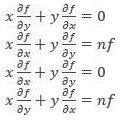
If f (x, y) is a homogeneous function of degree n in x and y having continuous first and second order partial derivatives, then:
Question 3:
If r=fxx (a, b), s=fxy (a, b), t= fyy (a ,b) at a point P(a, b), then the point P(a, b) is said to be point of maxima if and only if:
- (rt-s2 )>0, r>0
- (rt-s2 )>0, r<0
- (rt-s2 )=0
- (rt-s2 )<0
Question 4:
If A and B are two independent events, then by law of probability:
- P(A∪B) =P(A). P (B)
- P(A∪B) =1
- P(A∩B) =P(A). P (B)
- P(A∩B) =0
Question 5:
For a Poisson distribution:
- Mean > Variance
- Mean < Variance
- Mean – Variance = 1
- Mean = Variance
Clinical Biochemistry
Question 1:
Normality of 1M sulfuric acid is
- 1.0
- 0.5
- 4.0
- 2.0
Question 2:
Glucose 6-phosphatase is not present in
- Kidneys and liver
- Kidneys and muscles
- Muscles and adipose tissue
- Muscles and liver
Question 3:
Enzymes catalyzing electron transport are present mainly in the
- Ribosomes
- Endoplasmic reticulum
- Lysosomes
- Inner mitochondrial membrane
Question 4:
A coenzyme required for synthesis of glycine from serine is
- Vitamin B6
- ATP
- NAD
- Tetrahydrofolate
Question 5:
Tertiary structure of a protein describes the
- Specific peptide linkage
- Location of disulfide bonds
- Specific way of protein folding and according to the order of amino acids
- Specific loops
Embryology and cell Biology
QUESTION 1:
Which statements best explains the evolutionary advantage of meiosis?
- Meiosis is necessary for sexual reproduction
- Meiosis alternates with mitosis from generation to generation
- The same genetic system is passed on from generation to generation
- Genetic recombination is possible from generation to generation
QUESTION 2:
The first amino acid incorporated at the N-terminus of polypeptide is ______
- Methionine
- Cysteine
- Tryptophan
- Valine
QUESTION 3:
Why lysosome is known as “suicidal bags”?
- Because of its Parasitic activities
- Because of Presence of food vacuoles
- Because of its Catalytic activities
- Because of its Hydrolytic activities
QUESTION 4:
The histone octamer contains
- 4 histones of four types
- 5 histones of two types
- 6 histones three type
- 8 histones of four types
QUESTION 5:
How the intrinsic proteins in the plasma membrane is distributed?
- Random
- Symmetrical
- Asymmetrical
- None of the above
Clinical Microbiology
Question 1:
The capacity of a given strain of microbial species to produce disease is known as
- Pathogen
- Virulence
- Infection
- None of these
Question 2:
Factors on which disinfectivity of a disinfectant depends
- Concentration of substance
- Time of action
- pH of medium and temperature suitable for chemical
- All of these
Question 3:
Complement based agglutination reaction is known as
- Haeme agglutination
- Complement fixation
- Conglutination
- Schultz Dale phenomenon
Question 4:
Which of the following is a true statement regarding purified protein derivative (PPD) used in tuberculin test?
- Prepared from tubercle bacilli
- It is inferior to old tuberculin
- Consist of filtrate of glycerol broth
- None of these
Question 5:
The event that triggered the development and establishment of microbiology as a scienceis
- Germ theory of disease
- Development of microscope
- Time of action
- Use of disinfectant
Physiotherapy
Question 1:
Which primitive reflex is the first to integrate in a child?
- Moro reflex
- Righting reflex
- Parachute reflex
- Labyrinthine reflexes
Question 2:
What is the main characteristic feature of a patient with Duchenne’s Muscular Dystrophy?
- Face muscle weakness
- Tendon reflexes diminished
- Pseudoypertrophy of calf muscles
- Sensations impairment
Question 3:
Gower’s sign is used to assess which condition?
- Myasthenia Grevis
- Spasiticity and Flacidity
- Multiple Sclerosis
- Muscular Dystrophy
Question 4:
Frequency range for High TENS is:-
- 100 and 150 Hz
- 150 and 200Hz
- 50 and 100 Hz
- 100 and 200 Hz
Question 5:
Jones fracture is a fracture of:-
- Fifth metatarsal
- Second metatarsal
- Tarsal bones
- Second metacarpal
NIRF
 Report of NIRF Data Capturing System: Management
- Report of NIRF Data Capturing System: Pharmacy
- Report of NIRF Data Capturing System: Engineering
- Report of NIRF Data Capturing System: Overall
- Report of NIRF Data Capturing System: Law
- Report of NIRF Data Capturing System: Architecture
- Report of NIRF Data Capturing System: Innovation
- Report of NIRF Data Capturing System: Agriculture
- Report of SDG Institution
- Report of NIRF Data Capturing System: Management
- Report of NIRF Data Capturing System: Pharmacy
- Report of NIRF Data Capturing System: Engineering
- Report of NIRF Data Capturing System: Overall
- Report of NIRF Data Capturing System: Law
- Report of NIRF Data Capturing System: Architecture
- Report of NIRF Data Capturing System: Agriculture