



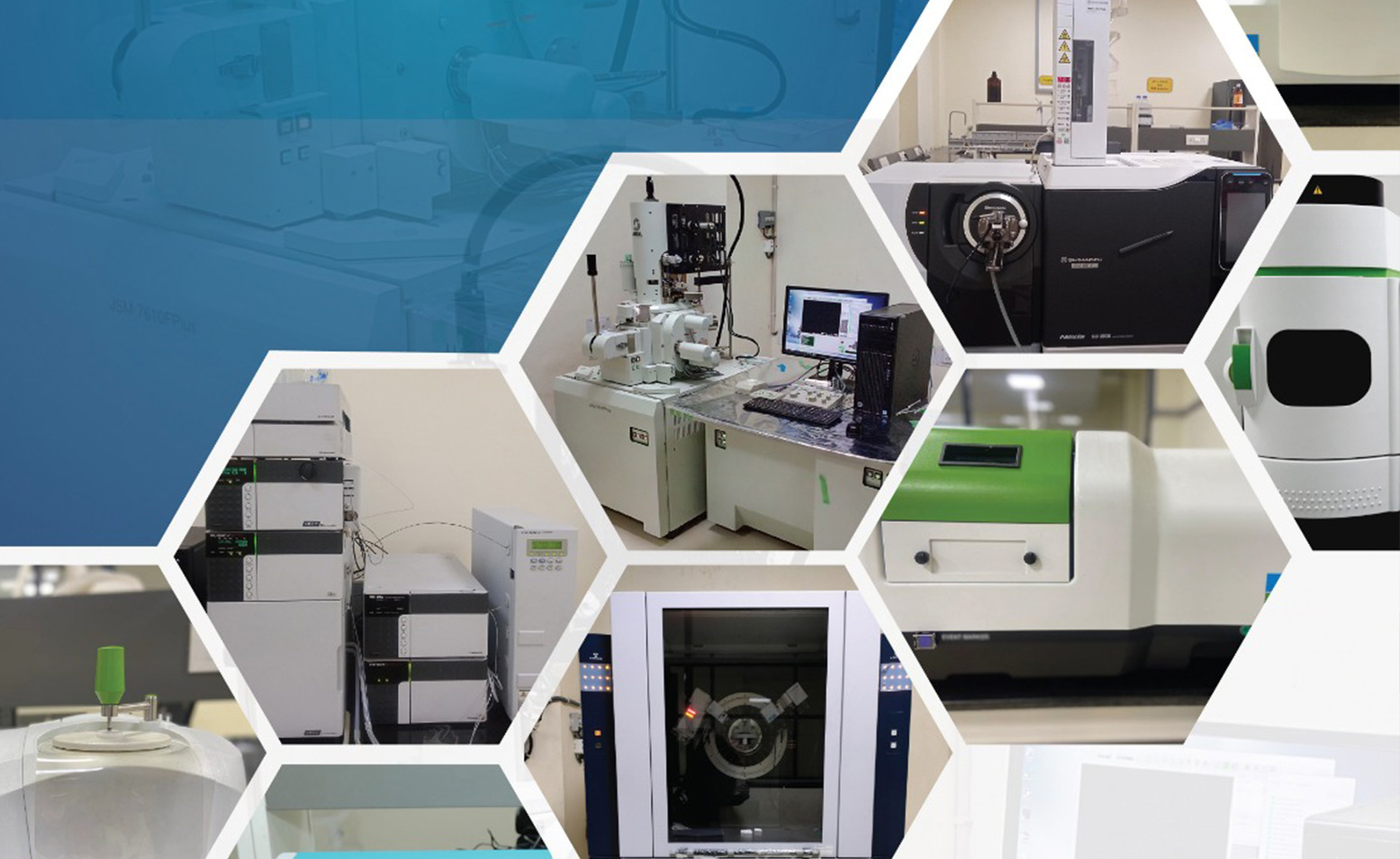
The Summer Training Programme organized by the Central Instrumentation Facility (CIF), LPU, is designed to provide hands-on exposure to advanced analytical instruments and modern research techniques. The training focuses on practical learning, enabling participants to understand instrument operation, sample preparation, data acquisition, and interpretation of results. It aims to bridge the gap between theoretical knowledge and real-time experimental skills in areas such as material characterization, chemical analysis, and nanotechnology. Through expert guidance and laboratory sessions, participants gain technical competence, research insight, and confidence to carry out high-quality academic and industrial research. Overall, the programme enhances analytical skills and prepares students and researchers for advanced research and professional careers.
Course objective
- Under the guidance of qualified professionals, the trainees are encouraged to become familiar with the tools. They will be given an introduction to the instruments’ operation, their operating principles, data analysis, and result interpretation.
- Invited lecture on Advanced Instrumentation and Techniques.
- Detailed demonstration of all the Instrument, their usage and troubleshoot the instrument.
- Demonstration and hands-on-training on sample preparation for biological and bulk sample for all the instruments.
- Hands-on-training and Insights for performing imaging and basic level interpretation of the data.
- Under the guidance of qualified professionals, the trainees are encouraged to become familiar with the tools. They will be given an introduction to the instruments’ operation, their operating principles, data analysis, and result interpretation.
Highlights of the training program
The main theme of this training program is to equip participants with advanced knowledge of state-of-the-art sophisticated instrumentation techniques, including spectroscopy, thermal analysis, chromatography, and advanced microscopy. The experiential learning approach includes theory lectures by experts on specific techniques, followed by discussions and demonstration-based hands-on training sessions using sophisticated instruments. The demonstration sessions will be carried out in the Central Instrumentation Facility, Research and Development Cell, Lovely Professional University, Punjab, which houses the equipment required for various demonstration sessions. The training will revolve around the practices and use of different spectroscopy and thermal analysis techniques (DSC, TGA, FTIR, and Fluorescence Spectrophotometer), chromatographic techniques (HPLC and GC-MS), advanced imaging (Field Emission Scanning Electron Microscope – FESEM with EDS), structural analysis (XRD), particle size and zeta potential analysis, along with applications in life science research, quality control, and good laboratory practices. These techniques will be accompanied by data analysis and result interpretation
Who Should Attend
- Undergraduate/ Postgraduate/ Ph.D Scholar (Pursuing/ Completed) in any field of science, engineering, technology or equivalent.
- Faculties/Laboratory/Technical staff working in any university/academic or research organization/industry.
- Laboratory or Technical staff working in govt. recognized institution/research organization /industry.
NIRF
 Report of NIRF Data Capturing System: Management
- Report of NIRF Data Capturing System: Pharmacy
- Report of NIRF Data Capturing System: Engineering
- Report of NIRF Data Capturing System: Overall
- Report of NIRF Data Capturing System: Law
- Report of NIRF Data Capturing System: Architecture
- Report of NIRF Data Capturing System: Innovation
- Report of NIRF Data Capturing System: Agriculture
- Report of SDG Institution
- Report of NIRF Data Capturing System: Management
- Report of NIRF Data Capturing System: Pharmacy
- Report of NIRF Data Capturing System: Engineering
- Report of NIRF Data Capturing System: Overall
- Report of NIRF Data Capturing System: Law
- Report of NIRF Data Capturing System: Architecture
- Report of NIRF Data Capturing System: Agriculture