



International Conference on
Next-Gen Computing, Artificial Intelligence and Pervasive Systems (NGCAPS-2027)
April 16th –17th , 2027
Online RegistrationWith an emphasis on recent advancements and paradigm-shifting in Next-Gen Computing, the conference will provide a platform for rigorous scholarly discourse and cross-domain collaboration. The technical program will delve into a comprehensive array of advanced topics, including but not limited to: Next-Generation Network Technologies (6G), Trustworthy and Explainable AI, Quantum Computing, Edge-Cloud Synergies, Intelligent Human-Computer Interaction, IoT & Cyber-Physical Systems, Scalable Data Science, Blockchain Security, Zero-Trust Cybersecurity, and breakthroughs in Computer Vision and Natural Language Understanding.
Dedication: Wesley A. Clark (1927–2016)

Wesley Allison Clark was a pioneering American computer scientist and engineer who played a crucial role in the development of early interactive and personal computing systems. Born on April 10, 1927, he is widely recognized for his contributions to computer architecture and for helping shift computing from large, centralized machines to more user-friendly, interactive systems.
Clark worked at MIT’s Lincoln Laboratory, where he was involved in the design of important early computers such as the TX-0 and TX-2. These machines were revolutionary because they emphasized real-time interaction, graphical displays, and direct user input—concepts that later became fundamental to modern computing.
His most influential achievement was the creation of the LINC (Laboratory INstrument Computer) in the early 1960s. The LINC is often regarded as one of the first minicomputers and a forerunner of the personal computer. Unlike mainframe computers, the LINC was small enough to be used in laboratories and was designed for individual researchers, particularly in biomedical research. This marked a significant step toward decentralized and user-centric computing.
Beyond hardware design, Wesley A. Clark strongly advocated that computers should be accessible tools for individuals, not just machines operated by specialists. His vision helped shape the future direction of computing toward personal use, interactivity, and experimentation.
In summary, Wesley A. Clark was a visionary computing pioneer whose work laid foundational ideas for interactive computing, minicomputers, and personal computers, making him an important figure in the history of computer science and engineering.
Our Sponsorship Partners
To be uploaded soon…
Our Industry Partners


About the Conference NGCAPS-2027
The Conference is conceived as a pivotal, transdisciplinary forum assured to convene distinguished scientists, pioneering researchers, academic leaders, industry innovators, and emerging scholars. Its core objectives are to facilitate the exchange of transformative ideas and to showcase frontier research within the dynamically evolving domain of Artificial Intelligence and Pervasive systems. With an emphasis on recent advancements and paradigm-shifting in Next-Gen Computing, the conference will provide a platform for rigorous scholarly discourse and cross-domain collaboration. The technical program will delve into a comprehensive array of advanced topics, including but not limited to: Next-Generation Network Technologies (6G), Trustworthy and Explainable AI, Quantum Computing, Edge-Cloud Synergies, Intelligent Human-Computer Interaction, IoT & Cyber-Physical Systems, Scalable Data Science, Blockchain Security, Zero-Trust Cybersecurity, and breakthroughs in Computer Vision and Natural Language Understanding.
Objectives
- To showcase cutting-edge advancements in AI, data science, and next-generation computing.
- To foster knowledge exchange on emerging technologies in pervasive systems.
- To address critical challenges in creating secure, ethical, and scalable computational frameworks.
- To promote interdisciplinary collaboration between academia, research, and industry
Chief Patron
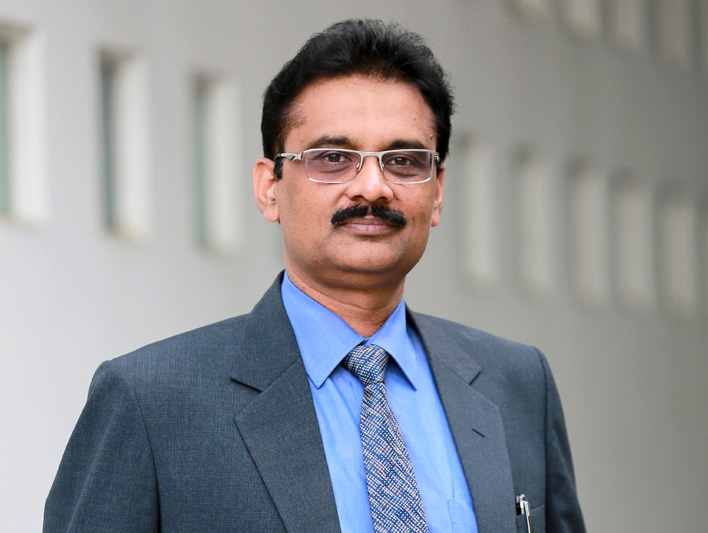
Dr. Ashok Kumar Mittal
Chancellor,
Lovely Professional University, Punjab, India
Patron

Dr. Rashmi Mittal
Pro Chancellor,
Lovely Professional University, Punjab, India

About LPU
Lovely Professional University (LPU), renowned for its academic excellence, boasts a modern campus and offers over 150 professional programs. With a diverse community from across India and over 40 countries, LPU is a global melting pot. Highlighting its commitment to quality, LPU has been awarded the prestigious NAAC A++ grade with an impressive score of 3.68/4 by the UGC's National Assessment & Accreditation Council, setting it apart as a leading institution in India.
NIRF
 Report of NIRF Data Capturing System: Management
- Report of NIRF Data Capturing System: Pharmacy
- Report of NIRF Data Capturing System: Engineering
- Report of NIRF Data Capturing System: Overall
- Report of NIRF Data Capturing System: Law
- Report of NIRF Data Capturing System: Architecture
- Report of NIRF Data Capturing System: Innovation
- Report of NIRF Data Capturing System: Agriculture
- Report of SDG Institution
- Report of NIRF Data Capturing System: Management
- Report of NIRF Data Capturing System: Pharmacy
- Report of NIRF Data Capturing System: Engineering
- Report of NIRF Data Capturing System: Overall
- Report of NIRF Data Capturing System: Law
- Report of NIRF Data Capturing System: Architecture
- Report of NIRF Data Capturing System: Agriculture