

Eco-Cosmology and Epistemic Pluralism
The Kattunayakan, a Particularly Vulnerable Tribal Group (PVTG) in Wayanad, Kerala, embody a worldview where cosmologies and forests are inseparable. Their everyday practices—honey collection, foraging, small-scale shifting cultivation—are guided by cosmological ethics that emphasize balance, restraint, and reverence. This project highlights eco-cosmology: a way of seeing where indigenous wisdom, scientific forestry, and community-driven conservation come together to strengthen ecological resilience, cultural identity, and livelihood security.
Background
In the Nilgiri Biosphere Reserve, the Kattunayakan’s cosmological ideas such as kāḍu (forestness) and Naayakan (leaders) shape their relationship with the environment. Taboos around overharvesting, rituals tied to sacred species, and oral traditions of forest guardians have long acted as conservation tools. Yet mainstream forest governance often privileges economic valuation and scientific metrics, sidelining these indigenous systems. This project responds by foregrounding epistemic pluralism—recognizing multiple knowledge systems—as essential to sustainable and inclusive forest governance.
Objectives- Interpret cosmologies as ecological knowledge: Demonstrate how rituals, taboos, and oral traditions shape sustainable forest use.
- Build plural governance frameworks: Integrate Kattunayakan knowledge with scientific and policy-based approaches for culturally sensitive forest management.
- Trace intergenerational change: Explore how younger generations sustain, adapt, or transform cosmological perspectives amid modernization and schooling.
The study used participatory ethnography—oral histories, seasonal observations of honey and NTFP harvests, and mapping of sacred sites. Work was also carried out in field interfaces such as Forest Department committees (VSS/EDCs), indigenous knowledge systems, and NGO initiatives like Keystone Foundation and Uravu. Student interns from Lovely Professional University contributed through sapling-planting drives, awareness campaigns, value-addition workshops, and documentation of oral narratives. These engagements not only enriched the research but also offered practical models of community–youth collaboration in forest regeneration.
Results and Wider Benefits- Cosmologies as conservation ethics: Ritual taboos on honey harvesting and respect for elephants and snakes acted as living ecological safeguards.
- Plural knowledge strengthens livelihoods: When indigenous rules were recognized within VSS/EDC forums, sustainable harvest practices improved alongside market opportunities.
- Value addition reduces forest stress: Training in hygienic honey processing and packaging boosted incomes and stabilized seasonal earnings.
- Responsive to ecological stress: Declines in honey availability prompted renewed indigenous protocols such as hive rotation and no-torch harvesting.
- Public benefits: Economic resilience, social inclusion, cultural heritage preservation, and ecosystem regeneration were all strengthened.
- Native sapling planting and youth-led grove care.
- Sustainable honey collection with rotation calendars and no-torch rules.
- Value-added NTFP products through training and cooperative branding.
- Livelihood diversification with bamboo crafts, herbal medicines, and eco-tourism storytelling.
- Recording of cosmologies and oral traditions for school and community archives.
- Kattunayakan families: Steadier incomes, recognition of cultural rights, and safer practices.
- Youth and students: Opportunities for experiential learning and intergenerational storytelling.
- Forest managers: Stronger compliance through co-designed ecological practices.
- Wider public: Healthier forests providing water security, pollination, biodiversity, and cultural value.
- Kerala total Kattunayakan population: ~18,199 (2011 census).
- Wayanad concentration: ~17,051 persons, 4,369 families, and nearly 100 settlements (Wayanad Wildlife Sanctuary Management Plan 2023–2033).
The research opens new avenues:
- Micro-enterprises under Van Dhan Yojana for honey and herbal products.
- Digital heritage archives and participatory media for cosmologies.
- Long-term ecological monitoring of bee phenology and forest diversity.
This project demonstrates how blending indigenous wisdom with science and student-led initiatives can regenerate ecosystems and secure tribal livelihoods. Similar initiatives worldwide especially with higher education students as active participants can amplify conservation impact and safeguard traditional knowledge.
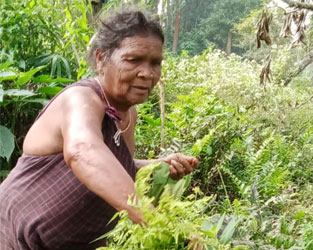
The Kattunayakan elderly tribal woman collecting edible resources from the forest reflects how livelihood, culture, and identity remain deeply embedded in everyday interactions with nature. From a social science lens, it highlights the intergenerational transmission of indigenous ecological knowledge and the gendered role of women as custodians of both sustenance and cultural continuity within forest-dependent communities.
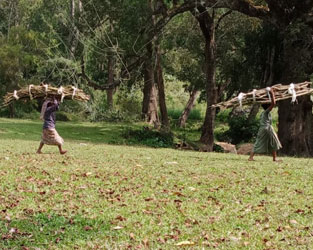
Tribal women collect firewood from the forest illustrates how daily subsistence practices are closely tied to ecological knowledge and customary rights over natural resources. It reveals the gendered labor that sustains households while also underscoring the need for inclusive forest governance that recognizes women as central actors in conservation and livelihood security.
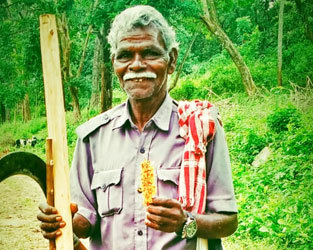
A tribal man working as a forest watcher under participatory forest management reflects the shift from exclusionary conservation to community-led stewardship. It signifies how indigenous knowledge and local labor are being recognized as vital components of inclusive governance, bridging state policies with lived ecological wisdom.
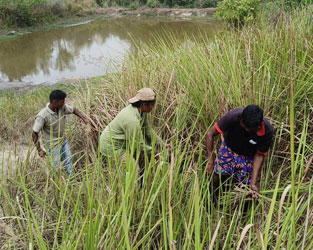
The tribal people collecting medicinal plants from the forest symbolizes how traditional ecological knowledge is rooted in everyday survival practices and cultural healing systems. It highlights the importance of epistemic pluralism, where indigenous wisdom about biodiversity complements scientific and policy approaches, making forest governance more inclusive and culturally sensitive.

This represents more than a livelihood, it reflects the Kattunayakan community’s sustainable relationship with the forest, where rituals and taboos regulate harvesting to protect both bees and biodiversity. It illustrates how indigenous ecological wisdom, when valued alongside scientific and policy frameworks, can strengthen participatory forest governance while securing livelihoods and cultural identity.
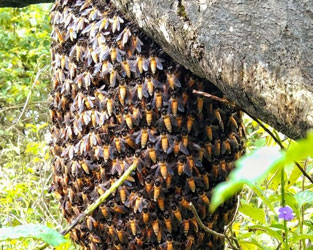
Beehive symbolizes the deep interconnection between biodiversity and tribal livelihoods, where bees act as both ecological indicators and providers of sustenance. From a social science perspective, it highlights how the Kattunayakan’s cosmologies and traditional harvesting practices embody conservation ethics, offering a model of epistemic pluralism where cultural wisdom and ecological balance reinforce one another.
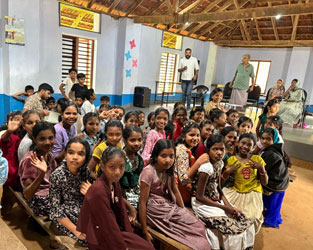
LPU student interns attending a conservation education workshop in the forest alongside school children reflects how knowledge-sharing bridges academic learning with community-based awareness. It shows how participatory initiatives empower both youth and indigenous communities, strengthening the project’s vision of epistemic pluralism in forest governance.
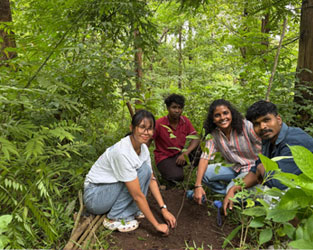
LPU student interns planting saplings as part of a forest regeneration initiative reflects how youth engagement strengthens community-driven conservation efforts. It demonstrates the practice of epistemic pluralism, where academic knowledge and indigenous traditions converge to restore ecosystems and support sustainable livelihoods.
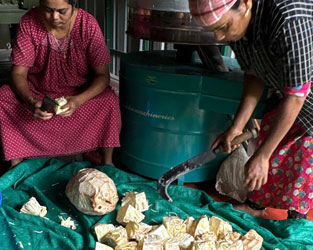
The value-added production and processing unit in the forest highlights how sustainable collection practices are being strengthened through local processing and diversification of non-timber forest products. It reflects a shift towards empowering tribal communities with alternative income opportunities, reducing ecological pressure while embedding indigenous wisdom within sustainable livelihood models.
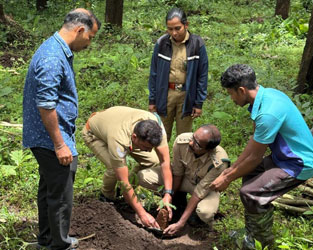
The NGO workers, forest officers, and tribal community members planting together in the forest reflects how diverse actors bring their knowledge systems into shared action. It illustrates epistemic pluralism in practice, where scientific forestry, policy frameworks, and indigenous wisdom converge to regenerate forest cover and create more inclusive, culturally rooted governance.
 Report of NIRF Data Capturing System: Management
- Report of NIRF Data Capturing System: Pharmacy
- Report of NIRF Data Capturing System: Engineering
- Report of NIRF Data Capturing System: Overall
- Report of NIRF Data Capturing System: Law
- Report of NIRF Data Capturing System: Architecture
- Report of NIRF Data Capturing System: Innovation
- Report of NIRF Data Capturing System: Agriculture
- Report of SDG Institution
- Report of NIRF Data Capturing System: Management
- Report of NIRF Data Capturing System: Pharmacy
- Report of NIRF Data Capturing System: Engineering
- Report of NIRF Data Capturing System: Overall
- Report of NIRF Data Capturing System: Law
- Report of NIRF Data Capturing System: Architecture
- Report of NIRF Data Capturing System: Agriculture