Fuelled by the global shift towards electric vehicles, hybrid technologies, and smart transportation systems, the automobile industry is growing faster than ever. In India, this change is especially significant due to the strong presence of automobile manufacturing, rising EV adoption, and government support for sustainable mobility solutions. Given the consistent growth, the demand for skilled automobile engineers continues to increase across both traditional and emerging sectors, making a degree in automobile engineering a highly rewarding option for those interested in this field.
In this article, we will explore the top career opportunities after an automobile engineering course in India, along with a clear understanding of what automobile engineering involves. To understand these opportunities better, it is important to first look at what automobile engineering actually involves and the core areas it covers.
Key Takeaways
|
What is Automobile Engineering?
Automobile engineering forms the foundation of vehicle design and development. It is one of the most established and application-driven engineering disciplines within the broader mechanical domain.
Automobile engineering is focused on the design, manufacturing, testing, and maintenance of vehicles such as cars, trucks, and motorcycles. It applies core mechanical engineering principles to create systems that ensure performance, safety, and efficiency.
Key Areas of Study in Automobile Engineering
A strong automobile engineering programme builds expertise across multiple vehicle systems including but not limited to:
- Powertrains: Understanding internal combustion engines and electric motors
- Transmission Systems: Studying gear mechanisms and power transfer
- Chassis Design: Structural framework that supports the vehicle
- Braking Systems: Safety mechanisms and control systems
- Fuel and Emission Systems: Efficiency and environmental considerations
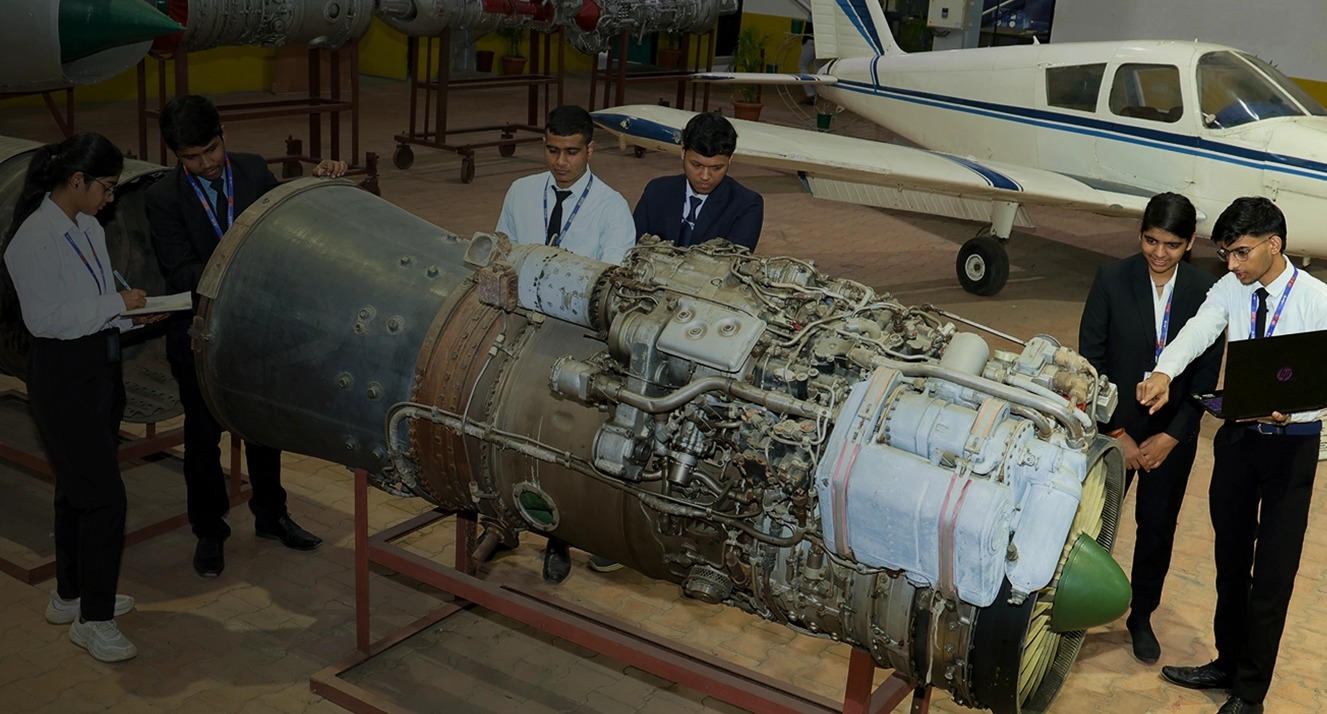
At LPU (Lovely Professional University), students also gain hands-on exposure through labs such as automotive engine labs and vehicle tinkering laboratories, strengthening both conceptual and practical understanding.
Career Opportunities After Automobile Engineering
After completing an automobile engineering course, graduates can explore a wide range of roles across design, manufacturing, testing, and emerging mobility technologies. Automobile engineering jobs in India and abroad are available across both traditional vehicle manufacturing and new-age EV and mobility companies.
| S.No. | Job Role | What You Do |
| 1. | Automobile Engineer | Design, develop, and improve vehicle systems including engines, chassis, and mechanical components |
| 2. | Design Engineer (Automotive) | Create and simulate vehicle components using CAD tools |
| 3. | Production/Manufacturing Engineer | Manage vehicle production processes and assembly lines |
| 4. | Service Engineer | Diagnose, repair, and maintain vehicles |
| 5. | Quality/Testing Engineer | Test vehicles and components for safety and performance standards |
| 6. | EV (Electric Vehicle) Engineer | Develop electric powertrains, battery systems, and charging solutions |
| 7. | ADAS & Autonomous Vehicle Engineer | Build driver assistance and self-driving systems |
| 8. | Mobility Systems Engineer | Design smart and connected mobility solutions |
| 9. | Automotive Software/Embedded Engineer | Develop ECUs and vehicle control software |
| 10. | R&D Specialist | Work on innovation, prototypes, and future vehicle technologies |
| 11. | Industrial/Manufacturing Engineer | Optimise factory operations and production systems |
| 12. | Technical Sales/Product Support Engineer | Support sales with technical expertise and client communication |
Let’s explore these roles one by one.
1. Automobile Engineer
Automobile engineers are responsible for the design, development, and improvement of vehicle systems. They work on core components such as engines, chassis, and mechanical systems to enhance performance, safety, and efficiency.
Key Skills Required: Strong understanding of thermodynamics, mechanics, and vehicle systems, problem-solving ability, and knowledge of manufacturing processes.
2. Design Engineer (Automotive)
Design engineers use CAD (Computer-Aided Design) tools to create and develop vehicle components and systems. They simulate and test designs to improve aerodynamics, strength, and overall performance before production.
Key Skills Required: Proficiency in CAD tools (such as CATIA, SolidWorks), understanding of material science, simulation skills (FEA), and attention to detail.
3. Production / Manufacturing Engineer
Production engineers oversee the manufacturing and assembly of vehicles. They focus on optimising production processes, improving efficiency, maintaining quality standards, and reducing manufacturing costs.
Key Skills Required: Knowledge of manufacturing processes, lean production techniques, operations management, and process optimisation.
4. Service Engineer
Service engineers are responsible for diagnosing, maintaining, and repairing vehicles. They work in workshops, dealerships, and service centres to ensure vehicle reliability and customer satisfaction.
Key Skills Required: Diagnostic skills, troubleshooting ability, knowledge of vehicle systems, and strong communication skills.
5. Quality/Testing Engineer
Quality or testing engineers ensure that vehicles and components meet safety, performance, and regulatory standards. They conduct tests in laboratories, proving grounds, and validation centres to identify and resolve technical issues before market release.
Key Skills Required: Attention to detail, knowledge of testing standards, data analysis, and problem-solving skills.
6. EV (Electric Vehicle) Engineer
EV engineers work on electric powertrains, battery systems, and charging technologies. Their focus is on improving energy efficiency and developing sustainable mobility solutions.
Key Skills Required: Understanding of battery technology, power electronics, electrical systems, and energy management.
7. ADAS/Autonomous Vehicle Engineer
These engineers develop advanced driver assistance systems and autonomous driving technologies using artificial intelligence, sensors, and computer vision.
Key Skills Required: Programming (Python/C++), AI/ML basics, sensor technologies, computer vision, and data processing.
8. Mobility Systems Engineer
Mobility systems engineers design and integrate smart transportation systems, including connected and shared mobility solutions that combine mechanical and digital technologies.
Key Skills Required: Systems thinking, IoT fundamentals, data integration, and understanding of smart mobility platforms.
9. Automotive Software / Embedded Systems Engineer
This role involves developing vehicle control systems, ECUs (Electronic Control Units), and embedded software. Engineers in this field work extensively with automotive electronics, IoT, and digital systems.
Key Skills Required: Embedded systems, programming (C/C++), electronics, microcontrollers, and software integration.
10. R&D Specialist
Research and development specialists focus on innovation, prototype development, and next-generation vehicle technologies. They play a key role in shaping future automotive products and solutions.
Key Skills Required: Research aptitude, innovation mindset, analytical thinking, and knowledge of emerging automotive technologies.
11. Industrial/Manufacturing Engineer
Industrial engineers design efficient production systems and optimise factory operations. They focus on automation, lean manufacturing techniques, and improving productivity in automotive plants.
Key Skills Required: Process optimisation, industrial engineering principles, automation tools, and data-driven decision-making
12. Technical Sales/Product Support Engineer
These professionals combine engineering knowledge with business skills. They support sales teams, explain technical features to clients, and act as a bridge between engineering and commercial operations.
Key Skills Required: Communication skills, technical understanding, client handling, and business awareness.
Automobile engineering offers a diverse and evolving career landscape that spans traditional mechanical roles to advanced electric, software-driven, and autonomous mobility systems, making it one of the most future-ready engineering fields today.
Did You Know?The automotive industry is a massive engine for India’s economy, contributing approximately 7% to the national GDP. Much like the industrial journeys of the US, Japan, and Germany, India’s auto sector has become a central pillar of growth, supporting the livelihoods of roughly 32 million people. Source: Wheels of Change: Automation in India’s Automotive Sector, Centre for Social and Economic Progress (CSEP), citing data from NITI Aayog (2025). |
Choose the Right Career Path Based on Your Interests
Not all automobile engineering careers are the same. The best path for you depends on your interests, strengths, and the kind of work you enjoy. Use this guide to identify the role that fits you best:
- If you like core machines & engines
Recommended Roles: Automobile Engineer, Production Engineer
- Work on engines, mechanical systems, and manufacturing processes
- Best for students who enjoy hands-on work, machinery, and factory environments
- Strong focus on thermodynamics, mechanics, and production systems
- If you like design & simulation
Recommended Role: Design Engineer (Automotive)
- Create and optimise vehicle components using CAD and simulation tools
- Ideal for those who enjoy creativity combined with technical problem-solving
- Common tools: CATIA, SolidWorks, ANSYS
- If you like coding & electronics
Recommended Roles: Automotive Software Engineer, Embedded Systems Engineer, ADAS Engineer
- Develop vehicle control systems, ECUs, and smart driving technologies
- Best suited for students interested in programming, electronics, and AI
- High-growth domain in connected and autonomous vehicles
- If you are interested in future technologies
Recommended Roles: EV Engineer, Mobility Systems Engineer
- Work on electric vehicles, battery systems, and sustainable mobility solutions
- Ideal for those who want to contribute to green and smart transportation
- One of the fastest-growing and most future-ready career paths
- If you prefer customer-facing roles
Recommended Roles: Service Engineer, Technical Sales Engineer
- Work closely with customers, handle servicing, or support product sales
- Best for those with strong communication and problem-solving skills
- Combines technical expertise with business exposure
Industries Hiring Automobile Engineers
Automobile engineering graduates are in demand across a wide range of industries, from traditional vehicle manufacturing to emerging electric mobility and smart transportation sectors. Here’s a closer look at where opportunities exist, along with real-world examples:
1. Automobile Manufacturing Companies
These companies design, manufacture, and assemble vehicles such as cars, two-wheelers, and commercial vehicles. They offer roles in design, production, quality control, and R&D.
Examples:
- Maruti Suzuki
- Tata Motors
- Mahindra & Mahindra
- Ashok Leyland
- Honda
- Escorts Kubota
- Indo Farm Equipment
2. Electric Vehicle (EV) Companies and Startups
With the rapid shift towards sustainable mobility, EV companies are hiring engineers for battery systems, electric powertrains, and charging infrastructure.
Examples:
- Ola Electric
- Ather Energy
- Tata Passenger Electric Mobility
3. Automotive Component Manufacturers
These companies produce critical vehicle components such as engines, braking systems, electronics, and tyres. They offer opportunities in manufacturing, design, and quality assurance.
Examples:
- Bosch
- Continental AG
- Motherson Group
- TaeguTec
4. Engineering, Design & Simulation Companies
These companies support automotive firms with product design, simulation, embedded systems, and digital engineering solutions.
Examples:
- Cyient
- Altair Engineering
- Tata Advanced Systems
5. Research & Development (R&D) Centres and Testing Organisations
R&D centres focus on innovation, prototype development, and advanced testing of vehicles and components, including safety, emissions, and performance validation.
Examples:
- Automotive Research Association of India
- International Centre for Automotive Technology
- Tata Elxsi
6. Industrial & Manufacturing Companies (Non-Automotive but Relevant)
Many large engineering and manufacturing companies hire automobile engineers for roles in production, operations, and maintenance due to their strong mechanical foundation.
Examples:
- LG Electronics
- Blue Star Limited
- Voltas
- Forbes Marshall
7. Mobility, Logistics, and Transport Companies
These organisations operate large vehicle fleets and require engineers for maintenance, operations, and optimisation of transport systems.
Examples:
- IndiGo
- Ola Cabs
- Uber
8. Service, Maintenance, and Dealership Networks
These organisations focus on vehicle servicing, diagnostics, and customer support, offering roles for service engineers and technical specialists.
Examples:
- Maruti Suzuki Service
- Hyundai Motor India
- Hero MotoCorp
The Road Ahead: Powering the FutureDid You Know? The shift to electric mobility is set to redefine India’s industrial landscape. By 2030, the EV industry is projected to reach a valuation of Rs. 20 lakh crore (US$ 234 billion). This transformation is expected to act as a massive job creator, generating approximately 5 crore (50 million) new jobs across the ecosystem. Source: Growth of Automobile Industry in India, India Brand Equity Foundation (IBEF). |
Career Progression Pathway
Career growth in automobile engineering typically follows a structured path:
- Entry Level: Service Engineer, Design Engineer, Production Engineer
- Mid-Level: Quality Engineer, Manufacturing Engineer, R&D Engineer
- Advanced Level: EV Systems Engineer, Mobility Architect, R&D Lead
This progression allows professionals to move from core technical roles into specialised and leadership positions over time.
How to Start Your Career in Automobile Engineering
From selecting the right programme to developing industry-relevant expertise, each step plays a crucial role in shaping your career path.
1. Choose the Right Automobile Engineering Programme
Start by selecting a programme that offers a strong foundation in core automobile engineering along with exposure to emerging technologies such as electric vehicles and smart mobility. At LPU, options like B.Tech. Automobile Engineering, lateral entry pathways, and international transfer programmes allow students to align their education with their career goals and preferred learning route.
2. Gain Hands-On Experience Through Internships
Internships play a critical role in bridging the gap between academic learning and real-world application. At LPU, students benefit from structured industry exposure through internships, live projects, and collaborations with automotive organisations. These experiences help students understand manufacturing processes, vehicle systems, and workplace expectations, making them industry-ready from the start.
3. Build Practical Skills Through Projects
Project-based learning is an integral part of the B.Tech. Automobile Engineering programme at LPU. Students work on capstone projects and lab-based assignments focused on real-world automotive challenges. Whether it is working on vehicle subsystems, exploring emerging areas like electric mobility, or developing design prototypes, these projects help build strong problem-solving and technical capabilities.
4. Develop Software and Technical Proficiency
Modern automobile engineering increasingly relies on digital tools and simulation technologies. At LPU, students are trained in relevant engineering software and tools as part of their curriculum and lab work. This exposure helps them develop the ability to design, analyse, and optimise automotive systems, which is essential for roles in design, testing, and advanced engineering domains.
5. Strengthen Your Profile with Industry-Relevant Skills
In addition to core engineering knowledge, LPU emphasises skill development in areas such as analytical thinking, communication, and technical presentation. Through workshops, interactive learning, and interdisciplinary opportunities, students are encouraged to build a well-rounded profile aligned with industry expectations.
6. Leverage Campus Placements and Industry Connect
LPU offers a strong placement ecosystem supported by industry partnerships, training programmes, and career guidance. Students gain access to opportunities across automobile manufacturing, electric mobility, and related sectors. With structured placement support and exposure to real-world industry requirements, graduates are well-positioned to secure roles in leading organisations.
Courses in Automobile Engineering at LPU
Choosing the right programme is a critical step in building a strong foundation in automobile engineering. At LPU, the focus is not only on offering degree pathways but on creating a structured academic journey that combines core engineering fundamentals, practical exposure, and industry relevance.
-
B.Tech. Automobile Engineering
This is a 4-year undergraduate programme (8 semesters) that builds a comprehensive understanding of vehicle engineering, from core sciences to advanced automotive systems. The curriculum progresses from fundamentals to specialised subjects, ensuring both conceptual clarity and practical application.
-
B.Tech. Automobile Engineering (Lateral Entry)
B.Tech. Automobile Engineering (lateral entry) is a 3-year course designed for students with prior technical education, who wish to directly enter the degree programme and specialise in the field.
This pathway enables students to build on their existing foundation and transition into advanced automobile engineering concepts more efficiently.
-
B.Tech. Automobile Engineering (2+2 with International Credit Transfer Option)
B.Tech. Automobile Engineering (2+2 with International Credit Transfer Option), is a 4-year programme designed for students seeking a globally integrated learning experience, combining strong academic foundations at LPU with international exposure in the later stages of the degree.
Structure:
- First 2 years at LPU (India)
- Final 2 years at a partner university abroad
Key Highlights of the International Pathway
- Global Study Pathway: Begin your academic journey at LPU and seamlessly transfer credits to a partner university abroad
- Cost-Effective International Education: Complete initial years at LPU and pay international tuition only for the final phase
- International Career Exposure: Build skills aligned with global automotive and mobility industry requirements
- Post-Study Work Guidance: Receive support in understanding work permit options and application processes across countries
Programme Comparison Overview
| Programme | Duration | Entry Level | Eligibility | Key Advantage |
| B.Tech. in Automobile Engineering | 4 years (8 semesters) | After 10+2 | 60% aggregate (PCM & English) + LPUNEST/JEE Main | Strong foundation + full programme at LPU |
| B.Tech. Automobile Engineering (Lateral Entry) | 3 years (6 semesters) | After Diploma / B.Sc. | 60% + LPUNEST (exempt with 90%) | Faster route for technically qualified students |
| B.Tech. Automobile Engineering (2+2 International) | 4 years (8 semesters) | After 10+2 | 60% aggregate (PCM & English) + LPUNEST/JEE Main | Global exposure + international degree pathway |
What You Study in B.Tech. Automobile Engineering: Core Subjects and Learning Areas
The B.Tech. Automobile Engineering curriculum at LPU is designed to build both engineering fundamentals and specialised automotive knowledge, ensuring that students understand not only how vehicles function but also how they are designed, tested, and optimised.
Some of the key areas covered include:
Engineering Foundations:
- Engineering Physics
- Engineering Chemistry
- Mathematics for Engineers
- Mechanical Workshop
Core Automobile Subjects:
- Automobile Engineering Drawing
- Automotive Chassis and Suspension System
- Automotive Structures and Design
- Automotive Transmissions
Advanced System Learning:
- Automotive Electrical and Electronics
- Automotive Engine Component Design
- Vehicle Dynamics and Performance
Practical and Lab-Based Learning:
- Hands-on Automotive Engine
- Vehicle Tinkering Laboratory
- Automotive Engine and Chassis Component Lab
Project-Based Learning:
- Capstone projects focused on real-world automotive challenges
Students are also introduced to emerging areas such as hybrid systems and evolving vehicle technologies, ensuring alignment with industry trends.
B.Tech. Automobile Engineering Programme Outcomes: What You Become
The programme is designed to develop not just knowledge, but the ability to apply that knowledge in real-world scenarios.
By the end of the B.Tech. Automobile Engineering course, students are expected to:
- Understand complete vehicle systems, including IC engines, chassis design, and vehicle dynamics
- Apply engineering principles such as thermodynamics and system design to solve practical automotive challenges
- Develop optimised solutions using tools such as computer-aided design (CAD), manufacturing (CAM), and engineering simulations
- Communicate and present engineering solutions effectively, supported by strong analytical and technical skills
Why Choose LPU for Automobile Engineering?
Choosing the right institution is not just about earning a degree; it is about gaining the skills, exposure, and opportunities that shape your career in the automotive industry. At LPU, the automobile engineering programmes are designed to go beyond academics, combining strong fundamentals with industry relevance, practical exposure, and even global learning pathways.
-
Industry-Oriented Curriculum
The curriculum is structured around real-world automotive requirements, covering areas such as vehicle dynamics, automotive systems, and emerging mobility. With options like engineering minors and open minors, students can expand their expertise beyond core disciplines.
-
Hands-On Learning and Workshops
Learning is deeply application-driven, with regular exposure to labs, workshops, and project-based assignments. This ensures that students do not just understand concepts, but also learn how to apply them in practical engineering scenarios.
-
Advanced Labs and Infrastructure
State-of-the-art automotive labs, simulation tools, and vehicle-focused learning environments support experiential learning. These facilities allow students to work on real systems, strengthening both technical skills and confidence.
-
Focus on EV and Emerging Mobility
With the industry shifting toward electric and sustainable mobility, the programme integrates learning in areas such as green vehicles and modern automotive technologies. This ensures that students remain aligned with future industry demands.
-
Internships and Placement Support
LPU offers structured industry interface opportunities, including internships, live projects, and industry collaborations. The university’s strong placement ecosystem is reflected in the outcomes for the year 2025:
- ₹54.90 LPA highest package
- ₹7 LPA average package
- ₹1 lakh highest monthly internship stipend
- 600+ Dream and Super Dream offers
These outcomes highlight the strong industry demand for skilled graduates.
-
Global Exposure and Study Opportunities
Through international credit transfer options and study abroad pathways, students gain access to global academic environments and industry practices. This exposure helps build a broader perspective and enhances career opportunities across international markets.
-
Research, Industry Interface, and Holistic Development
Students benefit from opportunities in undergraduate research, industry interaction, and interdisciplinary learning. Combined with technical events and collaborative projects, this approach supports both professional growth and overall development.
Conclusion: Start Your Career in Automobile Engineering
B.Tech. Automobile engineering remains a focused and future-ready discipline rooted in strong engineering fundamentals. As the automotive industry evolves toward sustainability and innovation, the demand for skilled professionals continues to grow. If you are looking to build a career in vehicle design, manufacturing, or mobility solutions, pursuing an automobile course at LPU can provide the right foundation.
Explore the B.Tech. Automobile Engineering and other Mechanical Engineering programmes, understand your interests, and take the first step toward a career in automobile engineering.
Frequently Asked Questions
Q.1 Is automobile engineering a good career option?
Yes, it offers a clear and application-driven career path within the automotive sector. With the rise of electric mobility and evolving vehicle technologies, the demand for skilled automobile engineers continues to remain relevant.
Q.2 What skills are required for automobile engineering?
A strong understanding of vehicle systems, design tools, and engineering fundamentals is essential. Alongside this, analytical thinking and problem-solving skills play a key role in real-world automotive applications.
Q.3 What is the salary of an automobile engineer?
Salaries vary based on skills, role, and experience. Graduates from LPU may benefit from structured placement support and access to competitive opportunities across the automotive sector.
Q.4 Can I pursue automobile engineering after 12th?
Yes, students who have completed 10+2 with Physics, Mathematics, and Chemistry are eligible to apply to LPU. Admissions to the B.Tech. Automobile Engineering at LPU typically requires qualifying entrance exams such as LPUNEST or JEE Main. Explore our programmes page for more information.
Q.5 What are the top job roles in automobile engineering?
Common roles include automobile engineer, design engineer, production engineer, and service engineer. Each role focuses on different aspects of vehicle development, manufacturing, and performance optimisation.
Q.6 What is the future scope of automobile engineering?
The field continues to evolve with advancements in electric vehicles, sustainability, and connected mobility. Engineers with strong fundamentals remain essential to adapting these innovations into real-world applications.
Q.7 Does LPU offer automobile engineering courses?
Yes, Lovely Professional University offers B.Tech. Automobile Engineering, along with B.Tech. Automobile Engineering (Lateral Entry) and B.Tech. Automobile Engineering (2+2 with International Credit Transfer Option). These programmes are designed with a strong focus on practical learning, industry exposure, and emerging automotive technologies. Explore our programmes page for more information.
Q.8 What is the eligibility for automobile engineering at LPU?
For the B.Tech. Automobile Engineering programme at Lovely Professional University, students must have 60% aggregate marks in 10+2 with Physics, Mathematics, and Chemistry (with English) or equivalent, along with qualifying LPUNEST or JEE Main. Eligibility may vary slightly for pathways such as lateral entry or international transfer options.
Q.9 How are placements at LPU for automobile engineering?
Lovely Professional University offers a well-structured placement ecosystem supported by strong industry partnerships, internships, and career-focused training. Students gain access to opportunities across automotive manufacturing, electric mobility, and emerging sectors, with outcomes reflecting ₹54.90 LPA highest package, ₹7 LPA average package, ₹1 lakh highest monthly internship stipend, and 600+ Dream and Super Dream offers in the last year.
Q.10 What facilities are available for engineering students at LPU?
At LPU, Students benefit from advanced labs, hands-on workshops, research opportunities, and global exposure programmes. This integrated learning environment supports both technical development and career readiness.