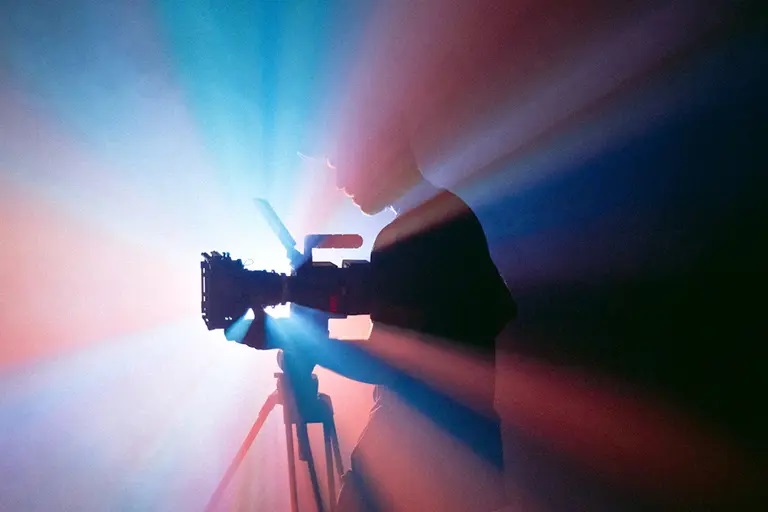
As a teacher of the cinematic arts, the most common phenomenon I observe at the beginning of every academic year is the contagious, genuine excitement of the new students entering film and media education. They walk into the studio with visions of sweeping crane shots and dramatic lighting, and the ultimate dream of sitting in the director’s chair, yelling, “Action!” They are drawn to the magic of contemporary filmmaking, film production, and practical filmmaking, and the palpable rush of capturing light and sound.
But for us as faculty, our greatest challenge-and our most profound responsibility-is to gently lead them to an understanding that before we can shout “Action,” we must first ask, “Why?”
This question is central to the perceived divide between film studies and practical filmmaking integration. For years, there has been a tug-of-war in the world of academia and film and media education between scholars who study cinema and technicians who make it. But in my years of teaching, I have come to a fundamental realisation: film studies and practical filmmaking are not opposing forces. They are, in fact, two parts of a holistic pedagogical ecosystem. Teaching one without the other results in incomplete artists. The practical filmmaking skills acquired in the classroom are strengthened by the theoretical knowledge gained in film studies, cinema studies, and film theory, adding to more rounded artistic development.
Film Studies: The Foundation of Visual Literacy
The reduction of film studies and cinema studies to “watching films and writing papers” is often unfair. It is, in fact, a rigorous study of the most powerful communicative medium of the modern era-an essential part of visual literacy in contemporary cinema and modern media education.
Just as a novelist needs to read voraciously to know the pulse of language, a filmmaker must consume cinema critically to understand the grammar of the screen. This is the essence of visual literacy and film theory in filmmaking education.
It provides students with historical, cultural, and psychological context for the moving image. When we look at the French New Wave, we are not just studying history-we are studying a shift in contemporary film education and industry trends, a rebellion that gave us the jump cut and handheld camera techniques still used in contemporary filmmaking.
Students build a mental library of visual vocabulary, strengthening visual storytelling in media education through mise-en-scène in Wong Kar-wai films or psychological framing in Alfred Hitchcock thrillers. This is where the importance of film theory in filmmaking education becomes clear: a low-angle shot is not just a technique but a statement about power relations. This theoretical grounding enhances visual literacy in contemporary cinema and prevents filmmakers from becoming purely technical operators.
The Forge of Creation: The Art of Practical Filmmaking
On the other hand, theory in a vacuum is merely academic. Cinema is an art of kinetic, technical, and collaborative execution-this is where practical filmmaking and filmmaking skills become essential.
Writing about lighting is one thing; stepping onto a set and executing it is another. Film production and practical filmmaking skills demand mastery of tools, timing, and teamwork.
Students discover the realities of how film schools prepare future filmmakers through collaboration-where the director depends on the cinematographer, sound recordist, and production designer. They learn that developing filmmaking skills through film studies and practice includes managing unpredictable conditions like weather, schedules, and technical limitations.
This is where benefits of studying film and media education become tangible: resilience, leadership, and problem-solving in real-world contemporary filmmaking environments.
The Alchemy of the Classroom: Theory and Practice
The true strength of film studies and practical filmmaking integration lies in their intersection.
From Montage Theory to Timeline
Students learn Soviet Montage theory as part of film theory and cinema studies, then apply it in editing software. This is a direct example of how film studies enhance practical filmmaking, where theoretical understanding transforms into creative execution in film production workflows.
The Kuleshov Effect teaches that meaning arises from sequence, reinforcing the importance of visual storytelling in media education and strengthening filmmaking skills through film studies.
Genre Conventions and Subversion
Understanding genre evolution through film studies and cinema studies allows students to engage in contemporary film education and industry trends, enabling them to subvert expectations in innovative contemporary filmmaking practices.
Forming Tomorrow’s Storytellers
We are living in an exciting time in contemporary filmmaking and media education. The democratization of technology and the rise of AI tools mean that film production and filmmaking skills are more accessible than ever.
However, technical access alone is not enough. The future of cinema depends on how film schools prepare future filmmakers who combine technical ability with intellectual depth.
This is why the integration of film studies, visual literacy, and practical filmmaking is more important than ever. The industry needs creators who understand both film theory and filmmaking skills, not just operators.
From Scorsese to Bong Joon-ho, great filmmakers embody the synthesis of film studies and practical filmmaking integration, blending scholarship with hands-on craft.
Conclusion
The ultimate goal of film and media education is to cultivate filmmakers who balance intellect and execution-who understand the importance of visual storytelling in media education while mastering practical filmmaking and film production techniques.
By bridging film studies, cinema studies, and filmmaking skills, we ensure that students become holistic artists capable of shaping meaningful contemporary filmmaking.
The future of cinema does not belong to those who only operate cameras or only study theory-it belongs to those who unite both worlds through developing filmmaking skills through film studies and creative practice.