
- Introduction
- Why Choose B.Tech. (Food Technology) at LPU?
- Career & Placement Opportunities
- Advanced Laboratories, Infrastructure & Digital Resources
- Research, Innovation & Entrepreneurship
- Skill Development, Certifications & Industry Exposure
- Projects, Internships & Industry-Academia Collaboration
- Student Experience at LPU
- LPU at a Glance
- LPUNEST – Gateway to a Future-Ready Food Technology Career
- LPUNEST Apply Page
- Final Words
- Frequently Asked Questions (FAQs)
1. Introduction
Food is one of the most essential parts of everyday life, but behind every packaged product, beverage, dairy item, frozen food, snack, or ready-to-eat meal, there is a complex process involving science, engineering, quality control, safety, packaging, and production. This is where food technology plays an important role.
For students interested in science as well as engineering, B.Tech. Food Technology can be an interesting undergraduate career option. The programme combines food science with engineering principles and introduces students to areas such as food processing, preservation, quality management, packaging, food safety, production systems, and product development.
The B.Tech. food technology at LPU is a four-year undergraduate programme designed around this combination of technical learning and practical exposure. The programme includes foundation and core courses along with engineering minors, discipline minors, electives, industry interface, undergraduate research, live projects, workshops, educational trips, hackathons, certifications, and other experiential learning opportunities.
What makes the food technology course at LPU interesting is that students are not restricted to learning only the science behind food. The programme also gives them an opportunity to understand how food products are processed, tested, packaged, managed, and taken from an idea to an industrial application.
For students looking for a food technology degree that combines technical education with practical and industry-oriented learning, LPU provides an environment where these areas can be explored together.
2. Why Choose B.Tech. (Food Technology) at LPU?
Choosing an undergraduate programme is about more than simply selecting a degree. Students usually look at the curriculum, practical facilities, exposure, career opportunities, internships, faculty support, and opportunities to develop skills outside the classroom. These factors become especially important in a technical programme such as food technology.
The B.Tech. food technology LPU programme follows a structure that combines foundation and core courses with engineering minors, open minors, specialisations and electives, industry interface, study-abroad opportunities, placement pathways, and undergraduate research.
One of the useful aspects of the food technology program at LPU is its interdisciplinary approach. Food technology is connected with chemistry, biology, microbiology, engineering, packaging, quality control, data, and manufacturing. A student therefore benefits from understanding different areas instead of looking at food production from only one perspective.
The curriculum also integrates activities such as industry certifications, MOOCs, hackathons, workshops, guest lectures, educational trips, live projects, incubation projects, and community projects. These activities can help students connect classroom concepts with practical situations.
Another point students may consider while exploring the food technology course at LPU is the range of learning pathways available within the broader engineering ecosystem. The current B.Tech. Food Technology offering includes areas such as Data Science, Food Safety and Quality, Machine Learning for Healthcare, and Process Engineering as specialisation, track, or minor options listed in LPU’s B.Tech. admission material.
For admission, the current LPU programme page lists a four-year duration and eligibility of 60% aggregate marks in 10+2 with Physics, Chemistry, English and Mathematics or Biology or Biotechnology or an equivalent qualification, subject to qualifying LPUNEST, JEE Main, or CUET. Students should always check the latest official admission requirements before applying because eligibility and admission rules can be revised.
Students searching for a best food technology college in Punjab or a food technology university in Punjab can therefore compare LPU on factors such as curriculum, practical learning, infrastructure, research, industry exposure, internships, and placement support rather than looking at the course title alone.
3. Career & Placement Opportunities
A major question for any student considering food technology is: what can I do after graduation?
The answer is broader than just becoming a food technologist. The food industry includes manufacturing, quality assurance, research and development, food safety, packaging, production, product development, supply chain, regulatory compliance, and technical services.
This creates several food technology career opportunities for graduates who build strong technical and practical skills during their degree.
Some roles that students may explore after completing a B.Tech. in Food Technology include:
- Food Technologist
- Food Processing Technologist
- Quality Control Executive
- Quality Assurance Executive
- Food Safety Professional
- Production Executive
- R&D Associate
- Product Development Executive
- Packaging Technologist
- Process Development Professional
- Technical Executive
- Food Testing and Quality Analyst
The exact role and salary depend on the student’s skills, experience, specialisation, employer, location, and overall performance.
The food technology placements at LPU are supported by the university’s wider placement ecosystem. LPU’s placement platform highlights career preparation, recruiter interactions, internships, and student experiences across programmes, including a testimonial from a B.Tech. Food Technology student who specifically mentions supportive faculty, research areas, and lab facilities.
Students exploring B.Tech. food technology placements should also understand that placements are not determined by the degree alone. Technical knowledge, communication, internships, projects, certifications, problem-solving ability, and familiarity with industry processes can all influence career opportunities.
The food sector includes FMCG companies, dairy businesses, beverage companies, food processing units, ingredient manufacturers, testing laboratories, restaurants and hospitality organisations, research institutions, and startups. This creates different types of food technology jobs and food industry careers.
For students interested in research, higher education after B.Tech. can also be considered. Depending on their interests and eligibility, graduates can explore postgraduate study in food technology, food science, food processing, biotechnology, management, or related areas.
4. Advanced Laboratories, Infrastructure & Digital Resources
Food technology is a practical field. Reading about pasteurisation, food preservation, microbiology, packaging, quality control, or processing equipment is useful, but students also need opportunities to understand how these concepts work in practice.
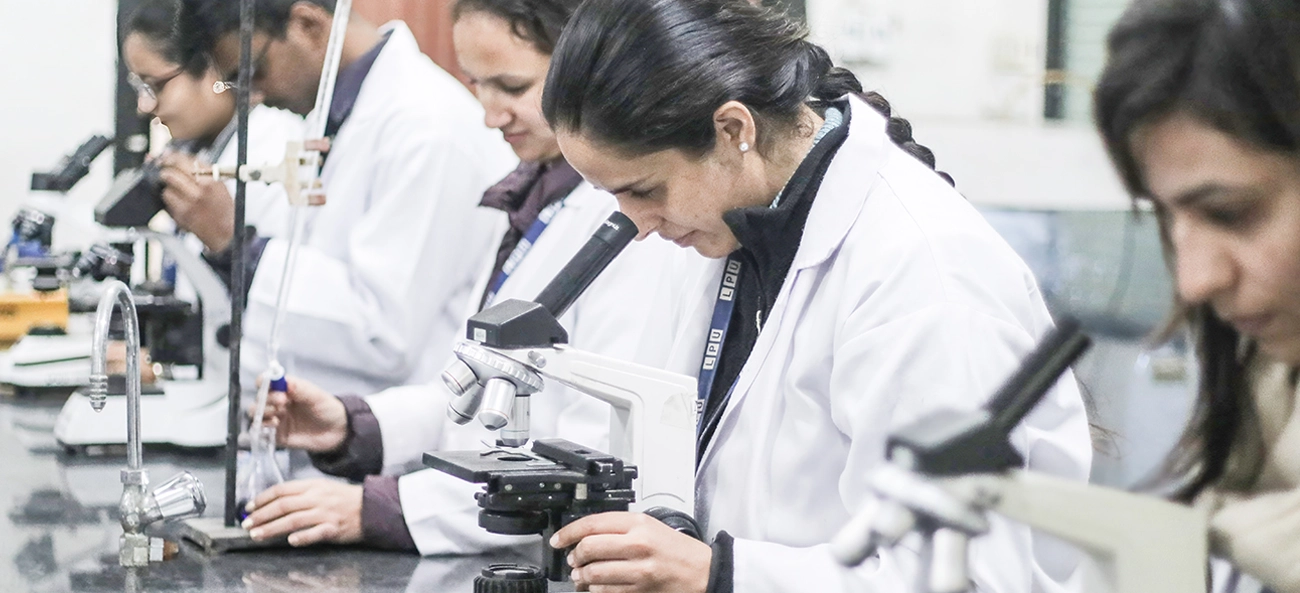
This is why food technology labs at LPU form an important part of the learning environment. Practical education can help students become familiar with laboratory procedures, testing methods, equipment, safety practices, and quality parameters.
The objective of a food technology laboratory is not simply to conduct experiments for academic marks. It can also help students understand how food products are analysed and how variables such as temperature, moisture, composition, microbial activity, processing conditions, and packaging can affect the final product.
The broader food technology infrastructure at LPU supports this practical approach alongside classroom learning. Students can use practical learning to connect theoretical concepts with areas such as food processing, food analysis, safety, quality assurance, and product development.
A typical learning journey in a food processing laboratory may involve understanding processing techniques, preservation methods, equipment operation, and production parameters. Similarly, a food testing laboratory environment can help students understand quality analysis and safety-related procedures.
Digital learning is another part of modern engineering education. Students today need to work with online learning resources, data, digital tools, simulations, research databases, and technology-enabled learning methods. LPU’s curriculum also incorporates MOOCs, certifications, hackathons, workshops, live projects, and undergraduate research.
For students, this combination of laboratory learning and digital resources can make food technology practical training more connected to the way modern industries operate.
5. Research, Innovation & Entrepreneurship
Food technology is constantly changing. Consumers are increasingly interested in healthier foods, convenient products, sustainable packaging, alternative proteins, functional foods, food safety, nutrition, and improved shelf life. At the same time, manufacturers are looking for better processing techniques, efficient production systems, and innovative products.
This creates a strong space for food technology research at LPU.
Students who enjoy experimentation and problem-solving can explore areas such as food product development, food safety, preservation, quality analysis, process optimisation, packaging, food microbiology, and sustainability.
The B.Tech. curriculum includes undergraduate research, along with live projects and incubation projects. These opportunities can encourage students to move beyond textbook learning and investigate practical problems.
For example, a student could work on a project related to improving the shelf life of a food product, developing a healthier formulation, studying packaging materials, analysing food quality, or improving a processing method.
This is where food technology innovation becomes relevant. Innovation in the food sector does not always mean inventing an entirely new product. It can also involve making an existing process safer, faster, more sustainable, affordable, or efficient.
Entrepreneurship is another possibility. Students interested in food technology entrepreneurship can explore ideas around packaged foods, functional foods, food processing, nutrition-focused products, quality testing services, sustainable packaging, or technology-based food solutions.
LPU’s wider ecosystem includes incubation and entrepreneurship opportunities, which can be useful for students who want to take a project beyond the classroom and explore it as a potential business idea.
For students interested in food technology startups, this combination of technical education, project work, incubation exposure, and entrepreneurship can provide a starting point for understanding how a food-related business is developed.
6. Skill Development, Certifications & Industry Exposure
A degree gives students an academic foundation, but employers also look for practical and professional skills. This makes food technology skill development an important part of undergraduate education.
A food technology student can work on developing skills in:
- Food processing
- Food safety
- Quality control
- Laboratory analysis
- Product development
- Packaging
- Production management
- Technical documentation
- Research methodology
- Communication and teamwork
- Problem-solving
- Data interpretation
Food safety skills are particularly important because food businesses need to maintain quality and safety standards throughout production and distribution.
Students can also explore relevant food technology certifications and short-term learning opportunities. Certifications related to food safety, quality management, HACCP, laboratory practices, or other relevant areas can complement a degree when they are appropriately chosen and recognised.
LPU’s B.Tech. Food Technology curriculum includes industry certifications and MOOCs as integral components, along with workshops, guest lectures, educational trips, hackathons, live projects, and other activities.
This type of food technology training can help students build a more complete professional profile. Instead of graduating with only theoretical knowledge, students can work towards developing technical skills, communication abilities, project experience, and industry awareness.
For someone considering industry-oriented food technology education, these additional learning opportunities can be useful because the food industry requires professionals who can understand both the science and the practical side of production and quality.
7. Projects, Internships & Industry-Academia Collaboration
Projects and internships can make a significant difference in a student’s learning experience. They provide an opportunity to apply classroom knowledge to practical situations and understand how organisations actually function.
At LPU, the B.Tech. curriculum includes live projects, industry interface, educational trips, incubation projects, community projects, and other experiential components.
For students, food technology internships at LPU can be an opportunity to gain exposure to real-world processes. Depending on the internship, students may observe or participate in activities related to production, quality control, research, testing, packaging, food safety, or process management.
Similarly, food technology projects can help students develop a portfolio that demonstrates their ability to solve practical problems.
A final-year or capstone-style project could focus on product development, food processing, quality analysis, packaging, food safety, sustainability, or process improvement. Such projects can also give students useful talking points during job interviews.
B.Tech. food technology internships are especially valuable when students actively learn from the experience rather than treating an internship simply as a mandatory requirement. Keeping records of the work performed, documenting results, understanding processes, and discussing challenges with industry professionals can make the experience more useful.
The broader idea of industry-academia collaboration is to reduce the gap between classroom learning and professional expectations. Guest lectures, industrial visits, live projects, internships, workshops, and industry-linked curriculum components can expose students to current practices and workplace expectations.
For students interested in food industry training, these experiences can also help them understand which career areas they enjoy before graduation.
8. Student Experience at LPU
College life is not only about attending lectures and completing examinations. For a technical programme, the overall environment can influence how students learn, collaborate, experiment, and develop confidence.
The food technology student experience at LPU can include classroom learning, laboratory work, projects, workshops, student activities, competitions, guest lectures, educational trips, and other co-curricular opportunities.
One interesting feature of the LPU engineering curriculum is that students can participate in hackathons and competitive events in addition to regular coursework. The curriculum also includes open minors, engineering minors, specialisations and electives, giving students opportunities to explore subjects outside their core discipline.
For a student, this can make the B.Tech. food technology student life more varied. A food technology student might spend one day working on a laboratory experiment, another day attending a guest lecture, and another working with a team on a project or competition.
The university’s wider campus ecosystem also gives students opportunities to interact with learners from different disciplines. This can be useful because the modern food industry itself is interdisciplinary. Product development, for example, may require inputs from food scientists, engineers, designers, marketers, data professionals, and business teams.
This kind of food technology campus experience can help students develop skills beyond their core academic subjects.
9. LPU at a Glance
Lovely Professional University is a multidisciplinary university in Punjab with programmes across engineering, technology, business, sciences, design, law, agriculture, healthcare, and other areas.
For students exploring LPU food technology, one of the key advantages is being part of a larger engineering and multidisciplinary ecosystem. This can create opportunities to interact with students and faculty from different academic backgrounds.
The B.Tech. Food Technology programme is structured as a four-year, eight-semester programme. LPU currently lists eligibility of 60% aggregate marks 10+2 with Physics, Chemistry, English and Mathematics or Biology or Biotechnology or an equivalent qualification, subject to qualifying LPUNEST, JEE Main, or CUET.
The programme also provides pathways involving industry interface, study abroad, specialisations and electives, placement pathways, undergraduate research, and discipline or engineering minors.
This makes LPU relevant for students looking at a food technology university where the programme is connected to a broader engineering ecosystem.
Students comparing a food technology college in Punjab can consider factors such as curriculum structure, practical exposure, infrastructure, research opportunities, industry interaction, student activities, scholarships, and career support before making their final decision.
10. LPUNEST – Gateway to a Future-Ready Food Technology Career
For students planning food technology engineering admission, understanding the admission route is an important step.
LPUNEST is LPU’s entrance and scholarship examination. The university currently lists Food Technology among the B.Tech. programmes for which students can apply through LPUNEST. Admission can also be based on JEE Main or CUET, subject to the applicable eligibility criteria.
For B.Tech. Food Technology, LPU currently lists 60% aggregate marks in 10+2 with Physics, Chemistry, English and Mathematics or Biology or Biotechnology or an equivalent qualification, subject to qualifying LPUNEST, JEE Main or CUET.
One advantage of LPUNEST is that it can also provide access to scholarship opportunities. LPU’s current B.Tech. scholarship information lists LPUNEST-based scholarship categories, including scholarships of up to 50% of the programme fee for eligible applicants under the stated criteria.
The university also provides online remotely proctored and test-centre options for LPUNEST, subject to the applicable arrangements.
Students interested in LPUNEST B.Tech. admission should check the official LPU website for the latest dates, eligibility requirements, exam pattern, scholarship criteria, and admission conditions before registering.
For someone planning a B.Tech. food technology scholarship, the LPUNEST route is therefore worth exploring alongside other available admission and scholarship pathways.
11. LPUNEST Apply Page
Students planning to apply should use the official admission portal rather than relying on third-party websites for current information.
The LPUNEST application process generally involves registration, selecting the relevant examination/programme, completing the application details, and following the instructions provided by LPU.
Students searching for the LPUNEST application form, LPUNEST registration, or LPUNEST online application should verify the latest application schedule and requirements on the official LPU admission portal.
For students looking at B.Tech. food technology application options for the 2026 admission cycle, LPU’s official programme page provides the current programme details, eligibility, admission route, fee information, scholarship information, and application-related guidance.
Before submitting an application, it is useful to keep academic documents and other required information ready. Students should also carefully review eligibility requirements because admission criteria can change from one academic session to another.
12. Final Words
Food technology is a field where science, engineering, manufacturing, safety, innovation, and consumer needs come together. As the food industry continues to evolve, there is a need for professionals who understand not only how food is produced but also how it can be processed safely, tested accurately, packaged effectively, and developed for changing consumer requirements.
The B.Tech. food technology at LPU brings these areas together through a curriculum that combines core and foundation courses with industry interface, research, specialisations, minors, electives, live projects, certifications, workshops, hackathons, and practical learning opportunities.
For students looking at a food technology career at LPU, the programme provides multiple areas to explore, including food processing, quality, safety, research, product development, production, packaging, and related technical roles.
The university’s multidisciplinary environment, practical learning approach, research opportunities, industry exposure, and scholarship pathways can make it an option worth considering when comparing food technology programmes.
Ultimately, the value of a food technology education depends not just on the university but also on how actively a student uses the opportunities available. Building technical knowledge, completing meaningful projects, gaining internship experience, developing food safety and processing skills, and staying updated with industry trends can help students prepare for the future of food technology.
For students who are curious about food science and engineering and want to explore food industry opportunities, B.Tech. Food Technology can be a pathway worth considering.
13. Frequently Asked Questions (FAQs)
1. What is the duration of B.Tech. Food Technology at LPU?
The B.Tech. Food Technology programme at LPU is currently a four-year undergraduate programme divided into eight semesters.
2. Does LPU provide practical exposure in Food Technology?
Yes. The programme includes practical and experiential components such as live projects, industry interface, educational trips, workshops, guest lectures, hackathons, incubation projects, and undergraduate research.
3. Are there internships for B.Tech. Food Technology students?
Students can explore internship and industry-exposure opportunities as part of their professional development. LPU’s curriculum incorporates industry interface, live projects and other practical components designed to connect academic learning with industry.
4. What skills are useful for a food technology career?
Useful skills include food processing, food safety, quality control, laboratory analysis, product development, packaging knowledge, problem-solving, communication, teamwork, and an understanding of industry standards.
5. Can Food Technology students explore other subjects at LPU?
The B.Tech Food Technology curriculum includes engineering minors, open minors, specialisations and electives. The current LPU admission material also lists areas such as Data Science, Food Safety and Quality, Machine Learning for Healthcare, and Process Engineering among the options associated with Food Technology.








![Career Paths after B.Tech. Aerospace Engineering [Lateral Entry]](https://www.lpu.in/blog/wp-content/uploads/2025/10/B-Tech-Aerospace-Engineering-Lateral-Entry-01.png "Career Paths after B.Tech. Aerospace Engineering [Lateral Entry]")