
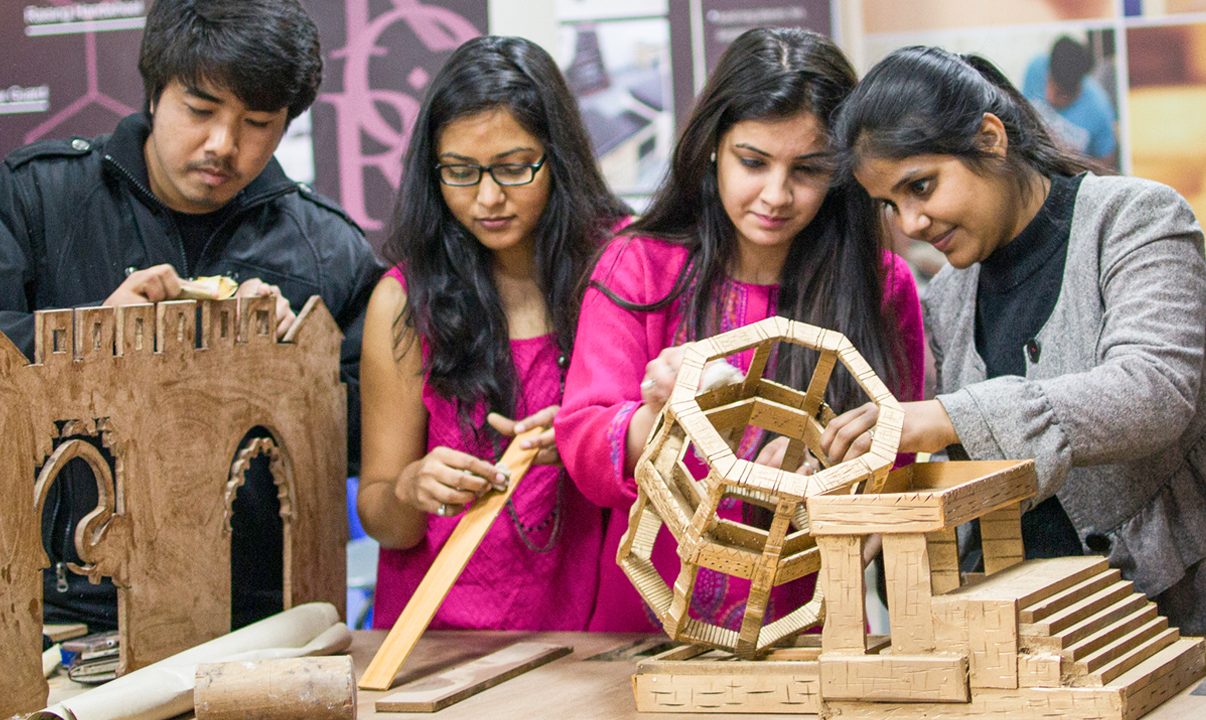
If you have always excelled at arts and crafts as a child or would rearrange the furniture in a room just because it “felt wrong”, you may have something special in there. That instinct about how things should look, feel, or function, is exactly what design sensibility is all about. If you have always been the person who notices these subtle nuances, then design could be a potential career, and Lovely Professional University (LPU) is here to help you realise your true potential. The Bachelor of Design (B.Design) course is built around turning that design sensibility into a thriving profession. It is a 4-year programme that gives your creative thinking a direction, helping you communicate ideas through visual elements and graduate ready for the industry. If you are considering a future in the world of design, this guide covers everything you need to make an informed decision, from eligibility and specialisations to skills, career paths, and salary outcomes.
What is a B.Design Degree?
A B.Design (Bachelor of Design) degree is a 4-year undergraduate programme that focuses on building skills in creative thinking, design principles, and practical application across different design fields. It is structured to help students understand how ideas are developed into visual or functional solutions used in everyday life.
The course covers areas such as product design, fashion design, interior design, graphic design, animation, and user experience (UX) and user interface (UI) design. Students learn through a mix of classroom learning, studio work, projects, and internships, which helps them develop both conceptual understanding and hands-on experience.
Eligibility Criteria for a B.Design Course
Admission to a Bachelor of Design (B.Design) programme is based on specific academic qualifications along with performance in an entrance test. The criteria ensure that students have the required academic background and a basic aptitude for creative and design-focused learning:
- Educational Qualification: Completion of 10+2 or equivalent examination from a recognised board
- Minimum Marks Requirement: At least 50% aggregate marks in 10+2 (with English as a subject)
- Entrance Exam Requirement: Admission is based on a design entrance test such as LPUNEST (UG Design) or other recognised exams like UCEED, NIFT Entrance Exam, or NID entrance exam
- Subject Requirement (English): English should have been studied in 10+2 or equivalent
Admission Process
The admission process for a B.Design programme is conducted in a structured manner to assess both academic eligibility and design aptitude. Key steps involved in the process include:
Step 1: Online Application
Candidates are required to register and fill out the application form through the official admission portal. This includes entering personal details, academic qualifications, and uploading the necessary documents as specified in the application guidelines.
Step 2: Entrance Examination
Applicants must appear for a design aptitude test or other recognised entrance exams like UCEED, NIFT Entrance Exam, or NID entrance exam. The test generally assesses creativity, logical reasoning, design awareness, and visual interpretation skills.
At LPU, the aspirants have to take the LPUNEST (Lovely Professional University National Entrance and Scholarship Test) which doubles as both an entry qualifier and a scholarship exam, with merit-based scholarships per semester available to qualifying candidates.
Step 3: Result Declaration
After the examination, results are announced based on the performance of candidates. Shortlisting is done according to the marks or rank secured in the entrance test as per the admission criteria.
Step 4: Counselling and Seat Allotment
Shortlisted candidates are invited for counselling sessions. During this stage, seat allocation is carried out based on merit rank, preferred specialisation, and availability of seats in the programme.
Step 5: Document Verification and Admission Confirmation
Candidates who are allotted seats must undergo document verification by submitting original academic and identity proofs. Admission is confirmed once verification is completed and the fee is paid within the given deadline.
Specialisations in B.Design
LPU offers the B.Design programme across eight specialisations, each supported by dedicated design studios, industry-standard tools, and faculty with domain expertise. The B.Design curriculum at LPU integrates industry certifications, live projects, workshops, guest lectures, and incubation projects as core components of each specialisation. Below is an overview of each:
1. B.Design Interior and Furniture
B.Design in Interior and Furniture covers the design of interior spaces and the objects within them. Students work with spatial planning, materials, lighting, and furniture design, developing an understanding of how environments are experienced by the people who use them. It is suited to students interested in the design of built environments at a human scale.
| Core Focus | Spatial planning, materials, and furniture design |
| Key Tools | AutoCAD, SketchUp, 3ds Max, Revit |
| Ideal For | Students interested in built environments and spatial design |
2. B.Design User interface/ User Experience (UI/UX)
B.Design User interface/ User Experience (UI/UX) is concerned with how people interact with digital products and interfaces. Students study user research, interaction design, information architecture, and interface design, with a focus on making digital experiences functional and accessible. It is increasingly relevant across technology, e-commerce, and software product companies.
| Core Focus | User research, interaction design, and interface design |
| Key Tools | Figma, Adobe XD, InVision, Maze |
| Ideal For | Students interested in digital products and human-centred design |
3. B.Design Product and Industrial Design
B.Design Product and Industrial Design focuses on the design of physical objects, from consumer products and appliances to furniture and utility items. Students study the relationship between form, function, and user need, and work with materials, manufacturing processes, and prototyping methods. It is suited to students who think in three dimensions and are interested in how objects are made and used.
| Core Focus | Form, function, materials, and manufacturing processes |
| Key Tools | SolidWorks, Rhino, KeyShot, AutoCAD |
| Ideal For | Students interested in designing physical products and objects |
4. B.Design Fashion
B.Design Fashion covers garment construction, textile knowledge, pattern-making, and the broader context of the fashion industry. Students develop skills in both the creative and technical aspects of clothing design. This specialisation is suited to students with an interest in apparel, construction, and the fashion industry.
| Core Focus | Garment construction, textiles, and pattern-making |
| Key Tools | Adobe Illustrator, CLO 3D, Lectra |
| Ideal For | Students interested in apparel, construction, and the fashion industry |
5. B.Design Animation and VFX
B.Design Animation and VFX focuses on the creation of animated content and visual effects for film, television, advertising, and digital media. Students study principles of animation, character design, motion graphics, and compositing. It is intended for students who want to work in screen-based storytelling and visual production.
| Core Focus | Animation principles, character design, and visual effects |
| Key Tools | Maya, After Effects, Blender, Nuke |
| Ideal For | Students interested in screen-based storytelling and visual production |
6. B.Design Gaming
B.Design Gaming combines elements of visual design, interaction, narrative, and technology. Students study game mechanics, level design, character design, and the tools used in game development. It is suited to students interested in interactive entertainment and the growing games industry.
| Core Focus | Game mechanics, level design, and character design |
| Key Tools | Unity, Unreal Engine, Blender, ZBrush |
| Ideal For | Students interested in interactive entertainment and game development |
7. B.Design Graphics
B.Design Graphics is concerned with visual communication, covering areas such as typography, layout, branding, print, and digital media. Students develop the ability to translate ideas and information into visual form across a range of contexts and audiences. This specialisation is relevant to students with a strong visual sensibility and an interest in communication design.
| Core Focus | Typography, branding, layout, and visual communication |
| Key Tools | Adobe Illustrator, Photoshop, InDesign |
| Ideal For | Students interested in visual communication and design for print and digital media |
8. B.Design Film and TV Production
B.Design Film and TV Production focuses on the creative and technical aspects of filmmaking and television content. Students study elements of production including direction, cinematography, editing, and production design. It is intended for students who want to work in visual storytelling and screen-based media.
| Core Focus | Direction, cinematography, editing, and production design |
| Key Tools | Adobe Premiere Pro, DaVinci Resolve, Final Cut Pro |
| Ideal For | Students interested in filmmaking and screen-based media |
Skills Developed Across B.Design Specialisations
Design education at the undergraduate level is structured to build both creative and technical competence. At LPU, skill development is reinforced through live projects, industry internships, workshops, and guest lectures from industry professionals, all of which are formally integrated into the B.Design curriculum.
Beyond the foundational skills, each specialisation develops a distinct set of technical and domain-specific competencies. The table below provides an overview of the key skills developed across each specialisation:
| Specialisation | Core Skills Developed |
| Interior and Furniture Design | Space planning, material selection, furniture construction, lighting design, technical drawing |
| UI/UX Design | User research, wireframing, prototyping, usability testing, interaction design |
| Product and Industrial Design | 3D modelling, prototyping, material science, design thinking, manufacturing knowledge |
| Fashion Design | Pattern-making, garment construction, textile knowledge, trend analysis, fashion illustration |
| Animation and VFX | 3D animation, motion graphics, compositing, character rigging, visual storytelling |
| Gaming | Game mechanics design, level design, character design, scripting basics, interactive narrative |
| Graphics | Typography, branding, layout design, colour theory, print and digital production |
| Film and Television Production | Scriptwriting, cinematography, video editing, production planning, sound design |
Career Paths and Job Roles
A Bachelor of Design degree opens up career opportunities across multiple industries such as fashion, media, technology, retail, and entertainment. The career path depends largely on the specialisation chosen, along with the skills and portfolio developed during the course. Below is an overview of the career paths and job roles associated with each specialisation:
Interior and Furniture Design
- Interior Designer
- Furniture Designer
- Space Planner
- Exhibition Designer
- Set Designer
UI/UX Design
- UX Designer
- UI Designer
- Interaction Designer
- UX Researcher
- Product Designer
Product and Industrial Design
- Product Designer
- Industrial Designer
- Design Consultant
- Packaging Designer
- Prototype Developer
Fashion Design
- Fashion Designer
- Textile Designer
- Pattern Maker
- Fashion Stylist
- Costume Designer
Animation and VFX
- Animator
- VFX Artist
- Motion Graphics Designer
- Character Designer
- Compositing Artist
Gaming
- Game Designer
- Level Designer
- Game Artist
- UI Designer for Games
- Narrative Designer
Graphics
- Graphic Designer
- Brand Identity Designer
- Packaging Designer
- Art Director
- Digital Designer
Film and Television Production
- Assistant Director
- Production Designer
- Video Editor
- Cinematographer
- Content Producer
Salary Outlook for B.Design Graduates
The salary figures below are drawn from placement data published on the LPU’s official programme pages. These figures represent placement outcomes from recent batches as per the specialisation:
Interior and Furniture Design / Product and Industrial Design / UI/UX Design
| Highest Salary Package | ₹19.63 LPA |
| Average Salary of Top 10% | ₹10.12 LPA |
Fashion Design
| Highest Salary Package | ₹18 LPA |
| Average Salary of Top 10% | ₹11.4 LPA |
Animation and VFX / Graphics / Gaming
| Highest Salary Package | ₹23.25 LPA |
| Average Salary of Top 10% | ₹11.48 LPA |
Film and TV Production
| Highest Salary Package | ₹35.62 LPA |
| Average Package of Top 25% | ₹6.93 LPA |
Conclusion
A Bachelor of Design covers a range of disciplines, and the specialisation a student selects determines the kind of work undertaken during the programme and the professional domain entered upon graduation. Students who take the time to understand what each path involves, rather than making the choice based on general interest alone, are better placed to align their academic years with the kind of work they eventually want to do. For any questions regarding admissions or specialisations, the LPU admissions team is available to help. LPU’s NAAC A++ accreditation, UGC recognition, industry-integrated curriculum, and active placement support make it a strong foundation for a career in design.
Frequently Asked Questions
1. Is B.Design a good option for students from a science or commerce background?
Yes. B.Design does not restrict admission to students from a specific academic stream. Students from science, commerce, and arts backgrounds are eligible to apply, provided they meet the minimum eligibility criteria. What matters more than the academic stream is an interest in design and creative problem-solving.
2. What is the difference between B.Design and B.Sc. in Design?
B.Design is a professional undergraduate degree that places greater emphasis on design practice, studio work, and industry application. B.Sc. in Design, on the other hand, has a stronger focus on the scientific and technical aspects of the discipline. The choice between the two depends on whether a student is more inclined towards design practice or a more technical and research-oriented approach to the subject.
3. Is a portfolio mandatory for admission to B.Design at LPU?
A portfolio is not mandatory for admission to B.Design at LPU. Admission is based on performance in qualifying examinations such as LPUNEST, UCEED, NID DAT, or NIFT, along with meeting the minimum academic eligibility criteria.
4. Can B.Design graduates pursue an MBA after completing the programme?
Yes. B.Design graduates are eligible to apply for an MBA, provided they meet the eligibility requirements of the institution they are applying to. Some students choose to pursue an MBA with a focus on design management, brand management, or marketing, which can complement a background in design.
5. Is B.Design a recognised degree for government job opportunities?
B.Design is a recognised undergraduate degree and graduates are eligible to apply for government positions that require a bachelor’s degree as the minimum qualification. However, specific government roles in design are limited, and most B.Design graduates pursue careers in the private sector, design studios, or independent practice.
6. What is the difference between B.Design and B.F.A (Bachelor of Fine Arts)?
B.Design is oriented towards applied design, with a focus on solving practical problems through design across fields such as product, fashion, UI/UX, and communication. B.F.A, on the other hand, is rooted in fine arts disciplines such as painting, sculpture, and printmaking, with a stronger emphasis on artistic expression rather than industry application. The two programmes serve different purposes and lead to different professional paths.
7. Can students switch specialisations after the first year?
Specialisation changes after enrolment are subject to the policies of the university at the time of admission. Students who are uncertain about their choice of specialisation are encouraged to speak with the admissions team before enrolling to understand the options available to them.
8. Are there internship opportunities during the B.Design programme?
Yes. Internships are a part of the B.Design curriculum at LPU. Students undertake industry internships as part of their programme, which provides practical exposure to the professional environment relevant to their specialisation.
9. What is the scope of B.Design for students who wish to work abroad?
Design is a field with demand across global markets, and a B.Design degree from a recognised university is a valid qualification for pursuing work opportunities abroad. Students who wish to work internationally may also consider higher education options such as a Master’s in Design from a foreign university, which can strengthen their prospects in global design markets.
10. How is B.Design different from a diploma in design?
A B.Design is a 4-year undergraduate degree that provides comprehensive academic and practical training in a chosen design specialisation. A diploma in design is typically shorter in duration and more focused on specific technical skills. In terms of academic recognition, career opportunities, and eligibility for postgraduate programmes, a B.Design degree holds a broader standing than a diploma.




![Is B.Sc. Information Technology [Lateral Entry] the Right Course for You?](https://www.lpu.in/blog/wp-content/uploads/2026/01/Is-B.Sc_.-Information-Technology-Lateral-Entry-the-Right-Course-for-You-100x70.png "Is B.Sc. Information Technology [Lateral Entry] the Right Course for You?")