Introduction: From Idea to Object – Faster Than Ever
What if you could turn a digital idea into a physical product overnight?
That’s exactly what 3D printing Manufacturing makes possible.
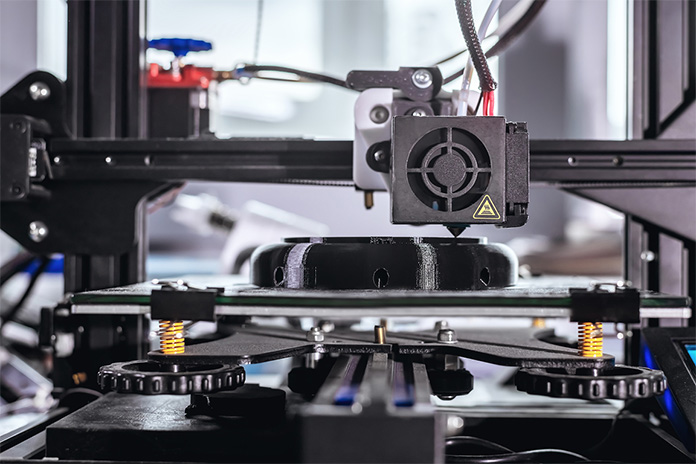
Once considered a niche technology, 3D printing-also known as additive manufacturing process – has now become a driving force in modern design and production. It is reshaping how products are imagined, tested, and manufactured across industries, from healthcare and aerospace to consumer goods.
Unlike traditional manufacturing, which cuts or molds material into shape, 3D printing builds objects layer by layer directly from digital models. This simple shift in process has unlocked something powerful: speed, flexibility, and design freedom like never before.
What Is 3D Printing, and Why Does It Matter?
At its core, 3D printing is a digital fabrication process and an important part of modern product development tech. A design created using CAD software is divided into thin layers, and the printer builds the object step by step using materials like plastics, resins, or metals.
Popular methods include:
- Fused Deposition Modeling (FDM)
- Stereolithography (SLA)
- Selective Laser Sintering (SLS)
But the real breakthrough isn’t just in how objects are made—it’s in what can be made.
Complex geometries, intricate internal structures, and lightweight designs that were once impossible or expensive to produce can now be created with relative ease. This opens up entirely new possibilities for designers and engineers.
Why 3D Printing Is Revolutionizing Rapid Prototyping
- Speed That Transforms the Design Process
Traditionally, creating a prototype could take days—or even weeks. Tooling, molds, and machining slowed everything down.
With 3D printing, that timeline shrinks dramatically. A digital concept can be printed within hours, allowing designers to test, refine, and iterate quickly, highlighting key rapid prototyping benefits.
This means:
- Faster decision-making
- More design iterations
- Shorter product development cycles
In industries where time-to-market is critical, this speed is a major competitive advantage.
- Lower Costs, Higher Creativity
Prototyping used to be expensive. Every design change meant additional cost.
3D printing changes that equation. Since it eliminates tooling and reduces material waste, designers can experiment freely without worrying about escalating costs.
The result?
- More innovation
- Greater willingness to test bold ideas
- Reduced financial risk during development
- Customization Becomes Easy
One of the most powerful aspects of 3D printing is its ability to create customized products without extra effort.
Whether it’s a patient-specific medical implant or a personalized consumer product, designs can be tailored to individual needs without changing the production process.
This level of personalization is nearly impossible with traditional manufacturing methods.
- From Concept Models to Functional Prototypes
3D printing is no longer limited to visual models.
Today, prototypes can be fully functional—capable of being tested under real-world conditions. Advanced materials allow designers to simulate the strength, flexibility, and durability of final products.
This bridges the gap between concept and production, making the entire process more reliable and efficient.
How 3D Printing Is Changing Manufacturing
- On-Demand Production
Why produce thousands of units and store them when you can print what you need, when you need it?
3D printing supports low-volume and on-demand manufacturing, reducing the need for inventory and warehousing. This is particularly useful for:
- Customized products
- Spare parts
- Limited-edition designs
- Freedom to Design Without Limits
Traditional manufacturing comes with constraints—certain shapes are difficult or impossible to produce.
3D printing removes many of these limitations. Designers can create:
- Complex internal channels
- Lightweight lattice structures
- Organic, fluid forms
This is especially valuable in industries like aerospace and automotive, where reducing weight without compromising strength is critical.
- More Sustainable Production
Sustainability is becoming a priority—and 3D printing supports it in several ways:
- Minimal material waste
- Efficient use of resources
- Potential for recycled or bio-based materials
Because objects are built layer by layer, only the required material is used—unlike traditional methods that often generate excess waste.
- A Smarter, Decentralized Supply Chain
3D printing is changing how products move around the world and is a key part of smart manufacturing.
Instead of shipping finished goods, companies can send digital files and produce items locally. This reduces:
- Transportation costs
- Lead times
- Supply chain disruptions
It also makes manufacturing more agile and responsive to demand, especially in industrial 3D printing India where localized production is growing.
The Challenges That Still Exist
Despite its advantages, 3D printing is not without limitations.
Slower for Mass Production
The layer-by-layer process can be time-consuming, making it less suitable for large-scale manufacturing compared to traditional methods like injection molding.
Material Limitations
While material options are expanding, they still do not match the full range available in conventional manufacturing. Some applications require properties that are difficult to achieve with current 3D printing materials.
Post-Processing Requirements
Many 3D-printed objects need finishing processes such as sanding or polishing to achieve the desired quality. This adds time and cost.
High Initial Investment
Advanced industrial printers and skilled expertise can be expensive, which may limit accessibility for smaller businesses.
What the Future Holds
The future of 3D printing looks highly promising.
Advancements in materials—such as high-performance polymers, metals, and bio-materials—are expanding its applications. At the same time, innovations like multi-material printing and hybrid manufacturing are pushing the boundaries of what’s possible.
Integration with technologies like artificial intelligence is another game-changer. AI-driven design tools can generate optimized structures specifically suited for 3D printing, improving both performance and efficiency.
Sustainability will also play a major role, with ongoing developments in recyclable materials and energy-efficient processes.
Conclusion: A Shift That’s Here to Stay
3D printing is more than just a new manufacturing technique—it represents a fundamental shift in how products are created.
It enables faster prototyping, greater design freedom, and more flexible production methods. While challenges remain, continuous innovation is steadily overcoming these barriers.
As industries evolve, 3D printing will play an increasingly central role—not just in making products, but in redefining how we think about design, production, and innovation itself.
In a world that demands speed, customization, and efficiency, 3D printing is no longer the future—it is the present.





![Career Paths after B Sc. Information Technology [2+2 with International Credit Transfer Option]](https://www.lpu.in/blog/wp-content/uploads/2025/11/Career-Paths-after-B-Sc.-Information-Technology-22-with-International-Credit-Transfer-Option-100x70.png "Career Paths after B Sc. Information Technology [2+2 with International Credit Transfer Option]")



![Why B Sc Information Technology [2+2 with international credit transfer option] at LPU Stands Out](https://www.lpu.in/blog/wp-content/uploads/2025/11/Why-B-Sc-Information-Technology-22-with-international-credit-transfer-option-at-LPU-Stands-Out-100x70.png "Why B Sc Information Technology [2+2 with international credit transfer option] at LPU Stands Out?")