People in the design world love labels. You are a UI designer, a motion designer, a concept artist, or a character rigger. The industry has grown so vast that hyper specialization has become the default career path and it is for good reason. But then there is another creature entirely, one that exists in the gaps between all those neat boxes. I am a 3D generalist artist, and that means my work moves across multiple disciplines rather than staying within one specialised area.
Let me be clear about what that does-and does not-mean.
The Myth of the Jack of All Trades
The moment I tell someone I work in 3D, the follow-up question is almost always: “What do you specialize in?” When I say, “a bit of everything,” I watch them process that. Some nod politely. Others look vaguely concerned, like they want to warn me about something.
The assumption buried in that question is that a generalist is simply a specialist who has not committed yet. That is wrong — and it undersells what a generalist actually does.
A 3D generalist understands the full production pipeline. Modelling, rigging, texturing, lighting, rendering, compositing — we have worked in all of it. Not always at the depth of a specialist, but with enough fluency to direct, connect and problem-solve across every stage of a project. That breadth is not a compromise. It is the skill.
The distinction becomes clearer when you consider a 3D generalist vs specialist: a specialist may develop exceptional depth in one discipline, while a generalist builds enough range across multiple disciplines to understand and connect the entire workflow.
What a 3D Generalist Actually Does
On any given week, my work might span across the following:
3D Modelling & Sculpting:
Building assets from concept — hard-surface objects, environments, characters. Polygonal workflows, subdivision surfaces, procedural modifiers. This can include 3D modelling, 3D sculpting, hard surface modelling, character modelling and environment design 3D, depending on the project.
Shading & Texturing:
PBR material creation, UV unwrapping, PBR texturing, hand-painted textures. Making surfaces feel real — or deliberately unreal, depending on the project. 3D shading is also an important part of understanding how an asset moves from geometry to a convincing finished surface.
Lighting & Rendering:
HDRI setups, three-point lighting, camera placement. Translating mood into light. Running renders that serve the story, not just the technical spec.
Animation & Motion:
Keyframing, graph editor work, basic rigging. Giving objects and environments a sense of life, rhythm and timing.
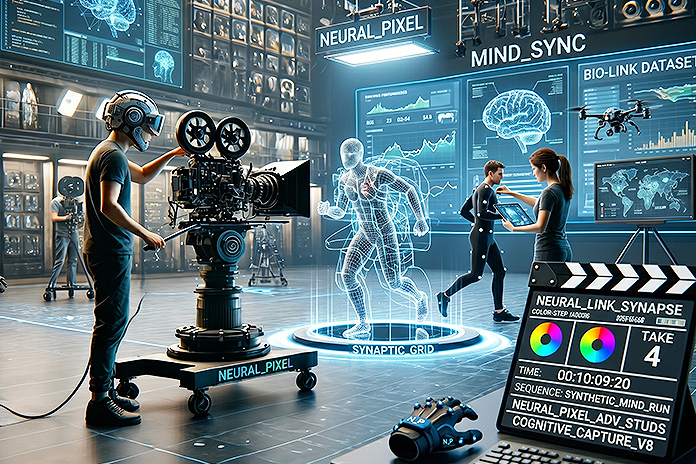
Add to that post-production compositing, working with game engines like Unreal or Unity for real-time outputs and increasingly — immersive and extended reality environments. The work does not stay in one lane. Neither do I.
Why This Matters More Now
The creative industry has changed. Independent studios, research labs, educational institutions and product companies are all producing 3D content, but very few have the budget to hire a team full of specialists. They need generalists who can supervise entire visual output.
This is where the generalist becomes irreplaceable. We are the ones who can take a brief from concept sketch to final render without needing six different hands. We are the ones who understand enough of every stage to make smart decisions at each of them.
Beyond commercial work, generalist thinking has opened doors I never expected. My own research into immersive computer graphic technologies for road safety education-using 3D environments to simulate real-world navigational scenarios-would simply not have been possible if I had worked inside only one discipline. It required modelling, environment design, lighting, interactive logic and communication design all at once. Generalism was not a workaround. It was the method for me.
For anyone considering a 3D generalist career, this ability to combine technical and creative disciplines can create opportunities across animation, gaming, visual effects, advertising, product visualisation, education, simulation and immersive media.
The Skills That Actually Define a Generalist
Technical range is the visible part. But the real skills that make a 3D generalist effective are less obvious. The skills required for 3D generalist work go beyond knowing multiple software packages; they include creative judgement, problem-solving, communication and the ability to understand how different parts of a project connect.
Systemic thinking
You understand how every decision upstream affects every output downstream. A modelling choice affects rigging. A rigging choice affects animation. An animation choice affects rendering time. You think in pipelines, not tasks.
Visual language fluency
You have developed a sense of composition, proportion, color and mood across many different styles and outputs. You are not just technically proficient; you have aesthetic sense that has been tested across many areas.
Rapid context switching
Moving between tools and modes of thinking without losing momentum. From the geometric precision of modelling to the subjective craft of lighting and back again within the same afternoon.
Communication and direction
Because you understand every role in the pipeline, you can discuss with specialists, brief clients accurately and articulate exactly what is possible within a given timeframe and budget.
A strong 3D generalist also needs to understand the tools that support this range of work, whether for modelling, sculpting, texturing, animation, rendering, compositing or real-time production. The best software for 3D generalists ultimately depends on the type of projects they want to create and the production environment in which they work.
Should You Become a Generalist?
Honesty, not everyone should. If you are deeply passionate about one area of 3D character animation or photorealistic rendering, going deep is the right call. The world needs brilliant specialists also.
But if you find yourself genuinely curious about every part of the pipeline, if you get restless working in a single mode for too long, if you want to build things independently from start to finish, you are made to be a generalist.
The creative community often treats specialization as the more serious, more credible choice. Some of the most inventive and impactful work I have seen, in design, film, research and education, is the one from generalists.