
- Why Choose B.Tech. (Automobile Engineering) at LPU?
- Career & Placement Opportunities
- Advanced Laboratories, Infrastructure & Digital Resources
- Research, Innovation & Entrepreneurship
- Faculty Expertise & Academic Support
- Student Clubs, Competitions & Experiential Learning
- Student Experience at LPU
- LPU at a Glance
- LPUNEST – Gateway to a Future-Ready Automobile Engineering Career
- LPUNEST Apply Page
- Final Words
- Frequently Asked Questions (FAQs)
The automobile industry is changing faster than ever. Electric vehicles, intelligent transportation systems, connected cars, and sustainable manufacturing are reshaping how vehicles are designed, produced, and maintained. As automotive technology advances, engineers are expected to understand traditional mechanical systems alongside electronics, software, and emerging mobility solutions.
An automobile engineering degree introduces students to vehicle design, manufacturing, engine technology, automotive electronics, vehicle dynamics, and safety systems. It combines theoretical engineering principles with practical applications, making it an interesting option for students who enjoy understanding how vehicles work.
With electric mobility and automation gaining importance, B.Tech. Automobile Engineering in India offers opportunities to explore both established automotive industries and newer technology-driven sectors. However, selecting the right university matters because automobile engineering requires laboratory experience, technical guidance, industry awareness, and opportunities to apply classroom knowledge.
This is where B.Tech. Automobile Engineering at LPU becomes worth considering. The automobile engineering course at LPU is offered within a multidisciplinary engineering environment that encourages practical learning, technical exploration, and professional development.
For students looking to build a foundation in automotive technology, LPU Automobile Engineering provides an academic pathway to explore vehicle systems, engineering design, innovation, and emerging transportation technologies.
Why Choose B.Tech. (Automobile Engineering) at LPU?
Choosing an automobile engineering college in India involves evaluating several factors, including curriculum, infrastructure, academic guidance, project opportunities, and career preparation. Students should look beyond promotional claims and understand how a university supports technical development.
One reason students may consider B.Tech. Automobile Engineering at LPU is the opportunity to study within a university that offers several engineering disciplines. Modern vehicles combine mechanical components, electronics, computer systems, and advanced materials, making interdisciplinary knowledge increasingly valuable.
The LPU automobile engineering course can help students develop an understanding of engineering fundamentals while exploring their applications in automotive systems.
Important advantages of studying automobile engineering at LPU include:
- Opportunities to connect theoretical concepts with practical engineering assignments.
- Exposure to a multidisciplinary academic environment.
- Scope for participating in technical projects and innovation activities.
- Academic guidance for developing engineering knowledge and professional skills.
- Opportunities to explore emerging areas such as electric mobility and intelligent vehicle technologies.
Students wondering why study automobile engineering at LPU should also consider the importance of communication, teamwork, and analytical thinking. These abilities support a successful B.Tech. automobile engineering career alongside technical expertise.
Rather than choosing an institution solely because it is described as the best automobile engineering college, applicants should compare its curriculum, available facilities, faculty expertise, and recent programme-specific outcomes.
Career & Placement Opportunities
The automotive industry offers career opportunities in vehicle design, manufacturing, testing, production, maintenance, and research. With the increasing adoption of electric vehicles and intelligent automotive systems, new technical roles are also emerging.
Graduates pursuing automobile engineering jobs may work with vehicle manufacturers, component suppliers, engineering service companies, testing organisations, or technology-focused businesses.
Career Options After B.Tech. Automobile Engineering
| Career option | Major responsibilities |
|---|---|
| Automobile Design Engineer | Designing and developing vehicle components |
| Automotive Production Engineer | Managing and improving manufacturing processes |
| Vehicle Testing Engineer | Evaluating performance, safety, and reliability |
| Quality Control Engineer | Maintaining product and production standards |
| EV Systems Engineer | Working with electric drivetrains and vehicle systems |
| Automotive CAD Engineer | Developing computer-aided engineering designs |
| Research and Development Engineer | Supporting automotive technology development |
| Service Engineer | Diagnosing and maintaining vehicle systems |
Automobile engineering career opportunities are expanding as manufacturers invest in electric mobility, battery systems, automotive electronics, and vehicle connectivity.
Students interested in EV engineering jobs can develop additional knowledge of electric motors, battery management, power electronics, and control systems.
Automobile Engineering Placements at LPU
When evaluating B.Tech. Automobile Engineering placements, students should consider the quality of their technical preparation, practical experience, internships, and communication skills.
LPU offers university-level career development and placement-support activities. These can help students prepare for recruitment processes and understand employer expectations.
However, LPU placements for automobile engineering depend on employer participation, student performance, market conditions, and programme-specific opportunities.
Applicants should request the latest verified automobile engineering placements at LPU, including relevant recruiters, placement rates, and salary information, before making an admission decision.
Advanced Laboratories, Infrastructure & Digital Resources
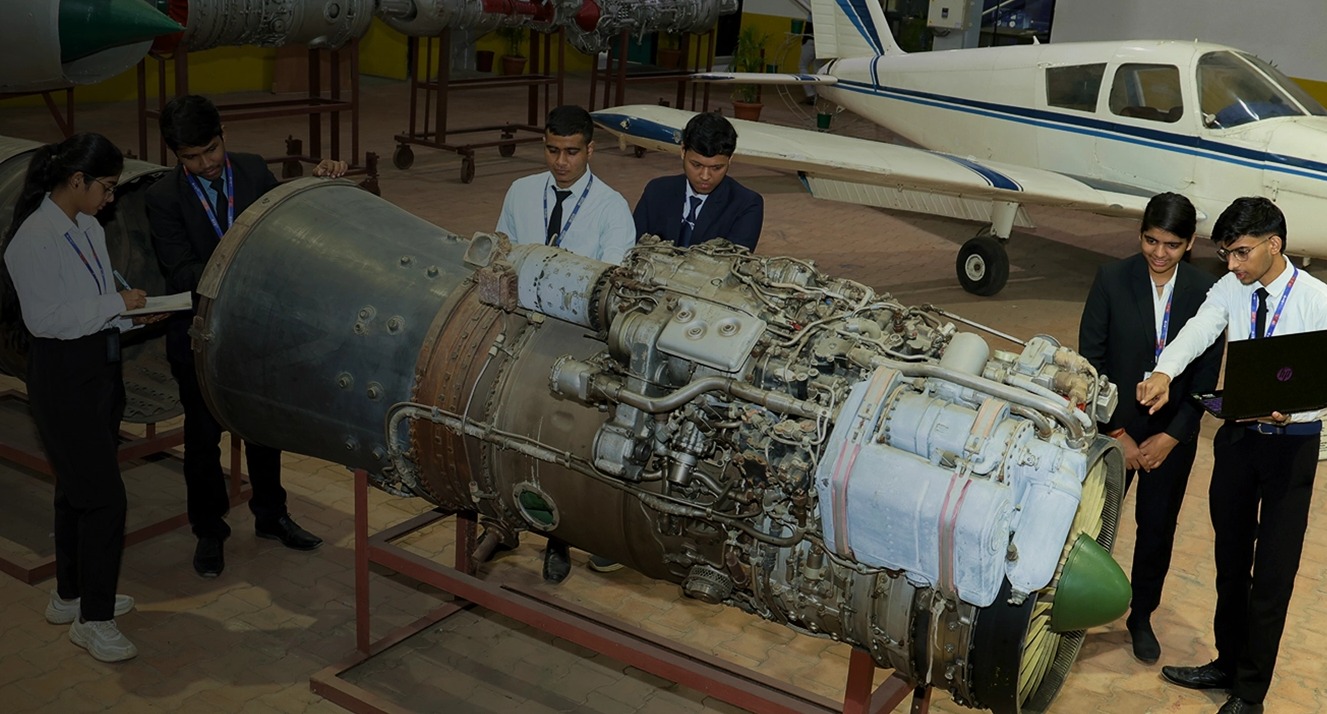
Practical learning is an essential part of automobile engineering. Students need opportunities to understand mechanical components, examine vehicle systems, conduct experiments, and use engineering software.
Automobile engineering laboratories support this learning by helping students connect technical concepts with real applications.
At LPU, the broader engineering environment provides a setting for laboratory-based education and technical activities. Students should verify the specific automobile engineering labs at LPU available for their programme.
Important Laboratory and Infrastructure Areas
| Laboratory or facility | Learning applications |
| Automotive workshop | Vehicle components, assembly, and maintenance |
| CAD laboratory | Component modelling and engineering design |
| Mechanical engineering laboratory | Machines, materials, and mechanical systems |
| Thermal engineering laboratory | Heat transfer and energy conversion |
| Manufacturing workshop | Fabrication and production processes |
| Vehicle testing laboratory | Performance evaluation and testing principles |
| Computing facilities | Engineering calculations and simulation |
These represent important categories of automobile engineering infrastructure, not a confirmed inventory of separately available LPU facilities.
Digital Resources for Automobile Engineering
Modern automotive design depends heavily on digital technologies. Computer-aided design, simulation, engineering analysis, and technical documentation help engineers evaluate ideas before manufacturing physical components.
For example, digital modelling allows students to examine component dimensions and assemblies, while simulation tools can support the analysis of mechanical performance.
Access to suitable LPU engineering labs, computing facilities, and technical guidance can strengthen students’ understanding of engineering applications.
Students should confirm the availability of specific software, equipment, automotive engineering labs, and workshop access directly with the university.
Research, Innovation & Entrepreneurship
Automotive engineering is no longer limited to conventional engines and mechanical systems. Electric mobility, autonomous technologies, connected vehicles, and sustainable transportation are creating new possibilities for research and innovation.
Students interested in automobile engineering research at LPU can explore how engineering knowledge contributes to solving transportation-related challenges.
The university’s multidisciplinary environment can encourage collaboration across mechanical engineering, electronics, computer science, and other technical areas.
Emerging Research Areas
| Research area | Potential project topics |
| Electric vehicle research | Battery efficiency and electric drivetrains |
| Autonomous vehicle research | Sensors and intelligent navigation |
| Sustainable mobility | Alternative fuels and energy efficiency |
| Automotive materials | Lightweight vehicle components |
| Vehicle safety | Safety systems and performance analysis |
| Smart automotive systems | Connected vehicle monitoring and diagnostics |
These are potential directions for automotive engineering research, rather than a verified list of ongoing LPU projects.
Innovation and Entrepreneurship
Automobile engineering innovation encourages students to identify practical problems and develop technical solutions.
For example, automobile engineering projects may involve improving vehicle efficiency, designing components, exploring battery technologies, or developing diagnostic systems.
Students interested in automotive entrepreneurship can also investigate business ideas involving electric mobility, vehicle maintenance technologies, automotive software, and transportation services.
Research-oriented learning helps students develop curiosity, analytical thinking, and the confidence to explore new ideas.
Faculty Expertise & Academic Support
Faculty guidance plays an important role in engineering education. Students need support in understanding technical concepts, performing experiments, developing projects, and preparing for professional responsibilities.
The automobile engineering faculty at LPU forms part of the university’s wider engineering academic environment, where students can seek guidance on subject knowledge and practical applications.
Importance of Academic Mentorship
Conceptual learning: Faculty members help students understand engineering principles and their relevance to vehicle systems.
Project guidance: Academic mentors can assist students in selecting project topics, evaluating designs, and improving technical documentation.
Research support: Students interested in advanced engineering topics can seek guidance on research methods and technical problem-solving.
Professional development: Faculty feedback can help students improve communication, presentation, and analytical skills.
Effective automobile engineering academic support also encourages students to ask questions, discuss challenges, and develop independent learning habits.
Applicants should review the current qualifications, specialisations, and research interests of the LPU automobile engineering faculty when comparing academic programmes.
Student Clubs, Competitions & Experiential Learning
Engineering becomes more interesting when students get opportunities to build, test, and improve their own ideas.
Technical clubs, competitions, workshops, and collaborative activities allow students to practise engineering beyond regular classroom assignments.
Experiential learning at LPU can help automobile engineering students develop technical confidence through participation in practical projects and interdisciplinary activities.
Learning Through Technical Activities
Automobile engineering competitions and student projects can encourage learners to explore vehicle design, mechanical systems, energy efficiency, and manufacturing concepts.
Potential activities include:
- Computer-aided vehicle component design.
- Energy-efficient vehicle concepts.
- Mechanical assembly and fabrication projects.
- Automotive technology presentations.
- Engineering problem-solving competitions.
- Collaborative design and innovation challenges.
Participation in student clubs at LPU can also help students develop teamwork and leadership skills.
Importance of Hands-On Learning
Hands-on automobile engineering allows students to understand the practical challenges involved in applying engineering principles.
For example, a vehicle design project may require students to consider material selection, structural strength, cost, safety, and manufacturing feasibility.
Similarly, student innovation projects can encourage experimentation and independent thinking.
These experiences help students develop a stronger understanding of engineering processes and prepare for future technical responsibilities.
Student Experience at LPU
University life is about more than attending lectures and preparing for examinations. It also involves discovering interests, building friendships, developing independence, and participating in activities that support personal growth.
Student life at LPU takes place within a multidisciplinary campus where learners from different academic backgrounds can interact.
For automobile engineering students, this environment may encourage collaboration with students interested in electronics, computer science, design, and other engineering disciplines.
Learning Beyond Academics
The LPU student experience includes opportunities to participate in cultural activities, technical events, student organisations, and collaborative learning.
These experiences can help students improve communication, leadership, and teamwork.
Developing Professional Skills
Engineering students often work on assignments and projects that require planning, research, technical documentation, and presentations.
Participating in student activities at LPU can help learners become more confident when explaining technical ideas and working with teams.
Campus Environment
The broader campus life at LPU offers opportunities for academic interaction and personal development.
For students pursuing automobile engineering, access to a multidisciplinary university environment can add value to the overall automobile engineering learning experience.
LPU at a Glance
Lovely Professional University (LPU) is a private university located in Phagwara, Punjab. It offers undergraduate, postgraduate, and research programmes across multiple academic disciplines.
The university’s engineering portfolio covers several technical fields, providing students with opportunities to explore engineering education within a large academic environment.
Overview of LPU
| Feature | Details |
| University name | Lovely Professional University |
| Location | Phagwara, Punjab |
| Institution type | Private university |
| Programme | B.Tech. Automobile Engineering |
| Standard duration | Four years |
| Academic environment | Multidisciplinary |
| Admission | Subject to current programme eligibility and selection criteria |
| Scholarship opportunities | LPUNEST and other applicable categories |
Engineering Education at LPU
LPU engineering programmes are designed to support technical learning, practical understanding, and professional development.
The university also highlights academic achievements, research activities, industry interactions, and student accomplishments across different disciplines.
Students reviewing LPU rankings and LPU achievements should distinguish between university-wide recognition and outcomes specific to automobile engineering.
For students searching for an engineering college in India, the combination of academic programmes, campus activities, and technical learning opportunities makes LPU worth considering.
LPUNEST – Gateway to a Future-Ready Automobile Engineering Career
Admission to an engineering programme requires students to understand the eligibility criteria, application process, and applicable entrance examination requirements.
LPUNEST, the Lovely Professional University National Entrance and Scholarship Test, is associated with admission and scholarship opportunities at LPU.
Students interested in LPUNEST for B.Tech. should review the examination syllabus, admission requirements, important dates, and scholarship conditions for their intended academic session.
The exact B.Tech. automobile engineering eligibility requirements, including subject combinations, minimum marks, exemptions, and accepted entrance examinations, should be checked on LPU’s current admission page.
LPUNEST Scholarship Opportunities
The LPUNEST scholarship provides eligible applicants with an opportunity to receive financial support according to the university’s scholarship policies.
Scholarship amounts depend on applicable categories, qualifying performance, and the rules announced for the admission session.
Students preparing for the LPU entrance exam should focus on strengthening their understanding of relevant subjects and practising examination-style questions.
LPUNEST Apply Page
Students planning B.Tech. Automobile Engineering admission at LPU can begin by visiting the university’s official admission website.
The application process generally involves registration, programme selection, completing the LPUNEST application form, and following the instructions for examination and admission.
Steps to Apply
| Step | Application process |
| 1 | Visit the official LPUNEST website |
| 2 | Check B.Tech. Automobile Engineering eligibility |
| 3 | Register with the required details |
| 4 | Complete the application form |
| 5 | Follow the examination scheduling instructions |
| 6 | Appear for the applicable entrance examination |
| 7 | Review admission and scholarship information |
| 8 | Complete the required admission formalities |
Students can visit the official LPUNEST Apply Page to review current information.
Before submitting the LPU admission form, applicants should confirm application fees, examination dates, scholarship deadlines, and required documents.
Final Words
The automobile engineering future is being shaped by electric vehicles, sustainable transportation, intelligent automotive systems, and advanced manufacturing technologies.
For students interested in automobiles, this changing industry offers opportunities to explore engineering design, vehicle development, research, production, and emerging mobility solutions.
B.Tech. Automobile Engineering at LPU is worth considering because of its multidisciplinary academic environment, emphasis on practical learning, opportunities for technical exploration, and focus on professional development.
Students can strengthen their knowledge through academic study, engineering projects, collaborative activities, and skill-building opportunities.
Ultimately, a successful automobile engineering career depends on technical competence, practical experience, continuous learning, and individual effort.
For aspiring engineers looking to explore B.Tech. automobile engineering career opportunities, LPU provides an educational option worth evaluating.
Frequently Asked Questions (FAQs)
1. Does LPU offer B.Tech. Automobile Engineering?
Yes, Lovely Professional University lists a B.Tech. Automobile Engineering programme. Applicants should verify its availability and admission requirements for their chosen academic session.
2. What is the duration of B.Tech. Automobile Engineering at LPU?
The standard automobile engineering course duration is four years, generally divided into eight semesters.
3. What is the eligibility for automobile engineering admission at LPU?
Students generally need to complete 10+2 with the required science subjects and meet the minimum academic and entrance examination criteria specified by the university.
4. What are the automobile engineering fees at LPU?
Automobile engineering fees at LPU depend on the applicable academic session, programme fee structure, and scholarship eligibility. Students should check the latest official fee details before applying.
5. What career options are available after automobile engineering?
Graduates can explore opportunities in automotive design, vehicle testing, manufacturing, quality assurance, electric mobility, research, and maintenance.