Introduction
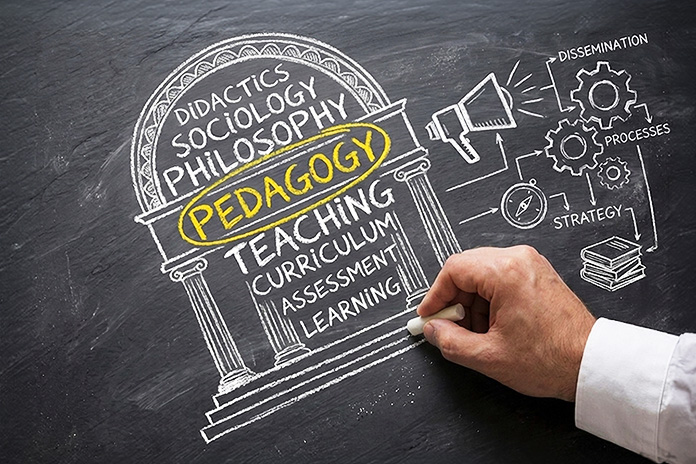
Education has always been the foundation of human progress. While the purpose of education—to develop knowledge, values, and critical thinking—has remained constant, the methods of teaching, teaching methods, modern teaching methods have undergone remarkable transformation. From the traditional chalk-and-talk classrooms to technology-enabled, Smart classrooms, learner-centered environments, pedagogy, modern pedagogy, evolution of pedagogy, evolution of pedagogy in education have evolved to meet the changing needs of society. Today’s classrooms are no longer confined to four walls; they are dynamic spaces where innovation, collaboration, and creativity shape the learning environment.
The Era of Chalk and Talk
For decades, the chalkboard symbolized education. Teachers stood at the front of the classroom, delivering lectures while students listened, took notes, and memorized information. This teacher-centered approach emphasized discipline, structured learning, and content mastery in the education system.
The traditional model offered several advantages. It allowed teachers to present concepts in a systematic manner, encouraged direct interaction, and required minimal resources. Many generations of learners benefited from this approach, building strong foundations in literacy, mathematics, and critical subjects.
However, as society evolved, this method revealed certain limitations. Passive learning often restricted creativity, problem-solving, and independent thinking. Students became receivers of information rather than active participants in the teaching and learning process.
The Shift Towards Student-Centered Learning
The twenty-first century has witnessed a significant shift in educational philosophy. Modern pedagogy recognizes that every learner is unique, possessing different learning styles, interests, and abilities. Consequently, teaching has moved from simply delivering information to facilitating meaningful learning experiences through student-centered learning.
Student-centered classrooms encourage learners to ask questions, participate in discussions, collaborate with peers, and apply knowledge in real-life situations. Teachers now function as facilitators, mentors, and guides rather than being the sole source of knowledge, highlighting the importance of student-centered learning.
Active learning strategies such as project-based learning, experiential learning, flipped classrooms, peer teaching, and collaborative activities have made education more engaging and relevant, demonstrating the benefits of active learning and the importance of experiential learning.
Technology as a Catalyst for Change
The rapid advancement of educational technology has revolutionized pedagogy. Digital tools have expanded learning opportunities beyond textbooks and classrooms. Smart boards, learning management systems, virtual classrooms, educational apps, artificial intelligence, and multimedia resources have enriched both teaching and learning experiences.
Technology enables personalized learning in education, allowing students to learn at their own pace while providing instant feedback. Interactive quizzes, simulations, educational videos, and digital learning environments enhance classroom learning and improve knowledge retention.
The rise of AI in education-powered educational tools, educational AI tools, has further transformed learning by assisting in content creation, language improvement, adaptive assessments, and personalized academic support. Rather than replacing teachers, these technologies empower educators to focus more on mentoring, creativity, and higher-order thinking, demonstrating the role of technology in education and how AI is transforming education.
The Changing Role of the Teacher
As pedagogy evolves, so does the role of educators. Today’s teachers are expected to be lifelong learners who continuously adapt to new methodologies and technological advancements, reflecting teacher education and skills required for modern teachers.
Modern educators serve multiple roles:
- Facilitator of learning
- Mentor and counselor
- Technology integrator
- Motivator and communicator
- Critical thinking coach
- Lifelong learner
The emphasis has shifted from “What should I teach?” to “How can I help students learn effectively?” through effective teaching strategies, teaching strategies, and learning strategies.
Skills Beyond the Syllabus
Education today extends beyond academic achievement. Institutions increasingly emphasize the development of essential life skills such as communication, collaboration, creativity, emotional intelligence, leadership, adaptability, and ethical decision-making.
These competencies prepare students not only for careers but also for responsible citizenship and lifelong learning. Modern pedagogy integrates these skills into classroom activities through presentations, group discussions, debates, projects, internships, and experiential learning opportunities, contributing to quality education.
Challenges in the New Era
Despite remarkable advancements, modern pedagogy also presents new challenges. Digital distractions, unequal access to technology, information overload, academic integrity concerns, and the growing dependence on artificial intelligence require thoughtful educational practices during the ongoing digital transformation in education.
Teachers must strike a balance between technology and human interaction. While digital tools enhance efficiency, empathy, mentorship, and meaningful classroom discussions remain irreplaceable aspects of quality education.
The Future of Pedagogy
The future classroom will likely become even more personalized, immersive, and interdisciplinary. Artificial intelligence, virtual reality, augmented reality, learning analytics, and adaptive educational platforms will continue to reshape how students acquire knowledge, defining the future of classroom education and the future of education.
However, regardless of technological advancements, the essence of education will remain deeply human. Inspiration, curiosity, compassion, and meaningful relationships between teachers and students will continue to define effective teaching and the future of teaching and learning.
Conclusion
The journey from chalkboards to Smart classrooms reflects more than technological progress—it represents a transformation in educational philosophy and educational transformation. Pedagogy has evolved from information delivery to learner empowerment, from memorization to innovation, and from teaching subjects to nurturing capable, confident, and compassionate individuals, highlighting the evolution of pedagogy and traditional vs modern pedagogy.
As educators, embracing this transformation does not mean abandoning traditional methods altogether. Instead, it involves blending the strengths of time-tested teaching practices with modern innovations to create inclusive, engaging, and future-ready learning environments, while realizing the benefits of smart classrooms.
Ultimately, the true success of pedagogy lies not in the tools we use but in the lives we inspire and the minds we empower.