
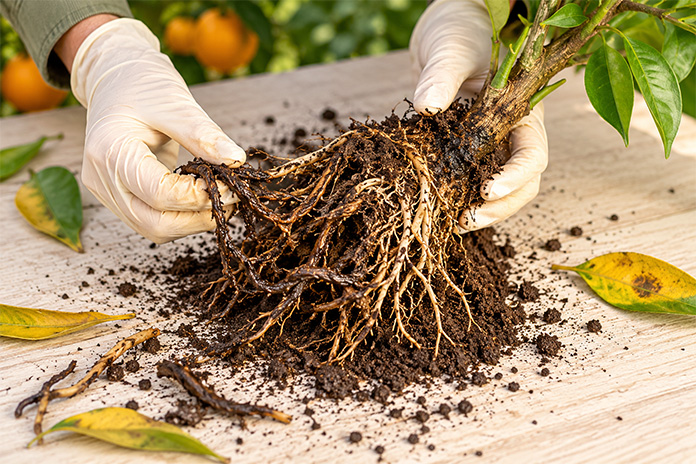
Kinnow mandarin is one of the most important citrus fruits cultivated in northern India and plays a major role in the livelihood of citrus growers. Punjab, Haryana, Rajasthan and adjoining regions are important Kinnow-growing areas, contributing significantly to Kinnow farming in India. In recent years, Kinnow root rot and associated decline of Kinnow plants have emerged as a serious concern in citrus orchards. Among various Kinnow orchard diseases, root rot is particularly difficult to manage because infection begins below the soil surface, while visible symptoms on the plant canopy often appear only after considerable damage has already occurred to the root system.
Citrus root rot is generally associated with soil- and root-inhabiting pathogens, with Phytophthora spp. being among the important pathogens associated with citrus root diseases. Phytophthora root rot in citrus is therefore an important concern for orchard health. Other soil-borne fungi may also contribute to root deterioration. The major causes of root rot in Kinnow include excessive irrigation, poor drainage, waterlogging, compacted soil and fluctuating soil moisture, which create favourable conditions for the development of soil-borne diseases in citrus. Under such conditions, feeder roots are damaged and the plant gradually loses its ability to absorb water and nutrients efficiently.
The early symptoms of root rot in Kinnow can easily be mistaken for nutritional deficiency or drought stress. Affected Kinnow plants may show yellowing of leaves, reduced shoot growth, sparse foliage, premature leaf fall and gradual drying of twigs. Fruit size and yield may also decline. Examination of the root system often reveals brown or darkened roots, rotting of feeder roots and a reduction in healthy fine roots. In advanced cases, Kinnow plant decline may become severe and the entire plant may eventually die.
The increasing occurrence of root rot in Kinnow is also linked with changing orchard conditions. Heavy rainfall followed by prolonged soil moisture, irregular irrigation practices and inadequate drainage can create favourable conditions for soil-borne pathogens. Continuous cultivation without adequate attention to soil health in citrus orchards may further disturb the beneficial microbial population in the rhizosphere. Mechanical injury to roots during orchard operations can also provide opportunities for infection. Movement of contaminated soil, irrigation water and infected nursery material can facilitate the spread of pathogens from one location to another.
Effective Kinnow disease management requires an integrated approach rather than dependence on a single treatment. Proper drainage management in citrus orchards and judicious irrigation management in Kinnow are among the most important preventive measures. Waterlogging prevention in orchards is particularly essential, as water should not be allowed to stagnate around the root zone or trunk. Healthy, disease-free planting material should be used, and declining plants should be examined carefully rather than assuming that yellowing is caused by nutrient deficiency. Improving soil health through appropriate organic matter management and maintaining favourable soil conditions can also support healthier root development. These measures form an important part of integrated root rot management and effective citrus disease management.
Biological control of root rot through agents such as Trichoderma spp. and beneficial rhizosphere microorganisms has considerable potential in managing soil-borne diseases by competing with pathogens, producing inhibitory compounds and improving the biological health of the rhizosphere. The use of Trichoderma for root rot management can therefore be considered as part of an integrated disease management strategy. Where chemical intervention is necessary, root rot treatment in Kinnow should preferably be based on proper diagnosis of the causal pathogen and locally recommended fungicides. Repeated use of the same mode of action should be avoided to reduce the risk of fungicide resistance.
The greatest challenge with Kinnow root rot is that the disease often remains hidden until the root system has suffered substantial damage. Regular inspection of declining plants, examination of roots and timely laboratory diagnosis can therefore play an important role in preventing severe losses. Farmers should pay particular attention to orchards with poor drainage or a history of declining trees.
Root rot of Kinnow should no longer be considered merely an isolated disease of individual trees. With changing environmental conditions, intensive orchard production and increasing soil-health problems, it has the potential to become an important constraint to sustainable Kinnow production. Protecting the root system through good drainage, balanced irrigation, healthy planting material, soil-health management, biological approaches and timely diagnosis is essential for maintaining productive and long-lived Kinnow orchards. Adopting these practices can also strengthen sustainable disease management in citrus farming.