
- Why B.Tech. (CSE – AI and Data Analytics) at LPU Stands Out
- What Makes LPU’s CSE – AI and Data Analytics Program Different?
- Industry-Focused Curriculum Designed for Emerging Technologies
- Hands-on Learning Through Live Projects, AI Applications, and Data Analytics Tools
- Industry Exposure Through Internships, Corporate Collaboration, and Expert Sessions
- Student Experience at LPU: Learning Beyond the Classroom
- Modern Infrastructure, AI Labs, and Advanced Learning Resources
- Faculty Mentorship and Academic Support for Career Development
- LPUNEST – Your Gateway to B.Tech. (CSE – AI and Data Analytics) Admission
- Interdisciplinary Learning and Industry Certifications for Competitive Advantage
- Innovation, Research, Entrepreneurship, and Startup Opportunities
- Placement Support and Career Readiness for AI and Data Analytics Graduates
- Future Scope of AI and Data Analytics Across Industries
- Final Thoughts: Why B.Tech. (CSE – AI and Data Analytics) at LPU Stands Out
- Frequently Asked Questions (FAQs)
Artificial Intelligence and Data Analytics are transforming how businesses operate, how organisations make decisions, and how technology solves real-world problems. From personalised digital experiences and intelligent healthcare solutions to fraud detection and predictive business models, these technologies are becoming essential across industries.
For students interested in programming, intelligent systems, emerging technologies, and data-driven innovation, pursuing B.Tech. (CSE – AI and Data Analytics) at LPU can provide an exciting academic pathway.
The AI and Data Analytics course at LPU brings together Computer Science Engineering fundamentals with specialised learning in Artificial Intelligence, Machine Learning, data analysis, and computational technologies.
Understanding why choose LPU for AI and Data Analytics involves looking beyond the degree itself. The university’s multidisciplinary academic environment, emphasis on practical learning, technical activities, and career-development opportunities can contribute to a well-rounded engineering education.
For students exploring the best AI and Data Analytics college in India, evaluating curriculum quality, industry exposure, infrastructure, faculty support, and career preparation is essential.
Why B.Tech. (CSE – AI and Data Analytics) at LPU Stands Out
Artificial Intelligence is no longer limited to research laboratories or large technology companies. Today, AI-powered systems help organisations understand customer behaviour, automate processes, identify patterns, and make informed decisions.
At the same time, Data Analytics enables businesses to transform large volumes of information into meaningful insights.
The LPU AI engineering program offers students an opportunity to explore the relationship between software development, intelligent algorithms, and data-driven decision-making.
Unlike a conventional approach focused primarily on programming concepts, an AI and analytics specialisation introduces students to technologies that connect computational thinking with practical applications.
Programme at a Glance
| Feature | Details |
| Programme | B.Tech. (CSE – AI and Data Analytics) |
| Academic Focus | Computer Science, Artificial Intelligence and Data Analytics |
| Core Learning Areas | Programming, AI, Machine Learning and Data Analysis |
| Learning Approach | Conceptual understanding and practical applications |
| Relevant Technologies | Python, SQL, Machine Learning and Data Visualisation |
| Potential Career Fields | AI Development, Data Analytics, Software Engineering and Business Intelligence |
The programme can be particularly relevant for students who want to combine traditional computer science knowledge with emerging digital technologies.
What Makes LPU’s CSE – AI and Data Analytics Program Different?
Choosing an engineering programme involves more than selecting a specialisation. Students should also consider how effectively the programme helps them develop technical knowledge, professional skills, and adaptability.
The LPU AI and Data Analytics program can appeal to students seeking an educational environment that connects foundational computer science concepts with modern technological applications.
Integration of Computer Science and AI
A strong understanding of programming, algorithms, databases, and software engineering provides the foundation for exploring Artificial Intelligence.
Students can gradually connect these concepts with Machine Learning, intelligent applications, and data analysis.
Focus on Emerging Technologies
A unique AI curriculum should encourage students to understand not only existing technologies but also the principles behind future developments.
Exposure to intelligent computing, automation, predictive analytics, and data processing can help students understand how technology evolves.
Practical Problem-Solving
An industry-oriented AI course becomes more meaningful when students learn how theoretical concepts relate to actual problems.
For example, analysing customer information, predicting demand, or identifying unusual financial transactions requires both programming knowledge and analytical thinking.
Broader Academic Exposure
LPU’s multidisciplinary environment can encourage interaction between students from engineering, management, sciences, and other disciplines.
Such exposure is useful because modern AI solutions frequently require collaboration across different professional fields.
Together, these elements make an AI and analytics specialization a relevant choice for students interested in a future-ready engineering program.
Industry-Focused Curriculum Designed for Emerging Technologies
An effective AI and Data Analytics curriculum should provide students with a balanced understanding of Computer Science Engineering and specialised computational technologies.
Before developing advanced AI applications, students need to understand programming logic, mathematics, algorithms, data structures, and database systems.
These subjects form the foundation for more advanced learning.
Important Academic Areas
| Learning Area | Importance |
| Programming Fundamentals | Develops computational thinking and coding abilities |
| Data Structures and Algorithms | Helps create efficient software solutions |
| Database Management | Supports structured data storage and retrieval |
| Artificial Intelligence | Introduces intelligent computational systems |
| Machine Learning | Helps systems identify patterns from data |
| Deep Learning | Explores advanced neural network techniques |
| Big Data Analytics | Supports analysis of large and complex datasets |
| Cloud Computing | Introduces scalable computing environments |
| Data Visualisation | Helps communicate findings through charts and dashboards |
The machine learning syllabus in a specialised engineering programme may introduce concepts such as supervised learning, unsupervised learning, model evaluation, and predictive modelling.
Similarly, deep learning explores how artificial neural networks can process complex information.
Big data analytics helps students understand the challenges involved in managing large datasets, while cloud computing introduces resources that support modern software and analytics systems.
An emerging technologies course becomes especially valuable when students learn how different tools and techniques connect.
For instance, a business intelligence system may combine cloud-based data storage, SQL queries, Machine Learning algorithms, and visual dashboards.
This integrated understanding is an important part of industry-focused engineering education.
Students should refer to LPU’s latest official semester-wise syllabus to confirm the subjects, electives, and practical components currently offered.
Did You Know?
|
Hands-on Learning Through Live Projects, AI Applications, and Data Analytics Tools
Understanding Artificial Intelligence requires more than memorising algorithms.
Students need opportunities to work with datasets, experiment with programming tools, test models, and interpret results.
Hands-on AI learning helps bridge the gap between theoretical understanding and technical implementation.
Practical Learning with Programming and Analytics Tools
Students exploring AI live projects and data analytics projects can develop familiarity with technologies commonly used in the industry.
| Technology | Potential Application |
| Python Programming | Data processing, automation and Machine Learning |
| SQL | Database querying and data management |
| TensorFlow | Neural network development and Deep Learning |
| Power BI | Business dashboards and interactive reports |
| Tableau | Data visualisation and analytical storytelling |
| Pandas | Data cleaning and manipulation |
| Scikit-learn | Machine Learning model development |
| Cloud Platforms | Data storage and scalable computing |
These are examples of industry-relevant technologies, not a confirmed list of compulsory tools in LPU’s current programme.
Examples of AI and Data Analytics Projects
- Customer Behaviour Analysis
Students can examine purchasing patterns to understand consumer preferences and identify business trends.
- Sales Prediction Models
Machine Learning algorithms can be used to analyse historical sales information and estimate future demand.
- Healthcare Data Analysis
Students can explore anonymised healthcare datasets to understand how analytical models support research and decision-making.
- Sentiment Analysis
Natural Language Processing techniques can help classify opinions expressed in customer reviews or social media content.
- Business Intelligence Dashboards
Using tools such as Power BI or Tableau, students can convert raw datasets into understandable visual reports.
Through such AI applications, students can practise problem identification, dataset preparation, programming, model testing, and presentation.
Practical AI training also teaches an important lesson: a technically advanced model is not necessarily useful unless its results are accurate, understandable, and relevant to the problem.
Industry Exposure Through Internships, Corporate Collaboration, and Expert Sessions
Artificial Intelligence and Data Analytics are continuously evolving. New software frameworks, business applications, and technical methods emerge regularly.
Therefore, students benefit from understanding how organisations apply these technologies in professional environments.
Industry exposure can help connect academic learning with workplace expectations.
Internship Opportunities
AI internships can introduce students to professional workflows involving software development, data analysis, automation, or Machine Learning.
Depending on the organisation and assigned responsibilities, internship activities may involve preparing datasets, writing code, generating reports, or assisting with technical projects.
Corporate Collaboration
Industry collaboration can support interactions between universities and professionals working on technological challenges.
Workshops, practical assignments, collaborative initiatives, and technical discussions may help students understand how academic concepts are used in business environments.
Expert Lectures and Technical Sessions
Expert lectures provide opportunities to learn about current technological developments and industry expectations.
Professionals may discuss topics such as Generative AI, cloud-based analytics, responsible AI, cybersecurity, and emerging employment trends.
Industry-Integrated Learning
The purpose of industry-integrated learning is to help students develop an understanding of how technical knowledge is applied outside classrooms.
At LPU, students can explore university-supported career-development activities, internship guidance, and relevant industry interactions.
The availability of specific AI industry partnerships, corporate training programmes, and internships should be confirmed through the latest university information.
Student Experience at LPU: Learning Beyond the Classroom
Engineering education becomes more engaging when students participate in activities that encourage creativity, experimentation, and collaboration.
Student life at LPU offers a broader campus environment in which learners can explore academic interests alongside extracurricular development.
Coding Competitions
Programming competitions encourage students to improve logical reasoning, coding speed, and problem-solving abilities.
AI Hackathons
AI hackathons challenge participants to develop solutions within a limited period.
Students may work in teams to design prototypes, analyse information, or create intelligent applications.
Innovation Clubs
Student-led technical communities and innovation clubs can provide opportunities to exchange ideas, collaborate on projects, and explore emerging technologies.
Technical Events
Workshops, seminars, coding challenges, and other technical events can help students interact with peers who share similar interests.
Project-Based Learning
Project-based learning allows students to apply classroom concepts to defined technical challenges.
It also encourages communication, teamwork, planning, and independent thinking.
An active AI student community can be valuable because technology is often learned through discussion, experimentation, and shared problem-solving.
These aspects of experiential learning can help students become more confident while developing both technical and interpersonal skills.
Did You Know?An AI model can perform well during training but still struggle with unfamiliar information. This problem is known as overfitting. Learning how to evaluate models using appropriate datasets and performance metrics is an important part of practical Machine Learning education. It demonstrates why testing and analytical judgement matter as much as writing code. |
Modern Infrastructure, AI Labs, and Advanced Learning Resources
Artificial Intelligence and Data Analytics involve computational experimentation, programming, data processing, and technical collaboration.
Access to suitable academic resources can therefore make a meaningful difference to the learning experience.
LPU’s broader engineering ecosystem includes computing and technology-enabled learning facilities that support academic and practical activities.
Infrastructure and Learning Resources
| Resource | Learning Purpose |
| Computing Laboratories | Programming and software development |
| Data Analytics Learning Resources | Dataset processing and analytical exercises |
| Digital Learning Platforms | Access to academic materials and technical resources |
| Smart Classrooms | Technology-supported teaching |
| Project Development Spaces | Teamwork and practical experimentation |
| Research Facilities | Technical investigation and innovation activities |
| Library Resources | Access to books, journals and academic references |
Importance of Computing Facilities
Programming and analytics activities require students to work with development environments, databases, and computational tools.
For advanced applications, access to suitable processing resources becomes especially important.
AI labs at LPU, data analytics labs, and other relevant computing resources should be evaluated based on their current equipment, software access, and student availability.
Prospective students interested in high-performance computing labs or specialised AI infrastructure should confirm the precise facilities offered for their programme.
Modern infrastructure is most beneficial when combined with meaningful assignments, guided experimentation, and consistent student participation.
Faculty Mentorship and Academic Support for Career Development
Artificial Intelligence can initially appear challenging because it combines programming, mathematics, statistics, and computational concepts.
Faculty guidance helps students develop an organised understanding of these subjects.
Academic Mentorship
Faculty mentorship can help students clarify difficult concepts, strengthen programming fundamentals, and identify areas requiring improvement.
Technical Project Guidance
Students working on Machine Learning or Data Analytics projects may need assistance with dataset selection, algorithm design, model evaluation, and technical documentation.
Research Mentorship
Research mentorship can introduce interested students to scientific inquiry, literature reviews, experimentation, and analytical reporting.
Career Guidance
Career guidance helps students understand how their academic interests may relate to professional opportunities.
Students may benefit from discussions about technical skills, internship preparation, higher education, and industry expectations.
The role of AI faculty at LPU is particularly important in helping students connect fundamental computing knowledge with specialised applications.
A supportive academic environment can encourage personalized learning, independent exploration, and continuous skill development.
LPUNEST – Your Gateway to B.Tech. (CSE – AI and Data Analytics) Admission
Students planning to pursue engineering at LPU should understand the university’s admission and scholarship framework.
LPUNEST, or Lovely Professional University National Entrance and Scholarship Test, forms part of LPU’s admission and scholarship processes for applicable programmes.
For students interested in B.Tech AI admission, understanding the latest examination requirements is an important step.
Important Admission Considerations
| Admission Component | What Students Should Check |
| Programme Eligibility | Required qualifying subjects and minimum marks |
| LPUNEST | Current entrance examination requirements |
| Application Process | Registration and documentation |
| Examination Schedule | Applicable dates and examination phases |
| Scholarship Eligibility | Relevant scholarship categories and conditions |
| Programme Fees | Current tuition and other applicable charges |
| Admission Confirmation | University instructions and deadlines |
LPUNEST Scholarship Opportunities
The LPUNEST scholarship framework can provide eligible students with financial benefits based on applicable university criteria.
Students exploring scholarships for engineering should review the latest scholarship categories, eligibility requirements, and continuation conditions.
Scholarship availability and amounts may vary according to university policies.
Before completing an LPU admission application, students should verify the current eligibility, examination schedule, scholarship provisions, and fee structure.
Interdisciplinary Learning and Industry Certifications for Competitive Advantage
Artificial Intelligence increasingly connects with business management, healthcare, finance, manufacturing, cybersecurity, and other professional fields.
This makes interdisciplinary learning particularly useful.
A student who understands Machine Learning and financial operations, for example, may be better positioned to explore applications involving fraud detection or financial risk analysis.
Similarly, combining AI with healthcare knowledge can help students understand medical data analysis and diagnostic-support technologies.
Role of Industry Certifications
AI certifications and other professional certifications can help students demonstrate familiarity with particular tools, platforms, or technical concepts.
Some relevant certification pathways include:
| Certification Area | Skills Students May Explore |
| Google AI Certification | AI fundamentals and related applications |
| Microsoft AI Certification | AI services and Microsoft technologies |
| AWS Certification | Cloud computing and AI-related services |
| Azure AI Certification | Cloud-based Artificial Intelligence |
| Data Analytics Certification | Data preparation, analysis and visualisation |
| Python Certification | Programming fundamentals and applications |
These are examples of external learning pathways. They are not presented as certifications automatically included in LPU’s degree.
Students should verify the current certification names, eligibility requirements, fees, and availability directly with the relevant providers.
Why Certifications Matter
Certifications can complement academic learning by helping students explore specific technologies in greater detail.
However, employers also evaluate practical skills, projects, communication, problem-solving, and technical understanding.
Combining an AI and Data Analytics degree with relevant independent learning can help students build a more comprehensive professional profile.
Did You Know?Data preparation can be one of the most important stages of an AI project. Incomplete records, inconsistent formatting, duplicate entries, and biased datasets can affect the quality of analytical results. Before developing a Machine Learning model, professionals often spend considerable effort understanding, cleaning, and validating data. This is why data handling skills are essential in AI and analytics education. |
Innovation, Research, Entrepreneurship, and Startup Opportunities
Artificial Intelligence offers opportunities to develop solutions for challenges across different industries.
Students interested in AI innovation can explore how programming, analytics, and computational models may contribute to new products and services.
Research Opportunities
AI research may involve investigating new algorithms, improving model performance, studying intelligent applications, or examining ethical considerations.
Student research projects can encourage systematic thinking and a deeper understanding of emerging technologies.
Entrepreneurship at LPU
Students interested in entrepreneurship at LPU can explore the university’s broader innovation and entrepreneurial ecosystem.
Developing a technology-based business requires more than an innovative idea. Students must understand customer needs, technical feasibility, market demand, and financial sustainability.
AI Startup Opportunities
Potential AI startup opportunities include:
- Intelligent educational applications
- Automated business reporting tools
- Customer support solutions
- Predictive maintenance applications
- Personalised learning platforms
- Data-driven agricultural solutions
- AI-enabled productivity tools
Startup Incubation
A supportive innovation ecosystem can help students learn about business planning, prototype development, pitching, and product improvement.
Students considering an incubation center or startup-support programme should verify current mentoring, eligibility, funding, and incubation provisions.
Exposure to innovation can be useful even for students who do not plan to launch businesses immediately, because it encourages initiative, creativity, and independent problem-solving.
Placement Support and Career Readiness for AI and Data Analytics Graduates
Career preparation is an important consideration for students choosing an engineering programme.
The demand for relevant skills varies by industry, employer, location, and economic conditions. Therefore, students should focus on building strong technical foundations rather than relying solely on the popularity of a specialisation.
LPU placement support and career-development initiatives can help students prepare for recruitment processes and professional opportunities.
Important Components of Career Readiness
Technical Preparation: Programming, algorithms, databases, Machine Learning, and analytical methods.
Project Portfolio: Demonstrating practical knowledge through completed technical projects.
Internship Experience: Understanding workplace expectations and professional workflows.
Communication Skills: Explaining technical findings and collaborating with teams.
Interview Preparation: Practising coding problems, technical discussions, and professional interviews.
Potential Career Opportunities
| Career Role | Relevant Skills |
| Data Analyst | SQL, Python, statistics and visualisation |
| Machine Learning Engineer | Programming, ML algorithms and model development |
| AI Developer | Software development and AI integration |
| Business Intelligence Analyst | Dashboards, SQL and reporting |
| Data Engineer | Databases, data pipelines and cloud technologies |
| Software Engineer | Programming, algorithms and software design |
| Junior Data Scientist | Statistics, Python and predictive modelling |
| Analytics Consultant | Business analysis and analytical communication |
Some specialised roles, particularly in advanced Machine Learning and Data Science, may require additional experience or postgraduate education.
AI Recruiter Companies and Campus Placements
Students evaluating AI placements should examine verified programme-specific placement information, employer participation, internship opportunities, and the types of roles offered.
University-wide recruitment figures should not be treated as guaranteed outcomes for a particular specialisation.
Ultimately, career readiness depends on academic preparation, technical competence, practical experience, individual performance, and available employment opportunities.
Future Scope of AI and Data Analytics Across Industries
The future of AI is closely connected with the increasing use of digital technologies across industries.
Organisations are exploring ways to use data and intelligent systems to improve efficiency, reduce operational risks, and support decision-making.
As a result, AI career scope and data analytics careers extend beyond conventional software companies.
AI Applications Across Industries
| Industry | AI and Data Analytics Applications |
| Healthcare | Medical data analysis and diagnostic support |
| Finance | Fraud detection and risk assessment |
| Manufacturing | Predictive maintenance and quality monitoring |
| Retail | Customer insights and demand forecasting |
| Education | Adaptive learning and educational analytics |
| Agriculture | Crop monitoring and yield prediction |
| Transportation | Route optimisation and traffic analysis |
| E-commerce | Recommendation systems and customer analytics |
AI in Healthcare
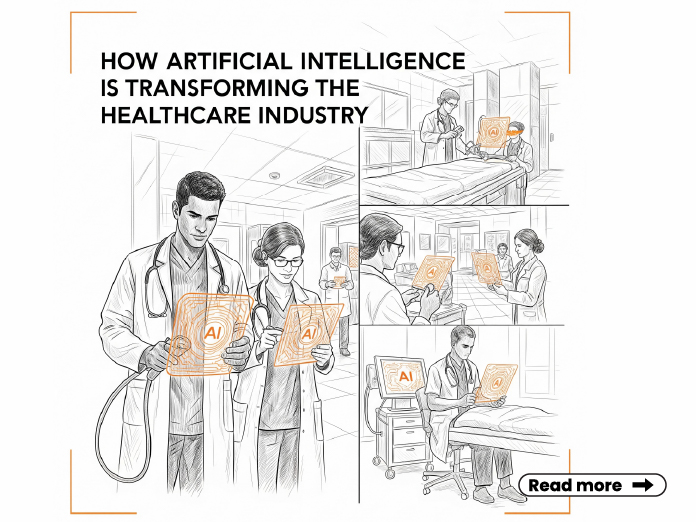
AI in healthcare can support medical research, image analysis, patient-data interpretation, and administrative efficiency.
However, healthcare applications require careful validation, privacy protection, and appropriate professional oversight.
AI in Finance
AI in finance is used to examine transactions, identify unusual patterns, support risk analysis, and improve customer services.
AI in Manufacturing
AI in manufacturing can help organisations analyse equipment performance, improve production processes, and monitor quality.
Business Analytics Careers
Business analytics careers combine technical analysis with commercial understanding.
Professionals in this field may examine sales performance, operational efficiency, customer trends, and business risks.
Emerging Areas for Graduates
Students interested in machine learning careers and other AI jobs may explore emerging fields such as:
- Generative Artificial Intelligence
- Natural Language Processing
- Computer Vision
- Responsible AI
- Predictive Analytics
- Intelligent Automation
- Cloud-Based Analytics
- AI-Assisted Cybersecurity
Because technologies change rapidly, continuous learning will remain important throughout a professional career.
Did You Know?AI applications are not limited to technology companies. A hospital analysing patient trends, a retailer forecasting inventory, and a manufacturer monitoring machinery may all use related analytical techniques. The difference lies in the data, objectives, regulations, and professional knowledge required for each application. This makes interdisciplinary understanding valuable for students pursuing AI and Data Analytics. |
Final Thoughts: Why B.Tech. (CSE – AI and Data Analytics) at LPU Stands Out
Choosing the right engineering programme requires careful consideration of academic interests, technical opportunities, campus facilities, and long-term career goals.
The B.Tech. (CSE – AI and Data Analytics) at LPU offers a pathway for students interested in combining Computer Science Engineering with Artificial Intelligence and analytical technologies.
The university’s broader academic environment, practical learning opportunities, technical activities, faculty guidance, and career-development support can contribute to students’ professional preparation.
For learners interested in programming, intelligent applications, Machine Learning, data analysis, and emerging digital technologies, this specialisation can be worth considering.
A career-focused engineering program should help students develop not only technical knowledge but also adaptability, communication, creativity, and independent problem-solving abilities.
Students searching for the best AI engineering course should compare current curricula, learning resources, industry exposure, verified placement information, and overall costs before making a decision.
With consistent effort, practical experience, and continuous skill development, an AI and Data Analytics degree can provide a foundation for exploring opportunities across technology-driven industries.
For students who want to understand data, develop intelligent applications, and participate in the evolving world of technology, AI engineering at LPU presents an educational pathway worth exploring.
Frequently Asked Questions (FAQs)
1. What is B.Tech. (CSE – AI and Data Analytics) at LPU?
It is an engineering programme that combines Computer Science fundamentals with specialised learning in Artificial Intelligence, Machine Learning, and Data Analytics. Students can develop programming, computational, and analytical skills relevant to modern technology applications.
2. What makes AI and Data Analytics different from regular CSE?
A conventional CSE programme provides broad exposure to computer science subjects, while an AI and Data Analytics specialisation places additional emphasis on intelligent systems, Machine Learning, predictive modelling, and data-driven applications. The exact differences depend on the university’s curriculum.
3. Is B.Tech. AI and Data Analytics a good career option?
It can be a suitable choice for students interested in programming, mathematics, data analysis, and intelligent technologies. Career opportunities depend on technical skills, practical experience, industry requirements, and continuous learning.
4. Does LPU provide practical learning opportunities in AI and Data Analytics?
LPU’s engineering environment supports practical and project-oriented learning. Students should review the latest programme curriculum to understand the specific laboratories, projects, tools, and training activities available.
5. Which programming languages are useful for AI and Data Analytics?
Python and SQL are particularly useful for data analysis and Machine Learning. Knowledge of other programming languages, algorithms, and database technologies can also strengthen a student’s technical foundation.