Mechanical Engineering is no longer limited to conventional machines, manufacturing systems, and mechanical design. Modern industries are increasingly combining mechanical systems with Artificial Intelligence, Machine Learning, automation, robotics, data analytics, digital manufacturing, and intelligent technologies.
This shift has created an interesting pathway for students who enjoy core engineering but also want to understand how data and intelligent algorithms can make machines and manufacturing systems smarter.
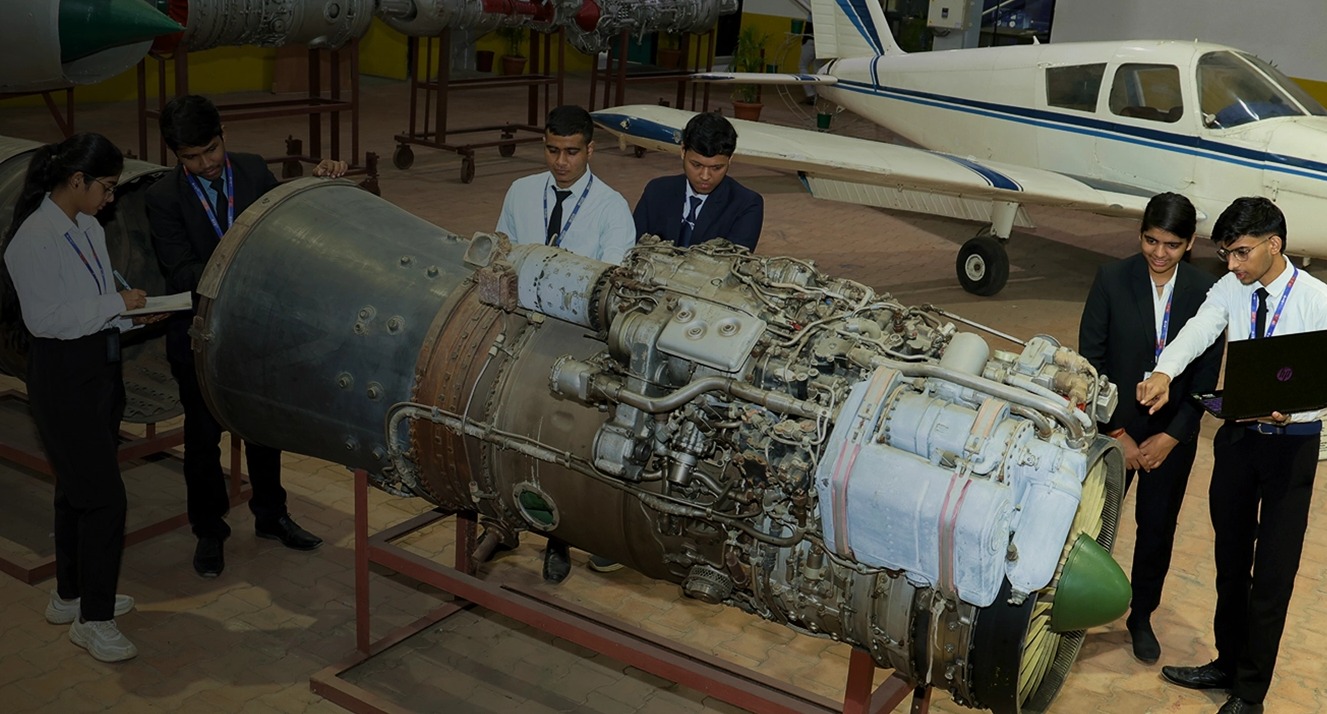
B.Tech. (ME – Artificial Intelligence and Machine Learning) combines Mechanical Engineering fundamentals with exposure to AI and ML concepts. At LPU, the programme is offered through the Mechanical Engineering discipline and is designed for students interested in exploring the intersection of machines and intelligent technologies.
But is this the right engineering course for you?
The answer depends on your interests, strengths, learning style, and career goals. If you enjoy mathematics, machines, technology, programming, data, automation, and problem-solving, this programme can be worth exploring.
Understanding the B.Tech. (Artificial Intelligence and Machine Learning) Program: An Overview
The B.Tech. (ME – Artificial Intelligence and Machine Learning) programme brings together traditional Mechanical Engineering concepts with emerging digital technologies.
Students can develop a foundation in Mechanical Engineering while exploring how Artificial Intelligence and Machine Learning can be applied to areas such as manufacturing, product design, predictive maintenance, automation, robotics, engineering analytics, and intelligent systems.
The learning journey can expose students to areas such as:
- Mechanical Engineering fundamentals
- Engineering mathematics
- Programming
- Artificial Intelligence
- Machine Learning
- Data analytics
- Automation
- Robotics
- Smart manufacturing
- Predictive maintenance
- Intelligent systems
- Digital manufacturing
Programme at a Glance
| Programme Aspect | What Students Can Explore |
| Mechanical Engineering | Machines, design, manufacturing and engineering systems |
| Artificial Intelligence | Intelligent decision-making and engineering applications |
| Machine Learning | Learning patterns and predictions from data |
| Programming | Developing computational solutions |
| Data Analytics | Understanding and interpreting engineering data |
| Automation | Intelligent and automated engineering processes |
| Practical Learning | Labs, projects, simulations and applications |
The interdisciplinary nature of the programme makes it different from a conventional Mechanical Engineering degree as students can explore both physical engineering systems and intelligent digital technologies.
Who Should Choose B.Tech. (Artificial Intelligence and Machine Learning)?
You do not need to be an AI expert or an experienced programmer before joining the programme.
However, curiosity about technology and a willingness to learn both Mechanical Engineering and computational concepts can be helpful.
You may consider B.Tech. (ME – Artificial Intelligence and Machine Learning) if you:
- Enjoy mathematics and analytical thinking
- Are curious about how machines work
- Have an interest in Artificial Intelligence
- Want to learn programming
- Like solving technical problems
- Are interested in data and algorithms
- Enjoy automation and smart technologies
- Want to explore robotics
- Prefer practical and project-based learning
- Are curious about future engineering technologies
Ask Yourself
Before selecting this course, think about a few questions.
Do I enjoy understanding machines and technology?
Am I willing to learn programming along with Mechanical Engineering?
Do I like mathematics and logical problem-solving?
Would I enjoy analysing data and identifying patterns?
Am I interested in automation, intelligent machines, or smart manufacturing?
If most of your answers are yes, this programme may align well with your interests.
Is Artificial Intelligence and Machine Learning Suitable for Students Interested in Technology and Innovation?
AI and ML are closely connected with innovation because they allow machines and software systems to analyse information, recognise patterns, make predictions, and support decisions.
In Mechanical Engineering, these technologies can be explored in areas such as:
- Smart manufacturing
- Robotics
- Predictive maintenance
- Product design optimisation
- Industrial automation
- Quality monitoring
- Digital twins
- Engineering simulations
- Intelligent machines
- Data-driven manufacturing
For example, data collected from industrial machines can potentially be analysed using Machine Learning techniques to identify patterns associated with equipment performance.
This makes the programme relevant for students interested in both engineering and future technology.
Did You Know?AI is not limited to software companies. Artificial Intelligence and Machine Learning are increasingly explored in Mechanical Engineering for applications such as product design, manufacturing, predictive maintenance, robotics, digital twins, automation, and engineering simulation. |
What Skills Are Required to Succeed in Artificial Intelligence and Machine Learning Engineering?
Studying AI and ML requires a combination of technical, mathematical, analytical, and professional skills.
Analytical Thinking
Students need to understand problems, examine available information, and identify possible solutions.
Programming Skills
Programming is an important part of AI and ML. Python programming is widely used for working with data, algorithms, Machine Learning models, and AI applications.
Mathematics
Mathematics provides the foundation for many Machine Learning concepts.
Students may encounter areas connected with probability, statistics, calculus, matrices, and optimization.
Problem-Solving
AI projects often begin with a problem rather than a ready-made solution. Students need to experiment with different approaches and evaluate their results.
Data Analysis
Understanding data is essential because Machine Learning models depend heavily on the quality and relevance of the information used.
Communication and Teamwork
Real engineering projects often involve teams from different technical backgrounds. Students should therefore develop communication and collaborative skills alongside technical knowledge.
Academic Learning and Technical Concepts Covered in B.Tech. (Artificial Intelligence and Machine Learning)
The programme can introduce students to Mechanical Engineering fundamentals alongside AI and ML concepts.
Depending on the curriculum, students may explore topics connected with:
- Engineering mathematics
- Mechanical systems
- Manufacturing
- Programming
- Data structures
- Artificial Intelligence
- Machine Learning
- Data analytics
- Predictive modelling
- Neural networks
- Deep Learning
- Computer Vision
- Automation
- Robotics
- Smart manufacturing
The exact AI and ML syllabus can change as the curriculum is reviewed, so students should always check the latest university curriculum before admission.
Important Technical Areas
| Technical Area | Why It Matters |
| Programming | Helps develop computational solutions |
| Mathematics | Provides the foundation for AI and ML concepts |
| Machine Learning | Helps systems learn patterns from data |
| Data Analytics | Helps interpret engineering information |
| Deep Learning | Supports more advanced intelligent applications |
| Computer Vision | Helps machines interpret visual information |
| Mechanical Engineering | Provides knowledge of physical engineering systems |
| Automation | Connects intelligent technologies with industrial processes |
How Programming, Data, and Algorithms Come Together in Artificial Intelligence and Machine Learning
One of the most interesting parts of AI is understanding how different technical elements work together.
Consider a manufacturing machine fitted with sensors.
The sensors may continuously collect information about temperature, vibration, speed, or other operating conditions.
Data provides information about the machine.
Programming helps process and organise that information.
Machine Learning algorithms can analyse patterns within the data.
A trained model may then be used to support predictions or engineering decisions.
This basic relationship between Python for AI, data analytics, Machine Learning algorithms, neural networks, predictive analytics, and engineering knowledge forms the foundation of many intelligent engineering applications.
Did You Know?A Machine Learning system does not simply become intelligent on its own. The quality of the data, algorithm selection, model training, testing, and interpretation can all influence how useful the final system becomes. |
Career Opportunities After B.Tech. (Artificial Intelligence and Machine Learning)
The combination of Mechanical Engineering and AI can expose students to several career directions.
Depending on their skills, electives, projects, internships, certifications, and further education, graduates can explore opportunities connected with:
- AI-enabled engineering
- Machine Learning applications
- Engineering data analytics
- Intelligent manufacturing
- Predictive maintenance
- Industrial automation
- Robotics
- Digital manufacturing
- Smart systems
- Research and development
- Data-driven engineering
Students who build deeper programming and AI skills may also explore technology-oriented opportunities, subject to the requirements of individual employers.
Potential Career Areas
| Career Area | Possible Application |
| Smart Manufacturing | Intelligent and connected production |
| Predictive Maintenance | Using data to understand equipment condition |
| Engineering Analytics | Analysing technical and operational data |
| Industrial Automation | Automating engineering and manufacturing processes |
| Robotics | Intelligent machines and automated systems |
| AI Applications | Applying intelligent technologies to engineering problems |
| Digital Manufacturing | Data-driven production and engineering |
| R&D | Exploring new engineering and AI technologies |
Career outcomes can vary considerably based on skills, employer, location, internships, projects, experience, and market conditions.
Challenges Students May Face While Studying Artificial Intelligence and Machine Learning and How to Overcome Them
Like any technical engineering programme, AI and ML can be challenging.
Mathematics Can Feel Difficult
Machine Learning involves mathematical and statistical concepts.
How to overcome it:
Strengthen your fundamentals gradually and connect mathematical concepts with practical AI examples.
Programming May Be New
Students coming from school may initially find programming unfamiliar.
How to overcome it:
Start with programming fundamentals and practise consistently rather than trying to learn advanced AI immediately.
AI Has Many Concepts
Algorithms, statistics, data, Machine Learning, engineering, and programming can seem overwhelming when studied together.
How to overcome it:
Follow a learning roadmap and master fundamentals before moving towards advanced topics.
Projects May Not Work the First Time
Models may produce unexpected results and code may contain errors.
How to overcome it:
Treat experimentation, debugging, and repeated testing as part of the learning process.
AI education rewards consistency and curiosity more than trying to understand everything at once.
How B.Tech. (Artificial Intelligence and Machine Learning) Builds Industry-Ready Skills
Employers generally look beyond academic marks alone.
Practical exposure can help students demonstrate what they can actually build, analyse, or solve.
Industry-ready AI education can involve:
- AI projects
- Machine Learning projects
- Engineering laboratories
- Data analysis assignments
- Programming practice
- Hackathons
- Technical competitions
- Internships
- Industry interaction
- Workshops
- Research projects
- Portfolio development
A student portfolio containing meaningful AI projects, Machine Learning models, engineering applications, internships, and technical achievements can provide evidence of practical learning.
Career Expectations vs Industry Reality in Artificial Intelligence and Machine Learning Fields
AI is popular, but students should approach the field with realistic expectations.
Completing an AI and ML degree does not automatically guarantee a particular job title or salary.
Employers may look for:
- Strong programming fundamentals
- Mathematics and statistics
- Data handling
- Machine Learning knowledge
- Problem-solving
- Engineering fundamentals
- Practical projects
- Internship experience
- Communication skills
- Ability to learn new technologies
Similarly, a student should not expect to become an AI engineer simply by studying theoretical subjects.
AI career growth is strongly influenced by continuous skill development.
Building projects, practising coding, working with real datasets, completing internships, and learning relevant tools can help strengthen a graduate’s profile.
Future Scope of Artificial Intelligence and Machine Learning in Emerging Industries
The future scope of AI and ML extends across many industries.
AI-related technologies are being explored in:
- Manufacturing
- Automotive systems
- Healthcare
- Finance
- Logistics
- Energy
- Robotics
- E-commerce
- Transportation
- Education
- Smart infrastructure
Emerging areas include:
- Generative AI
- Intelligent automation
- Digital twins
- Autonomous systems
- Smart manufacturing
- Predictive maintenance
- Computer Vision
- AI-powered robotics
- Industry 5.0
- Data-driven engineering
For Mechanical Engineering students, the intersection between AI and manufacturing can be particularly interesting as industrial systems become increasingly connected and data-driven.
Did You Know?A digital twin can represent a physical system in a digital environment. When combined with sensor data, analytics, simulation, and AI-related techniques, such systems can support monitoring, experimentation, and engineering decision-making. |
Why Choose B.Tech. (Artificial Intelligence and Machine Learning) at LPU?
For students considering B.Tech. (ME – Artificial Intelligence and Machine Learning) at LPU, one of the programme’s key attractions is its interdisciplinary nature.
Students can explore Mechanical Engineering alongside areas connected with:
- Artificial Intelligence
- Machine Learning
- Data analytics
- Automation
- Smart manufacturing
- Robotics
- Digital technologies
- Engineering applications
LPU’s broader Mechanical Engineering ecosystem also provides opportunities for practical learning through laboratories, projects, technical activities, innovation, and industry exposure.
The university’s School of Mechanical Engineering highlights industry associations with organisations such as Siemens, ASME, SAE, Tech Mahindra, Bosch, and Autodesk.
Students interested in admission should also explore LPUNEST, applicable scholarships, programme eligibility, current fees, and admission deadlines before applying.
Decision Checklist: Is B.Tech. (Artificial Intelligence and Machine Learning) the Right Choice for You?
Before deciding “Should I choose Artificial Intelligence and Machine Learning?”, consider what you genuinely enjoy.
This programme may suit you if you:
Enjoy mathematics and logical thinking
Are interested in Mechanical Engineering
Want to learn programming
Find AI and Machine Learning interesting
Enjoy solving technical problems
Are curious about data
Like automation and intelligent machines
Want to explore smart manufacturing
Enjoy project-based learning
Are willing to keep learning new technologies
Think carefully if you:
Strongly dislike mathematics
Have no interest in programming
Do not enjoy technical problem-solving
Are choosing AI only because it is currently popular
Expect a high salary simply because your degree contains “AI”
Do not want to continuously update your technical skills
There is no single best AI engineering course for every student.
The right choice depends on your interests, strengths, career goals, programme curriculum, practical exposure, learning environment, and willingness to develop skills consistently.
Final Words
So, is B.Tech. (ME – Artificial Intelligence and Machine Learning) the right course for you?
If you enjoy machines, mathematics, data, programming, Artificial Intelligence, automation, and solving practical engineering problems, this interdisciplinary programme can be worth exploring.
It can introduce you to the fundamentals of Mechanical Engineering while helping you understand how AI, Machine Learning, analytics, and intelligent technologies are influencing modern engineering.
At Lovely Professional University (LPU), students can explore this combination through an engineering environment that includes practical learning, projects, technical activities, industry interaction, innovation opportunities, and career-oriented skill development.
However, the most important factor is your own interest.
Choose AI and ML because you are genuinely curious about how intelligent technology works—not simply because AI is trending.
If you are willing to learn continuously, build projects, strengthen mathematics and programming, and understand how AI can interact with real engineering systems, B.Tech. (ME – Artificial Intelligence and Machine Learning) at LPU can be an interesting pathway to explore.
Frequently Asked Questions (FAQs)
Q1. What is B.Tech. (ME – Artificial Intelligence and Machine Learning)?
It is an interdisciplinary B.Tech programme that combines Mechanical Engineering education with exposure to Artificial Intelligence, Machine Learning, programming, data analytics, automation, and related technologies.
Q2. Who should study B.Tech. (ME – Artificial Intelligence and Machine Learning)?
Students interested in machines, AI, mathematics, programming, data, automation, smart manufacturing, and problem-solving can consider this programme.
Q3. Do I need programming knowledge before joining?
Previous programming experience can be helpful, but students can develop programming skills through coursework, practice, projects, and technical activities.
Q4. Is mathematics important for Artificial Intelligence and Machine Learning?
Yes. Mathematics and statistics support many concepts used in Machine Learning, data analysis, algorithms, optimisation, and model development.
Q5. What careers can I explore after the programme?
Depending on individual skills and employer requirements, graduates can explore opportunities related to AI-enabled engineering, Machine Learning applications, smart manufacturing, engineering analytics, industrial automation, predictive maintenance, robotics, digital manufacturing, and R&D.