Robotics and automation are changing the way modern industries design, manufacture, transport, and deliver products and services. From industrial robots and automated production lines to autonomous machines and smart manufacturing systems, robotics is becoming an important part of the evolving engineering landscape.
A B.Tech. (Robotics and Automation) combines engineering fundamentals with robotics, automation, control systems, programming, electronics, embedded systems, sensors, and other emerging technologies. If you enjoy understanding how machines work, solving technical problems, building systems, and experimenting with new technologies, a robotics engineering course can be an interesting career choice.
But is robotics and automation really the right option for you? The answer depends on your interests, academic strengths, willingness to learn technical concepts, and career goals. This guide explores what the course involves, the skills you need, possible challenges, career opportunities, and why B.Tech. (Robotics and Automation) at LPU can be considered by students interested in this field.
Understanding the B.Tech. (Robotics and Automation) Program: An Overview
A B.Tech. in Robotics and Automation is an engineering degree focused on the design, development, programming, operation, and application of robotic and automated systems.
Unlike a conventional engineering program that may focus primarily on one engineering discipline, robotics brings together concepts from multiple areas. Students may work with mechanical systems, electronics, programming, sensors, control systems, embedded technologies, and automation.
The field is particularly relevant to industries adopting smart machines and automated processes.
Key Areas of Learning
- Robotics fundamentals
- Automation systems
- Programming
- Sensors and actuators
- Embedded systems
- Control systems
- Electronics
- Industrial automation
- Internet of Things (IoT)
- Artificial Intelligence and intelligent systems
- Machine vision
- Smart manufacturing
The combination makes a robotics and automation program suitable for students who want to understand how different engineering technologies work together to create intelligent and automated solutions.
| Program Aspect | What Students Explore |
| Robotics | Robot design, programming and applications |
| Automation | Automated processes and industrial systems |
| Programming | Coding and computational problem-solving |
| Electronics | Circuits, sensors and electronic components |
| Control Systems | Monitoring and controlling machines |
| Embedded Systems | Hardware-software integration |
| Emerging Technologies | AI, IoT and intelligent automation |
Who Should Choose B.Tech. (Robotics and Automation)?
The right engineering course depends largely on your interests and strengths. You do not necessarily need to know everything about robotics before entering the program. However, having curiosity about technology and machines can make the learning experience more engaging.
A robotics course for students can be a good choice if you:
- Enjoy technology and engineering
- Are curious about how machines work
- Like solving technical problems
- Enjoy mathematics and logical reasoning
- Are interested in programming
- Want to experiment and build things
- Have an interest in automation
- Enjoy working on practical projects
- Want to explore emerging technologies
- Are comfortable learning across multiple engineering domains
Is Robotics Engineering Right for Me?
Ask yourself a few questions:
Do I enjoy understanding how machines work?
Am I interested in programming and technology?
Do I like solving practical problems?
Am I willing to learn mathematics, electronics, and engineering concepts?
Would I enjoy working on projects and experiments?
If most of your answers are yes, robotics engineering may be worth exploring as an engineering career choice.
Is Robotics and Automation Suitable for Students Interested in Technology and Innovation?
Robotics is closely connected with technological innovation. Students interested in creating new systems, improving existing processes, or experimenting with machines may find the field particularly engaging.
A robotics engineer can work on solutions that combine hardware and software. For example, an automated system may use sensors to collect information, a controller to process it, software to make decisions, and mechanical components to perform an action.
This makes robotics engineering for innovators an interdisciplinary field.
Students interested in areas such as:
- Artificial intelligence
- Automation
- Smart manufacturing
- Autonomous systems
- IoT
- Embedded technologies
- Industrial robotics
- Intelligent machines
may find robotics and automation particularly interesting.
Did You Know?Robotics is no longer limited to manufacturing. Robots and automated technologies are being explored across healthcare, agriculture, logistics, automotive engineering, aerospace, and other sectors. |
What Skills Are Required to Succeed in Robotics and Automation Engineering?
A successful robotics engineer needs a combination of technical knowledge and problem-solving ability.
You do not need to master every skill before starting the degree. These abilities can be developed progressively through academic learning, laboratory work, projects, and practice.
Important Robotics Engineering Skills
- Programming Skills
Programming helps engineers control robots, process data, develop applications, and automate tasks. - Analytical Thinking
Robotics involves analysing systems, identifying problems, and understanding how different components interact. - Problem-Solving
Robotic systems can involve complex technical challenges. Engineers need to identify the cause of a problem and develop suitable solutions. - Mathematics
Mathematical concepts are useful for understanding areas such as robotics, control systems, modelling, and automation. - Electronics Knowledge
Sensors, controllers, circuits, and electronic components are important parts of robotic systems. - Mechanical Understanding
Knowledge of mechanical systems helps students understand robot structures, movement, mechanisms, and physical components. - Curiosity and Continuous Learning
Robotics is an evolving field. Students need to remain willing to learn new technologies and tools.
Academic Learning and Technical Concepts Covered in B.Tech. (Robotics and Automation)
The robotics engineering syllabus typically combines concepts from several engineering and technology areas. The exact subjects and curriculum structure can vary by university and programme.
Students pursuing robotics and automation may encounter concepts related to:
- Robotics fundamentals
- Automation engineering
- Control systems
- Sensors and actuators
- Embedded systems
- Electronics
- Programming
- Industrial automation
- Mechatronics
- IoT
- Artificial intelligence
- Machine vision
The interdisciplinary nature of the curriculum helps students understand both the individual components and the complete system.
| Technical Area | Why It Matters in Robotics |
| Robotics Fundamentals | Understanding robot structures and operation |
| Control Systems | Controlling machine behaviour |
| Sensors | Collecting information from the environment |
| Actuators | Creating physical movement |
| Embedded Systems | Connecting hardware and software |
| Programming | Controlling and developing robotic applications |
| Automation | Improving efficiency through automated processes |
| IoT | Connecting machines and devices |
How Programming, Electronics, and Mechanical Systems Come Together in Robotics?
One of the most interesting aspects of robotics is that it brings different engineering disciplines together.
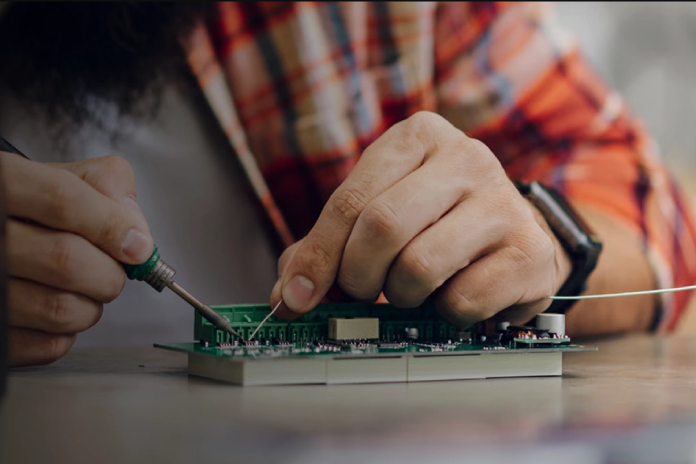
Consider a simple automated robot. Its mechanical structure enables movement. Sensors collect information. Electronics process signals. An embedded controller manages operations, while programming tells the system how to respond.
This is where mechatronics and multidisciplinary engineering become important.
Students may encounter technologies and concepts such as:
- Robotics programming
- Embedded programming
- Electronics in robotics
- Mechanical systems
- Sensors and actuators
- Microcontrollers
- PLC programming
- IoT
- Programming languages used in engineering applications
For students interested in coding, Python for robotics and other programming technologies can provide opportunities to connect software with physical systems.
Did You Know?A modern robotic system may involve mechanical components, electronics, sensors, control systems, software, and communication technologies working together as a single system. |
Career Opportunities After B.Tech. (Robotics and Automation)
One of the major reasons students consider robotics is its connection with several technology-driven industries.
After completing a robotics engineering degree, graduates can explore roles depending on their technical skills, specialization, project experience, and industry requirements.
Potential career options include:
- Robotics Engineer
- Automation Engineer
- Robotics Software Engineer
- Control Systems Engineer
- Industrial Automation Engineer
- Embedded Systems Engineer
- Robotics Technician
- Systems Engineer
- IoT Engineer
- Robotics Researcher
Career Domains
| Career Domain | Possible Work Area |
| Robotics Engineering | Robot design, programming and integration |
| Industrial Automation | Automated production systems |
| Control Systems | Machine control and monitoring |
| Embedded Systems | Hardware-software integration |
| IoT | Connected machines and devices |
| Research & Development | New robotic technologies |
| Smart Manufacturing | Intelligent and automated production |
The actual robotics engineer salary can vary considerably depending on factors such as job role, experience, technical skills, employer, location, and industry. Students should therefore focus on developing strong technical capabilities rather than selecting the course based only on salary expectations.
Challenges Students May Face While Studying Robotics and Automation and How to Overcome Them
Robotics can be exciting, but it can also be challenging because it combines multiple technical disciplines.
Common Challenges
Learning Multiple Technologies
Students may need to understand programming, electronics, mechanical concepts, and control systems.
Programming Difficulties
Students who are new to programming may initially find coding challenging.
Mathematical Concepts
Certain robotics and control applications require mathematical reasoning and analytical thinking.
Troubleshooting
A robotic system may not work correctly because of a software issue, sensor problem, electrical connection, or mechanical fault.
Keeping Up with Technology
New tools and technologies continue to emerge, making continuous learning important.
How Can Students Overcome These Challenges?
- Practise programming regularly
- Work on small projects
- Strengthen mathematics fundamentals
- Participate in laboratory activities
- Learn through experimentation
- Ask faculty and mentors for guidance
- Participate in technical competitions
- Read about new robotics technologies
- Work collaboratively with other students
The key is not to expect everything to become easy immediately. Robotics learning challenges can become opportunities to develop stronger technical and problem-solving skills.
How B.Tech. (Robotics and Automation) Builds Industry-Ready Skills?
The difference between understanding robotics theoretically and actually working with robotic systems can be significant. Practical learning helps students understand how concepts work in real situations.
An industry-ready robotics education can involve:
- Laboratory experiments
- Robotics projects
- Automation applications
- Programming assignments
- Technical workshops
- Internships
- Industry interactions
- Hackathons
- Capstone projects
- Research activities
At LPU, the learning environment combines academic education with practical exposure through laboratories, projects, workshops, competitions, and industry interactions. The reference material similarly highlights practical learning, technical clubs, competitions, innovation activities, and industry workshops as part of the LPU learning ecosystem.
| Learning Activity | Skill Developed |
| Robotics Projects | Practical implementation |
| Laboratory Work | Technical experimentation |
| Internships | Industry exposure |
| Hackathons | Problem-solving and teamwork |
| Technical Competitions | Innovation and application |
| Research Projects | Advanced technical knowledge |
Career Expectations vs Industry Reality in Robotics and Automation Fields
Students sometimes assume that completing a robotics degree automatically means they will immediately design advanced humanoid robots or autonomous vehicles.
The industry reality is broader.
Robotics professionals can work on areas such as:
- Industrial automation
- Robot programming
- Machine integration
- Embedded systems
- Control systems
- Testing and maintenance
- Manufacturing automation
- Software development
- Research and development
The robotics job market includes different types of roles, and students may begin their careers in positions that allow them to gradually specialise.
What Employers Look For
Employers may value:
- Strong engineering fundamentals
- Programming knowledge
- Practical project experience
- Problem-solving abilities
- Communication skills
- Teamwork
- Adaptability
- Understanding of industry tools
Therefore, students should think beyond the degree title and actively build skills, projects, internships, and technical portfolios during college.
Future Scope of Robotics and Automation in Emerging Industries
The future scope of robotics engineering is closely connected with the growth of automation, smart manufacturing, artificial intelligence, IoT, and digital transformation.
Industries are increasingly exploring automated technologies for improving productivity, precision, safety, and operational efficiency.
Emerging Areas
- Industry 4.0
- Smart manufacturing
- Industrial automation
- AI-powered robotics
- Autonomous systems
- Warehouse automation
- Healthcare robotics
- Agricultural robotics
- Automotive automation
- Logistics technologies
- Intelligent infrastructure
As industries adopt more connected and automated systems, professionals who understand robotics and related technologies may find opportunities across diverse sectors.
Did You Know?The growth of Industry 4.0 is increasing the importance of connected machines, automation, data-driven decision-making, and intelligent manufacturing systems. |
Why Choose B.Tech. (Robotics and Automation) at LPU?
For students looking specifically for robotics engineering at LPU, the university provides an ecosystem focused on practical and industry-oriented engineering education.
Students can benefit from learning opportunities involving:
- Robotics laboratories
- Practical projects
- Technical workshops
- Industry interactions
- Innovation activities
- Competitions
- Hackathons
- Research opportunities
- Career preparation
The reference material describes LPU’s engineering ecosystem in terms of industry-aligned curriculum, modern robotics laboratories, live projects, industry mentorship, and placement support.
LPU Advantage
| LPU Feature | Potential Student Benefit |
| Industry-Oriented Learning | Understanding industry requirements |
| Robotics Labs | Hands-on experimentation |
| Projects | Practical technical experience |
| Industry Interaction | Exposure to professional practices |
| Innovation Activities | Creativity and problem-solving |
| Career Support | Professional preparation |
Students interested in admission should also check the latest programme eligibility, admission requirements, LPUNEST information, scholarship criteria, and deadlines through LPU’s official admission resources.
Decision Checklist: Is B.Tech. (Robotics and Automation) the Right Choice for You?
Before choosing the programme, consider the following checklist.
You may be a good fit if you:
☑ Enjoy technology and engineering
☑ Are curious about robots and automated machines
☑ Like solving technical problems
☑ Are willing to learn programming
☑ Are comfortable with mathematics and logical thinking
☑ Want to work on practical projects
☑ Enjoy experimentation and innovation
☑ Are interested in electronics and mechanical systems
☑ Want to explore Industry 4.0 technologies
☑ Are willing to continuously upgrade your skills
Think carefully if you:
- Dislike technical subjects completely
- Are unwilling to learn programming
- Do not enjoy practical experimentation
- Prefer a field with little interaction with technology
- Are choosing robotics only because it sounds trendy
The goal is not to find an engineering course that is universally “best.” The better question is whether the course matches your interests, strengths, learning style, and career goals.
Final Words
A B.Tech. (Robotics and Automation) can be an exciting choice for students who are interested in technology, engineering, machines, programming, automation, and innovation.
The field requires students to understand multiple areas and apply them together. From programming and electronics to mechanical systems, sensors, control technologies, and intelligent automation, robotics offers a multidisciplinary learning experience.
Students should also understand that robotics is not only about building robots. It includes industrial automation, embedded systems, control engineering, smart manufacturing, autonomous systems, and many other applications.
At Lovely Professional University (LPU), practical learning, laboratories, projects, industry exposure, innovation activities, and career-focused initiatives can help students build a foundation for technology-driven careers.
So, is robotics engineering a good career choice? It can be-especially if you are genuinely curious about technology, enjoy solving problems, and are ready to continuously learn.
Frequently Asked Questions (FAQs)
Q1. Is B.Tech. (Robotics and Automation) a good career choice?
Yes, it can be a suitable career option for students interested in robotics, automation, engineering, programming, intelligent systems, and emerging technologies.
Q2. Who should study Robotics and Automation?
Students who enjoy technology, engineering, mathematics, programming, machines, innovation, and practical problem-solving may consider this programme.
Q3. Is Robotics and Automation difficult?
The programme can be challenging because it combines several technical areas, including programming, electronics, mechanical systems, mathematics, and control systems. Regular practice and project-based learning can help students manage these challenges.
Q4. What skills are needed for Robotics and Automation?
Important skills include programming, analytical thinking, mathematics, problem-solving, electronics knowledge, mechanical understanding, teamwork, and continuous learning.
Q5. What career opportunities are available after B.Tech. Robotics and Automation?
Graduates can explore careers as Robotics Engineers, Automation Engineers, Control Systems Engineers, Embedded Systems Engineers, Robotics Software Engineers, IoT Engineers, and researchers.
Q6. What is the future scope of Robotics and Automation in India?
The field has applications in manufacturing, automotive, logistics, healthcare, agriculture, aerospace, smart infrastructure, and other technology-driven industries.
Q7. Does Robotics and Automation involve programming?
Yes. Programming is an important part of robotics because software is used to control robots, process sensor data, automate operations, and develop intelligent applications.
Q8. Is Robotics and Automation related to AI?
Yes. Robotics can work together with AI, machine learning, computer vision, and intelligent systems. However, robotics and automation also include several areas beyond AI, such as mechanical systems, electronics, sensors, actuators, and control systems.
Q9. Why choose B.Tech. (Robotics and Automation) at LPU?
LPU provides an engineering learning ecosystem that includes practical learning, laboratories, projects, technical activities, industry exposure, innovation opportunities, and career preparation.
Q10. What should I consider before choosing Robotics and Automation?
Consider your interest in technology, willingness to learn programming and engineering concepts, interest in practical projects, problem-solving ability, and long-term career goals before choosing the programme.