
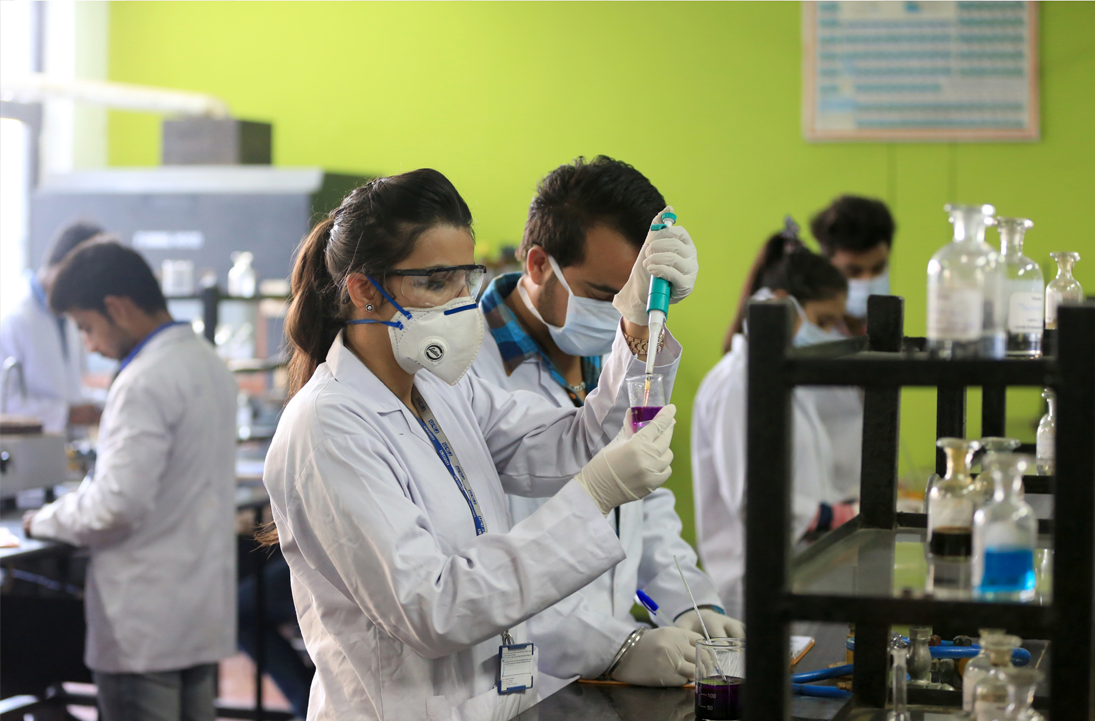
As demand for healthcare services and pharmaceutical innovation continues to grow, skilled professionals in drug development, quality assurance, and clinical research are more sought after than ever. Consequently, an increasing number of students are choosing to build their foundation in pharmaceutical sciences through programmes such as the B.Pharm. degree.
However, before choosing a B.Pharm. programme, it is essential to understand what the course involves, the eligibility requirements, fee structure, and the career opportunities it offers. To help, this guide covers everything you need to know about pursuing a B.Pharm. degree in India.
What is a B.Pharm. (Bachelor of Pharmacy) Degree?
B.Pharm. is a four-year undergraduate degree programme that focuses on the study of pharmaceutical sciences, including drug development, formulation, quality control, and the safe usage of medicines. It builds a strong foundation in subjects such as pharmacology, pharmaceutics, medicinal chemistry, and pharmacognosy, while also covering healthcare systems and regulatory practices that govern the profession.
The programme combines classroom learning with practical laboratory training, enabling students to understand how medicines are researched, tested, manufactured, and distributed. As pharmacy is a regulated profession, the degree also prepares students for licensing requirements and professional practice.
In addition to industry roles, B.Pharm. serves as a stepping stone for higher studies such as M.Pharm., Pharm.D., or specialised fields like clinical research and regulatory affairs.
Why Pursue B.Pharm.?
Pursuing a B.Pharm. degree offers a structured pathway into the pharmaceutical and healthcare sectors, professions that play a direct role in improving and protecting public health. The programme not only builds scientific knowledge but also prepares students for a range of meaningful professional roles.
Develop strong pharmaceutical knowledge
Go beyond textbook science and understand how drugs are discovered, formulated, and tested, and how they interact with the human body at a molecular level.
Explore diverse career pathways
A B.Pharm. degree opens doors across pharmaceutical companies, hospitals, clinical research organisations, regulatory agencies, and public health institutions, offering far more career flexibility than most undergraduate science programmes.
Gain practical and laboratory experience
The programme places significant emphasis on hands-on training, giving students direct experience in drug formulation, quality testing, and laboratory procedures that are central to pharmaceutical practice.
Enter a profession with regulatory importance
Pharmacy is a licensed, regulated profession. Trained pharmacists and pharmaceutical scientists play a critical role in ensuring that medicines reaching patients are safe, effective, and compliant with national and international standards.
Build a foundation for advanced studies
B.Pharm. creates a strong academic base for those wishing to specialise further, whether through M.Pharm., Pharm.D., MBA in Pharmaceutical Management, or certifications in clinical research and regulatory affairs.
B.Pharm. Course Duration & Structure
The B.Pharm. programme is designed to provide a comprehensive understanding of pharmaceutical sciences, combining scientific theory with practical training. The course equips students with the knowledge and skills required to work across drug development, manufacturing, quality assurance, clinical research, and healthcare services. Here are some of the key aspects of the programme:
B.Pharm. Duration
The B.Pharm. programme in India is a four-year undergraduate degree, divided into eight semesters. The curriculum progresses from foundational science subjects in the early semesters to advanced pharmaceutical topics, research, and industry-oriented training in the later years.
Core subjects
During the programme, students study a range of subjects that build their understanding of pharmaceutical sciences and healthcare. These commonly include:
- Pharmaceutics
- Pharmaceutical Chemistry
- Pharmacology
- Pharmacognosy and Phytochemistry
- Pharmaceutical Analysis
- Medicinal Chemistry
- Clinical Pharmacy and Therapeutics
- Pharmacy Practice and Hospital Pharmacy
- Pharmaceutical Jurisprudence and Ethics
- Biopharmaceutics and Pharmacokinetics
These subjects help students develop a strong scientific foundation in drug discovery, formulation, and patient care, along with an understanding of the regulatory and ethical frameworks governing the profession.
Practical Learning
B.Pharm. programmes place significant emphasis on hands-on training to prepare students for real-world pharmaceutical practice. Students typically engage in:
- Laboratory sessions in pharmaceutical chemistry and analysis
- Drug formulation and compounding practicals
- Hospital and community pharmacy internships
- Research projects and dissertations
- Industrial visits and exposure to manufacturing facilities
These components help bridge the gap between classroom learning and professional application.
Specialisations and electives
In the later years of the programme, many universities offer students the opportunity to explore specific areas of interest through elective subjects or specialised tracks. Some commonly offered areas include:
- Clinical Research and Pharmacovigilance
- Pharmaceutical Marketing and Management
- Quality Assurance and Regulatory Affairs
- Industrial Pharmacy
- Herbal and Natural Product Sciences
These electives enable students to develop focused expertise in areas aligned with their career goals and the evolving needs of the pharmaceutical industry.
Eligibility Criteria for B.Pharm.
The eligibility criteria for admission to a B.Pharm. programme may vary slightly across universities; however, the general requirements remain largely consistent across India.
| Criteria | Typical Requirement |
| Academic Qualification | 10+2 (or equivalent) from a recognised board with a science background |
| Required Subjects | Physics and Chemistry (compulsory) along with Biology or Mathematics |
| Minimum Marks | 50%–60% aggregate or above (may vary by university and category) |
| Age Criteria | Minimum age requirement as specified by the institution or regulatory authorities |
| Additional Requirements | Entrance exam scores, merit-based selection, or counselling depending on the institution |
At Lovely Professional University, admission is based on academic performance along with entrance and scholarship tests such as LPUNEST, which also provides opportunities for scholarship.
Entrance Exams for B.Pharm.
Admission to B.Pharm. programmes in India can be based on merit, entrance examinations, or a combination of both, depending on the institution. While many universities offer direct admission based on 10+2 performance, several reputed institutions require candidates to qualify through national, state, or university-level entrance tests.
Some of the commonly accepted entrance exams for B.Pharm. include:
| Entrance Exam | Conducting Body | Accepted By | Level |
| CUET (Common University Entrance Test) | National Testing Agency (NTA) | Central universities and participating institutions | National |
| State-Level Entrance Exams (e.g., MHT CET, KCET, WBJEE) | State Education Authorities | State universities and affiliated colleges | State |
| University-Level Entrance Exams | Individual Universities | Specific universities offering B.Pharm. programmes | University |
It is important to note that admission requirements can vary significantly across institutions. Some universities, including Lovely Professional University, offer admission based on academic performance along with entrance or scholarship tests such as LPUNEST, providing flexibility as well as opportunities for financial assistance.
Before applying, students should carefully review the admission criteria of their preferred institutions, including eligibility, entrance requirements, and selection process.
B.Pharm. Course Fee in India
The fee structure for B.Pharm. programmes in India varies widely depending on the type of institution, its infrastructure, and the academic and industry exposure it offers. Government and public institutions generally have lower tuition fees due to subsidised education, while private universities may have higher fees reflecting advanced facilities and industry-oriented training.
When evaluating programme costs, it is important to look beyond tuition fees alone and consider the overall value offered, including laboratory infrastructure, faculty expertise, placement support, and industry exposure.
The table below provides an indicative overview of B.Pharm. course fees across different types of institutions in India:
| Institution Type | Typical Fee Range (Complete Programme) | Examples |
| Government Colleges | ₹40,000 – ₹1.5 lakh | State universities, govt colleges |
| Central Universities | ₹50,000 – ₹2 lakh | Select central institutions |
| Deemed Universities | ₹2 lakh – ₹6 lakh | Private deemed institutions |
| Private Universities | ₹4 lakh – ₹10 lakh | LPU, Amity, etc. |
Note: Fee figures are indicative and may vary based on institution, location, and facilities offered. Applicants should refer to official university sources for current details.
In addition to tuition fees, students should also account for expenses such as examination fees, hostel accommodation, and study materials.
Many universities, including Lovely Professional University, offer scholarships, entrance-based fee concessions, and financial aid options that can significantly reduce the overall cost of the programme if applied for early.
Career Opportunities After B.Pharm.
One of the most common questions students have is what career paths a B.Pharm. degree actually opens up. The scope is broader than many expect. Graduates can find opportunities across pharmaceutical manufacturing, healthcare, research, and regulatory sectors, as well as in emerging areas such as clinical research and pharmacovigilance.
Some of the common career options after B.Pharm. include:
| Job Role | Key Responsibilities | Industries |
| Pharmacist | Dispensing medicines, advising patients, and ensuring safe medication use | Hospitals, retail pharmacies, healthcare centres |
| Medical Representative | Promoting pharmaceutical products and engaging with doctors and healthcare providers | Pharmaceutical companies, healthcare sector |
| Quality Control / QA Executive | Testing drugs, ensuring quality standards, and maintaining compliance | Pharmaceutical manufacturing, biotech companies |
| Production Executive | Managing drug manufacturing, formulation, and packaging processes | Pharma manufacturing units, production facilities |
| Clinical Research Associate | Assisting in clinical trials, data collection, and protocol compliance | Clinical research organisations (CROs), pharma companies |
| Drug Inspector | Monitoring drug safety, inspecting manufacturing units, and ensuring legal compliance | Government agencies, regulatory bodies |
| Pharmacovigilance Associate | Tracking adverse drug reactions and ensuring drug safety | Pharma companies, healthcare organisations |
| Research Scientist | Conducting research on drug development and formulation | R&D labs, pharmaceutical companies, biotech firms |
These roles span industries such as pharmaceutical companies, hospitals, clinical research organisations (CROs), regulatory bodies, and healthcare services. Some universities, including Lovely Professional University, support students through internships, industry exposure, and placement assistance to help them transition into these roles more effectively.
Higher Studies and Professional Pathways After B.Pharm.
A B.Pharm. degree also serves as a strong foundation for students who wish to pursue advanced education or specialise further within the pharmaceutical and healthcare domain. Many graduates choose to enhance their qualifications to improve career prospects, deepen expertise, or move into specialised roles.
Some of the popular options include:
M.Pharm. (Master of Pharmacy)
A postgraduate degree that allows students to specialise in areas such as pharmacology, pharmaceutics, pharmaceutical chemistry, or quality assurance.
Pharm.D (Doctor of Pharmacy)
A professional doctoral programme focused on clinical practice, patient care, and hospital pharmacy, ideal for those interested in direct healthcare roles.
MBA (Pharmaceutical Management / Healthcare Management)
Suitable for students aiming to move into managerial, administrative, or business-oriented roles within the pharmaceutical and healthcare sectors.
Clinical Research and Regulatory Affairs Courses
Short-term or postgraduate programmes that prepare students for specialised roles in drug development, clinical trials, and compliance.
International Certifications
Qualifications such as regulatory affairs certifications or specialised clinical research credentials can open up global career opportunities.
At Lovely Professional University, students have access to workshops, mentorship programmes, and dedicated resources to help them prepare for higher studies and professional certifications alongside their B.Pharm. programme.
Typical Salaries After B.Pharm. in India
One of the key considerations for students pursuing B.Pharm. is the earning potential after graduation. Salaries can vary depending on factors such as the job role, industry, location, level of experience, and additional qualifications or skills.
At the entry level, B.Pharm. graduates can expect moderate starting salaries, with steady growth as they gain experience or pursue specialisations. The table below provides an indicative overview of salary ranges across common roles:
| Job Role | Entry-Level Salary (Per Annum) | Mid-Level Salary (Per Annum) |
| Pharmacist | ₹2.5 lakh – ₹4.0 lakh | ₹4.5 lakh – ₹7.0 lakh |
| Medical Representative | ₹2.5 lakh – ₹5.0 lakh | ₹5.0 lakh – ₹8.0 lakh |
| Quality Control / QA Executive | ₹3.0 lakh – ₹5.0 lakh | ₹6.0 lakh – ₹10.0 lakh |
| Production Executive | ₹3.0 lakh – ₹5.5 lakh | ₹6.0 lakh – ₹9.0 lakh |
| Clinical Research Associate | ₹3.0 lakh – ₹6.0 lakh | ₹6.0 lakh – ₹12.0 lakh |
| Pharmacovigilance Associate | ₹3.5 lakh – ₹6.0 lakh | ₹6.0 lakh – ₹10.0 lakh |
Note: Salaries are indicative and may vary based on organisation, location, and individual skill set.
Graduates who pursue higher education such as M.Pharm., MBA, or specialised certifications often see a significant increase in earning potential and access to more advanced roles. Additionally, experience in reputable organisations or niche domains such as clinical research and regulatory affairs can further enhance salary growth over time.
Top Colleges for B.Pharm. in India
Choosing the right college for B.Pharm. is an important decision, as factors such as faculty expertise, laboratory infrastructure, industry exposure, and placement support can significantly influence both learning outcomes and career opportunities.
The table below highlights some of the well-regarded institutions offering B.Pharm. programmes in India:
| University | Location | Type | Key Highlights |
| National Institute of Pharmaceutical Education and Research (NIPER) | Multiple locations | Government | Premier institute for pharmaceutical education and research in India |
| Jamia Hamdard | Delhi | Deemed | Renowned for pharmacy programmes and strong research focus |
| Punjab University | Chandigarh | Government | Well-established pharmacy department with strong academic reputation |
| Institute of Chemical Technology (ICT) | Mumbai | Government | Highly regarded for chemical and pharmaceutical sciences |
| Birla Institute of Technology (BIT Mesra) | Ranchi | Deemed | Strong technical foundation with focus on research and innovation |
| Delhi Pharmaceutical Sciences and Research University (DPSRU) | Delhi | Government | Specialised pharmacy university with industry-relevant curriculum |
| Lovely Professional University | Punjab | Private | Modern labs, industry exposure, and strong placement support |
When evaluating colleges, students should consider not just rankings, but also factors such as curriculum design, practical exposure, internship opportunities, and placement outcomes.
Why Pursue B.Pharm. at Lovely Professional University?
For students considering private universities for B.Pharm., Lovely Professional University offers a programme designed to balance academic depth with practical exposure. While evaluating any institution, it is important to look at how well the curriculum aligns with industry requirements and how effectively it prepares students for real-world roles.
Industry-Aligned Curriculum
The programme covers core pharmaceutical subjects while incorporating contemporary areas relevant to the evolving healthcare and pharmaceutical sectors.
Modern Laboratory Infrastructure
Students gain hands-on experience through well-equipped laboratories that support practical learning in formulation, testing, and analysis.
Experienced Faculty
Learning is supported by faculty members with academic expertise and industry exposure, helping bridge the gap between theory and practice.
Internships and Industry Exposure
Opportunities such as industrial visits, internships, and guest lectures help students understand real-world pharmaceutical operations.
Placement Support
The university provides structured placement assistance, including training and industry connections, to help students transition into professional roles.
Scholarship Opportunities
Through entrance and scholarship tests such as LPUNEST, students may be eligible for fee concessions based on performance.
Conclusion
Choosing to pursue B.Pharm. is an important decision that can shape your academic journey and long-term career prospects in the pharmaceutical and healthcare sectors. While the degree provides a strong foundation in pharmaceutical sciences and opens up diverse opportunities across drug development, healthcare, research, and regulatory roles, the overall value of the programme depends significantly on the quality of education, practical exposure, and career support offered by the institution.
At Lovely Professional University, the B.Pharm. programme is designed to build strong subject knowledge while emphasising hands-on learning, industry relevance, and career readiness. With a structured curriculum, modern laboratory infrastructure, experienced faculty, and exposure to real-world pharmaceutical practices, students are equipped to navigate evolving opportunities in the healthcare and pharmaceutical domains.
If you are considering building your academic and professional future through B.Pharm., choosing the right university can make a meaningful difference in your outcomes. To learn more about the B.Pharm. programme at LPU or explore admission details, you may connect with the university admissions team:
Phone: +91 1824 517000 / +91 1824 404404
Frequently Asked Questions (FAQs)
Can I pursue B.Pharm. without Biology in 12th?
Yes, many universities allow students with Mathematics in place of Biology, provided they have studied Physics and Chemistry as core subjects.
Is B.Pharm. a good career option?
B.Pharm. offers stable and diverse career opportunities across pharmaceutical companies, healthcare services, and research organisations, making it a viable long-term career choice.
What is the difference between B.Pharm. and D.Pharm.?
B.Pharm. is a four-year undergraduate degree with broader career scope, while D.Pharm. is a two-year diploma focused mainly on pharmacy practice.
Is a licence required after B.Pharm.?
Yes, graduates who want to practise as a registered pharmacist in India must obtain a licence from the State Pharmacy Council.
Can I open a pharmacy after B.Pharm.?
Yes, after obtaining the required licence and meeting regulatory requirements, B.Pharm. graduates can open and operate a pharmacy.
What are the best specialisations after B.Pharm.?
Popular options include pharmacology, pharmaceutics, pharmaceutical chemistry, and clinical research, depending on career goals.
Can I go abroad after B.Pharm.?
Yes, students can pursue higher studies or certifications abroad, though some countries may require additional qualifying exams or credentials.
How important are internships during B.Pharm.?
Internships are highly valuable as they provide practical exposure, industry understanding, and improve employability.
What skills do students develop during a B.Pharm. programme?
B.Pharm. programme helps students develop a range of industry-relevant skills, including attention to detail, analytical thinking, scientific understanding, and knowledge of regulatory standards, all of which are essential for a successful career in the pharmaceutical and healthcare sectors.
Does the choice of college matter when pursuing B.Pharm.?
Yes, factors such as faculty, infrastructure, industry exposure, and placement support can significantly impact learning outcomes and career opportunities.