The media landscape has undergone a significant transformation over the past decade. From traditional print journalism to digital platforms and the creator economy, the way information is produced and consumed continues to evolve. This shift has created exciting opportunities for students who are interested in storytelling, public communication, and media-driven careers.
As a result, many students today actively explore a journalism course after 12th to build a career in this dynamic field. Whether your interest lies in news reporting, digital media, or content creation, structured education plays a crucial role in shaping your journey.
In this blog, we will explore journalism course details, types of programmes available, eligibility, career opportunities, and how you can start a career in journalism after 12th.
Journalism Course After 12th: An Overview
|
What is a Journalism Course?
A media and journalism course is designed to train students in gathering, analysing, and presenting information across different media platforms. It combines theoretical knowledge with practical skills required to work in print, electronic, and digital media.
Students enrolled in journalism and mass communication courses after 12th are introduced to various formats such as:
- News reporting and editing
- Broadcasting for television and radio
- Digital content creation
- Multimedia storytelling
The scope of journalism and mass communication courses extends beyond traditional reporting. They also include areas such as advertising, public relations, and digital media, making it a foundational course that opens up a versatile career path.
Why Choose Journalism After 12th?
Choosing a journalism course after 12th is about far more than selecting a degree. It is about stepping into a field that connects people, ideas, events, and institutions. Journalism plays an important role in how society understands current affairs, culture, public issues, and everyday life. For students who are curious, expressive, and eager to engage with the world around them, it can be an exciting and meaningful career path.
- Expanding Media Landscape: Journalism today extends beyond newspapers and television to digital platforms, podcasts, and social media. This shift has created diverse roles across reporting, content creation, and digital strategy.
- Dynamic and Non-Routine Career: Journalism offers variety, from reporting and interviews to scripting and production. It suits students who prefer an active, intellectually engaging career over routine desk roles.
- Purpose-Driven Profession: Journalists play a key role in shaping public understanding and highlighting important issues. It is a career where your voice and storytelling can create real impact.
- Growth of Digital Opportunities: Digital and independent media have expanded career options into areas such as multimedia journalism, content creation, and social media. Students are no longer limited to traditional newsroom roles.
- Transferable Skills Across Industries: Journalism builds skills such as writing, research, communication, and critical thinking. These skills open pathways into fields like PR, advertising, publishing, and corporate communication.
In short, choosing journalism after Class 12 makes sense for students who are observant, expressive, socially aware, and interested in how stories shape the world. With the right academic environment, practical training, and industry exposure, a media and journalism course can become the foundation for a career that is both creatively fulfilling and professionally versatile.
Types of Journalism and Media Courses After 12th
Students exploring journalism and media courses after 12th will come across multiple programme options, each designed for different levels of depth, career focus, and industry readiness. Understanding how these courses differ helps in choosing the right path for a long-term career in journalism after 12th.
- B.A. Journalism: A B.A. Journalism course focuses specifically on the core principles and practices of journalism, including reporting, editing, news writing, and media ethics. It is designed for students who want to build a strong foundation in news-focused roles such as reporting, anchoring, and editorial work. While it may include some exposure to digital media, its primary emphasis remains on journalistic processes and storytelling within traditional and modern news environments.
- B.A. Mass Communication: A B.A. in Mass Communication takes a broader approach by focusing on media as a communication system rather than journalism alone. It includes subjects such as advertising, public relations, media theory, and audience behaviour. This course is better suited for students who are interested in communication strategy, branding, or corporate communication, rather than core newsroom roles.
- Bachelor of Journalism and Mass Communication (BJMC): The Bachelor of Journalism and Mass Communication (BJMC) combines elements of both journalism and mass communication. It aims to provide exposure to reporting as well as areas like digital media, PR, and advertising. However, the depth of practical training and industry exposure can vary depending on the institution, so students should evaluate the curriculum and facilities carefully before choosing this option.
- Diploma in Journalism: A diploma in journalism is a short-term course that introduces basic media concepts such as news writing, reporting, and editing. It is suitable for students who want a quick introduction to the field, but it generally lacks the depth, structured learning, and industry exposure offered by a full undergraduate degree. For those aiming to build a long-term career, it is usually not a substitute for a bachelor’s programme.
B.A. Journalism and Mass Communication: One of the Most Preferred Courses
Some universities, like the Lovely Professional University, offer an integrated Bachelor of Arts in Journalism and Mass Communication, a three-year undergraduate programme that integrates the depth of journalism with the breadth of mass communication. The Bachelor’s in Arts programme is designed to go beyond theory by combining reporting, content creation, video production, and digital media training with real-world exposure. Students develop practical skills in areas such as news writing, photography, editing, and multimedia storytelling, while also gaining industry experience through projects and internships. This makes the programme particularly suitable for students who want a well-rounded and industry-ready journalism course after 12th.
Eligibility Criteria for Journalism Courses After 12th
Most universities offering undergraduate journalism courses in India have straightforward eligibility criteria:
- Completion of 10+2 from any stream (Arts, Commerce, Science)
- Minimum percentage requirement (varies by institution)
- Entrance exams in some cases
This flexibility allows students from different academic backgrounds to pursue a journalism course after 12th arts, commerce, or science.
Eligibility at Lovely Professional University
For admission to the B.A. Journalism and Mass Communication course at the Lovely Professional University the requirements include:
- Minimum 50% aggregate marks in 10+2 with English
- Relaxation of 5% for specific categories
- Merit-based selection
Scholarship opportunities are also available for students who perform well in LPUNEST.
Entrance Exams for Journalism Courses After 12th
Admission to journalism courses after 12th can take place through entrance exams or merit-based selection, depending on the university. While some institutions offer direct admission based on Class 12 performance, many universities conduct entrance tests to assess aptitude in communication, general awareness, and analytical ability. These exams help colleges evaluate whether students are suited for a career in journalism after 12th, especially in areas such as writing, critical thinking, and awareness of current affairs.
Common Entrance Exams for Journalism Courses
| Entrance Exam | Conducting Body | Accepted By / Scope | Key Focus Areas |
| CUET-UG | National Testing Agency (NTA) | Central and participating universities | General test, language skills, domain subjects |
| IPU-CET | Guru Gobind Singh Indraprastha University | IP University colleges | General awareness, English, reasoning |
| SET | Symbiosis International University | Symbiosis institutes | English, analytical reasoning, general awareness |
| GMCET | Media & private institutions | Select journalism and media colleges | Media aptitude, communication skills |
| LPUNEST | Lovely Professional University | LPU programmes (including Journalism) | English, reasoning, general awareness + scholarship eligibility |
Journalism Course Duration and Structure
A Bachelor’s Degree in Journalism and Mass Communication is typically a three-year undergraduate programme divided into six semesters. The course is designed to gradually build your understanding of media while simultaneously developing the practical skills required for the industry.
Unlike purely theoretical degrees, a journalism course after 12th combines classroom learning with hands-on training, ensuring that students are prepared for real-world media environments.
The curriculum of a B.A. Journalism and Mass Communication programme is structured to cover all major areas of media, including print, broadcast, and digital platforms.
Core Subjects
In the initial semesters, students are introduced to the fundamentals of journalism and communication. These typically include:
- Introduction to Journalism and Mass Communication
- Media Laws and Ethics
- Reporting and Editing
- Professional Communication Skills
- Media Management
These subjects help build a strong conceptual foundation and an understanding of how the media industry operates in society.
Practical and Skill-Based Learning
As the course progresses, the focus shifts towards application and skill development. Students work on:
- Digital photography and visual storytelling
- Video production and editing
- Radio production and podcasting
- Graphic design and digital content creation
At institutions like Lovely Professional University, students regularly engage in projects such as creating digital platforms, producing content, and managing media outputs, helping them build a strong practical portfolio.
Digital and Industry-Relevant Subjects
Modern journalism programmes also include subjects aligned with current industry needs, such as:
- Social media and digital journalism
- Mobile journalism (MoJo)
- Digital marketing and media analytics
- Audience behaviour and content strategy
- Data journalism
These subjects prepare students for roles beyond traditional journalism, especially in digital and multimedia environments.
Advanced and Specialised Learning (Final Year)
In the later stages of the programme, students move towards specialised and application-oriented areas, including:
- Advertising and Public Relations
- Film and media communication
- Communication for development
- Social media management
Students also undertake major projects such as short films, field projects, and capstone assignments, allowing them to apply their learning in real-world scenarios.
Internships and Industry Exposure
A key component of any strong media and journalism course is practical exposure. Students typically complete internships with media organisations, digital platforms, or communication agencies.
Leading universities, including Lovely Professional University, integrate:
- Mandatory internships
- Industry-led sessions and guest lectures
- Live projects and collaborations
This ensures that students gain hands-on experience before they graduate.
Electives and Interdisciplinary Learning
To make the programme more flexible, students are often given the option to choose electives outside their core discipline. These may include:
- Photography and animation
- Management and business communication
- Humanities and social sciences
Such electives help students build additional skills and explore areas aligned with their interests.
Global Exposure and Research Opportunities
Some universities also offer opportunities such as:
- Semester exchange programmes with international universities
- Summer or winter schools
- Undergraduate research projects
These experiences allow students to expand their perspective, explore global media practices, and develop deeper academic or professional interests.
Skills Required for a Career in Journalism
A successful career in journalism after 12th requires a combination of creative and analytical skills.
- Communication and Writing: Clear and concise communication is fundamental. Journalists must present complex information in an accessible manner.
- Research and Analytical Ability: Understanding facts, verifying information, and analysing data are essential for credible reporting.
- Digital Literacy and Multimedia Skills: With the rise of digital media, knowledge of video editing, social media, and content platforms is increasingly important.
- Confidence and Presentation: Whether reporting on-ground or presenting on camera, confidence plays a key role in effective communication.
Career Opportunities After Journalism Course
A journalism and mass communication course opens up diverse career paths across media, communication, and digital industries. The table below outlines key roles along with a quick understanding of what each role involves.
| Category | Role | What the Role Involves |
| Core Roles | News Reporter | Gathers information, conducts interviews, and reports on current events across print, TV, or digital platforms. |
| News Anchor | Presents news on television or digital platforms, hosts discussions, and communicates stories clearly to audiences. | |
| Content Writer | Creates articles, blogs, scripts, and web content for media houses, brands, and digital platforms. | |
| Emerging Roles | Digital Content Strategist | Plans and manages content across digital platforms, aligning storytelling with audience engagement and platform trends. |
| Social Media Manager | Handles content creation, posting schedules, audience interaction, and performance tracking across social channels. | |
| Multimedia Journalist | Produces stories using multiple formats such as text, video, audio, and graphics for digital-first platforms. | |
| Allied Fields | Public Relations (PR) | Manages brand communication, media relations, and public messaging for organisations and individuals. |
| Advertising | Develops creative campaigns, writes ad copy, and builds brand messaging for products and services. | |
| Media Planning | Strategises where and how content or advertisements should be distributed to reach the target audience effectively. |
The scope of journalism today extends well beyond traditional newsrooms. With the growth of digital platforms, students pursuing a journalism course can explore careers in storytelling, brand communication, and audience engagement across multiple industries.
Top Recruiters in the Media Industry
Graduates from journalism colleges in India have opportunities to work with leading media organisations such as:
- The Times of India
- Hindustan Times
- NDTV
- BBC
- Reuters
Digital platforms and emerging media companies also offer significant opportunities.
Salary After a Bachelor’s in Journalism and Mass Communication
For students pursuing a journalism course, salary typically depends on the role you enter after completing your bachelor’s degree, along with your skills and practical exposure. The table below provides a realistic view of entry-level and early-career salary ranges across common journalism roles.
| Career Path | Typical Entry-Level Role | Average Salary Range (INR) | Growth Potential |
| Print & Digital Journalism | Reporter/Content Writer | ₹3 – ₹5 lakhs | Moves into Senior Writer, Editor roles |
| Broadcast Journalism | News Reporter/Junior Anchor | ₹4 – ₹6 lakhs | Can grow into Anchor, Show Producer |
| Digital Media & Content | Social Media Executive/Content Creator | ₹4 – ₹6 lakhs | Progresses to Content Strategist, Digital Lead |
| Public Relations (PR) | PR Executive | ₹3 – ₹5 lakhs | Advances to PR Manager, Corporate Communications |
| Advertising & Brand Communication | Copywriter/Media Executive | ₹4 – ₹6 lakhs | Growth into Creative Strategist, Brand Lead |
| Multimedia & Production | Video Editor/Media Producer | ₹3 – ₹5 lakhs | Moves into Director, Production Head roles |
Higher Studies Options After a Bachelor’s in Journalism
For some students, an undergraduate degree is the beginning of their academic and professional journey rather than the final step. After completing a B.A. Journalism course or another relevant undergraduate programme, many students choose to continue their studies to deepen their knowledge, specialise in a specific area, or improve their career prospects.
Higher studies can be especially useful for students who want to move into advanced editorial roles, research, academic work, communication strategy, media management, or specialist domains within the industry.
-
MA Journalism and Mass Communication
An M.A. in Journalism and Mass Communication is a natural progression for students who want to build on the foundation created during their undergraduate studies. This programme usually offers more advanced engagement with journalism practice, media theory, research, communication analysis, and specialised media production.
It can be especially useful for students who want to sharpen their editorial capabilities, strengthen their research orientation, or develop a more mature understanding of media and society. For those who wish to teach, pursue research, or move into more specialised media roles, this option often adds clear value.
-
MBA in Media Management
Some students develop an interest not only in content and communication, but also in the business side of media. In such cases, an MBA in Media Management can be a strong option. It prepares students for roles in media administration, marketing, strategy, operations, and communication-led management.
This route is useful for students who see themselves eventually moving into leadership roles within media companies, entertainment organisations, publishing houses, or communication firms. It combines media awareness with managerial understanding, which can significantly broaden long-term career opportunities.
-
Specialised Certifications in Digital Media
The media industry is changing quickly, and specialised certifications can help students build niche skills that complement their degree. Certifications in digital journalism, social media strategy, video editing, content marketing, podcast production, data journalism, or media analytics can help students stay aligned with industry needs.
These courses are especially useful for students who want to strengthen a specific skill area and become more employable in a competitive market. They can also help students tailor their profile towards emerging roles in digital-first media environments.
Not every student needs to pursue higher education immediately, but it can be a smart choice for those who want to specialise, grow academically, or increase their long-term career mobility. In a field as dynamic as media, additional qualifications can help students move beyond entry-level roles and build stronger professional direction over time.
Top Journalism Colleges in India
Choosing the right institution is an important step when planning a career in journalism. The following table highlights well-known colleges and universities offering journalism and mass communication courses after 12th across India.
| University / Institute | Course Focus | City | State | Type |
| Symbiosis Institute of Media and Communication | Media & Journalism | Pune | Maharashtra | Private |
| Manipal Institute of Communication | Journalism & Communication | Manipal | Karnataka | Private |
| Christ University (Dept. of Media Studies) | Journalism & Media Studies | Bengaluru | Karnataka | Private |
| Amity University Noida (School of Communication) | Media & Communication | Noida | Uttar Pradesh | Private |
| Kishinchand Chellaram College | Mass Communication | Mumbai | Maharashtra | Government |
| St. Xavier’s College | Media & Communication | Mumbai | Maharashtra | Private |
| Lovely Professional University | BA Journalism & Mass Communication | Jalandhar | Punjab | Private |
How LPU Supports Journalism Students
At Lovely Professional University, the B.A. Journalism and Mass Communication programme is designed to bridge the gap between academic learning and industry expectations.
Students benefit from:
- Live Projects and Assignments: Students actively cover campus events and contribute to in-house media platforms, gaining real-time experience.
- Industry Exposure: Regular interaction with media professionals helps students understand industry trends and expectations.
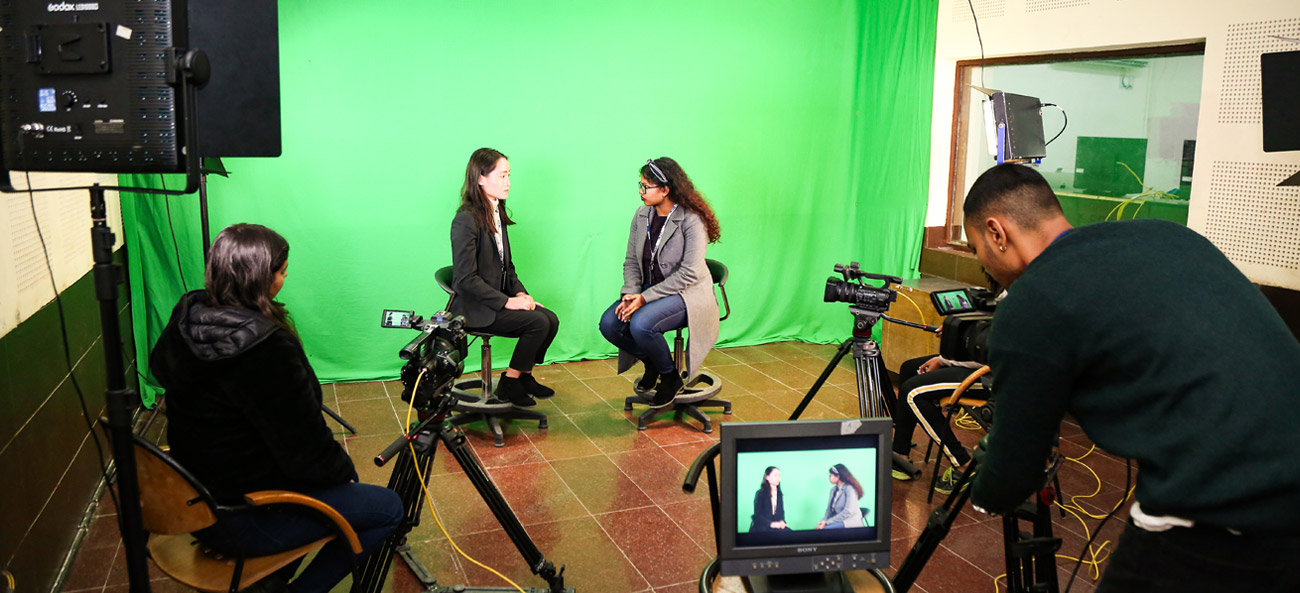
- State-of-the-Art Infrastructure: Well-equipped studios, photography labs, and editing suites support practical learning.
- Internship Opportunities: Mandatory internships with media organisations ensure hands-on experience.
- Placement Support: With strong industry connections and recruiters, students gain access to promising career opportunities. The programme has recorded competitive placement outcomes, including high salary packages.
This integrated approach ensures that students graduate with both skills and confidence.
Future Scope of Media and Journalism in India
The future of media and journalism in India is full of change, and that is precisely what makes it such an interesting field for students today. The profession is evolving in response to technology, audience behaviour, regional demand, and new formats of content consumption. For students planning a career in journalism after 12th, this means the field is not shrinking; it is diversifying.
- Growth of Regional and Digital Media: India’s media landscape is expanding beyond English-language platforms, with strong growth in regional media driven by local audiences seeking relevant, language-specific content. At the same time, digital platforms, websites, apps, podcasts, and social media are reshaping how information is consumed, making digital adaptability essential for students entering the field.
- Expansion of the Creator Economy: The rise of the creator economy has opened new opportunities for individuals to build their own media presence through podcasts, newsletters, video platforms, and niche content channels. While it complements traditional journalism, it also allows students to explore independent storytelling and entrepreneurial media ventures.
- Integration of AI and Digital Tools: Technology is transforming how media is produced and distributed, with AI tools, analytics, and digital platforms becoming part of everyday workflows. This shift increases the importance of core journalistic values such as credibility, verification, and ethical storytelling, alongside technical adaptability.
- A Wider Range of Professional Pathways: Journalism today connects with multiple fields, offering career flexibility across reporting, digital content, PR, advertising, and media strategy. This allows students to move across roles over time, making it a career that supports both creative expression and long-term professional growth.
Overall, the future of journalism in India is not limited to one platform or one kind of job. It lies in the ability to tell meaningful stories across formats, adapt to changing technologies, and remain relevant to audiences. For students who are prepared through the right Bachelor’s Degree in Journalism and Mass Communication, the future can offer both stability and room for growth.
Explore Journalism Course After 12th at LPU
A journalism course after 12th at Lovely Professional University offers a strong foundation in reporting, digital media, and content creation through its B.A. Journalism and Mass Communication programme.
With hands-on projects, studio training, and industry exposure, students gain practical skills aligned with real media environments. The programme prepares you for careers across journalism, digital platforms, and communication roles. Explore the eligibility, syllabus, and course details to understand how the programme is structured. Learn more about the School of Liberal and Creative Arts (Journalism and Mass Communication), LPU and take the first step towards your media career.
Frequently Asked Questions
Q.1 How do I start a career in journalism after 12th?
The most practical way to start is by enrolling in a structured journalism course after 12th, preferably a degree that combines academic learning with practical exposure. A strong undergraduate programme helps you understand reporting, writing, editing, media ethics, and digital communication while also giving you opportunities to work on projects, internships, and portfolio-building assignments. For students wondering how to become a journalist after 12th, the right course is usually the first serious step.
Q.2 Which course is best for journalism after 12th?
A B.A. Journalism and Mass Communication is widely considered one of the most suitable options because it offers broad exposure to print, electronic, and digital media. Unlike shorter diploma programmes, it gives students time to build both theoretical understanding and hands-on media skills. It is particularly useful for students who want flexibility across journalism, digital media, public relations, and communication-led careers.
Q.3 Can I pursue journalism after 12th from any stream?
Yes, in most cases you can. Students from Arts, Commerce, and Science backgrounds are generally eligible for journalism courses after 12th, provided they meet the university’s admission criteria. This makes journalism an accessible option for students from different academic streams, including those looking specifically for journalism courses after 12th in arts and commerce.
Q.4 What skills are required for a journalism career?
A strong journalism career depends on several interconnected skills. Communication is critical because journalists need to write and speak clearly. Research ability is equally important, since every story requires facts, context, and verification. Analytical thinking helps students interpret information rather than merely repeat it. In today’s media environment, digital literacy is also essential, especially for students working across online platforms, multimedia formats, and social media-led content.
Q.5 What is the salary in journalism in India?
Starting salaries in journalism can vary depending on the role, location, employer, and skill level of the candidate. Fresh graduates often begin in the range of approximately ₹2.5 lakh to ₹5 lakh per annum, especially in entry-level editorial, writing, digital, or communication roles. Over time, salaries can grow considerably in areas such as digital media, public relations, content strategy, and broadcast communication, particularly when students combine skill with experience.
Q.6 Do journalism courses require entrance exams?
That depends on the institution. Some universities admit students through merit in qualifying examinations, while others may conduct entrance tests or scholarship-based assessments. When evaluating journalism eligibility, students should look not only at the admission route but also at the larger value of the programme, including internships, labs, faculty exposure, and placement support.
Q.7 What are the career options after journalism?
The answer is much broader today than it used to be. Journalism career options now include reporting, anchoring, content writing, digital content strategy, multimedia journalism, social media communication, public relations, advertising, and media planning. This means students are not confined to one narrow path. A strong media and journalism course can prepare them for multiple professional directions depending on their interests and strengths.
Q.8 Which are the best journalism colleges in India?
The best journalism colleges in India are usually those that combine strong academics with real industry exposure. Students should look for institutions that offer studio facilities, newsroom simulations, internships, experienced faculty, practical assignments, and placement support. When students search for the best journalism colleges in India, they should evaluate not just reputation but also how effectively the institution prepares them for actual media work. Universities such as Lovely Professional University are often considered by students looking for a balance of academic structure and practical learning.
Q.9 Is journalism a good career option?
Yes, journalism can be a strong career option for students who enjoy communication, storytelling, research, and engagement with current issues. It offers variety, purpose, and flexibility. As media continues to expand across digital platforms, the profession remains relevant and adaptable. It is especially suitable for students who do not want a purely routine career and prefer a field where learning continues every day.
Q. 10 What is the duration of a journalism course?
Most undergraduate programmes, such as a B.A. Journalism course or similar Bachelor’s in Journalism and Mass Communication degree, are typically three years long and divided into six semesters. This structure allows students to build their knowledge gradually while also gaining practical exposure through projects, lab work, and internships across the duration of the programme.