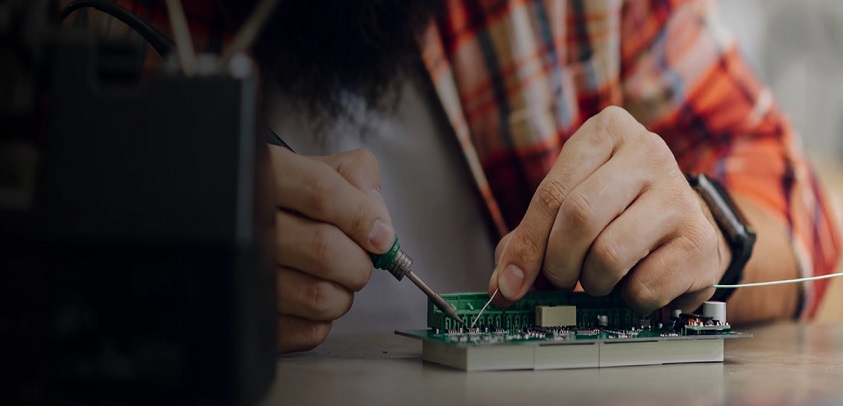
A degree in Electronics and Communication Engineering (ECE) opens the doors to some of the most exciting technologies being built today. If this sounds exciting, a B.Tech. in ECE could be an ideal choice for you. If you’ve already made up your mind, the 4-year B.Tech. Electronics and Communication Engineering (ECE) programme at Lovely Professional University (LPU) will take you from understanding the fundamentals of electronics, all the way to industry-ready specialisations. In this article, we’ll explore the details of the programme, covering semester-wise syllabus, software tools you’ll learn to work on, and the career scope that will follow the completion of the programme.
B.Tech. Electronics and Communication Engineering (ECE): Overview
LPU’s B.Tech. ECE is a 4-year, 8-semester programme designed to take students from the ground-level fundamentals of electronics all the way through to advanced, industry-relevant specialisations. The curriculum is built around a strong core in electronics and communication, layered with engineering minors, open electives, and dedicated industry interface components that keep the learning connected to what is actually happening in the field. To be eligible, you need at least 60% aggregate in your 10+2 with Physics, Mathematics, and English, along with a qualifying score in LPUNEST or JEE Main, or CUET.
Here’s a quick overview of the B.Tech. Electronics and Communication Engineering (ECE) programme:
| Aspect | Details |
| Course Name | B.Tech. in Electronics and Communication Engineering |
| Course Duration | 4 Years |
| Total Semesters | 8 Semesters |
| Course Level | Undergraduate |
| Teaching Format | Theory Classes, Labs, Projects, |
| Core Areas Covered | Electronics, Communication Systems, Signal Processing, Embedded Systems |
| Practical Components | Laboratory Sessions, Mini Projects, Major Project, Internship |
Semester-Wise Syllabus Breakdown
Year 1: Basics
The first year is less about ECE specifically and more about building the engineering mindset. You cover the fundamentals across physics, mathematics, and basic electronics, while also getting your first taste of hands-on lab work and programming. By the end of Semester 2, core ECE subjects start making an appearance, which sets the tone for what Year 2 brings.
Semester 1 (Autumn Term)
- Basic Electrical and Electronics Engineering: An introduction to the fundamental principles of electrical and electronics engineering, covering circuits, components, and basic theory.
- Basic Electrical and Electronics Engineering Laboratory: The hands-on counterpart to the theory paper, where you apply circuit concepts in a lab setting.
- Design Fabrication Lab: Early exposure to the design and fabrication process, giving you a feel for how ideas translate into physical components.
- Engineering Physics: Core physics concepts that underpin most of what you will study in ECE, from wave theory to semiconductor behaviour.
- Engineering Physics Laboratory: Practical experiments to reinforce the physics concepts covered in class.
- Hands on Practical Electronics: A practical, beginner-friendly introduction to working with real electronic components and circuits.
- Introduction to Python: A foundational programming course that establishes coding as a core skill from Day 1.
- Mathematics for Engineers: Covers the mathematical tools, primarily calculus and algebra, that engineering problem-solving relies on.
- Program Orientation I: An introductory module designed to help you settle into university life and understand the programme structure.
Semester 2 (Spring Term)
- AI, ML and Emerging Technologies: A broad introduction to artificial intelligence and machine learning, framed around where these technologies are headed.
- Biology for Engineers: Covers biological concepts relevant to engineering applications, particularly useful for interdisciplinary fields.
- Differential Equations and Vector Calculus: Advances the mathematical foundation from Semester 1, with a focus on equations and calculus tools used extensively in signal and system analysis.
- Digital Electronics: Introduces logic gates, Boolean algebra, and digital circuits, which are foundational to almost every ECE subject that follows.
- Digital Logic Design Lab: Practical lab work to complement the Digital Electronics theory paper.
- Electronic Devices and Circuits: Covers the behaviour of semiconductors, diodes, and transistors, the building blocks of all electronic systems.
- Engineering Chemistry: Introduces chemical principles relevant to materials and components used in electronics manufacturing.
- Engineering Drawing with AutoCAD: Develops technical drawing skills with hands-on AutoCAD training.
- Human Values and Program Orientation II: Continues the orientation thread from Semester 1, with added focus on professional ethics and values.
- Language Elective 1: A language course to develop communication skills alongside technical learning.
Year 2: Core ECE
Year 2 is where the programme starts feeling distinctly like ECE. The foundational subjects from Year 1 start paying off here as you move into analog electronics, signals, and network theory in Semester 3, and then into more specialised territory with microprocessors, digital signal processing, and control systems in Semester 4.
Semester 3 (Autumn Term)
- Analog Electronics: Covers amplifiers, oscillators, and analog circuit design, a critical building block for understanding how real-world signals are processed.
- Analog Electronics Laboratory: Hands-on lab work to apply and test analog circuit concepts covered in theory.
- Community Development Project: A socially oriented project component that encourages applying engineering thinking to real community problems.
- Computer Programming: Strengthens programming skills beyond Python, covering broader concepts in software development relevant to ECE applications.
- Environmental Studies: Covers the environmental impact of technology and engineering practices, a mandatory component across engineering programmes.
- Language Elective 2: Continues the language learning thread from Semester 2.
- Network Analysis and Synthesis: Deals with the analysis of electrical networks and circuits, an essential subject for understanding how signals travel through systems.
- Probability Theory and Stochastic Processes: Introduces probability concepts that are directly applicable to communication systems and signal analysis.
- Signals and Systems: One of the most important subjects in ECE, covering how signals are represented, analysed, and processed across time and frequency domains.
Semester 4 (Spring Term)
- Control System Laboratory: Practical lab work accompanying the Control Systems theory paper.
- Control Systems: Covers the principles of feedback and control, widely used in robotics, automation, and communication systems.
- Digital Signal Processing: Builds on Signals and Systems to cover how digital systems process and manipulate signals, a heavily GATE-relevant subject.
- Electromagnetic Field Theory: Covers electric and magnetic fields and their behaviour, foundational to understanding antennas, transmission lines, and wireless communication.
- Engineering Minor Elective 1: An elective from outside core ECE, allowing students to begin building a secondary area of expertise.
- Foundations of Indian Knowledge Systems: A multidisciplinary subject covering traditional Indian scientific and philosophical contributions.
- Fundamentals of Microprocessors and Microcontrollers: Introduces the architecture and programming of microprocessors and microcontrollers, the backbone of embedded systems.
- Microcontroller and Applications Laboratory: Hands-on lab work to programme and test microcontroller-based applications.
- Object Oriented Programming: Covers OOP concepts in a language like C++ or Java, increasingly relevant for embedded and software-facing ECE roles.
- Open Minor 1: An open elective that gives students flexibility to explore subjects from other disciplines entirely.
Year 3: Specialisations
Year 3 is where the subjects get more specific, more technical, and more directly tied to what you will actually be doing in the industry. Semester 5 brings VLSI, communications, and Verilog into the picture, while Semester 6 pushes further into communication networks, digital signal processing applications, and programming. Elective choices also expand considerably this year, giving you more control over where your learning is headed.
Semester 5 (Autumn Term)
- Analog and Digital Communications: Covers both analog and digital modulation techniques and how information is transmitted across communication channels.
- Database Management Systems: Introduces database concepts and query languages, increasingly relevant as ECE roles intersect with data-driven applications.
- Digital System Design Using Verilog: Teaches hardware description language for designing and simulating digital systems, a key skill for VLSI and chip design careers.
- Digital VLSI Design: Covers the design of Very Large Scale Integration circuits, one of the most sought-after specialisations in ECE today.
- Engineering Minor Elective 2: Continues building a secondary area of expertise outside core ECE.
- Open Minor 2 and 3: Two open elective slots that allow you to explore subjects from entirely different disciplines.
- Pathway Elective 1: A career-focused elective that begins steering your learning towards a specific professional track.
- Professional Ethics and Legal Compliance: Covers ethical responsibilities and legal considerations relevant to engineering practice.
- Seminar on Industrial Training: A structured reflection on industry exposure, helping bridge the gap between academic learning and professional environments.
Semester 6 (Spring Term)
- Communication Networks: Covers the architecture, protocols, and design of modern communication networks, directly relevant to telecom and networking roles.
- Communication Networks Project Laboratory: A project-based lab where concepts from Communication Networks are applied to real network design problems.
- Communication System Laboratory: Hands-on lab work focused on building and testing communication systems.
- Discrete Mathematics: Covers mathematical structures used in computing and communications, including graph theory, logic, and combinatorics.
- Engineering Minor Elective 3: Third engineering minor elective, allowing further depth in a chosen secondary area.
- General Seminar: A broader academic seminar component encouraging research awareness and presentation skills.
- Open Minor 4: Another open elective slot for interdisciplinary exploration.
- Pathway Elective 2: Continues the career-track elective thread from Semester 5.
- Programming in Java: Covers Java programming with a focus on object-oriented applications relevant to software-facing ECE roles.
Year 4: Industry and Research
Year 4 is less about learning new concepts and more about applying everything you have built over the past three years. The subject load lightens considerably, replaced by project work, industry collaboration, and electives that let you go deep into the areas that matter most to your career. By the end of Semester 8, you are expected to have a body of work, not just a degree.
Semester 7 (Autumn Term)
- Capstone Project I: The first phase of your major final-year project, where you identify a problem, propose a solution, and begin development under faculty guidance.
- Engineering Minor Elective 4: Continues deepening expertise in your chosen secondary engineering area.
- Industry Co-op Project 1: A structured industry collaboration component where you work on real projects with external organisations, bridging academic learning and professional practice.
- Pathway Elective 3 and 4: Two career-track electives that allow you to go deeper into your chosen specialisation, whether that is VLSI, communications, embedded systems, or another area.
Semester 8 (Spring Term)
- Capstone Project II: The concluding phase of your final-year project, where you complete, test, and present your solution, typically in front of a panel.
- Engineering Minor Elective 5 and 6: Two final minor electives rounding off your secondary area of expertise.
- Training Elective 1: A specialised elective tied to industry training, designed to ensure your skills are aligned with current professional requirements before you graduate.
Key Software Tools You’ll Learn During the Programme
The following are some of the key tools you are likely to work with across the programme. The exact toolkit may vary by semester and is subject to updates as the curriculum evolves.
- Python: Introduced in Semester 1, Python is used for scripting, data analysis, and increasingly for signal processing and machine learning applications in ECE.
- MATLAB: Widely used alongside subjects like Signals and Systems and Digital Signal Processing, MATLAB is the go-to tool for modelling, simulation, and visualising signal behaviour.
- Verilog: Covered directly in the Digital System Design Using Verilog subject in Year 3, it is the primary hardware description language used for designing and simulating digital circuits and VLSI systems.
- Cadence or Xilinx Vivado: Used in VLSI and digital design courses for chip layout, synthesis, and simulation work.
- Proteus or Multisim: Circuit simulation tools used in electronics lab work, particularly useful for testing analog and digital circuit designs before physical implementation.
- Keil or MPLAB: Used in microprocessor and microcontroller subjects for writing, compiling, and debugging embedded C code.
- AutoCAD: Introduced in Semester 2 through Engineering Drawing with AutoCAD, it remains a useful tool for technical design and documentation.
- Java and C++: Covered through the Object Oriented Programming and Programming in Java subjects, these languages are relevant for software-facing ECE roles and embedded application development.
- MySQL or equivalent: Tied to the Database Management Systems subject in Year 3, giving you working knowledge of querying and managing databases.
Career Scope After B.Tech. Electronics and Communication Engineering (ECE)
One of the stronger aspects of ECE as a branch is how wide the career net actually is. The skills you build across four years, from circuit design and signal processing to embedded systems and communication networks, are applicable across a surprisingly broad range of industries. Here is a broad look at where ECE graduates typically end up:
| Career Path | Roles |
| Core ECE | Electronics Engineer, VLSI Design Engineer, Embedded Systems Developer, RF Engineer |
| Communication and Networking | Network Analyst, Telecom Engineer, Communication Systems Engineer |
| Software and IT | Software Developer, Hardware-Software Integration Engineer, IoT Developer |
| Research and Development | R&D Engineer, Systems Engineer |
Conclusion
Electronics and Communication Engineering is not a branch you stumble into, and if you have read this far, chances are you already know this is the direction you want to go. The four years ahead are demanding, no question about it, but they are also the kind of years that genuinely shape what kind of engineer you become. B.Tech. Electronics and Communication Engineering (ECE) programme at LPU gives you the structure, the exposure, and the flexibility to make those four years count, whether your goal is a core ECE role, a research career, or higher studies. If you are ready to take the next step then the LPU admissions team is available at the admissions centre to walk you through everything and help you with the enrollment.
Frequently Asked Questions
Which subjects in B.Tech. ECE are most important for GATE?
Several core ECE subjects carry heavy GATE weightage, including Signals and Systems, Digital Signal Processing, Electromagnetic Field Theory, Control Systems, and Analog Electronics. These subjects appear consistently across GATE ECE papers and are worth paying extra attention to even during your regular semesters.
What is the difference between B.Tech. ECE and B.Tech. ECE with a specialisation?
A standard B.Tech. ECE gives you a broad foundation across all areas of electronics and communication. A specialisation, such as in VLSI or IoT, means a portion of your electives and coursework is focused specifically on that domain. It is useful if you already know which career track you want to pursue, but the general programme still offers enough elective flexibility to steer your learning in a specific direction.
What entrance exams does LPU accept for ECE admissions?
LPU accepts LPUNEST, JEE Main, and CUET scores for admission into B.Tech. ECE. LPUNEST is LPU’s own entrance exam and also serves as the basis for merit scholarships.
Can I switch branches after the first year?
Branch changes are subject to LPU’s internal policy, seat availability in the desired programme, and the student’s academic performance. It is advisable to confirm the current policy directly with the admissions or academic office.
Does the programme have any international exposure?
Yes, the curriculum includes a Study Abroad component, giving students the opportunity to spend a semester at an international partner university as part of their degree.
What is the difference between B.Tech. ECE and B.Tech. EEE?
ECE focuses on electronics, communication systems, signal processing, and embedded technology. EEE, or Electrical and Electronics Engineering, leans more towards power systems, electrical machines, and energy. If you are drawn to wireless communication, VLSI, or embedded systems, ECE is the more relevant choice.