
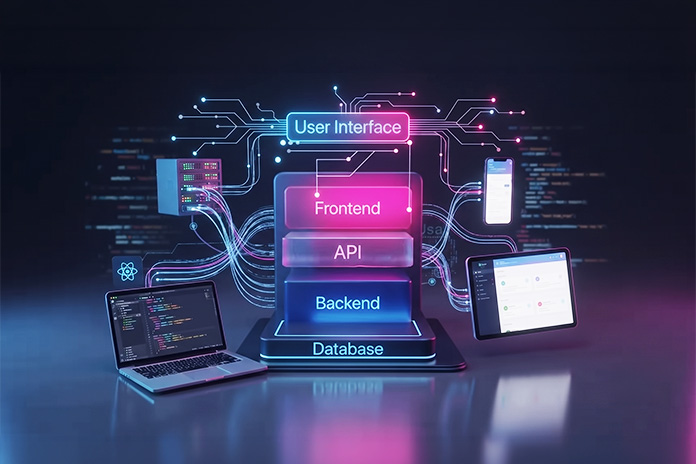
Imagine opening your favourite food delivery app, booking a cab, shopping online, or chatting with friends on social media. Have you ever wondered who builds these digital experiences? Behind every successful website and application is a team of developers who bring ideas to life. Among them, Full Stack Developers are some of the most in-demand professionals because they understand how an application works from start to finish. This makes Full Stack Development a valuable part of modern web development, software development, and web application development.
In 2026, Full Stack Development 2026 is no longer just about writing code. It has evolved into a combination of creativity, problem-solving, artificial intelligence, cloud technologies, cybersecurity awareness, and user experience. Companies are looking for professionals who can think beyond programming and build complete digital solutions. If you are planning a career in computer applications, this is one of the most exciting fields to explore through a Full Stack Development course.
Why Full Stack Development Is Booming
The digital world is growing at an incredible pace. Every business—whether it is a startup, hospital, bank, university, retail brand, or government organization—needs web applications and digital platforms to serve customers efficiently.
Organizations prefer hiring professionals who can understand both the front-end (what users see) and the back-end (how everything works behind the scenes). Instead of depending on multiple specialists for every small task, companies value developers who can contribute across different stages of software development. This is why front-end development, back-end development, full stack web development, and modern web development are becoming increasingly important.
This shift has made Full Stack Development career one of the fastest-growing career paths in the technology industry. From building e-commerce websites to AI-powered applications, Full Stack Developers are creating solutions that impact millions of users every day.
AI Is Changing the Way Developers Work
Artificial Intelligence is transforming software development faster than ever before. Modern AI coding assistants can generate code snippets, detect bugs, recommend improvements, and even automate repetitive programming tasks. The rise of AI in software development, AI for developers, AI development tools, and artificial intelligence and web development is changing the way applications are created.
Does this mean developers will become less important?
Absolutely not.
AI is becoming a powerful assistant, not a replacement for skilled professionals. While AI can generate code, it cannot fully understand business requirements, user expectations, ethical concerns, or innovative thinking.
The role of a developer is shifting from simply writing code to designing intelligent systems, validating AI-generated solutions, solving complex problems, and creating better user experiences. This is where full stack development with AI, AI and full stack development, and full stack development in AI era are creating new possibilities.
The developers who learn to work alongside AI will have a significant advantage in the coming years.
More Than Just Coding
Many students believe learning a programming language is enough to become a successful developer. In reality, Full Stack Development skills require a broader skill set, including strong Full Stack Developer skills and practical knowledge of full stack programming.
A successful Full Stack Developer understands how to design attractive user interfaces, manage databases, develop secure APIs, deploy applications on cloud platforms, collaborate with teams, and continuously improve software after deployment. These abilities cover areas such as API development, database management, responsive web development, and secure web development.
Communication skills, creativity, logical thinking, teamwork, and adaptability are equally important.
Technology changes rapidly, and employers appreciate professionals who are willing to learn throughout their careers rather than relying on a single programming language.
Technologies Every Future Full Stack Developer Should Know
The technology landscape keeps evolving, but some core skills remain essential. Understanding the best technologies for full stack development can help students build a strong technical foundation.
Students should build a strong foundation in:
- HTML, CSS, and JavaScript
• Modern front-end frameworks such as React or Angular
• Back-end technologies like Node.js, Python, Java, or PHP
• Database management using MySQL, PostgreSQL, or MongoDB
• Git and GitHub for version control
• REST APIs and API integration
• Cloud platforms
• Basic cybersecurity practices
• AI development tools
• Testing and debugging techniques
You do not need to master everything on the first day. Learning step by step while building practical projects is the best way to develop confidence.
Real-World Projects Matter More Than Certificates
One of the biggest mistakes students make is collecting certificates without building practical skills.
Recruiters are increasingly interested in what you have built rather than how many online courses you have completed. Building full stack development projects for students can help demonstrate practical knowledge.
Imagine attending an interview where you can confidently demonstrate your own:
- AI-powered chatbot
• Personal portfolio website
• Online shopping platform
• Hospital management system
• Food delivery application
• Student management portal
• Event management system
• Real-time weather application
These projects showcase your ability to solve problems, work with modern technologies, and apply classroom knowledge to real situations.
Your GitHub profile can often speak louder than your résumé.
Career Opportunities Are Expanding Rapidly
Full Stack Development opens doors to multiple career paths instead of limiting you to one job role. A strong Full Stack Developer career can lead to diverse roles across software and technology.
Depending on your interests, you can work as a:
- Full Stack Developer
• Software Engineer
• Front-End Developer
• Back-End Developer
• Web Application Developer
• Cloud Application Developer
• DevOps Engineer
• AI Application Developer
• Technical Consultant
• Technology Entrepreneur
Many professionals also choose freelancing or remote work, collaborating with companies across different countries without relocating.
The flexibility and diversity of opportunities make this career especially attractive to today’s generation. This broad full stack developer career scope also makes Full Stack Developer jobs relevant across different industries.
Salary Prospects in 2026
Technology remains one of the highest-paying industries globally.
Fresh graduates with strong practical skills, internship experience, and an impressive project portfolio often receive competitive salary packages compared to many traditional career options.
As developers gain experience in cloud computing, artificial intelligence, cybersecurity, and scalable application development, their earning potential continues to grow. Skills in full stack development with cloud computing, full stack development with cybersecurity, and cloud and AI development can further expand professional opportunities.
While salaries vary by company, location, and expertise, professionals who continuously upgrade their skills generally enjoy faster career progression and better opportunities.
The most valuable investment is not simply learning another programming language—it is developing the ability to adapt to new technologies.
How Students Can Prepare Today
The best developers are not created overnight. They grow through consistent practice, curiosity, and continuous learning.
Start by strengthening your programming fundamentals. Participate in hackathons, coding competitions, and open-source projects. Build applications that solve real-world problems instead of copying tutorial examples. Learn how AI tools can improve your workflow while understanding the logic behind every solution. Exploring full stack development projects for students can also help turn theoretical knowledge into practical experience.
Networking is equally important. Join technical communities, attend workshops, collaborate with peers, contribute to GitHub repositories, and connect with industry professionals on platforms like LinkedIn.
Every project you complete adds another layer to your professional identity.
The Future Belongs to Builders
The technology industry is entering an exciting era where software, artificial intelligence, cloud computing, cybersecurity, and data are becoming deeply interconnected. Companies are no longer searching for developers who can only write code—they need innovators who can understand users, solve real problems, and create reliable digital experiences. This is driving the future of full stack development and creating demand for full stack developer skills for the future.
Full Stack Development offers exactly that opportunity.
If you enjoy creating, experimenting, and turning ideas into reality, this field can provide an exciting and rewarding career. The journey begins with curiosity, grows through practical experience, and succeeds through continuous learning.
In 2026, learning to code is only the starting point. The real advantage comes from becoming a well-rounded technology professional who can build complete solutions for a rapidly evolving digital world. The future belongs to those who are ready to learn, adapt, and create—and Full Stack Development is one of the strongest pathways to get there.




![Is B.Tech (CSE) [2+2 with International Credit Transfer Option] the Right Course for You?](https://www.lpu.in/blog/wp-content/uploads/2026/05/Is-B.Tech-CSE-22-with-International-Credit-Transfer-Option-the-Right-Course-for-You-100x70.jpg "Is B.Tech (CSE) [2+2 with International Credit Transfer Option] the Right Course for You?")