
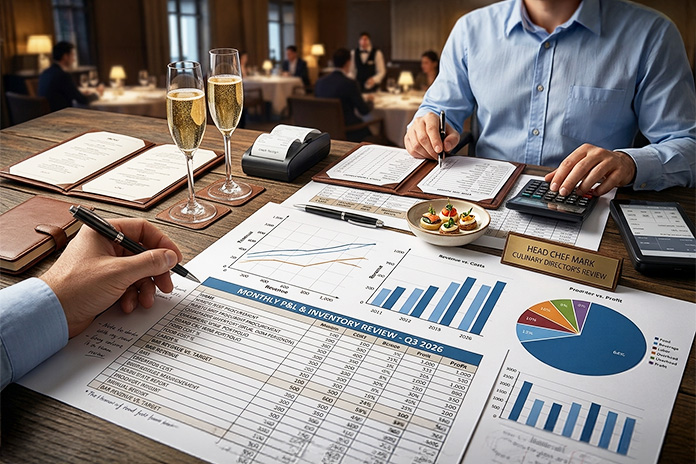
Imagine walking into a bustling restaurant on a Saturday evening. Guests are enjoying beautifully presented meals, the kitchen is operating at full speed, and the service team is ensuring every customer leaves satisfied. While the dining area reflects warmth and hospitality management, another critical operation is taking place behind the scenes—accounting, hospitality accounting.
In the hospitality industry, exceptional food and outstanding service may attract customers, but effective financial management, hospitality financial management, determines whether a hospitality business thrives or struggles. From luxury hotels and fine-dining restaurants to cafés and resorts, accounting, accounting in hospitality serves as the foundation for sustainable growth, hospitality business profitability, profitability, and operational efficiency.
Why Accounting Matters in Hospitality
Hospitality businesses operate in a dynamic environment where customer preferences, seasonal demand, labor costs, and food prices constantly change. Unlike many industries, hotels and restaurants deal with high volumes of daily transactions, perishable inventory, and fluctuating occupancy or customer traffic.
Accounting, hospitality accounting, hospitality finance transforms these day-to-day financial activities into meaningful information that helps managers understand where money is earned, where it is spent, and how profits can be improved. Rather than simply recording transactions, hospitality accounting provides valuable insights that support strategic planning, financial planning, and operational excellence in hospitality business management.
Cost Control: Protecting Every Rupee
One of the greatest challenges in hospitality is controlling costs without compromising the guest experience. Even small increases in food waste, utility bills, or labor expenses can significantly reduce profit margins.
Effective accounting in hospitality enables businesses to monitor and control various costs, including:
- Food and beverage expenses
- Employee wages and benefits
- Utility and maintenance costs
- Housekeeping and operational supplies
- Marketing and promotional expenditures
For example, if a restaurant notices that its food cost percentage has increased from 30% to 38%, restaurant accounting reports can help identify the underlying reasons. The cause may be excessive food waste, rising supplier prices, poor portion control, or inventory control, inventory theft. By identifying these issues early, management can implement corrective measures before profitability is affected.
Cost control is not about cutting corners—it is about using resources efficiently while maintaining high standards of quality and customer satisfaction. These are essential cost control in hospitality industry practices.
Budgeting: A Financial Roadmap for Success
A budget acts as a financial blueprint that guides hospitality businesses throughout the year. It estimates expected revenues and expenses, helping managers allocate resources effectively and prepare for both opportunities and challenges through better financial planning.
Hotels and restaurants use budgets to:
- Forecast sales and occupancy levels
- Plan staffing requirements
- Schedule maintenance and renovations
- Manage seasonal fluctuations
- Set realistic financial targets
For instance, a beach resort anticipating increased tourist arrivals during the holiday season can use budgeting in hotel management to hire temporary staff, increase inventory, and plan marketing campaigns well in advance. Conversely, during off-peak periods, budgets help management control discretionary spending and maintain financial stability.
Regular comparisons between budgeted and actual performance also allow managers to identify variances and make timely adjustments.
Financial Reporting: Turning Numbers into Insights
Financial statements are much more than compliance documents—they are powerful decision-making tools. Accurate financial reporting in hotels provides a clear picture of an organization’s financial health and operational performance.
The three primary financial statements include:
- Income Statement: Measures revenue, expenses, and profit over a specific period.
- Balance Sheet: Shows the organization’s assets, liabilities, and owner’s equity.
- Cash Flow Statement: Tracks the movement of cash into and out of the business.
These reports help hospitality managers answer critical questions:
- Is the business generating sufficient profit?
- Which departments perform best?
- Are expenses increasing faster than revenue?
- Is there enough cash available for future investments?
Reliable financial reporting also builds confidence among investors, lenders, owners, and other stakeholders who rely on accurate information when making financial decisions.
Inventory Management: Every Ingredient Counts
Inventory management represents one of the largest investments for hospitality businesses. Restaurants must carefully manage food ingredients, beverages, cleaning supplies, linens, and consumables through effective restaurant inventory management and food inventory management, while hotels also monitor guest amenities, maintenance materials, and room supplies through hotel inventory management.
Poor hospitality inventory management can result in:
- Food spoilage
- Overstocking
- Stock shortages
- Theft and pilferage
- Increased operating costs
Accounting systems, including hospitality accounting systems, help track inventory levels, calculate inventory turnover, determine reorder points, and measure consumption patterns. Modern inventory management software and hospitality accounting software can even integrate with point-of-sale (POS) systems, allowing managers to monitor stock usage in real time.
Efficient inventory management reduces waste, improves cash flow, and enhances operational efficiency.
Supporting Better Business Decisions
Successful hospitality managers rely on financial information to make informed decisions rather than assumptions. Accounting provides accurate data that supports both short-term operational decisions and long-term strategic planning, demonstrating how accounting improves hospitality business performance.
Examples include:
- Evaluating whether to introduce a new menu item.
- Determining room pricing during peak and off-peak seasons.
- Assessing the profitability of banquet services.
- Comparing the performance of different hotel departments.
- Deciding whether to renovate facilities or expand operations.
Data-driven decision-making minimizes financial risk and helps organizations respond quickly to changing market conditions through effective hospitality financial management strategies.
Technology is Transforming Hospitality Accounting
Digital transformation has significantly changed the way hospitality businesses manage their finances. Cloud-based accounting software for hospitality, integrated property management systems (PMS), point-of-sale (POS) systems, and business intelligence dashboards now provide real-time financial information.
These technologies offer several advantages:
- Automated bookkeeping
- Faster financial reporting
- Improved accuracy
- Better inventory tracking
- Real-time revenue management and revenue management in hospitality
- Enhanced data security
- Simplified tax compliance
Automation also reduces manual errors, allowing finance professionals to spend more time analyzing data and supporting strategic decisions rather than processing routine transactions.
Accounting as a Strategic Advantage
In today’s competitive hospitality market, accounting has evolved from a back-office function into a strategic management tool. Financial information enables businesses to measure key performance indicators (KPIs) such as food cost percentage, occupancy rate, average daily rate (ADR), revenue per available room (RevPAR), gross operating profit, and customer profitability, supporting hotel financial management and restaurant financial management.
By continuously monitoring these indicators, hospitality organizations can identify emerging trends, benchmark performance against competitors, and implement improvement strategies before problems escalate.
When combined with excellent customer service and operational efficiency, strong financial management creates a sustainable competitive advantage.
In essence
Behind every memorable guest experience lies a carefully managed financial system. While guests remember exceptional service, delicious meals, and comfortable accommodations, accounting, the role of accounting in hospitality industry, ensures that every service delivered contributes to long-term profitability.
Through effective cost control, realistic budgeting, accurate financial reporting, efficient inventory management, and technology-driven decision-making, accounting enables hospitality businesses to operate efficiently and grow sustainably.
As the hospitality industry continues to evolve, organizations that embrace sound accounting practices in hotel accounting, restaurant accounting, and financial management in hotels and restaurants will be better positioned to navigate economic uncertainties, optimize resources, and deliver lasting value to both customers and stakeholders. Ultimately, accounting is not merely about balancing books—it is about building profitable, resilient, and successful hospitality business management where every plate served and every room occupied contributes to a stronger financial future.