
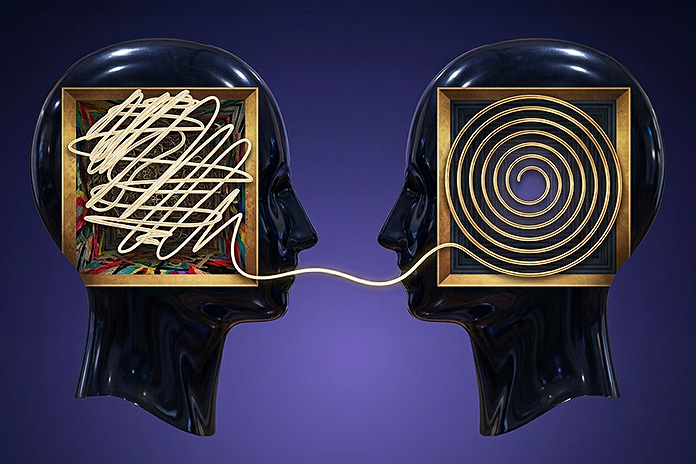
Have you ever noticed how two people say the exact same thing but one just clicks better?
It’s not just the words, right?
It’s how they say them.
Words are powerful.
They’re the architects of your image – your intelligence, competence, and whether anyone will trust you. Whether it’s your first job interview, leading a team, or convincing investors, the way you talk matters. They’re the bricks and mortar of first impressions. Think about “Tell me about yourself.”
If you respond with “Uh, I guess I’m pretty decent at most things,” versus “I’m really into solving problems and learning, and I’m always looking for ways to grow,” there’s a HUGE difference.
The second one shouts professionalism and confidence, leaving the first one in the dust. And in today’s world of digital communication, where conversations happen both in person and online, the words you choose shape how people perceive you. Whether you’re building online identity or expressing your digital identity, your communication creates lasting impressions. And in case you’re wondering, research shows body language isn’t the only thing; it’s what you say and how you say it.
Words evoke emotion
Everything you utter, intentionally or not, triggers an emotional reaction. Some words naturally bring about feelings of ease, confidence, and optimism: “success,” “growth,” “teamwork.” Others bring unease and apprehension: “failure,” “challenge,” “difficulty.”
Just compare these two sentences: “This is an insurmountable task, but I’m confident we can find a way to solve it,” versus “This is an insurmountable task, and I feel like we’re never going to figure it out.”
The impact of just one word can change the entire trajectory of the sentence, right? “Insurmountable” conjures failure, while “task,” even though it represents a problem, carries an underlying implication that solutions exist. That single word transforms the emotional weight of the entire statement. This principle also explains much of the psychology of social media and the social media influence we experience every day, where carefully chosen words can shape opinions, emotions, and decisions.
Better relationships
Who doesn’t want to understand and be understood?
Crystal-clear communication is key. You can smooth the edges of any relationship with a thoughtful approach. Whether it’s face-to-face conversations or digital communication and relationships, respectful language strengthens trust and creates authentic friendship.
Instead of blunt “You’re wrong,” consider “I see your point of view, but I don’t agree. Here’s what I think – what’s your opinion?” Or for the kids: “I’m not saying it again” becomes “Perhaps there’s another way we can approach this together.”
Your reader, listener – even if they don’t remember the exact words, they will remember the emotions they conjured. That’s true in modern friendship, online friendships, and every form of technology and human relationships, where empathy often matters more than the medium.
Words in the digital age
We’re blurring the lines between written and spoken word more than ever, and one poorly chosen “slip of the keyboard” can cost you dearly. Even a quick email, text, or social media post can have long-lasting repercussions.
“Please get the report to me when you have time” vs. “I need the report. ASAP.”
Trust me, even months later, the second one will yield drastically different results.
The same applies to social media and friendship, where one careless comment can affect years of trust. The impact of social media on friendships is often determined less by technology itself and more by the words we choose. As friendship in the digital age evolves, understanding how social media has changed friendship helps us communicate more thoughtfully.
Our dependence on technology has also increased the impact of mobile phones on friendships, changing how quickly we respond, resolve conflicts, and maintain connections. This is why the role of social media in modern relationships continues to grow, influencing the effects of digital technology on human connection in ways we are still learning to understand.
Words lift people up
Leaders, managers, teachers – powerful communication inspires confidence, authority, and respect.
“Let’s get to work on this together!”
“I know you can do this.”
These are phrases that build people up and encourage them to excel.
Contrast that with, “You’ll never be good at that.” One builds, the other tears down.
Overall, words have the power to uplift more than they tear down. Words empower your audience. They also strengthen human connection in the digital age, helping create authentic friendships in the digital world despite the challenges of friendship in the digital age.
Positive communication becomes even more valuable at a time when social media and loneliness are frequently discussed together. Genuine encouragement reminds us of the importance of genuine friendships, whether they’re built offline or through online friendships vs real friendships.
The key to unlocking success?
Mastering your communication.
When you speak to someone, think about your core message.
What key messages are you trying to convey?
They’re almost always centered around benefits and value. Use words like “advantage,” “opportunity,” “success,” “benefit,” “save time,” and “guaranteed results,” and you’ll make a powerful impression. Simply being more mindful about the words you choose – both spoken and written – can dramatically enhance your effectiveness and credibility.
This awareness is increasingly important in today’s digital culture and relationships, where communication influences careers, friendships, and communities. As friendship in the era of artificial intelligence continues to evolve, authentic communication will remain a timeless skill.
Here are a few techniques:
1. Practice.
Seriously. I can’t stress this enough. Before a big conversation or presentation, rehearse out loud what you’re going to say. This ensures clarity and reduces the likelihood of people looking at you blankly wondering what you’re talking about. Practice builds confidence and respect.
2. Beware the word “but.”
Many of us habitually use “but” to negate everything that came before it.
“I really enjoyed the presentation, but I thought it was a little long.”
The unspoken message?
“I didn’t like the presentation.”
Try this instead:
“I really enjoyed the presentation. I do think it was a bit long, however.”
3. Choose positive words.
Swap out “I can’t do that” or “I won’t do that” for “I can do that” or “I will do that.” Studies show this simple change boosts self-belief and optimism. It also helps reduce the negativity often amplified through social media psychology and even social comparison theory, where our words influence both our own mindset and the mindset of others.
4. Read more.
Whether you need to communicate team updates, market changes, or simply want to improve your speaking, being well-read is crucial. The more language you’re exposed to, the better you’ll be at wielding it.
People want to collaborate, not compete. And the better you become at articulating that collaboration, the more respected you’ll be as a leader or a teammate.
Your words paint the picture. Saying it right isn’t just about speaking clearly; it’s about shaping the impression you leave behind. In an age where social media and mental health, social media addiction, how technology affects human relationships, and loneliness in the digital age are important conversations, thoughtful communication matters more than ever. Whether you’re nurturing digital friendship, strengthening friendship in the age of social media, or simply trying to connect more meaningfully, the right words have the power to create trust, inspire confidence, and build relationships that last.