Key Takeaways
|
The fashion industry is shifting faster than hemlines. In 2026, fashion design students aren’t just learning to sketch; they’re learning digital skills, sustainable fashion practices, and ways to navigate a global industry where an Instagram post can launch careers and AI tools have transformed the creative process. If you’re considering a B.Design Fashion degree, the curriculum you choose needs to keep pace with this revolution. The B.Design Fashion offered at LPU is a 4-year undergraduate programme that helps students build design and technology skills for a career in today’s fashion industry. In this article, we’ll highlight how fashion design is evolving in 2026 and how the curriculum of LPU’s B.Design Fashion programme helps students develop the skills required to excel in the industry. But first, let’s understand the shift that has happened.
How the Fashion Design Industry Has Changed
In recent years, fashion design has moved far beyond sketching outfits, choosing fabrics, stitching garments, and presenting collections on the runway. Today, the industry needs designers who can understand people, trends, technology, sustainability, styling, and business. This is why a modern fashion design course must prepare students for the full fashion ecosystem, not just garment creation.
Students entering a bachelor of design in fashion design today need exposure to areas such as:
- Consumer behaviour and changing fashion preferences
- Digital moodboards and visual storytelling
- Sustainable fabric choices and responsible design
- Apparel production planning
- Styling for social media, e-commerce, and campaigns
- Brand communication and fashion presentation
- Tech-enabled fashion retail and digital design tools
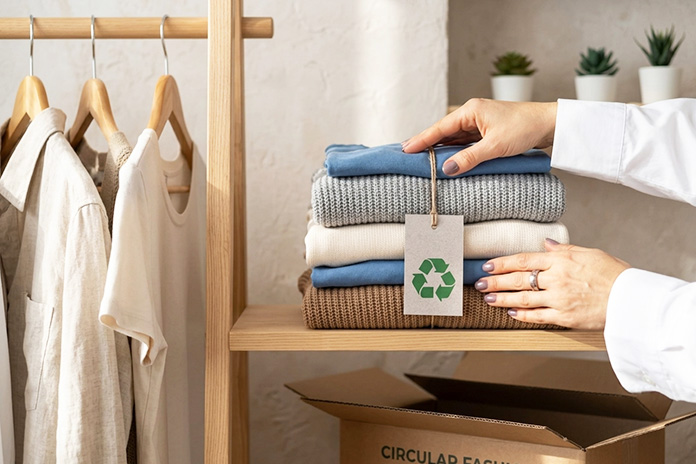
Sustainability has also become a major part of fashion thinking. Designers are now expected to consider fabric waste, durability, ethical choices, upcycling, circular fashion, and mindful consumption. This means future designers must learn how to create fashion that is visually strong, commercially practical, and responsible.
| Did You Know?
Fashion is one of the world’s largest creative industries. The global clothing industry is valued at around USD 1.3 trillion and employs more than 300 million people across the value chain. However, global fibre production has more than doubled since 2000, reaching about 132 million tonnes in 2024. This is why sustainable fashion is becoming an important area of learning for students entering a modern fashion design course. |
Technology is changing the design process as well. AI styling, virtual prototyping, digital fashion illustrations, trend search, and 3D garment design are helping designers explore ideas faster and present them more effectively. However, technology does not replace creativity. Human judgement, cultural understanding, personal taste, and storytelling remain at the heart of good fashion design.
Global runways are also influencing students more directly than ever. Through digital platforms, students can follow fashion weeks, international collections, styling experiments, cultural fusion, and new design movements from across the world. This global exposure helps them think beyond local trends and develop a wider fashion perspective.
For students comparing short-term courses in cloth design or garment design with a full B.Design Fashion Programme, this change is important. Fashion careers now require a stronger mix of creative, technical, digital, sustainable, and industry-ready skills.
| About B.Design Fashion at LPU
LPU’s B.Design Fashion is designed for students who want to study fashion in a structured, degree-based format. The programme is spread across 4 years and 8 semesters, giving students time to move from basic design learning to advanced fashion, textile, styling, digital, and industry-oriented courses. Key course details include:
This makes LPU’s B.Design Fashion suitable for students who want a full undergraduate fashion pathway instead of a short-term cloth design or garment design course. The programme does not focus only on making clothes. It helps students understand design, construction, textiles, technology, styling, business, presentation, and practical application. |
What Students Study in B.Design Fashion Programme
A good fashion designer needs both imagination and skill. Students must be able to think creatively, draw clearly, understand fabric, create patterns, develop garments, build collections, and present ideas professionally.
LPU’s B.Design Fashion curriculum is designed to support this complete learning journey. It includes foundation design subjects in the first year and then gradually introduces students to fashion illustration, pattern making, garment construction, textiles, draping, digital tools, surface design, fashion business, sustainability, and industry projects.
1. Foundation in Design and Fashion
The early semesters help students build a strong design foundation. This is important because fashion begins with observation, visual thinking, material understanding, and creative expression.
Students study subjects such as:
- Elements of Design
- Fashion Studies
- Free Hand Design Drawing
- Indian Craft Studies
- Material Handling
- Raster Graphics
- Art Appreciation
- Basics of Draping
- Figure Drawing
- History of Indian Costumes and Textiles
- Indian Textiles: From Ancient Knowledge to Contemporary Practice
- Principles of Design
- Vector Graphics
These subjects help students understand:
- Line, form, colour, texture, and proportion
- Indian textiles, costumes, and craft traditions
- Basic drawing and visual communication
- Design principles used in fashion and other creative fields
- Material handling and early-stage garment thinking
- Digital graphics through raster and vector tools
For students who are passionate about fashion but still discovering their style, this foundation can be very useful. It helps them move from interest to skill.
2. Garment Design, Pattern Making, and Construction
Fashion ideas need to become wearable garments. This is where technical learning becomes important.
LPU’s curriculum includes subjects such as:
- Basics of Fashion Illustration
- Basics of Pattern Making and Garment Construction
- Introduction to Fashion Design Process
- Apparel Manufacturing Technology
- Draping Exploration
- Manipulations in Pattern Making and Garment Basics
- Technical Fashion Illustration
- Pattern Construction for Kids and Mens
Through these areas, students learn how garments are planned, shaped, constructed, and refined. They understand how a sketch becomes a pattern, how a pattern becomes a sample, and how a sample can be developed into a finished garment.
This is an important difference between a short-term garment design course and a full bachelor of design in fashion design. A degree programme gives students time to understand both the creative and technical sides of fashion.
3. Textile, Surface, and Technical Learning
Every fashion design begins with material. The fabric chosen for a garment affects its fall, structure, comfort, appearance, and final use. That is why textile learning is a major part of fashion education.
LPU’s B.Design Fashion curriculum includes subjects such as:
- Textile Science
- Dyeing and Printing
- Technical Fabric Studies and Analysis
- Textile Processing
- Technical Textile
- Testing of Technical Textiles
- Embroideries Traditions and Techniques
- Exploration in Surface Design
These subjects help students understand:
- Different types of textiles
- Fabric behaviour and performance
- Dyeing and printing methods
- Surface design possibilities
- Embroidery traditions and techniques
- Technical textiles and their testing
This knowledge can help students create garments that are not only stylish but also suitable for their intended purpose.
How LPU’s Curriculum Reflects the Changing Fashion Industry
The fashion industry is changing. Students now need to prepare for a world where design is influenced by sustainability, digital tools, styling, global exposure, retail, and entrepreneurship.
LPU’s curriculum reflects these changes through its subjects, electives, industry exposure, international opportunities, and practical projects.
1. Sustainability in Fashion
Sustainable fashion is becoming an important part of fashion education. Designers are expected to think about responsible choices, eco-friendly practices, waste reduction, and better ways of creating fashion.
At LPU, Sustainability in Fashion Industry is offered as a discipline minor elective. The course explores eco-friendly practices and innovation for a sustainable fashion future.
This can help students understand important ideas such as:
- Eco-friendly fashion practices
- Innovation in sustainable fashion
- Responsible design thinking
- Better use of materials
- The future of conscious fashion
For students who want to build meaningful fashion careers, sustainability can become a strong area of interest.
2. Digital Design and Software Skills
Technology is becoming a major part of fashion. Students are expected to be comfortable with digital tools, visual presentation, graphics, and virtual design methods.
LPU’s curriculum supports this through subjects and electives such as:
- Raster Graphics
- Vector Graphics
- Digital Print Development
- 3D Modelling
- User Interface Designing
- Digital Design
- Digital Marketing and Media Analytics
The Digital Design elective focuses on designing garments virtually using 3D software and creating fashion illustrations.
This is relevant for students interested in AI styling, digital fashion, virtual garment design, and modern fashion presentation. While creativity remains human-led, digital skills can help students present ideas faster, explore variations, and build stronger portfolios.
3. Fashion Styling and Visual Presentation
Fashion is also about how a look is presented. Styling, photography, visual merchandising, and presentation techniques help students understand how garments communicate mood, personality, and brand identity.
LPU’s curriculum includes areas such as:
- Fashion Photography
- Fashion Styling
- Visual Merchandising
- Design Presentation Techniques
- Prototype and Portfolio Development
- Design Collection
These areas can help students develop skills in:
- Styling outfits and looks
- Presenting garments professionally
- Building visual stories
- Creating fashion portfolios
- Understanding store display and visual merchandising
- Preparing design collections
For students who dream of working as stylists, fashion designers, fashion illustrators, or visual merchandisers, these learning areas can support their career direction.
| Did You Know?
Generative AI is quickly becoming part of the fashion industry. As per Generative AI in Fashion Market Report by Market.us, the global generative AI in fashion market is expected to grow from USD 96.5 million in 2023 to around USD 2,230.4 million by 2032, at a CAGR of 36.9%. In McKinsey’s State of Fashion 2025 report, 50% of fashion executives identified product discovery as the key use case for generative AI in 2025, while 82% of customers said they want AI to help reduce the time they spend researching what to buy. For students entering a modern fashion design course, this shows why digital design, AI styling awareness, product discovery, visual presentation, and human creativity are becoming important parts of future fashion careers. |
4. Global and International Exposure
Fashion is global. Students today are inspired by Indian textiles, international runways, global retail, digital media, and cross-cultural design ideas.
LPU lists international exposure opportunities such as:
- Summer/Winter School
- International Exposure
- Semester Exchange
- International Immersion Programme
- Study abroad-related opportunities
These opportunities can help students experience new learning environments and understand fashion from a broader perspective.
This is also relevant for students exploring global exposure through the course. A global outlook can help students understand fashion beyond one market and prepare for wider opportunities in design, styling, retail, and fashion business.
5. Industry Exposure and Practical Learning at LPU
Fashion is a practical field. Students need classroom learning, but they also need projects, industry interaction, internships, portfolio development, and opportunities to apply their skills.
LPU’s B.Design Fashion programme includes industry-focused learning through:
- Tie-ups with industry
- Content delivery by industry experts
- Projects in collaboration with industry
- Internships
- Live projects
- Industry Project
- Industrial Training
- Graduation Project
- Design Collection at the Annual Graduating Show
Industry Interface
The programme includes industry interface through industry tie-ups, expert-led content delivery, collaborative projects, and internships. This helps students understand how the fashion industry works beyond classroom assignments.
Through this exposure, students can learn about:
- Industry expectations
- Real-world design challenges
- Professional timelines
- Practical problem-solving
- Fashion production and presentation
- Communication with industry professionals
This can help students become more confident and career-ready.
Live Projects and Portfolio Development
A strong portfolio is important for fashion students. It shows their ideas, skills, process, creativity, and final outcomes.
LPU’s B. Design Fashion curriculum includes portfolio-focused subjects such as:
- Prototype and Portfolio Development: Foundations
- Prototype and Portfolio Development: Techniques
- Prototype and Portfolio Development: Mastery
Students also get exposure to:
- Live projects
- Industry projects
- Industrial training
- Graduation projects
- Design collection development
These experiences can help students build work that reflects both creativity and practical understanding.
Annual Graduating Show
LPU’s salient features mention an opportunity to showcase a design collection at the Annual Graduating Show.
This can be an important milestone for students. It allows them to bring together what they have learnt across the programme and present their design identity through a collection.
For many fashion students, this kind of showcase can become a confidence-building experience. It helps them see their growth from first-year design basics to final-year collection development.
Electives That Help Students Build Specialised Fashion Skills
One of the strengths of LPU’s B.Design Fashion curriculum is the range of electives offered. These electives allow students to explore areas that match their interests, career goals, and creative strengths.
The electives cover fashion business, retail, sustainability, entrepreneurship, couture, digital design, styling, Indian wear, accessories, and international exposure.
1. Fashion Business and Retail Electives
Students who are interested in the business side of fashion can explore electives such as:
- Global Retail Fashion Business
- Retail Buying and Planning
- Supply Chain Management
- International Business
- Visual Merchandising
- Digital Marketing and Media Analytics
These areas are useful for students who want to understand how fashion moves from design studios to stores, brands, e-commerce platforms, and customers.
It is also relevant for students who may later want to study fashion business, retail, merchandising, or fashion management at a higher level.
2. Design and Product-Focused Electives
Students who want to strengthen their design skills can explore electives such as:
- Couture Garment Design
- Luxury and Couture
- Indian Wear
- Lifestyle Product Design
- Workshop on Fashion Accessories
- Knitting Technology
- Period Costume Workshop
- Digital Design
- Fashion Styling
These electives can help students explore different areas of fashion and product creation. For example:
- Couture Garment Design focuses on high-fashion garments such as jackets, dresses, and corsets.
- Indian Wear helps students appreciate and create Indian ethnic wear.
- Workshop on Fashion Accessories helps students convert concepts into products using different materials and forms.
- Fashion Styling helps students curate outfits and express individual style.
- Digital Design helps students design garments virtually using 3D software.
This gives students the opportunity to shape their learning based on their creative interests.
3. Sustainability and Entrepreneurship
Some students may want to create their own fashion label, work on responsible fashion, or build a business idea. LPU’s curriculum supports this direction through electives such as:
- Sustainability in Fashion Industry
- Entrepreneurship Development
The entrepreneurship elective is designed to equip students with skills to launch and develop their own fashion brand. The sustainability elective introduces eco-friendly practices and innovation for a sustainable fashion future.
For students who dream of building something of their own, these areas can be especially inspiring.
Career Opportunities After B.Design Fashion
A B.Design Fashion programme can open different career directions depending on a student’s skills, portfolio, interests, and exposure. LPU’s B.Design Fashion curriculum covers design, garment construction, textiles, styling, business, digital tools, and industry projects, which can support several possible career paths.
LPU’s B.Design Fashion graduates have achieved the following placement outcomes in 2023-24:
- Highest salary package: ₹18 lakh
- Average package of top 10%: ₹11.4 lakh
- Total recruiters: 70+
After completing B.Design Fashion, students may explore roles such as:
- Fashion Designer
- Garment Designer
- Fashion Illustrator
- Fashion Stylist
- Visual Merchandiser
- Apparel Production Professional
- Fashion Entrepreneur
- Retail and Fashion Business Professional
- Costume Designer
- Surface Design Professional
- Fashion Accessories Designer
- Digital Fashion or 3D Garment Design Assistant
The final career path depends on the student’s portfolio, practical skills, internships, industry exposure, and area of specialisation. Students who use their four years well can build a strong base for both employment and entrepreneurship.
Who Should Consider LPU’s B.Design Fashion Course?
LPU’s B.Design Fashion course may be suitable for students who are creative, curious, and serious about building a future in fashion.
Students may consider this programme if they:
- Want to pursue a 4-year undergraduate degree in fashion
- Are interested in design, garments, styling, textiles, and illustration
- Want to learn pattern making, draping, and garment construction
- Want exposure to digital design, 3D modelling, and visual presentation
- Are interested in sustainable fashion and responsible design
- Want to understand fashion business, retail, and entrepreneurship
- Want practical learning through internships, projects, and industry exposure
- Want to build a portfolio and design collection
- Are looking for a structured bachelor of design in fashion design programme
This course can be a good fit for students who do not want to limit themselves to only sketching or stitching. It is for students who want to understand fashion as a complete field, from idea to garment, and from garment to market.
Bachelors of Design in Fashion Design and Related Study Pathways at LPU
Students interested in fashion education at LPU can explore different pathways depending on their current qualification, career goal, and future study plans. While B.Design Fashion is a design-led undergraduate programme, LPU also offers related options across undergraduate, lateral entry, postgraduate, international, and doctoral levels.
1. Undergraduate Fashion Pathways
Students who have completed Class 12 and want to enter the fashion field can explore undergraduate options such as:
-
- B.Design Fashion
- B.Sc. Fashion Design
- B.F.Tech (Apparel Production)
Students who have relevant diploma course may also explore lateral entry options such as:
B.Design Fashion is suitable for students who want to focus on design foundation, garment construction, fashion illustration, textiles, styling, digital tools, sustainability, and portfolio development. Students who want to compare related undergraduate fashion programmes can also explore B.Sc. Fashion Design or B.F.Tech (Apparel Production), depending on whether their interest is more towards fashion design, apparel production, or international academic exposure.
2. Postgraduate Fashion Pathways
Students who want to continue their studies after graduation can explore postgraduate options such as:
M.Sc. Fashion Design can be considered by students who want to move towards advanced fashion design learning. Master of Fashion Management (MFM) may be relevant for those who want to build careers in fashion business, retail, merchandising, brand management, or fashion entrepreneurship.
3. Doctoral Pathways in Fashion
For students interested in research, academic careers, or deeper specialisation, LPU also offers doctoral options such as:
These pathways may suit learners who want to explore fashion through research, teaching, innovation, or advanced subject expertise.
B.Design Fashion for International Students
International applicants can also explore B.Design Fashion for international students at LPU. As per the shared details, eligibility includes passing Grade 12, A Level, or equivalent with 50% marks, along with the English Language Requirement. Applicants should also check the required documents and online application process before applying.
In this way, LPU offers multiple fashion-related study pathways, from undergraduate fashion design and lateral entry options to postgraduate management, advanced design learning, international transfer options, and doctoral research.
The Future of Fashion Design Career Starts with the Right B.Design Fashion Programme
Fashion in 2026 is creative, practical, digital, sustainable, and global. Students entering this field need more than passion for clothes. They need design thinking, garment knowledge, textile understanding, digital skills, styling awareness, business exposure, and the confidence to present their ideas professionally.
LPU’s B.Design Fashion brings these areas together through a 4-year curriculum that includes foundation design, fashion illustration, garment construction, draping, textiles, surface design, digital tools, styling, sustainability, industry exposure, electives, internships, and portfolio development.
For students searching for a fashion design course, LPU’s B.Design Fashion offers a structured route to learn, create, experiment, and prepare for opportunities in the evolving fashion industry. To learn more about the course, including eligibility criteria, curriculum, important dates, and course fee, please visit our programmes page.
Frequently Asked Questions
Q1. What is B.Design Fashion?
B.Design Fashion is an undergraduate fashion design course that helps students build creative, technical, and practical skills in areas such as design foundation, fashion illustration, garment construction, textiles, styling, digital tools, and portfolio development.
Q2. What is the eligibility for B.Design Fashion at LPU?
For LPU’s B.Design Fashion programme, students need 50% aggregate marks in 10+2 with English or equivalent, subject to qualifying LPUNEST, UCEED, Undergraduate NID, Undergraduate NIFT, or CUET.
Q3. Is B.Design Fashion a 4-year course?
Yes, LPU’s B.Design Fashion is a 4-year bachelor of design in fashion design programme spread across 8 semesters. It gives students time to study design basics, textiles, garment construction, styling, digital tools, and industry projects.
Q4. Does B.Design Fashion include garment construction?
Yes, LPU’s B.Design Fashion includes subjects such as Basics of Pattern Making and Garment Construction, Apparel Manufacturing Technology, Draping Exploration, and Pattern Construction for Kids and Mens. These subjects make it more comprehensive than a short-term garment design course.
Q5. Does LPU offer sustainable fashion learning in this programme?
Yes, LPU lists Sustainability in Fashion Industry as a discipline minor elective. This elective explores eco-friendly practices and innovation for a sustainable fashion future.
Q6. Does B.Design Fashion include digital design?
Yes, LPU’s B.Design Fashion curriculum includes digital and software-related areas such as Raster Graphics, Vector Graphics, 3D Modelling, Digital Print Development, User Interface Designing, and Digital Design as an elective.
Q7. What career options can students explore after B.Design Fashion?
After completing a b des fashion design programme, students may explore roles such as fashion designer, garment designer, fashion stylist, fashion illustrator, visual merchandiser, costume designer, fashion entrepreneur, or fashion accessories designer, depending on their skills and portfolio.
Q8 What salary package is offered after B.Design Fashion?
Salary after a B.Design Fashion course depends on the student’s skills, portfolio, industry exposure, role, and recruiter. For LPU’s B.Design Fashion programme, the university lists ₹18 lakh as the highest salary package and ₹11.4 lakh as the average package of the top 10%.
Q9. Can international students apply for B.Design Fashion at LPU?
Students looking for B.Design Fashion for international student information can explore LPU’s international applicant details. LPU’s programme information also mentions eligibility and admission-related details for international applicants.
Q10. What is the difference between B.Design Fashion and B.Sc. Fashion Design?
B.Design Fashion is a design-led undergraduate pathway focused on fashion design, garment construction, textiles, styling, digital tools, and portfolio development. Students can also explore B.Sc. Fashion Design at LPU if they want to compare related undergraduate fashion programmes.
Q11 What can students study after B.Design Fashion?
After B.Design Fashion, students may consider higher education options such as M.Sc. Fashion Design or Master of Fashion Management (MFM), depending on whether they want to move towards advanced fashion design, fashion business, retail, or management.