
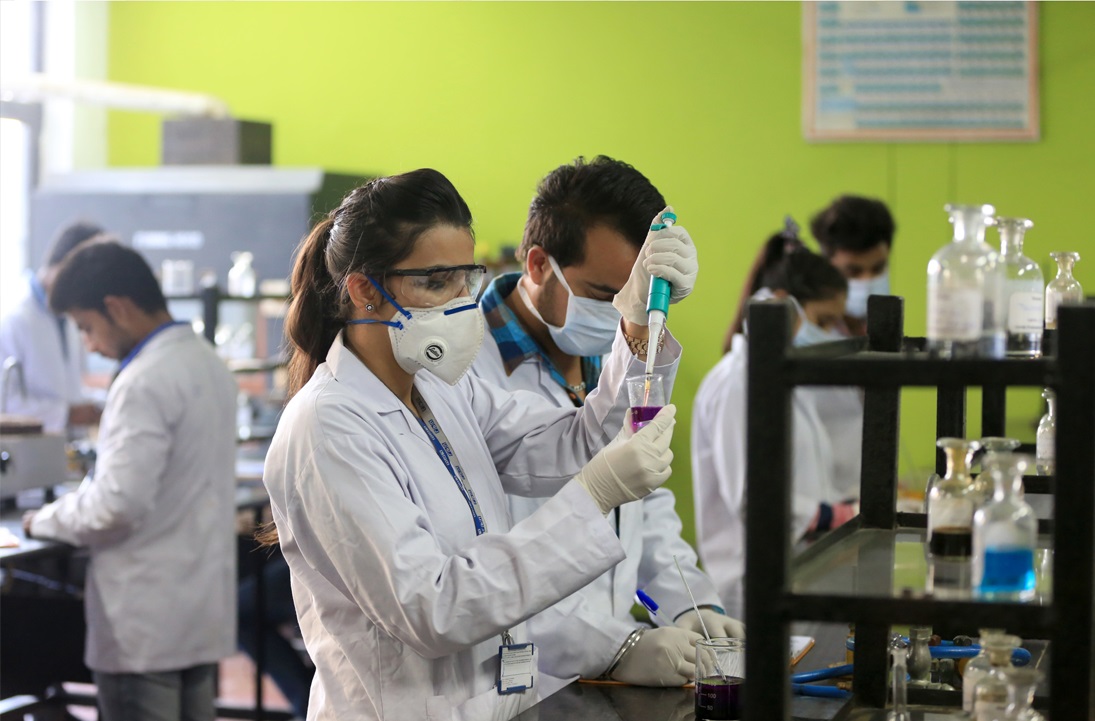
If you are a B.Pharm. student or a pharmacy professional drawn towards understanding how drugs are designed, synthesised, and how medicinal chemistry drives modern drug discovery, an M.Pharm. in Pharmaceutical Chemistry could be a rewarding academic path. At Lovely Professional University (LPU), this 2-year postgraduate specialisation is designed to build advanced expertise through a blend of core pharmaceutical chemistry concepts and practical laboratory training, whether you are headed towards an industry role or a research career. In this blog, we will break down the M.Pharm. Pharmaceutical Chemistry syllabus semester by semester, the key skills students develop during the programme, and the career opportunities that can open up after completing the degree.
Overview of the Programme
Before diving into the semester-wise syllabus, here is a quick look at the programme structure, who it is designed for, and what you need to be eligible.
Duration and Structure
M.Pharm. Pharmaceutical Chemistry at LPU is a 2-year postgraduate programme spread across four semesters, progressively moving from core coursework in the first year to advanced and research-oriented study in the second.
Who it is For
The programme is designed for B.Pharm. graduates who want to go deeper into the chemical and scientific foundations of drug development, moving beyond general pharmacy practice into more specialised territory.
Eligibility Criteria
Candidates must have passed B.Pharm. from a PCI-approved institution with at least 55% aggregate marks. A 5% relaxation in aggregate marks is applicable for SC/ST candidates.
Admission Criteria
Admission is based on merit in LPUNEST, or GPAT, or CUET, subject to fulfilment of the eligibility criteria. LPUNEST, which stands for Lovely Professional University National Eligibility and Scholarship Test, is LPU’s own entrance and scholarship test. What makes it particularly useful is that it serves a dual purpose, your score determines both your admission eligibility and your scholarship amount, meaning a stronger performance can directly reduce what you pay per semester. The exam can be taken online from home under remote proctoring or at a designated test centre, whichever is more convenient.
Semester-Wise Breakdown
LPU’s M.Pharm. Pharmaceutical Chemistry syllabus is spread across four semesters, each with a distinct focus and purpose. Rather than treating all four semesters as interchangeable taught terms, the programme is deliberately designed to evolve, from building strong subject knowledge in the first year to developing independent research capability in the second. Here is what each semester covers:
Semester 1: Building the Scientific Foundation
- Advanced Medicinal Chemistry
Medicinal Chemistry is in many ways the core of pharmaceutical chemistry as a discipline, and this subject establishes that foundation early. Students study the relationship between chemical structure and biological activity, understanding how even small changes in a molecule’s structure can significantly alter how it behaves in the body. This subject sets the conceptual framework that runs through much of the programme.
- Advanced Organic Chemistry I
Organic chemistry is the language of drug synthesis, and this subject builds the fluency students need to work with complex pharmaceutical compounds. It covers reaction mechanisms, synthetic strategies, and the principles that govern how organic molecules behave, giving students the practical chemical knowledge they will draw on throughout the programme and in their careers.
- Chemistry of Natural Products
A significant proportion of modern drugs are derived from or inspired by naturally occurring compounds, and this subject explores that connection. Students study the structure, biosynthesis, and pharmacological relevance of bioactive natural compounds, an area that remains highly active in contemporary drug discovery research.
- Modern Pharmaceutical Analytical Techniques
This subject covers the range of instrumental and analytical methods used to characterise, evaluate, and quality-test pharmaceutical compounds. From chromatography to spectroscopic methods, students develop an understanding of the tools that are central to both research and industry-based pharmaceutical work.
- Pharmaceutical Chemistry Practical I
Theory alone is not enough in pharmaceutical chemistry, and this practical component ensures students are working in the laboratory from the very first semester. Practical I runs parallel to the theory subjects, giving students hands-on experience with the techniques and methods they are learning in the classroom.
- Seminar Assignment I
Scientific communication is a skill that is often underestimated but consistently valued across both research and industry settings. Seminar Assignment I introduces students to the practice of presenting and discussing scientific ideas formally, building the academic inquiry and communication skills that become increasingly important as the programme progresses.
Semester 2: Going Deeper into Drug Science
- Advanced Organic Chemistry II
Building on the first part, this subject takes students further into the complexities of organic synthesis. More advanced reaction mechanisms, multi-step synthetic pathways, and strategies for constructing complex molecular frameworks are covered, deepening the synthetic chemistry competency that pharmaceutical research demands.
- Advanced Spectral Analysis
The ability to interpret spectroscopic data is a fundamental skill for anyone working in pharmaceutical chemistry, whether in a research lab or a quality control setting. This subject covers the interpretation of NMR, IR, mass spectrometry, and UV-Vis data, training students to deduce the structure and identity of chemical compounds from spectral evidence.
- Computer Aided Drug Design
One of the more forward-looking subjects in the curriculum, Computer Aided Drug Design introduces students to computational approaches in drug discovery. Students learn how molecular modelling, docking studies, and structure-activity relationship analysis are used to identify and optimise potential drug candidates, skills that are increasingly in demand across modern pharmaceutical R&D.
- Pharmaceutical Process Chemistry
There is a considerable difference between synthesising a compound in a laboratory and producing it at an industrial scale, and this subject bridges that gap. Students study the chemical and process considerations involved in scaling up drug synthesis, giving them an appreciation for the manufacturing side of pharmaceutical chemistry that is directly relevant to industry roles.
- Pharmaceutical Chemistry Practical II
Continuing the hands-on laboratory thread from Semester 1, Practical II builds on the techniques already introduced while adding greater complexity and depth. By the end of the first year, students have accumulated a solid base of practical laboratory experience alongside their theoretical knowledge.
- Seminar Assignment II
Seminar Assignment II continues the development of scientific communication skills begun in the first semester. Students engage more deeply with academic literature and research presentation, building the kind of scientific articulation that is expected in both research environments and professional pharmaceutical settings.
Semester 3: Transitioning into Research
1. Research Methodology and Biostatistics
Equips students with the tools to design studies, analyse data, and interpret results with statistical rigour, laying the groundwork for the dissertation work that follows.
2. Research Work
Students initiate their dissertation projects under faculty supervision, moving from structured coursework into original pharmaceutical chemistry research.
3. Discussion/Presentation (Proposal Presentation)
Students formally present their research proposals to faculty, developing the ability to articulate and defend their scientific thinking in an academic setting.
4. Journal Club I
Introduces the practice of critically reading and discussing current pharmaceutical research literature, building the habit of staying current with developments in the field.
Semester 4: Dissertation and Advanced Study
1. Research Work and Colloquium
The formal culmination of the dissertation journey, where students present their completed research findings and have their work evaluated by faculty.
2. Discussion/Presentation (Final Presentation)
The concluding presentation of the programme, bringing the dissertation work together into a structured and defensible body of research.
3. Journal Club II
Continues the critical engagement with current research literature, now at a more advanced level and in closer connection with the student’s own research work.
4. Department Elective 1
Allows students to pursue a subject of specific interest within the broader field, adding a degree of personalisation to the final semester before graduation.
Key Skills Students Develop During the Programme
The M.Pharm. Pharmaceutical Chemistry curriculum at LPU is structured to build both technical expertise and research capability over two years. Some of the key skills students develop through the programme include:
- Medicinal and Synthetic Chemistry: Through subjects like Advanced Medicinal Chemistry and Advanced Organic Chemistry I and II, students develop a strong command of how chemical compounds are designed and synthesised for therapeutic application.
- Analytical and Spectroscopic Skills: Advanced Spectral Analysis and Modern Pharmaceutical Analytical Techniques train students to characterise and evaluate drug compounds using contemporary analytical methods.
- Computational Drug Design: Computer Aided Drug Design introduces students to in-silico approaches, equipping them with skills that are increasingly in demand across pharmaceutical R&D.
- Research and Scientific Reasoning: Research Methodology and Biostatistics, combined with the dissertation work in Years 3 and 4, builds the ability to design, execute, and critically evaluate research independently.
- Scientific Communication: Seminar Assignments, Journal Clubs, and the Proposal and Final Presentations develop the ability to articulate and defend scientific ideas clearly, a skill as important in industry as it is in academia.
- Process and Manufacturing Awareness: Pharmaceutical Process Chemistry gives students an understanding of how laboratory-scale chemistry translates into real-world drug production.
Career Opportunities After M.Pharm. Pharmaceutical Chemistry
An M.Pharm. in Pharmaceutical Chemistry opens doors across a fairly wide range of industries and institutions, from pharmaceutical giants running large-scale R&D operations to academic institutions training the next generation of pharmacists and researchers. Some of the key career paths graduates typically pursue are:
| Career Area | Roles | Pharmaceutical R&D | Research Scientist, Drug Discovery Analyst, Medicinal Chemist | Analytical and Quality Control | Analytical Chemist, QC Analyst, Quality Assurance Officer | Drug Regulatory Affairs | Regulatory Affairs Associate, Documentation Specialist | Academia and Teaching | Lecturer, Assistant Professor (in pharmacy colleges) | Chemical and Drug Manufacturing | Process Chemist, Production Chemist | Doctoral and Post-Doctoral Research | PhD Scholar, Post-Doctoral Researcher | Government and Public Sector | Drug Inspector, Scientist at CSIR/ICMR/CDRI labs |
How to Apply for M.Pharm. Pharmaceutical Chemistry at LPU
The admission process at LPU is straightforward and can be completed entirely online. Here is a step-by-step breakdown:
Step 1: Sign Up
Register on the LPUADMIT portal by providing basic details including your name, email address, mobile number, state, gender, and a password. Your email address will serve as your username. Once registered successfully, you will receive a confirmation on your registered email.
Step 2: Apply for LPUNEST
LPUNEST (Entrance and Scholarship Test) is LPU’s online entrance test that serves a dual purpose. It acts as the gateway to the programme and also determines scholarship eligibility, so performing well in it can significantly reduce your fee burden.
Step 3: Book Your Exam Slot and Appear for the Exam
Once registered for LPUNEST, book your preferred exam slot. The exam can be taken in two ways:
- Test Centre-Based: Choose a preferred venue, date, and time.
- Remotely Proctored Online Exam: Appear from home by booking a preferred date and time.
Step 4: Result and Seat Allotment
After the exam, download your scorecard and rank. Fill in your seat preferences, students can select multiple preferences depending on stream and programme availability. Based on seat availability and preferences, a specific preference number will be allotted in the first round of counselling. Download your allotment letter and proceed to the admission process.
Step 5: Admission
Deposit an initial payment of Rs. 50,000 to confirm your seat, following which a Unique Candidate ID will be generated and sent to your registered email. Upload the required documents:
- Recent Photograph
- Matriculation Marksheet
- Qualifying Exam Certificate/Marksheet
- Address Proof
Additionally, apply for residential, mess, transportation, or parking facilities as required. All submitted documents must be verified against original copies within the prescribed timelines, and the balance fee must be deposited to complete the admission process.
Conclusion
Choosing a postgraduate specialisation is not just an academic decision, it is a career decision. If you have read this far, the programme has likely already caught your attention for the right reasons. LPU’s M.Pharm. Pharmaceutical Chemistry is structured to take that interest somewhere meaningful, moving students from advanced coursework in the first year to independent research in the second, at a university that holds NAAC A++ accreditation and a place in the NIRF Top 50. For any questions about the admission process or to take the next step, reach out to LPU’s admissions centre directly at 01824-404404 or walk into the admissions office on campus.
Frequently Asked Questions
Is GPAT mandatory for admission to M.Pharm. at LPU?
No, GPAT is not mandatory. LPU accepts merit scores from LPUNEST, GPAT, or CUET, so candidates who have not appeared for GPAT can still apply through LPUNEST, which is conducted by LPU itself and can be taken online from home.
Can I pursue a PhD after completing M.Pharm. Pharmaceutical Chemistry?
Yes, M.Pharm. is a recognised qualification for PhD admission in pharmaceutical sciences. Graduates who wish to continue in research can apply for doctoral programmes at LPU and the research exposure built into the second year of this programme, particularly the dissertation work, is good preparation for that path.
What is the difference between M.Pharm. Pharmaceutical Chemistry and M.Pharm. Pharmacology?
While both are postgraduate pharmacy specialisations, they differ significantly in focus. Pharmaceutical Chemistry is rooted in the chemical and molecular side of drug science, covering synthesis, drug design, and analytical chemistry. Pharmacology, on the other hand, focuses more on how drugs interact with biological systems and their effects on the body. The right choice depends on whether your interest lies more in the chemistry of the drug or the biology of its action.
Does the programme have a dissertation component?
Yes. The second year of the programme is largely research-oriented. Students begin their dissertation in Semester 3 under faculty supervision and complete and present their research work in Semester 4 through the colloquium and final presentation.
What kinds of industries hire M.Pharm. Pharmaceutical Chemistry graduates?
Graduates are hired across a fairly wide range of sectors including pharmaceutical and biotechnology companies, contract research organisations, analytical testing laboratories, regulatory bodies, and academic institutions. The analytical and research skills built through this programme are applicable across all of these.