
Introduction
When we talk about stress, we usually think about humans or animals. But what about plants? Do they actually feel stress? The answer is fascinating. While plants don’t experience emotions, they have highly advanced systems to detect and respond to stress.
Modern plant biology research shows that plants constantly monitor their surroundings and react through complex biological processes. These responses are part of a sophisticated plant stress response system that helps them survive changing environments.
What is Stress in Plants?
In plants, stress refers to any external factor that affects growth or survival. This includes:
- Drought and heat
- Pests and diseases
- Soil salinity
- Physical damage
These are collectively known as environmental stress plants face daily. Since plants cannot move, they rely on internal systems to adapt and survive.
How Do Plants Detect Stress?
Plants use specialized sensors to detect environmental changes. These sensors are part of a complex plant signaling system that allows plants to respond quickly.
For example:
- During drought, plants produce abscisic acid to conserve water
- When attacked by insects, they activate defense mechanisms
These responses highlight the importance of plant hormones signaling in managing stress conditions.
The Plant Signaling System Explained
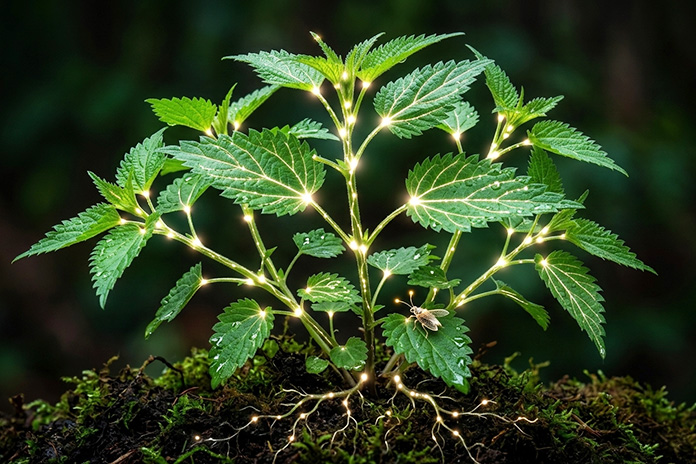
Plants don’t have a nervous system, but they do have an advanced plant signaling system that works through chemical and electrical signals.
Key components include:
- Hormones (ABA, jasmonic acid, salicylic acid)
- Calcium signals
- Reactive oxygen species
Together, these form the foundation of plant communication science, enabling plants to coordinate responses across different parts of their structure.
Do Plants Communicate Stress?
Yes, plants can “communicate” stress signals both internally and externally.
- Internally: Signals travel within the plant to activate defense
- Externally: Plants release chemicals into the air to warn nearby plants
This fascinating area of plant communication science shows that plants are far more interactive than we once thought.
Genetic and Biological Responses
At the molecular level, stress triggers gene activation. This is a crucial part of the plant stress response.
Plants may:
- Produce protective proteins
- Adjust growth patterns
- Strengthen defense mechanisms
This adaptability is a major focus of plant biology research, especially for improving crop resilience.
Do Plants Actually “Feel” Stress?
Plants do not feel stress in the emotional sense like humans. They lack a brain and nervous system. However, they do:
- Detect stress
- Process signals
- Respond in a coordinated way
So while they don’t “feel,” their biological responses are highly advanced and efficient.
Why This Matters
Understanding plant stress is essential for agriculture and sustainability.
With increasing climate challenges, studying:
- environmental stress plants face
- plant hormones signaling
- plant stress response mechanisms
can help scientists develop stronger, more resilient crops.
This is where plant biology research plays a key role in ensuring food security and sustainable farming.
Conclusion
Plants may not feel stress like humans, but they are far from passive. Through complex plant signaling systems and advanced plant communication science, they continuously adapt to their environment.
The study of plant stress response not only reveals how plants survive but also helps us build a more sustainable future.
In simple terms, plants don’t feel stress—but they are incredibly smart at handling it