Introduction
Artificial Intelligence (AI) and Machine Learning (ML) are transforming how healthcare and research operate in today’s digital age. From faster diagnoses to smarter treatment planning, healthcare innovation AI is making systems more efficient and patient-focused.
In countries like India, the rise of AI in healthcare India is accelerating digital transformation, improving accessibility, and supporting better clinical decisions. What once took years can now be achieved in months with the help of intelligent systems.
AI and ML in Modern Healthcare
Healthcare generates massive amounts of data—from medical imaging to patient records. This is where machine learning medical applications come into play.
AI helps:
- Analyze complex medical data
- Predict disease risks
- Support clinical decision-making
This shift is building the foundation for smart healthcare systems that are faster, more accurate, and scalable.
AI in Diagnostics and Clinical Decision-Making
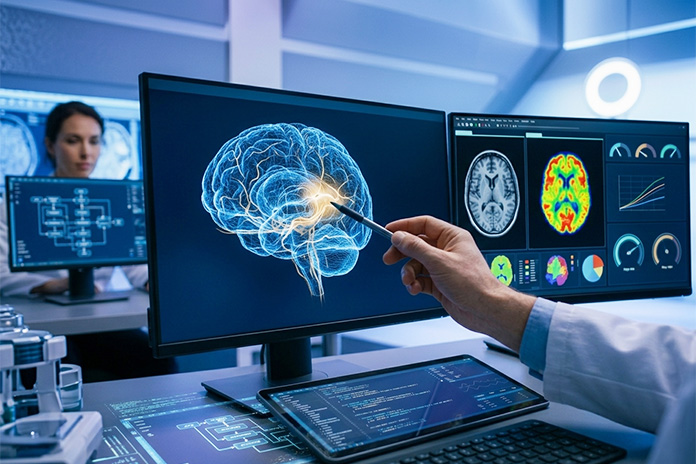
One of the most impactful uses of AI is in diagnostics.
With AI diagnostics, doctors can:
- Detect diseases like cancer at early stages
- Analyze X-rays, MRIs, and CT scans quickly
- Reduce human error in diagnosis
This is a key step toward a stronger digital health future, where technology supports doctors rather than replacing them.
AI in Drug Discovery and Research
AI/ML is reshaping how drugs are discovered and developed.
Traditionally, drug development was slow and expensive. Now:
- AI models screen thousands of compounds quickly
- Predict drug interactions and outcomes
- Reduce research time and cost
This demonstrates the power of healthcare innovation AI in accelerating scientific breakthroughs.
Precision Medicine and Personalized Healthcare
AI is enabling a shift toward personalized healthcare.
By combining genetic, clinical, and lifestyle data:
- Treatments can be tailored to individuals
- Disease progression can be predicted
- Better outcomes can be achieved
These advancements highlight the growing importance of machine learning medical applications in modern medicine.
Growth of AI in Healthcare India
India is rapidly adopting AI in healthcare, making it more accessible and affordable.
The growth of AI in healthcare India includes:
- Telemedicine platforms
- AI-powered diagnostics tools
- Digital patient management systems
This progress is shaping the country’s digital health future and strengthening healthcare infrastructure.
Emerging Trends in Smart Healthcare Systems
The next phase of healthcare is driven by innovation and automation.
Key trends include:
- AI-powered virtual assistants
- Digital twins for patient simulation
- Integrated data platforms
These developments are building advanced smart healthcare systems that improve efficiency and patient care.
Challenges and Ethical Considerations
Despite its benefits, AI in healthcare comes with challenges:
- Data privacy and security concerns
- Bias in AI models
- Need for regulatory frameworks
Ensuring ethical use is essential for sustainable growth in healthcare innovation AI.
Future of AI/ML in Healthcare
The future looks promising as AI continues to evolve.
We can expect:
- More accurate AI diagnostics
- Wider adoption of machine learning medical applications
- Expansion of smart healthcare systems
This will further strengthen the digital health future globally and in India.
Conclusion
AI and ML are redefining research and healthcare by making them smarter, faster, and more efficient. From AI diagnostics to personalized medicine, these technologies are shaping the next generation of healthcare systems.
With the rapid rise of AI in healthcare India and global advancements in healthcare innovation AI, the future is clearly digital, intelligent, and patient-centric.
In simple terms, AI/ML is not just enhancing healthcare—it is transforming it.