
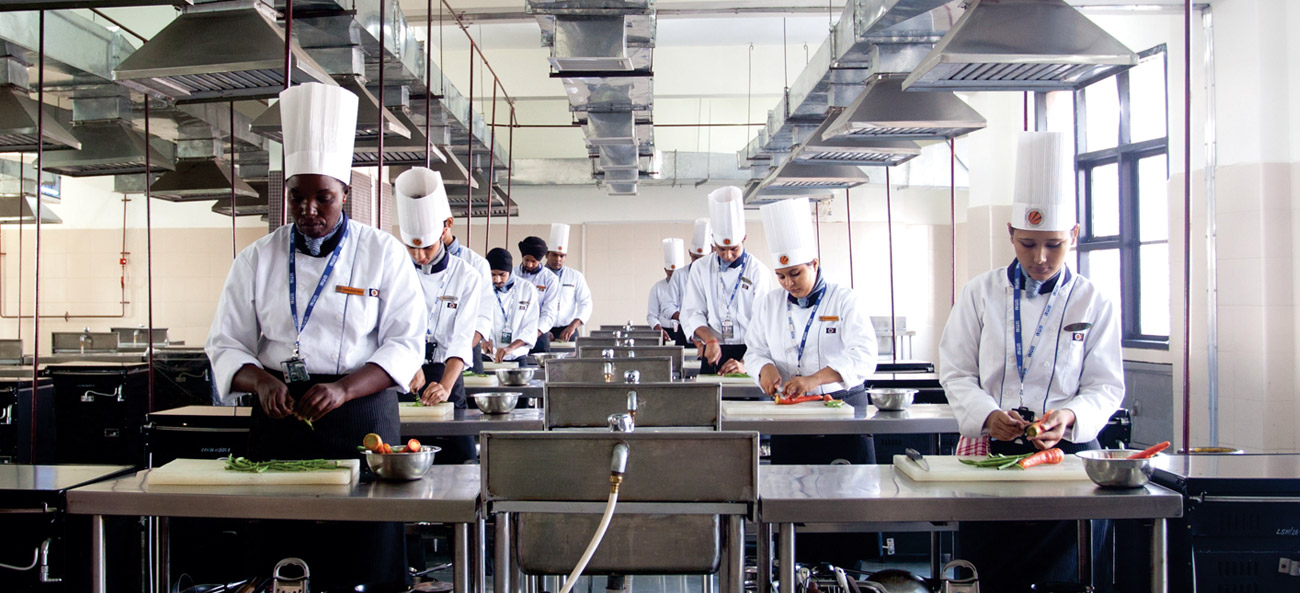
The hospitality industry continues to expand globally, driven by tourism, business travel, luxury experiences, and evolving consumer expectations. From boutique hotels to international chains, airlines to cruise lines, the demand for trained professionals is rising steadily. For students interested in people, travel, and dynamic work environments, hotel management courses offer a compelling answer.
Today, a wide range of hotel management courses are offered by universities, including diplomas, full-time degrees such as BSc hotel management or Bachelor of Hotel Management and Catering Technology, and even advanced postgraduate and research programmes. Each pathway offers a different level of depth, exposure, and career progression. In this article, we will explain all the options to help you make an informed decision about your future in the hotel management field after 12th.
Hotel Management Course: Quick Overview
|
What is a Hotel Management Course?
A hotel management course focuses on preparing students for the operational and managerial aspects of the hospitality industry. It goes beyond theory and emphasises real-world skills such as guest experience management, service delivery, communication, and business operations.
Students are trained across key areas, including food production, front office management, housekeeping, and hospitality marketing. Over time, these skills evolve into leadership capabilities, enabling graduates to manage teams, oversee operations, and contribute to business growth within the hospitality ecosystem.
Types of Hotel Management Courses in India
Before choosing a programme, it is important to understand how different hotel management courses compare in terms of depth, duration, and career outcomes.
| Course Type | Duration | Best For | Career Outcome |
| Bachelor’s Degree | 3-4 years | Long-term career growth | Management roles |
| Master’s Degree | 2 years | Specialisation & leadership | Senior roles |
| Ph.D. | 3-5 years | Research & academia | Academic & advisory roles |
Bachelor’s Degree in Hotel Management
A bachelor’s degree in hotel management remains the most preferred option among students aiming for long-term career growth in the hospitality sector. At LPU, we provide a variety of undergraduate courses in hotel management, including B.Sc. Hotel and Hospitality Management and Bachelor of Hotel Mngt and Catering Technology (BHMCT).
These programmes, or courses after 12th, typically span 3-4 years and offer a comprehensive understanding of both operational and managerial aspects of hospitality, combining classroom learning with hands-on industry exposure.
Graduates of a Bachelor’s Degree in Hotel Management can explore a wide range of roles across hospitality operations and customer experience functions, such as Hotel Manager and Chef.
These roles offer structured career progression, with opportunities to move into supervisory and managerial positions over time.
Eligibility
Students must complete 10+2 from a recognised board, typically with a minimum of 50% aggregate marks along with English as a subject. In cases where English has not been studied as a subject, the requirement may be relaxed if the qualifying education was completed in an English medium institution.
At Lovely Professional University, admission to undergraduate hospitality programmes follows similar criteria, with a 5% relaxation available for candidates from North-East states and Sikkim, Defence Personnel and their dependents, and wards of Kashmiri migrants. Admission and scholarship opportunities are available through LPUNEST, enabling students to access quality education with financial support.
Students who have completed a diploma can advance their education through lateral entry options into undergraduate degrees. These include:
- B.Sc. Hotel and Hospitality Management (Lateral Entry)
- Bachelor of Hotel Management and Catering Technology (BHMCT) – Lateral Entry
- B.Sc. Airlines, Tourism and Hospitality (Lateral Entry)
This allows diploma holders to build on their existing skills, gain a recognised degree, and move into higher-level roles within the hospitality industry.
Course Fees
The B.Sc. Hotel and Hospitality Management and Bachelor of Hotel Mngt and Catering Technology (BHMCT) course fee at LPU is ₹80,000 per semester. Scholarships based on merit and entrance performance (LPUNEST) can significantly reduce the financial burden. Explore the Programme Fee section on the respective course pages for detailed information.
Key Subjects Covered
The curriculum is designed to balance theory with practical exposure.
Core subjects include:
- Food Production
- Front Office Management
- Housekeeping
- Food & Beverage Service
Advanced subjects include:
- Revenue Management
- Luxury Hospitality
- International Hospitality Operations
Why a Bachelor’s in Hotel Management is the Most Preferred Path
Unlike short-term diploma courses, a full-time degree offers structured learning, industry exposure, and leadership training. It opens doors to international opportunities and positions students for long-term growth rather than entry-level roles.
At Lovely Professional University, students can choose from a wide range of undergraduate programmes aligned with different career paths within hospitality and tourism.
Regular programmes include:
- B.Sc. Hotel and Hospitality Management
- Bachelor of Hotel Management and Catering Technology (BHMCT)
Specialised programmes include:
- BBA Tourism, Hospitality and Event Management
- B.Sc. Culinary Arts
- B.Sc. Bakery and Pastry Management
- B.Sc. Airlines, Tourism and Hospitality
- BBA Airlines and Airport Management
For students seeking global exposure, LPU also offers an International Credit Transfer option, including a 2+2 pathway in Bachelor of Hotel Management and Catering Technology, enabling students to gain international academic and industry experience.
These programmes are supported by strong practical training, modern infrastructure, and internship opportunities, helping students develop both technical expertise and managerial confidence from the early stages of their careers.
Master’s in Hotel Management
For students looking to advance their careers, a master’s in hotel management provides deeper insight into strategic and managerial aspects of hospitality.
These programmes typically last two years and are open to graduates from hotel management or related fields. Some universities also accept students from other disciplines, allowing students to transition into the hospitality sector at a higher level.
Graduates often move into senior roles such as hospitality consultant, operations manager, or department head within leading organisations.
Eligibility
To pursue a master’s degree in hotel management, candidates must typically hold a bachelor’s degree with at least 50% aggregate marks or equivalent. While some institutions prefer a hospitality background, many universities accept graduates from any discipline.
At Lovely Professional University, eligibility for many hotel management programmes requires a minimum of 50% aggregate marks in a bachelor’s degree. A relaxation of 5% is applicable for candidates from North-East states and Sikkim, Defence Personnel and their dependents, and wards of Kashmiri migrants.
For specialised programmes such as MBA in Tourism, Aviation and Hospitality, candidates must typically have at least 55% aggregate marks in graduation and qualify through LPUNEST or other recognised entrance exams such as CAT, XAT, MAT, or CMAT. The selection process also includes a video essay and an interview. Candidates with professional qualifications such as CS, CA, or CMA may also apply, subject to qualifying the interview process.
Course Fees
A master’s degree in hotel management focuses on areas such as operations strategy, customer experience, and business development. Fees for the M.Sc. in Hospitality Management (2 years, 4 semesters) at LPU is ₹80,000 per semester and for the MBA Tourism, Aviation and Hospitality (2 years, 4 semesters) at LPU is ₹1,40,000 per semester. Scholarships are available based on performance in LPUNEST, the LPU Rise initiative, and other recognised examinations. For detailed eligibility and scholarship criteria, explore the respective programme page.
At Lovely Professional University, postgraduate programmes are designed to build leadership capabilities, with a strong focus on global hospitality trends, business strategy, and practical exposure. This enables students to transition into senior management roles across hotels, airlines, tourism organisations, and allied service industries.
Ph.D. in Hotel Management
A Ph.D. represents the highest level of academic qualification in hospitality management studies, focusing on research, innovation, and policy development.
The programme typically spans 3-5 years and requires a master’s degree with strong academic performance. Admission may involve entrance exams and interviews, often aligned with institutional criteria such as LPUNEST.
Career opportunities include academic roles such as professor, as well as research and advisory positions in policy-making bodies and hospitality organisations. At Lovely Professional University, doctoral programmes are available across both hospitality and tourism domains, offering flexibility based on career goals and research interests.
Eligibility
To apply for a Ph.D. in Hotel Management, candidates must typically have a master’s degree with at least 55% aggregate marks or equivalent, as prescribed by regulatory bodies. Selection generally involves qualifying an entrance exam followed by an interview to assess research aptitude.
At Lovely Professional University, Ph.D. admissions follow a structured process that includes qualifying LPUNEST and an interview, ensuring candidates are well-prepared for academic research.
Research Areas
Research areas include hospitality operations, tourism strategy, sustainability, and consumer behaviour in service industries.
Full-time programmes include:
- Ph.D. (Hotel Management)-Full Time Mode
- Ph.D. (Tourism Management)- Full Time Mode
Part-time programmes include:
- Ph.D. (Hotel Management)-Part Time Mode
- Ph.D. (Tourism Management)-Part Time Mode
These programmes provide a structured research environment, access to experienced faculty, and opportunities to contribute to evolving areas such as sustainable tourism, hospitality innovation, and service excellence.
Once you understand the different course pathways, the next step is to explore where a career in hotel management can take you.
Career Pathways After Hotel Management Course
The hospitality industry offers a wide range of career opportunities across sectors and geographies. As travel and tourism continue to expand, the demand for trained professionals remains strong.
Did You Know?India’s tourism and hospitality sector is projected to generate over 48 million jobs by 2025, rising to nearly 64 million by 2035, while also reaching US$ 50.9 billion by 2028—highlighting its growing role in employment and economic development. |
Top Career Roles
A career in hospitality is far more diverse than traditional hotel roles. Graduates of hotel management courses can explore opportunities across hotels, aviation, cruise lines, luxury services, and event management. As the industry evolves, roles now combine operational expertise with customer experience and business strategy.
Below is an overview of key career roles and what they involve:
| Role | Description |
| Hotel Manager | Oversees overall hotel operations, ensuring smooth functioning, guest satisfaction, and profitability. |
| Chef | Manages kitchen operations, menu planning, and food preparation across cuisines and service formats. |
| Front Office Manager | Handles guest check-ins, reservations, and customer interactions, acting as the face of the hotel. |
| Housekeeping Manager | Ensures cleanliness, hygiene, and maintenance standards across rooms and hotel premises. |
| Food & Beverage Manager | Supervises dining services, restaurant operations, and guest dining experiences. |
| Event Manager | Plans and executes events such as weddings, conferences, and corporate functions. |
| Cruise Line Staff | Works in hospitality roles aboard cruise ships, managing guest services, dining, and entertainment. |
| Airline Cabin Crew/ Hospitality Staff | Delivers in-flight service and ensures passenger comfort and safety. |
| Hospitality Consultant | Advises hotels and hospitality businesses on operations, branding, and customer experience. |
| Revenue Manager | Analyses pricing strategies and demand patterns to maximise hotel profitability. |
| Guest Relations Manager | Focuses on enhancing guest satisfaction, handling feedback, and building brand loyalty. |
| Resort Manager | Manages operations of luxury resorts, including guest experience and recreational services. |
| Catering Manager | Oversees food service operations for events, institutions, or corporate clients. |
| Entrepreneur (Hospitality Business Owner) | Starts and manages ventures such as restaurants, cafés, or boutique hotels. |
| Travel & Tourism Manager | Coordinates travel services, itineraries, and tourism experiences for clients. |
Salary Insight
The salary after a hotel management course depends on factors such as experience, job role, and the segment you work in. Entry-level roles offer foundational exposure, while senior positions and specialised roles command significantly higher compensation.
Hotel Management Salary Overview (India)
| Career Level | Experience | Salary Range | Overview |
| Entry-Level (Freshers) | 0-2 years | ₹15,000-₹16,000 per month (₹1.1 – ₹2 LPA) | Entry roles across front office, F&B, and kitchen operations, focused on skill-building and hands-on experience. |
| Mid-Level | 3-7 years | ₹5-₹10 LPA | Professionals move into supervisory and specialised roles with increased responsibilities in operations and team management. |
| Senior-Level | 8+ years | ₹14 LPA and above | Leadership roles such as hotel manager, department head, or consultant with strategic and business responsibilities. |
It is also useful to look at large-scale benchmarking studies, such as The Indian Hospitality Compensation Survey 2025-26 by The People Network, one of the most comprehensive analyses in the sector, covering 888 hotels, 130+ roles, 14 functional areas, and over 22,000 data points across budget, upscale, and luxury segments.
Hospitality Salary Comparison Across Segments (India)
| Role | Luxury Hotels (Upper Quartile) | Upscale Hotels | Budget Hotels |
| General Manager | ₹1.15 crore | ₹55 lakh | ₹15.5 lakh |
| Director / Head of Finance | ₹55 lakh | ₹35 lakh | ₹11.9 lakh |
| Executive / Head Chef | ₹49 lakh | ₹39.7 lakh | ₹12.7 lakh |
| Director of F&B / F&B Manager | ₹40.4 lakh | ₹12.9 lakh | ₹9.8 lakh |
Industry Demand
The growth of global tourism, luxury hospitality, and experiential travel continues to drive demand for skilled professionals. Emerging sectors such as aviation, hospitality, and cruise tourism further expand career opportunities.
| Area | Key Data / Projection | What It Means for Careers |
| Government Vision | Vision@2047 aims to attract 100 million inbound tourists | Long-term expansion of the hospitality sector and sustained job creation |
| GDP Contribution | Expected to grow from US$ 256 billion (2024) to US$ 523 billion (2034) | Increased investment and demand for skilled professionals across roles |
| Economic Contribution (2025) | Over ₹22 lakh crore contribution expected | Strong industry growth and stability |
| Employment Growth | 48 million jobs in 2025; projected ~63-64 million by 2034-35 | Significant rise in job opportunities across hospitality sectors |
| Current Employment Share | 46.5 million jobs in 2024 (9.1% of total employment) | Hospitality is already a major employment generator in India |
| Medical Tourism | 1.31 lakh+ foreign tourist arrivals (Jan-Apr 2025) | Growing demand for healthcare hospitality and specialised services |
| Wellness Tourism | ₹1.64 lakh crore (2024) → ₹2.51 lakh crore by 2031 (6.5% CAGR) | Expansion of spa, wellness, and holistic hospitality careers |
| Luxury Travel Segment | Expected to grow at 9.8% annually, reaching US$ 123.7 billion by 2030 | Higher-paying opportunities in premium hospitality and luxury services |
Top Recruiters
Graduates of hotel management courses are recruited by leading hospitality brands, luxury hotel chains, and global service organisations. These recruiters value strong operational training, customer service skills, and industry exposure.
Leading employers include:
- Taj Hotels
- Oberoi Group
- Marriott International
- Hyatt Hotels
- ITC Hotels
- Accor Hotels
- The Leela Palaces, Hotels & Resorts
In addition to hotel chains, opportunities are also available in airlines, cruise lines, and tourism organisations, expanding the scope beyond traditional hospitality roles.
Why Choose LPU for Bachelor of Hotel Management and Other Courses
At Lovely Professional University, the Bachelor’s in Hotel Management programmes are designed to align with real-world industry expectations, combining academic rigour with practical exposure and global perspectives.
Industry-Aligned Curriculum
The programme integrates classroom learning with industry-endorsed practices, ensuring students build both operational expertise and managerial understanding required in modern hospitality environments.
Hands-On Training
Students gain practical exposure through advanced infrastructure, including training kitchens, bakery labs, and simulated hospitality environments. This ensures readiness for real-world roles from the early stages of the programme.
Global Exposure
With a diverse student community representing 40+ countries, LPU offers a truly international learning environment. This exposure helps students develop cultural awareness and adaptability, which are some of the most valued traits in global hospitality careers.
Internships & Placement Support
Structured internships and dedicated placement support connect students with leading hospitality brands. The university has a strong recruiter base with 70+ companies participating in placements, offering opportunities across hotels, airlines, and allied sectors.
Placement outcomes reflect this strength:
- Highest salary package: ₹32 LPA
- Highest international stipend: ₹3.4 lakh
- Average package (top 10%): ₹7.2 lakh
Skill Development Focus
The curriculum emphasises communication, personality development, and professional grooming; skills essential for success in hospitality careers.
Recognition & Rankings
LPU’s credibility is further reinforced by its strong national and global rankings:
- Ranked 31st in NIRF 2025 among all government and private institutions
- Recognised among the top global universities for innovation (4th rank)
- Ranked 5th globally across government, IITs, and private institutions (World University Rankings 2026)
Scholarships & Accessibility
Scholarships are available through LPUNEST, making quality education more accessible for deserving students.
Give a Solid Foundation to Your Career in Hotel Management
A career in hospitality is no longer limited to hotel operations; it spans global industries, leadership roles, and entrepreneurial opportunities. Whether you begin with a diploma or directly pursue a bachelor’s degree in hotel management, the pathway offers continuous growth through master’s and doctoral programmes.
Choosing the right course and institution plays a crucial role in shaping your future. With industry-focused training, global exposure, and strong placement support, LPU provides a well-rounded platform to build a successful career in hospitality.
Explore the Bachelor’s of Hotel Management programmes and other hotel management courses on the Discipline of Hotel Management and Tourism’s page for admission and scholarship details.
Frequently Asked Questions
Q.1. What is the eligibility for hotel management courses in India?
Eligibility varies by course level. Diploma courses require Class 10 or 12, while a bachelor’s degree in hotel management requires 10+2 with minimum marks and, in some cases, entrance exams.
Q.2. Can I pursue a hotel management course after 12th?
Yes, hotel management courses after 12th are widely available. Students from any stream can apply for a diploma, BHM, or BSc hotel management programmes.
Q.3. What is the duration of a hotel management course?
Diploma courses take 6 months to 1 year, bachelor’s programmes take 3-4 years, master’s programmes take 2 years, and PhD programmes take 3-5 years.
Q.4. What is the difference between BHM and a diploma in hotel management?
A BHM is a full-time degree focusing on management and long-term growth, while a diploma is shorter and focused on basic operational skills.
Q.5. What is the average salary after a hotel management course?
Entry-level salaries range from ₹2.5-5 LPA, with experienced professionals earning ₹6-12 LPA or more depending on role and location.
Q.6. Is hotel management a good career option?
Yes, it offers global opportunities, diverse roles, and steady industry demand driven by tourism and hospitality growth.
Q.7 Do hotel management courses require entrance exams?
Some universities and courses require merit in entrance exams. For example, LPUNEST is used for admission in MBA courses and scholarships at LPU.
Q.8. What skills are required for hotel management?
Key skills include communication, customer service, teamwork, problem-solving, and time management, along with strong interpersonal abilities.
Q.9. What is the eligibility for BHM at Lovely Professional University?
LPU offers Bachelors in Hotel Mngt and Catering Technology (BHMCT). Students must complete 10+2 with the required minimum aggregate marks from a recognised board. Admission is primarily based on merit in the qualifying examination, with applicable relaxations for specific categories. Explore the programmes page for more details.
Q.11. What are the fees for hotel management courses at LPU?
The B.Sc. Hotel and Hospitality Management and BHMCT programmes at Lovely Professional University are priced at ₹80,000 per semester. For postgraduate studies, the M.Sc. Hospitality Management is ₹80,000 per semester, while the MBA in Tourism, Aviation and Hospitality is ₹1,40,000 per semester. Scholarships are offered based on merit, performance in LPUNEST, the LPU Rise initiative, and other recognised examinations. For detailed fee structures and eligibility, refer to the respective programme pages.
Q.12. Does LPU provide placements for hotel management students?
Yes, LPU provides structured placement support for hotel management students, with opportunities across leading hospitality brands, airlines, and international recruiters. The university focuses on industry exposure, internships, and skill development to prepare students for real-world roles.
Placement outcomes reflect this strength, with the highest salary package of ₹32 LPA, the highest international stipend of ₹3.4 lakh, and an average package of ₹7.2 lakh for the top 10% students. To explore detailed placement statistics, recruiter profiles, and role-wise opportunities, students are encouraged to visit the official placements page on the LPU website.