
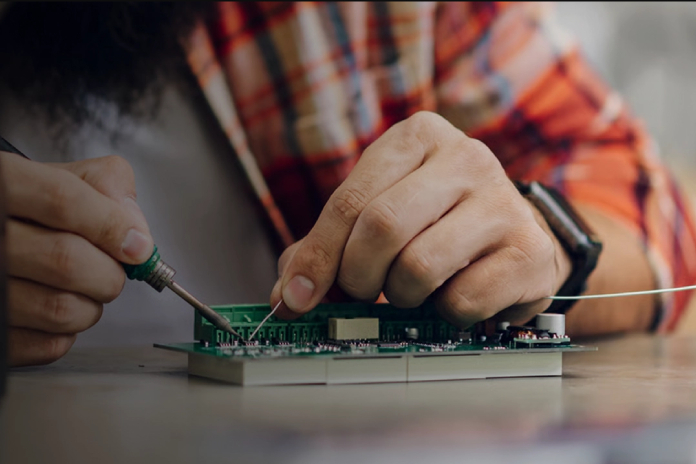
- Where Electronics Meets Chip Innovation
- Who Should Consider This VLSI-Focused Engineering Degree?
- What Will You Learn as a VLSI Design Student?
- Aligning the Program with Your Career Goals
- Skills and Mindset Required to Succeed in VLSI
- How Is This Program Different from Traditional ECE Degrees?
- Career Scope and Industry Demand for VLSI Engineers
- Current Trends Shaping VLSI and Semiconductor Careers
- Alumni Success Stories: From Campus to Chip Industry
- Role of Projects, Research, and Hands-On Innovation
- Final Words: Making the Right Engineering Choice
- Frequently Asked Questions (FAQs)
Where Electronics Meets Chip Innovation
The world is rapidly moving toward digital transformation, and at the center of this evolution lies semiconductor technology. Every modern device-from smartphones and laptops to electric vehicles, smart appliances, and artificial intelligence systems-depends on integrated circuits. This growing reliance on hardware innovation has significantly increased the demand for professionals skilled in VLSI design engineering. As industries adopt automation, IoT, and AI-based hardware, semiconductor technology education has become one of the most future-focused choices in engineering.
Lovely Professional University offers B. Tech. (ECE – VLSI Design and Technology) to help students develop expertise in chip architecture, semiconductor devices, and integrated circuit design. The program blends electronics fundamentals with advanced hardware development concepts. With the future of chip design careers expanding globally, students trained in VLSI can contribute to the electronics and semiconductor industry in diverse roles.
The importance of semiconductor innovation is also reflected in global investments in chip manufacturing. Governments and technology companies are investing heavily to strengthen hardware ecosystems. This makes VLSI specialization highly relevant for students who want to work in next-generation technology domains.
| Did You Know? Modern processors used in computers contain billions of transistors, all designed using VLSI technology to improve performance and efficiency. |
Who Should Consider This VLSI-Focused Engineering Degree?
Students who enjoy electronics, logical reasoning, and hardware innovation are ideal candidates for this specialization. If you are exploring who should study VLSI design, consider whether you are interested in circuits, chip architecture, and semiconductor devices. This program is suitable for individuals who want to understand how processors and integrated circuits function.
The VLSI engineering eligibility typically requires Physics and Mathematics in 10+2, along with analytical thinking ability. Students who are electronics students interested in semiconductor careers can benefit from this course because it focuses on hardware development rather than general electronics. Those searching for the best degree for chip design often choose this specialization due to its industry-oriented curriculum.
Ideal Student Profile
| Interest Area | Why It Matters |
| Electronics | Helps understand circuit fundamentals |
| Mathematics | Required for logic design |
| Logical Thinking | Essential for digital systems |
| Programming | Needed for HDL coding |
| Problem Solving | Important for optimization |
What Will You Learn as a VLSI Design Student?
The program includes comprehensive VLSI design subjects that combine theory and practical learning. Students explore digital electronics, semiconductor devices, analog circuits, and chip architecture. The semiconductor engineering curriculum gradually introduces advanced topics such as hardware description languages, ASIC design, and embedded systems.
Through digital circuit design learning, students understand logic gates, timing analysis, and circuit optimization. Exposure to chip design technologies helps them work with simulation tools and hardware platforms.
Core Subjects in the Program
| Category | Subjects |
| Foundation | Mathematics, Physics, Basic Electronics |
| Core VLSI | Digital Electronics, CMOS Design |
| Programming | Verilog, VHDL |
| Advanced | ASIC Design, Embedded Systems |
| Practical | Labs, Mini Projects |
Students also gain experience in chip simulation and debugging.
Aligning the Program with Your Career Goals
Students planning VLSI career planning often aim for semiconductor companies and electronics firms. The semiconductor engineering career path includes chip design, verification, and embedded systems roles. Growing chip design job opportunities allow graduates to explore diverse industries.
The program helps students align academic learning with career objectives by providing exposure to semiconductor workflows.
Skills and Mindset Required to Succeed in VLSI
To excel in this field, students need strong VLSI design skills and semiconductor engineering skills. Analytical thinking and attention to detail are essential.
Skills Developed
| Skill | Application |
| Digital Logic | Circuit design |
| HDL Coding | Simulation |
| Debugging | Error detection |
| Analytical Thinking | Optimization |
| Problem Solving | Performance improvement |
| Did You Know? Chip design engineers often run hundreds of simulations before finalizing a single processor. |
How Is This Program Different from Traditional ECE Degrees?
The VLSI vs traditional ECE degree difference lies in specialization depth. Traditional ECE covers communication and electronics broadly, while this program focuses on chip design. The difference between ECE and VLSI specialization is deeper semiconductor exposure.
VLSI vs Traditional ECE
| Feature | Traditional ECE | VLSI Specialization |
| Focus Area | Broad electronics | Chip design |
| Subjects | Signals, communication | CMOS, ASIC |
| Career Path | Mixed roles | Core hardware roles |
| Industry Alignment | Moderate | High |
| Practical Exposure | Limited | Extensive |
Career Scope and Industry Demand for VLSI Engineers
There are growing VLSI job opportunities due to semiconductor demand. The expansion of semiconductor industry jobs has created roles across hardware companies.
Career Opportunities
| Job Role | Description |
| VLSI Engineer | Chip design |
| Verification Engineer | Testing circuits |
| ASIC Engineer | Custom chips |
| Embedded Engineer | Hardware integration |
| Test Engineer | Performance evaluation |
The VLSI engineer salary and demand trend remains strong.
Current Trends Shaping VLSI and Semiconductor Careers
The semiconductor industry trends include AI processors and IoT chips. Chip manufacturing technology trends focus on miniaturization and performance optimization. The growth of AI chips and semiconductor innovation is expanding career scope.
Industry Applications of VLSI
| Industry | Application |
| Consumer Electronics | Smartphones, laptops |
| Automotive | Electric vehicles |
| Healthcare | Medical devices |
| Telecom | 5G networks |
| AI & Robotics | Smart processors |
Key trends include:
- AI chip development
- IoT devices
- Edge computing
- Sustainable electronics
These trends ensure long-term career growth in this field.
Alumni Success Stories: From Campus to Chip Industry
Many VLSI graduate success stories show students entering semiconductor companies. A semiconductor engineer career journey often begins with internships. Electronics alumni achievements highlight the importance of practical learning.
Typical Journey:
- Internship – Entry-level engineer
- Mid-level – Design specialist
- Senior – Leadership roles
Some students also pursue higher studies or international careers, expanding their opportunities globally.
Role of Projects, Research, and Hands-On Innovation
Students work on VLSI design projects for students such as logic circuits. Semiconductor research opportunities allow innovation.
Practical Learning
| Activity | Learning Outcome |
| Lab Work | Circuit testing |
| Projects | Design experience |
| Workshops | Tool exposure |
| Simulation | Validation |
| Research | Innovation |
| Did You Know? Global teams collaborate to design advanced processors. |
Final Words: Making the Right Engineering Choice
The benefits of studying VLSI engineering include specialization and industry demand. Growing semiconductor career opportunities ensure long-term prospects. The future of VLSI technology continues to expand.
Choosing the right engineering field is a crucial decision. VLSI stands out because it offers:
- Strong technical foundation
- High industry demand
- Global opportunities
As technology continues to evolve, the demand for efficient hardware solutions will only increase. This makes VLSI one of the most future-proof engineering specializations.
Frequently Asked Questions (FAQs)
Q1. What is VLSI engineering?
It focuses on chip design and semiconductor technology.
Q2. Is VLSI a good career?
Yes, due to growing semiconductor demand.
Q3. What skills are required?
Digital electronics and programming.
Q4. What industries hire VLSI engineers?
Semiconductor, telecom, electronics.
Q5. Are practical projects included?
Yes, labs and design assignments.





![Why B.Sc. Information Technology [Lateral Entry] at LPU Stands Out](https://www.lpu.in/blog/wp-content/uploads/2025/12/Why-B.Sc_.-Information-Technology-Lateral-Entry-at-LPU-Stands-Out-100x70.png "Why B.Sc. Information Technology [Lateral Entry] at LPU Stands Out?")