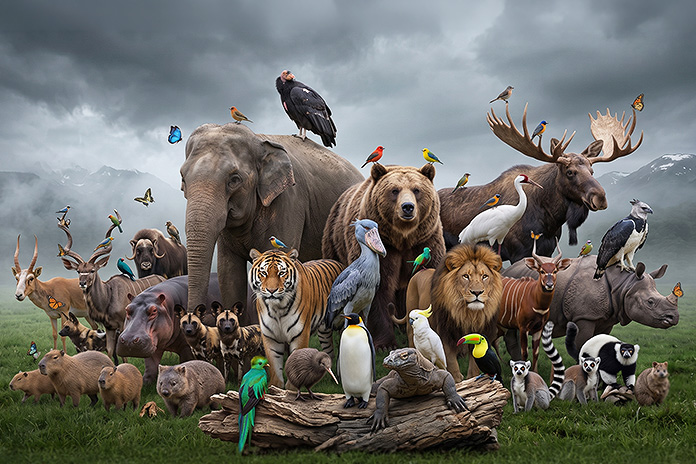
Biodiversity conservation has become an important focus worldwide. Habitat loss, climate change, and pollution are putting ecosystems under pressure at a scale that is difficult to ignore, and declining wildlife populations are one of the most visible signs of that. For students interested in wildlife, who want to contribute to protecting the animal world, B.Sc. Hons. Zoology is a natural fit. From wildlife research and conservation management to emerging fields such as conservation genetics and wildlife forensics, the scope of the degree continues to expand. This article covers why the degree is gaining ground, what the curriculum covers, and some of the career paths it can lead to.
Why Biodiversity Conservation Has Become a Global Priority
Biodiversity conservation has moved to the forefront of global discussions because the loss of species and ecosystems is no longer viewed as an isolated environmental issue. It is increasingly recognised as a challenge that affects food security, public health, climate stability, economic development, and overall human well-being. Several factors have contributed to this growing focus:
- Biodiversity Loss: Scientists have reported significant declines in species populations driven by habitat destruction, pollution, overexploitation, and invasive species. Protecting biodiversity has become essential for keeping ecosystems functional.
- Climate Change: Shifts in temperature, rainfall patterns, and extreme weather events can disrupt entire ecosystems and push species towards extinction, making conservation more urgent than ever.
- Ecosystem Services: Healthy ecosystems provide things people depend on daily, clean water, fertile soil, pollination, and carbon storage. When biodiversity declines, these services break down in ways that are costly and difficult to reverse.
- Sustainable Development: Conservation is now recognised as a core component of sustainable development, not an obstacle to it. Balancing economic growth with environmental protection has become a serious policy objective for governments worldwide.
Why Zoology is More Relevant Than Ever
As biodiversity conservation becomes a global priority, zoology has grown well beyond its traditional association with the study of animals. Today it sits at the centre of some of the most pressing environmental challenges around. Here is why it remains highly relevant:
- Wildlife Conservation: Understanding animal behaviour, population dynamics, and habitat requirements is fundamental to conservation work. Zoologists provide the scientific basis for wildlife protection and species recovery programmes.
- Biodiversity Assessment: Identifying, classifying, and monitoring species is essential for tracking environmental change. Zoology provides the tools and methods that make biodiversity surveys and ecological studies possible.
- Ecosystem Understanding: Animals function as pollinators, predators, decomposers, and ecosystem engineers. Studying these roles helps scientists understand what keeps ecosystems stable and what happens when that balance shifts.
- Conservation Research: Most conservation decisions are driven by scientific evidence. Zoologists conduct the research that informs habitat management, species recovery, and long-term conservation planning.
- Emerging Scientific Fields: The discipline now includes conservation genetics, wildlife forensics, behavioural ecology, and biodiversity informatics, creating new opportunities for graduates in both research and applied conservation.
- Environmental Decision-Making: Governments and conservation organisations rely on scientific expertise when developing policy. Zoological knowledge contributes directly to evidence-based environmental management.
B.Sc. Hons. Zoology Curriculum at LPU
At Lovely Professional University, the B.Sc. Hons. Zoology curriculum goes considerably further than a standard B.Sc. Zoology degree and is designed to build students’ understanding of animal life and biological systems in a structured manner.
Year 1: Autumn Term
- Animal Diversity I: This is where the degree begins in earnest. Students study the classification, structure, and biology of invertebrates, the group that makes up the vast majority of animal life on Earth.
- Animal Diversity Laboratory: The practical counterpart to Animal Diversity I. Students work with actual specimens, practise identification, and make sure the theory doesn’t just stay on paper.
- Basic Genetics: Covers heredity, gene expression, and biological variation. Foundational knowledge that becomes increasingly relevant as the programme moves into ecology and conservation topics.
- Communication Skills I: Builds the written and verbal communication abilities that science students often overlook but genuinely need, especially when research findings have to be presented or published.
- Discipline Minor Elective 1: Allows students to explore a subject outside their core discipline, adding some breadth to an otherwise specialised programme.
- Environmental Studies: Places animal biology within the larger ecological and environmental context. This is honestly where conservation thinking starts to enter the picture in a real way.
- Generic Elective 1: Gives students the flexibility to pursue an area of personal or professional interest beyond the fixed curriculum.
- Programme Orientation I: Familiarises students with the structure of the programme, academic expectations, and the broader scope of what Zoology as a discipline actually involves.
Year 1: Spring Term
- Animal Diversity II: Moves the focus to vertebrates, covering fish, amphibians, reptiles, birds, and mammals in terms of their biology, classification, and ecological roles.
- Animal Diversity II Laboratory: Students continue specimen work and build on the identification and observation skills developed in the first term.
- Biotechnology in Indian Knowledge System: Connects modern biological sciences with India’s indigenous scientific traditions. It gives the programme a slightly broader intellectual scope than most standard Zoology degrees.
- Cell Biology and Histology: Goes deeper into how animal tissues are structured and how cells function at a microscopic level. Important grounding for anyone considering research or biomedical work later.
- Discipline Minor Elective 2: A continuation of the minor elective stream, allowing students to develop a secondary area of academic interest alongside their core Zoology studies.
- Generic Elective 2: Further flexibility built into the curriculum, reflecting LPU’s broader approach to education rather than narrow specialisation.
- Human Values and Programme Orientation II: Covers ethical frameworks and the responsibilities that come with scientific knowledge. More relevant than it sounds, particularly for students heading into conservation or wildlife work where ethical questions come up pretty often.
- Language Elective 1: Gives students the opportunity to develop proficiency in a language of their choice, useful for fieldwork, international research collaborations, or simply broadening their academic reach.
Year 2: Autumn Term
- Basic Chemistry: Introduces the chemical principles that underpin biological processes, giving Zoology students the context to understand how living systems work at a molecular level.
- Basic Chemistry Laboratory: The practical counterpart to Basic Chemistry. Students apply theory through hands-on experiments and build comfort with lab techniques they will use throughout the degree.
- Community Development Project: Takes students outside the classroom entirely. This paper involves real community-level work, building an awareness of how science connects to society and public welfare.
- Comparative Anatomy of Vertebrates: Examines how body structures of vertebrates have evolved across species, drawing direct lines between anatomy, evolution, and adaptation.
- Comparative Anatomy of Vertebrates Laboratory: Students examine specimens and study structural differences across vertebrate groups firsthand, putting the theory to practical use.
- Discipline Minor Elective 3: Continues the minor elective stream, giving students space to develop expertise in a secondary subject alongside their core Zoology studies.
- Generic Elective 3: Further flexibility in the curriculum for students to pursue broader academic interests outside their primary discipline.
- Introduction to AI, ML and Emerging Technologies: A genuinely forward-looking addition. Students get working familiarity with AI and machine learning, both of which are increasingly being applied in biodiversity monitoring and conservation research.
- Pathway Elective 1: Allows students to begin specialising within Zoology, choosing a direction that aligns with their career interests, whether research, conservation, or applied biology.
Year 2: Spring Term
- Animal Physiology: Covers how animal bodies function, from organ systems to cellular processes. Essential groundwork for anyone heading into research or healthcare-adjacent fields.
- Animal Physiology Laboratory: Hands-on experiments that bring physiology theory to life and directly connect to the lecture content.
- Fundamentals of Biochemistry: Looks at the chemical processes inside living organisms, proteins, enzymes, metabolic pathways, the kind of content that connects Zoology to broader life sciences.
- Biochemistry Laboratory: Practical sessions complementing Fundamentals of Biochemistry, giving students direct experience with biochemical techniques used in research settings.
- Fundamentals of Molecular Biology: Covers how genetic information is stored, expressed, and regulated at the molecular level. Increasingly relevant as conservation science moves towards genetic tools for population monitoring.
- Molecular Biology Laboratory: Students get hands-on experience with techniques like gel electrophoresis and DNA extraction, now standard in conservation genetics work.
- Discipline Minor Elective 4: The fourth paper in the minor elective stream, continuing to build depth in the student’s chosen secondary subject.
- Pathway Elective 2: Builds on Pathway Elective 1, allowing students to go deeper into their chosen specialisation as the programme progresses.
Year 3: Autumn Term
- Applied Zoology: Bridges the gap between classroom learning and real-world application. Students look at how zoological knowledge is used in fields like pest management, aquaculture, wildlife conservation, and animal husbandry.
- Applied Zoology Laboratory: Hands-on work that runs alongside Applied Zoology, giving students practical exposure to the applied techniques covered in theory.
- Developmental Biology: Covers how organisms grow and develop from a single cell into complex multicellular beings. It’s one of those subjects that genuinely changes how you think about life at a biological level.
- Developmental Biology Laboratory: Students conduct experiments related to developmental processes, making the theory tangible and researchable.
- Discipline Minor Elective 5: Continues the minor elective stream into the final year, allowing students to carry a secondary area of study all the way through the programme.
- Ecology and Evolution: One of the most directly relevant papers for anyone interested in conservation. It covers how species interact with their environments, how populations change over time, and the evolutionary pressures that shape biodiversity.
- Ecology and Evolution Laboratory: Practical fieldwork and experiments that bring ecological and evolutionary concepts to life outside the lecture hall.
- Pathway Elective 3: The third and likely most advanced paper in the specialisation stream, allowing students to go deep into their chosen area within Zoology.
- Zoology Laboratory: A dedicated lab component that consolidates practical skills across the various streams of Zoology covered over the course of the degree.
Year 3: Spring Term
- Basics in Bioinformatics: Introduces students to the use of computational tools for analysing biological data. Increasingly essential in modern conservation science, where large datasets on species distribution and genetics need to be processed and interpreted.
- Behaviour and Chronobiology: Covers animal behaviour and how biological processes follow rhythmic cycles tied to time. Relevant to wildlife research, ethology, and understanding how animals respond to environmental change.
- Discipline Minor Elective 6: The final paper in the minor elective stream, rounding off the secondary subject students have been building throughout the three years.
- Industrial Internship: Gives students real-world exposure in an industry or research setting. Probably one of the most practically valuable components of the final year.
- Introduction to Python: Teaches programming fundamentals using Python, which has become a standard tool in data-heavy fields like bioinformatics, ecological modelling, and conservation research.
- Minor Project: Students undertake a focused research or applied project, developing the ability to work independently on a defined scientific question or problem.
- Online Academic Course: Allows students to complete a relevant course through an online platform, reflecting LPU’s approach to blended and flexible learning.
- Parasitology: Studies parasites, their biology, life cycles, and relationship with host organisms. Relevant to both animal health and ecosystem dynamics, and increasingly important in the context of zoonotic disease research.
Year 4: Autumn Term
- Biology of Vertebrate Immune System: Covers how the immune systems of vertebrates are structured and how they function. Relevant to both animal health research and broader biomedical applications.
- Discipline Minor Elective 7: Continues the minor elective stream into the fourth year, allowing students to carry their secondary subject through to the end of the programme.
- Endocrine Physiology: Looks at how hormones regulate biological processes in animals. Important for understanding animal behaviour, reproduction, and responses to environmental change.
- Methods and Applications of Molecular Biology: Takes molecular biology further into its practical applications. Students learn the actual techniques used in modern biological research, from PCR to gene sequencing.
- Research Methodology: Covers how to design, conduct, and evaluate scientific research. A genuinely useful paper for anyone planning to go into postgraduate study or a research-based career.
- Research Project I: Students take on an independent research project for the first time at this scale. It’s where a lot of the theoretical and practical learning from the previous three years actually comes together.
- Zoology Laboratory II: A continued laboratory component that builds on earlier practical work, consolidating skills across the different areas of Zoology covered so far.
Year 4: Spring Term
- Advanced Animal Physiology: Goes deeper into animal physiological processes than the Year 2 paper. At this stage students are engaging with the subject at a level that’s genuinely close to research grade.
- Advanced Cell Biology: Extends the cell biology covered in Year 1 into more complex territory, including cell signalling, division, and molecular mechanisms that underpin modern biological research.
- Discipline Minor Elective 8: Eighth paper in the minor elective stream, continuing secondary subject development through the final semester.
- Discipline Minor Elective 9: Runs alongside Elective 8, giving students even more room to develop expertise outside their core Zoology studies.
- Discipline Minor Elective 10: The final minor elective paper, rounding off what has been a fairly substantial secondary thread running through the entire programme.
- Industrial Internship: A second internship component in the final year, giving students another round of real-world exposure before they graduate.
- Online Academic Course: Allows students to complete a relevant course through an online platform, keeping the curriculum flexible and current.
- Research Project II: The continuation and likely culmination of Research Project I. By this point students are expected to produce work that reflects genuine scientific inquiry and independent thinking.
- Zoology Laboratory III: Further practical work building on the lab skills developed across all four years of the programme.
- Zoology Laboratory IV: The final laboratory component of the degree, consolidating everything students have learnt in practical settings over the course of four years.
Emerging Career Roles in Biodiversity and Conservation Science
The growing emphasis on biodiversity conservation has created opportunities well beyond traditional wildlife research. Governments, environmental organisations, research institutions, and private companies are actively looking for professionals who understand ecosystems, species, and conservation planning. Zoology graduates are finding more pathways into this space than ever before:
- Wildlife Biologist: Studies animal populations, behaviour, and habitats to support conservation programmes and biodiversity monitoring.
- Conservation Scientist: Develops and implements strategies to protect ecosystems, working on habitat restoration and species recovery plans.
- Biodiversity Specialist: Conducts ecological surveys and species inventories to evaluate ecosystem health and inform conservation decisions.
- Ecologist: Examines how organisms interact with each other and their environment, with findings feeding into habitat restoration and climate adaptation work.
- Conservation Geneticist: Uses genetic tools to study population diversity and the genetic health of wildlife, particularly endangered species.
- Wildlife Forensic Expert: Applies biological and laboratory techniques to investigate wildlife crimes and support conservation law enforcement.
- Environmental Consultant: Assesses the ecological impact of development projects and helps organisations meet environmental regulations without causing unnecessary harm to biodiversity.
- Research Scientist: Contributes to advances in ecology, animal behaviour, and conservation biology, with work that often directly informs policy.
- Sustainability Analyst: Helps organisations evaluate their environmental impact and develop responsible practices as biodiversity becomes central to corporate sustainability.
- Environmental Educator: Promotes conservation awareness through educational programmes, outreach, zoos, museums, and NGOs.
Conclusion
Zoology has come a long way from being seen as a degree you pursued when you weren’t quite sure what else to do with biology. The combination of a genuine global crisis around biodiversity loss, growing institutional investment in conservation, and the expansion of the field into areas like genetics, forensics, and ecological modelling has changed what this degree can realistically lead to. Lovely Professional University’s B.Sc. Hons. Zoology is designed with that in mind. The curriculum moves logically from foundational animal science through to advanced research, molecular biology, and applied fields, with consistent lab work and real-world exposure built in across all four years. To know more about the programme, eligibility, fee structure, or admissions, get in touch with LPU’s admissions centre and visit the campus to get a real sense of what the university has to offer.
Frequently Asked Questions
Q1. Is B.Sc. Hons. Zoology a good option for students who want to work abroad?
It can be. Organisations like WWF and IUCN actively recruit science graduates, and skills like bioinformatics or GIS make candidates reasonably competitive internationally.
Q2. Can a Zoology graduate pursue a career in medicine or allied health sciences?
Not directly, but graduates can move into veterinary science, pharmaceutical research, or public health roles connected to zoonotic diseases. Further study is usually required.
Q3. How important is fieldwork experience for a career in conservation?
Most employers expect practical exposure beyond the classroom. Internships and research projects during the degree make a real difference to employability.
Q4. What is the scope of Zoology in India specifically?
India is one of the world’s 17 megadiverse countries, with active demand from the Forest Department, Wildlife Institute of India, Zoological Survey of India, and numerous environmental NGOs.
Q5. Does B.Sc. Hons. Zoology prepare students for competitive examinations?
Yes. Graduates are eligible for CSIR NET Life Sciences, which opens doors to research fellowships and lectureships.
Q6. What is the difference between B.Sc. Zoology and B.Sc. Hons. Zoology?
The Honours version is more rigorous, includes specialised papers and a research component, and is the stronger choice for anyone considering postgraduate study or a research career.