
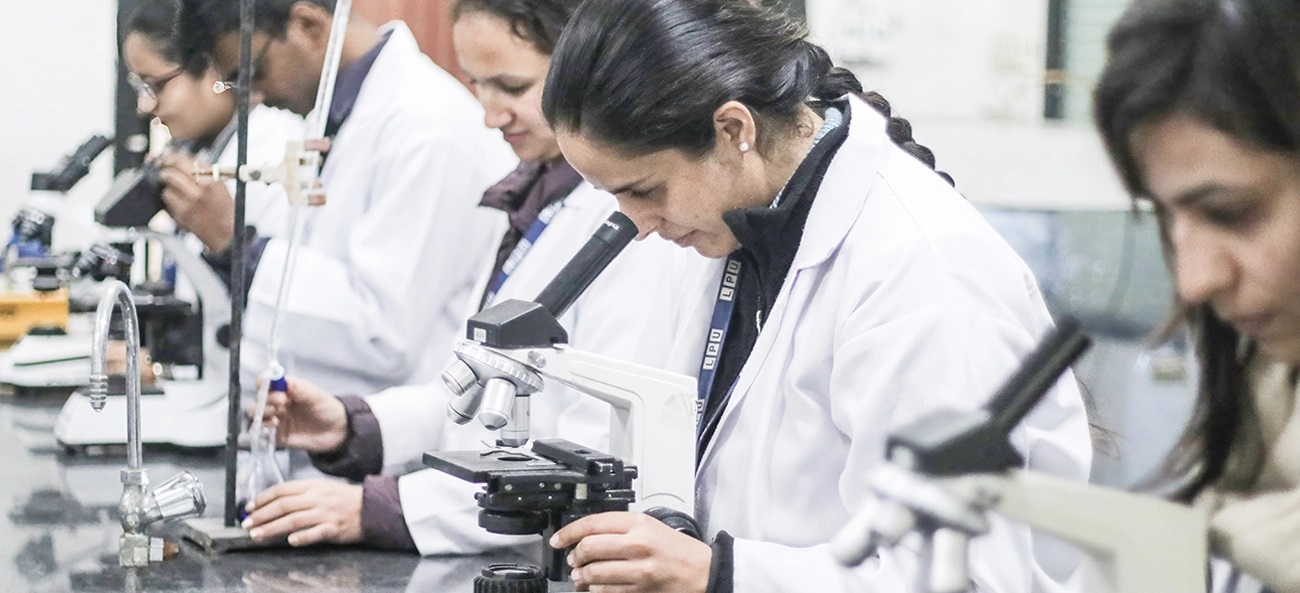
1. Why Choose LPU for B.Tech. Biotechnology [2+2] with International Credit Transfer Option?
Choosing an engineering programme involves more than selecting a degree. Students must consider academic quality, practical learning opportunities, international exposure, and long-term career development.
The B.Tech. biotechnology [2+2] at LPU offers a distinctive educational approach by combining foundational biotechnology studies in India with an international credit transfer option.
Within the suggested [2+2] biotechnology program framework, students can finish their first two years at LPU and continue their subsequent academic duration at an approved international partner university, depending on credit equivalence, entry requirements, institutional agreements, and relevant policies.
The biotechnology international credit transfer option can help students experience different educational environments while expanding their scientific knowledge.
Key Features of the Programme
| Programme Feature | Potential Student Benefit |
| International credit transfer option | Opportunity to pursue part of the degree at an overseas institution |
| Biotechnology-focused curriculum | Foundation in biological sciences and engineering principles |
| Laboratory-oriented education | Development of experimental and analytical skills |
| Project-based learning | Application of theoretical concepts to scientific problems |
| Multicultural learning environment | Exposure to diverse perspectives and collaborative learning |
| Career-oriented development | Preparation for further education and biotechnology-related professions |
The B.Tech. biotechnology at LPU pathway is particularly relevant for students interested in combining scientific education with international academic ambitions.
Through the LPU biotechnology [2+2] structure, students can explore the benefits of a B.Tech. biotechnology international program while building their foundational skills through the biotechnology course at LPU.
2. How Does LPU’s Curriculum Prepare Students for Global Biotechnology Standards?
A strong biotechnology education requires an interdisciplinary understanding of biology, chemistry, engineering, mathematics, and computational sciences.
The LPU biotechnology curriculum aims to establish these foundations while encouraging students to understand how biological systems can be applied to technological challenges.
The B.Tech. biotechnology curriculum covers scientific concepts relevant to biological processes, laboratory experimentation, industrial applications, and research-oriented problem-solving.
Students exploring the biotechnology curriculum at LPU can expect to encounter important areas of modern biotechnology.
Important Biotechnology Learning Areas
| Academic Area | Skills and Knowledge Developed |
| Molecular Biology | Understanding DNA, RNA, genes, and cellular processes |
| Genetics | Studying heredity, genetic variation, and molecular mechanisms |
| Microbiology | Understanding microorganisms and their industrial applications |
| Biochemistry | Exploring biochemical reactions and metabolic pathways |
| Bioprocess Engineering | Understanding biological production and process optimisation |
| Bioinformatics | Using computational approaches to analyse biological information |
| Genetic Engineering | Learning concepts involved in modifying genetic material |
| Environmental Biotechnology | Exploring biological approaches to environmental challenges |
These are representative B.Tech. biotechnology subjects and learning areas; the exact semester-wise syllabus should be verified against the current programme curriculum.
The biotechnology education at LPU also emphasises analytical thinking, scientific communication, and the practical application of academic knowledge.
By combining foundational subjects with emerging scientific developments, the biotechnology academic program can help students prepare for further specialisation and global biotechnology education.
| Did You Know? According to the World Economic Forum’s Global Cybersecurity Outlook 2025, only 14% of organisations reported having the skilled talent they needed to meet their cybersecurity objectives, highlighting the growing importance of cybersecurity professionals worldwide. |
3. What Makes LPU’s Technical Infrastructure Ideal for Biotechnology Learners?
Biotechnology cannot be understood through textbooks alone. Laboratory experimentation is essential for developing scientific reasoning, technical confidence, and familiarity with biological research procedures.
The biotechnology infrastructure at LPU supports a practical approach to learning, enabling students to connect theoretical knowledge with laboratory-based activities.
Through access to relevant LPU biotechnology labs, students can explore experimental procedures, biological analysis, and scientific observation.
Laboratory Learning and Technical Skills
| Laboratory Area | Learning Opportunities |
| Microbiology | Microbial culture techniques and laboratory safety |
| Molecular Biology | Understanding nucleic acid analysis and molecular methods |
| Biochemistry | Studying biochemical reactions and analytical procedures |
| Biotechnology Instrumentation | Familiarity with scientific equipment and measurement techniques |
| Bioprocess Technology | Exploring fermentation and biological production processes |
The availability of particular instruments, specialised laboratories, and individual experiments may depend on the current facilities and course requirements.
Biotechnology practical training helps students understand experimental accuracy, documentation, safety procedures, and scientific interpretation.
A well-supported biotechnology laboratory at LPU can also encourage collaborative experimentation and independent scientific thinking.
For students interested in research, exposure to biotechnology research facilities and advanced biotechnology laboratories is an important consideration when evaluating the programme.
| Did You Know?
According to IBM’s Cost of a Data Breach Report 2024, the global average cost of a data breach reached $4.88 million, highlighting why organisations continue to invest in cybersecurity expertise and digital protection. |
4. How Does LPU Integrate Real-World Biotechnology Projects into Learning?
Project-based education allows students to move beyond memorising scientific concepts and begin applying them to practical challenges.
Biotechnology projects at LPU can provide opportunities for students to explore biological problems, analyse experimental findings, and develop solutions through structured academic activities.
Through biotechnology project-based learning, students can strengthen their ability to plan experiments, interpret data, and communicate research findings.
Examples of Biotechnology Project Areas
| Project Area | Potential Application |
| Agricultural Biotechnology | Investigating biological methods for improving crop productivity |
| Environmental Biotechnology | Exploring microbial approaches to waste management |
| Pharmaceutical Biotechnology | Studying biological processes relevant to drug development |
| Industrial Biotechnology | Examining enzyme-based processes and fermentation |
| Bioinformatics | Analysing biological datasets using computational tools |
These examples illustrate possible B.Tech. biotechnology projects, rather than a confirmed list of projects offered every semester.
Biotechnology hands-on learning encourages students to understand why experiments succeed, why results sometimes differ from expectations, and how scientific methods can be improved.
Participation in biotechnology practical projects also supports teamwork, critical thinking, and technical communication.
Where available, biotechnology industry projects can introduce students to professional expectations, while biotechnology experiential learning helps connect academic preparation with real-world applications.
5. Student Experience at LPU – Campus Life, Labs, and Industry Exposure
University education also involves personal development, communication, collaboration, and participation in activities beyond the classroom.
The biotechnology student life at LPU combines academic responsibilities with opportunities to engage in campus activities, technical discussions, and student-led initiatives.
The broader LPU campus life offers a multicultural environment where students from different educational and geographical backgrounds can interact and exchange ideas.
For biotechnology learners, this environment can contribute to a more engaging biotechnology learning experience.
Students may develop their interests through academic projects, scientific events, presentations, and collaborative activities.
The B.Tech. biotechnology student experience can be particularly valuable when students actively participate in laboratory sessions and explore emerging scientific developments.
Biotechnology industry exposure, through relevant internships, professional interactions, or academic initiatives where available, can also help students understand workplace expectations.
Together, these opportunities contribute to the overall student experience at LPU and help students build biotechnology practical experience alongside academic knowledge.
6. LPU at a Glance – Innovation, Diversity, and Academic Excellence
Lovely Professional University is a multidisciplinary private university located in Phagwara, Punjab. It offers programmes across engineering, sciences, management, design, and several other academic disciplines.
As a biotechnology university in Punjab offering engineering education, LPU provides students with access to a broader multidisciplinary learning environment.
Its LPU engineering ecosystem creates opportunities for students to explore connections between biotechnology, computer science, engineering, and other fields.
| Institutional Strength | Relevance to Biotechnology Students |
| Multidisciplinary education | Encourages interdisciplinary scientific understanding |
| Diverse student community | Supports communication and cultural exchange |
| Engineering-oriented learning | Connects scientific knowledge with technical applications |
| Innovation activities | Encourages creative thinking and problem-solving |
| International academic initiatives | Provides pathways to explore overseas education |
Students evaluating a biotechnology college in Punjab may consider LPU for its combination of academic offerings and wider campus opportunities.
LPU innovation and its emphasis on applied learning contribute to an environment in which students can explore scientific interests.
The university’s broader focus on LPU academic excellence also supports its ambition to develop skilled graduates across different disciplines.
For prospective students, LPU biotechnology education offers a pathway that brings together science, engineering, and the possibility of international academic progression.
7. LPUNEST – Gateway to a Future-Ready Career in B.Tech. Biotechnology [2+2] Program
Admission planning is an important step for students considering biotechnology engineering.
The Lovely Professional University National Entrance and Scholarship Test (LPUNEST) is associated with admission and scholarship opportunities across eligible LPU programmes.
Students interested in B.Tech. biotechnology admission at LPU should review the latest admission requirements for the specific international credit transfer variant.
Admission Planning Overview
| Admission Component | Important Consideration |
| Academic eligibility | Must satisfy the current programme-specific qualifying examination requirements |
| LPUNEST | Applicable examination requirements depend on current admission rules |
| Scholarship | Eligibility and awards depend on applicable criteria |
| International transfer | Additional academic, financial, and partner-university conditions may apply |
| Documentation | Academic records and other required documents must be submitted |
Students searching for LPUNEST biotechnology or LPUNEST B.Tech. admission information should consult the university’s official admission portal.
Where applicable, biotechnology admission through LPUNEST may also provide access to an LPUNEST scholarship.
However, a B.Tech. biotechnology scholarship does not automatically cover overseas tuition, travel, accommodation, or other international expenses.
Before appearing for the LPU entrance exam, applicants should confirm current eligibility, scholarship provisions, and international transfer conditions.
8. How Do International Tie-Ups Enhance Biotechnology Learning and Career Opportunities?
International academic exposure can broaden students’ understanding of scientific research, laboratory practices, and emerging biotechnology applications.
The LPU international tie-ups associated with eligible academic pathways may provide students with opportunities to explore education beyond India.
A biotechnology international collaboration can introduce learners to different teaching methods, research environments, and academic perspectives.
Through biotechnology study abroad opportunities, eligible students may gain experience adapting to new educational systems and interacting with international academic communities.
Potential Benefits of International Credit Transfer
| International Experience | Possible Long-Term Benefit |
| Studying in another country | Development of cultural adaptability |
| Exposure to different academic systems | Broader understanding of teaching and assessment methods |
| International laboratory learning | Familiarity with different research approaches |
| Multicultural teamwork | Stronger communication and collaboration skills |
| International academic networks | Connections useful for further education and professional development |
Such international exposure in biotechnology can be valuable for students considering postgraduate research or global biotechnology careers.
However, an international biotechnology program does not automatically guarantee overseas employment or immigration eligibility.
Students interested in biotechnology career opportunities abroad should also understand country-specific qualifications, employment regulations, and professional requirements.
The actual extent of biotechnology global exposure depends on the approved partner institution, transfer eligibility, and available academic arrangements.
| Did You Know? According to the U.S. Bureau of Labor Statistics, employment of information security analysts is projected to grow by 29% between 2024 and 2034, making cybersecurity one of the faster-growing technology career fields in the United States. |
9. What Makes LPU’s Mentorship and Faculty Support Exceptional?
Faculty guidance plays an important role in helping engineering students understand difficult scientific concepts and develop confidence in their academic abilities.
The LPU biotechnology faculty contributes to classroom teaching, laboratory instruction, and academic guidance within the programme.
Through interaction with biotechnology faculty at LPU, students can seek clarification on scientific principles, experimental methods, and academic assignments.
Effective biotechnology mentorship can be especially useful when students begin exploring research interests or preparing technical projects.
Areas Where Faculty Guidance Matters
| Mentorship Area | Student Benefit |
| Academic guidance | Better understanding of complex biotechnology concepts |
| Laboratory supervision | Improved experimental techniques and safety awareness |
| Project guidance | Support in research planning and scientific analysis |
| Career discussions | Greater awareness of education and employment pathways |
| International study planning | Guidance on academic preparation and relevant requirements |
The role of B.Tech. biotechnology faculty extends beyond delivering lectures.
Meaningful biotechnology student mentoring can encourage independent learning, scientific curiosity, and professional discipline.
Students should actively use available biotechnology academic support and faculty support at LPU to strengthen their understanding and prepare for future academic challenges.
10. How Does LPU Prepare Students for Global Biotechnology Career Outcomes?
Biotechnology graduates can explore professional opportunities across healthcare, pharmaceuticals, agriculture, food processing, environmental management, and research-related industries.
The biotechnology career scope continues to evolve as organisations adopt biological technologies and data-driven scientific approaches.
Students pursuing biotechnology engineering can build relevant technical skills through laboratory education, academic projects, internships, and further specialisation.
Biotechnology Career Pathways
| Career Field | Potential Roles |
| Pharmaceutical Industry | Production Associate, Quality Control Analyst |
| Bioprocessing | Bioprocess Associate, Manufacturing Trainee |
| Agricultural Biotechnology | Agricultural Research Assistant |
| Food Biotechnology | Food Quality Analyst, Technical Associate |
| Bioinformatics | Junior Bioinformatics Analyst |
| Environmental Biotechnology | Environmental Laboratory Analyst |
| Research and Development | Research Assistant, Laboratory Associate |
Actual eligibility for these biotechnology jobs depends on qualifications, technical skills, employer requirements, and experience.
When evaluating LPU biotechnology placements and B.Tech. biotechnology placements, students should examine verified programme-specific placement statistics rather than relying solely on university-wide figures.
To improve biotechnology employability, students can focus on laboratory proficiency, data interpretation, scientific writing, computational skills, and professional communication.
Those interested in biotechnology jobs abroad may also pursue postgraduate education, research training, or relevant professional experience.
With appropriate preparation, graduates can explore a wide range of biotechnology career opportunities and work towards international academic or professional ambitions.
11. Final Thoughts
The B.Tech. biotechnology at LPU with a [2+2] international credit transfer option brings together biotechnology engineering education and the possibility of overseas academic progression.
Its appeal lies in the combination of scientific foundations, practical learning, project-oriented education, and international study opportunities.
For students interested in B.Tech. biotechnology [2+2 with international credit transfer option], the programme offers a route to explore both technical knowledge and cross-cultural academic experiences.
The wider LPU biotechnology learning environment can support the development of analytical skills, scientific understanding, and professional confidence.
As the biotechnology career scope expands across industries, students who combine technical competence with adaptability and continuous learning may be better prepared to explore diverse biotechnology career opportunities.
For aspiring biotechnology professionals interested in biotechnology global opportunities, LPU’s international credit transfer pathway is worth exploring, provided students carefully review the current partner universities, eligibility requirements, costs, and credit transfer conditions.
| Did You Know? According to IBM’s Cost of a Data Breach Report 2024, organisations extensively using security AI and automation experienced an average of $2.22 million lower breach costs compared with organisations that did not use these technologies, demonstrating the growing value of AI-driven cybersecurity solutions. |
12. Frequently Asked Questions (FAQs)
1. What is the B.Tech. Biotechnology [2+2 with international credit transfer option] programme at LPU?
The programme combines biotechnology engineering education at LPU with an international credit transfer option. Eligible students may complete part of their studies at an approved overseas partner institution, subject to the applicable academic and transfer requirements.
2. What is the eligibility for B.Tech. Biotechnology [2+2 with international credit transfer option] at LPU?
B.Tech. biotechnology eligibility depends on the university’s current admission requirements, including qualifying subjects and minimum academic performance. International transfer may involve additional criteria. Applicants should confirm the latest requirements on the official website.
3. Is LPUNEST required for biotechnology admission at LPU?
The applicability of LPUNEST depends on the programme and current admission policies. Students reviewing LPUNEST biotechnology FAQs should verify whether the examination is required for admission, scholarship consideration, or both.
4. What are the biotechnology course fees for the [2+2] programme?
Biotechnology course fees may include LPU tuition, overseas university charges, travel, accommodation, insurance, and other expenses. Students should request the latest programme-specific fee breakdown and confirm whether scholarships apply to the international portion.
5. What career opportunities are available after B.Tech. Biotechnology?
Graduates may explore opportunities in pharmaceuticals, bioprocessing, agricultural biotechnology, quality assurance, food technology, bioinformatics, and research support. Some specialised roles require additional qualifications or experience.