
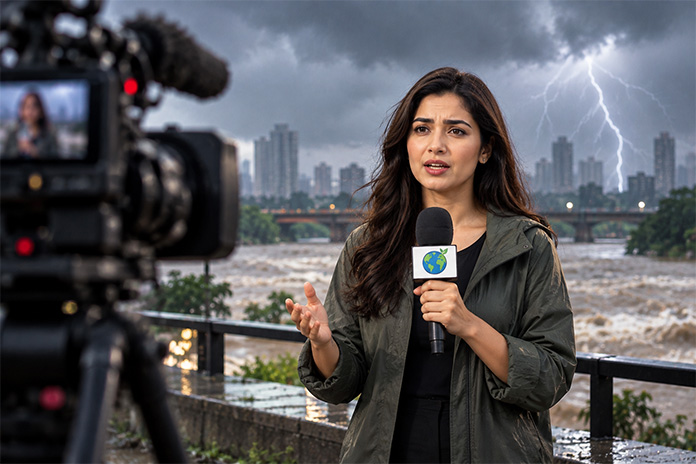
Climate change has emerged as one of the most important issues shaping societies, economies and communities around the world. Rising temperatures, extreme weather events, changing rainfall patterns, water scarcity, biodiversity loss, pollution and concerns around sustainable development are increasingly becoming part of everyday conversations. As these issues grow in importance, the role of climate change journalism and environmental journalism in explaining them accurately and responsibly has also become more significant.
Climate journalism is not simply about reporting on the environment. It is about helping audiences understand how environmental changes affect people, economies, public health, agriculture, cities and future generations. For young people interested in Journalism and Mass Communication, climate journalism for students offers an opportunity to combine storytelling, technology, research and public-interest communication while developing an understanding of effective climate communication.
What Is Climate Journalism?
Climate journalism refers to the reporting and communication of issues related to climate change and the wider environment. It includes stories about global warming, extreme weather, renewable energy, environmental policies, sustainability, conservation, pollution, forests, oceans, agriculture and climate adaptation. However, effective climate reporting goes beyond reporting that temperatures are rising or that a particular region has experienced heavy rainfall. Journalists need to explore the larger context behind such events.
For example, a report on flooding can examine its impact on residents, infrastructure, transportation, businesses and local communities. It can also explore scientific explanations, government preparedness, urban planning and possible long-term solutions. This makes climate journalism a multidisciplinary field where journalists interact with scientists, researchers, policymakers, environmental organisations, communities and ordinary citizens.
Why Does Climate Journalism Matter?
One of the most important responsibilities of journalism is to help citizens understand issues that affect their lives. Environmental issues often involve complex scientific concepts, technical terminology and large amounts of data. Journalism can make this information accessible to wider audiences. A well-researched climate story can answer important questions: What happened? Why did it happen? Who is affected? What does the available evidence show? What are experts saying? What can communities and policymakers do?
This highlights the importance of climate journalism and its role in connecting science with society through responsible environmental communication.
It can also give visibility to communities whose experiences may otherwise receive limited attention. Farmers dealing with changing weather patterns, coastal communities facing environmental pressures, residents affected by pollution, or communities adapting to water shortages can provide important human perspectives for environmental storytelling.
The Rise of Data-Driven Environmental Reporting
Modern climate journalism increasingly depends on data. Temperature records, rainfall statistics, satellite imagery, air-quality measurements, carbon emissions data and other datasets can help journalists identify trends and explain environmental developments. This growing role of data-driven journalism has made the ability to interpret information increasingly valuable in environmental reporting.
Instead of presenting only numbers, journalists can transform complex datasets into charts, maps, infographics and interactive stories. Visualisation can help audiences understand patterns that may be difficult to communicate through text alone. For journalism students, learning basic data analysis and visualisation can therefore become an important professional skill in data journalism.
The Importance of Verification and Fact-Checking
Environmental reporting also highlights one of the most important principles of journalism: verification. Climate change reporting can become highly technical and sometimes controversial. Social media platforms can also circulate misleading photographs, manipulated videos, inaccurate statistics and unsupported claims. Young journalists therefore need to develop strong verification habits.
Before publishing a climate-related story, journalists should examine the credibility of sources, verify statistics, check the date and location of visual material, consult reliable experts and distinguish established evidence from claims or opinions. Digital verification tools can support this process, but technology does not replace editorial judgement. Journalists remain responsible for ensuring that published information is accurate and appropriately contextualised.
Climate Journalism and Investigative Reporting
Environmental journalism can also involve investigative reporting. Some environmental stories require journalists to examine documents, public records, government data, corporate activities and regulatory decisions. Investigative environmental journalism can explore questions related to pollution, land use, environmental regulations, waste management, resource utilisation and the implementation of environmental policies. Such reporting requires persistence, research skills and ethical journalism practices. It demonstrates that journalism is not only about covering events; it can also involve investigating systems, examining evidence and bringing important public-interest issues to wider attention.
The Human Side of Environmental Stories
Numbers and scientific information are important, but effective journalism also needs human stories. A report about water scarcity, for example, can become more meaningful when audiences understand how the issue affects a family, farmer, student, worker or local business. Human-centred environmental storytelling allows journalists to connect broader environmental developments with everyday experiences. However, journalists must approach such stories responsibly. Communities should be represented accurately and respectfully, without exaggeration or unnecessary sensationalism.
Skills Future Climate Journalists Need
Students interested in environmental and climate journalism can develop a combination of traditional journalism and emerging digital skills.
1. Research Skills
Journalists need to locate credible information, understand background material and conduct interviews with experts and affected communities.
2. Fact-Checking and Verification
The ability to verify claims, photographs, videos, statistics and online information is essential for responsible environmental reporting.
3. Data Journalism
Understanding spreadsheets, datasets, charts, maps and basic data analysis can help journalists identify and explain environmental trends and strengthen their data-driven journalism skills.
4. Mobile Journalism
Mobile journalism allows journalists to use smartphones to report from the field through video, photography, audio and mobile editing tools.
5. Visual Storytelling
Photography, infographics, video and visualisation can make complex environmental issues easier to understand. These forms of visual storytelling are particularly useful when communicating scientific information and environmental data to wider audiences.
6. Multimedia Production
Future journalists can benefit from learning video editing, podcast production, graphic design, social media content creation and digital publishing. These abilities are increasingly important in multimedia journalism, where stories can be communicated across different digital formats.
7. Scientific and Environmental Literacy
Journalists do not need to become scientists, but they should be able to understand scientific evidence, terminology and research findings sufficiently to report them accurately. Such understanding can also strengthen their skills in science communication.
8. Ethical Communication
Environmental reporting should prioritise accuracy, context, fairness and responsible representation of communities and scientific evidence.
Career Opportunities in Climate and Environmental Communication
Climate journalism is part of a wider ecosystem of environmental communication. Students developing relevant journalism and digital media skills can explore opportunities in news organisations, digital media platforms, television, documentary production, magazines, specialised environmental publications, development communication and public-interest organisations.
There are also opportunities in areas such as environmental content creation, science communication, data journalism, multimedia production, documentary storytelling and digital communication. These expanding areas can lead students towards a career in climate journalism, while also opening possibilities across environmental journalism careers, science communication careers and climate communication careers.
For students considering Journalism and Mass Communication as a career, this demonstrates how journalism can extend well beyond traditional newsroom roles.
Why Students Should Explore Climate Journalism
Climate journalism brings together several areas that are increasingly important in contemporary media: research, technology, storytelling, data, visual communication and public engagement. Students can begin developing these skills through practical projects. They can document local environmental issues through photography, produce short mobile journalism reports, create infographics using publicly available data, conduct interviews with experts or develop short podcasts and documentaries.
Such projects can also help students build a professional portfolio that demonstrates their ability to research, report, produce and communicate stories across different media formats.
The Future of Environmental Reporting
The future of climate journalism will be increasingly multimedia, data-driven and digital. Artificial intelligence and emerging technologies may assist journalists with research, transcription, data analysis and content production. However, human skills such as critical thinking, verification, ethical judgement, interviewing and storytelling will remain essential. The most effective environmental journalists will need to understand both technology and people. They will need to interpret complex information while keeping audiences at the centre of their storytelling.
Conclusion
Climate change and environmental sustainability are shaping important conversations about the future of communities, economies and societies. Journalism has a crucial role in making these conversations understandable, evidence-based and accessible.
For the next generation of journalists, climate reporting provides an opportunity to develop a powerful combination of research, digital media, data, photography, video, storytelling and ethical communication skills.
The journalist of the future will not simply report what happened. They will help audiences understand the evidence, explore different perspectives and recognise the human significance of major issues. For students passionate about storytelling and interested in making a meaningful contribution through media, climate journalism offers a dynamic field where journalism, technology and public-interest communication come together.