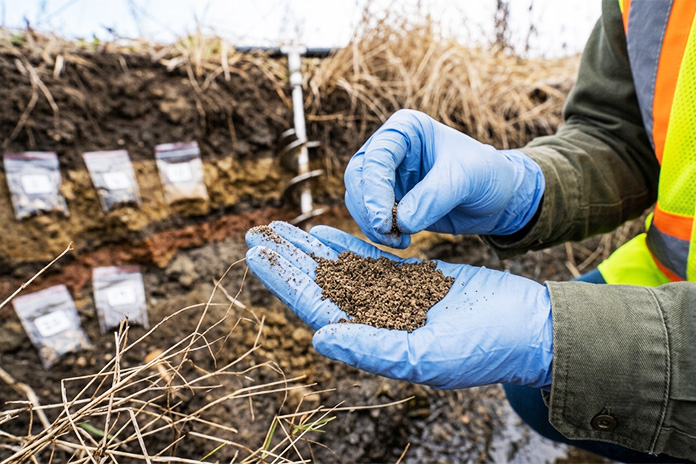
“Healthy soil is not just dirt beneath our feet-it is a living, breathing ecosystem that sustains life above it.”
When we think of breathing, we often picture humans, animals, or plants. Rarely do we imagine soil as a living entity capable of breathing. Yet, beneath every productive field lies a vibrant ecosystem where billions of microorganisms, plant roots, insects, and earthworms continuously consume oxygen and release carbon dioxide. This natural process, known as soil respiration, is a clear indicator that soil is alive. In agronomy, understanding how soil “breathes” is fundamental to improving crop productivity, conserving natural resources, and combating climate change. The study of soil respiration in agriculture also helps explain the relationship between soil respiration and climate change.
What Does It Mean That Soil is Breathing?
Soil breathing, or soil respiration, is the process by which living organisms in the soil release carbon dioxide (CO₂) during respiration. Just like human’s inhale oxygen and exhale carbon dioxide, soil organisms- including bacteria, fungi, nematodes, earthworms, insects, and plant roots carry out similar metabolic activities. Understanding how does soil respiration work helps researchers evaluate soil biological activity and soil microbial activity.
The amount of carbon dioxide released from soil reflects the biological activity occurring underground. Active, healthy soils exhibit higher microbial activity and efficient nutrient cycling, whereas degraded soils often show reduced respiration due to poor biological health. This highlights the relationship between soil respiration and soil health and the importance of soil respiration in maintaining productive agricultural systems.
The Living World Beneath Our Feet
A single teaspoon of fertile soil may contain billions of microorganisms representing thousands of species. These microscopic organisms perform essential functions that make agriculture possible. The role of microorganisms in soil health is therefore central to maintaining a living soil ecosystem and supporting soil biodiversity.
Soil microbes decompose crop residues and organic matter into simpler compounds, releasing nutrients such as nitrogen, phosphorus, sulfur, and potassium that plants require for growth. Mycorrhizal fungi extend plant root systems, increasing water and nutrient uptake, while earthworms improve soil aeration by creating channels that enhance water infiltration and root penetration.
Together, these organisms create a dynamic underground ecosystem that continuously breathes, grows, and renews itself.
Why Soil Respiration Matters in Agronomy
Soil respiration is more than a biological process; it serves as a valuable indicator of soil health. It is an important component of sustainable agronomy and sustainable soil management.
Healthy soil respiration signifies active microbial populations, efficient decomposition of organic matter, and balanced nutrient cycling. These processes improve soil fertility, increase crop productivity, and enhance resilience against environmental stresses.
However, excessive soil respiration can also indicate rapid decomposition of organic carbon soil, leading to carbon loss and declining soil fertility. Therefore, agronomists aim to maintain balanced soil respiration rather than maximizing it indiscriminately.
Factors Affecting Soil Breathing
Several environmental and management factors influence soil respiration. Understanding the factors affecting soil respiration is essential for effective soil management and sustainable agriculture.
Soil Moisture: Microbial activity is highest when soil moisture is optimal. Waterlogged soils restrict oxygen availability, while extremely dry soils limit microbial metabolism.
Temperature: Warm temperatures generally stimulate microbial growth and root respiration. Extremely high temperatures, however, may accelerate organic matter decomposition and carbon loss.
Organic Matter: Crop residues, compost, farmyard manure, and green manures provide food for soil organisms, enhancing biological activity. Maintaining soil organic matter is essential for healthy soil processes.
Soil Structure: Well-aggregated soils allow better air movement, water infiltration, and root growth, promoting healthy respiration.
Cropping Systems: Diverse crop rotations and cover cropping encourage diverse microbial communities and improve soil biological health.
Agricultural Practices That Help Soil Breathe
Modern sustainable agriculture emphasizes practices that maintain soil as a living ecosystem rather than merely a growing medium.
Conservation tillage minimizes soil disturbance, preserving soil aggregates and microbial habitats. Reduced tillage also decreases carbon losses and protects soil moisture.
Organic amendments, including compost, vermicompost, biochar, and farmyard manure, provide energy sources for beneficial microorganisms while improving soil structure.
Cover crops maintain living roots throughout the year, supplying continuous food to soil microbes and preventing erosion.
Integrated nutrient management, combining chemical fertilizers with organic inputs and biofertilizers, supports both crop nutrition and soil biological activity.
Crop diversification encourages a wider range of soil organisms, reducing disease pressure and improving ecosystem stability.
These practices contribute to how to improve soil health, while supporting sustainable soil management and long-term agricultural productivity.
Soil Breathing and Climate Change
Soil plays a dual role in the global carbon cycle. The connection between soil respiration and carbon cycling, soil and climate change, and soil respiration and climate change is therefore critical to modern agronomy.
Healthy soils act as one of the world’s largest carbon reservoirs, storing more carbon than the atmosphere and vegetation combined. Sustainable agricultural practices increase soil organic carbon sequestration, helping mitigate climate change. These approaches contribute to soil carbon sequestration, agricultural carbon sequestration, and soil carbon storage.
Conversely, intensive tillage, excessive chemical use, and poor land management accelerate soil respiration beyond natural levels, releasing stored carbon into the atmosphere as carbon dioxide.
Climate-smart agricultural practices seek to balance productivity with carbon conservation, ensuring that soils remain both fertile and effective carbon sinks. This makes soil as a carbon sink and carbon farming important concepts in sustainable agriculture.
Measuring Soil Health Through Respiration
Scientists increasingly use soil respiration as a biological indicator of soil quality. Measurements are conducted using portable CO₂ analyzers, respiration chambers, or laboratory incubation techniques.
Combined with indicators such as microbial biomass, soil organic carbon, enzyme activity, and aggregate stability, soil respiration provides valuable insights into the long-term sustainability of agricultural systems.
The Future of Living Soils
The future of agronomy depends on treating soil as a living resource rather than an inert substrate. Advances in precision agriculture, digital soil monitoring, microbial inoculants, and regenerative farming are enabling farmers to manage soils more intelligently than ever before.
Emerging technologies now allow real-time monitoring of soil moisture, temperature, biological activity, and carbon dynamics, helping farmers make informed decisions that enhance both productivity and environmental sustainability.
Conclusion
The phrase “Soil is breathing” is far more than a scientific metaphor – it represents the continuous biological activity that sustains agriculture and life itself. Every breath taken by soil organisms fuels nutrient cycling, supports plant growth, stores carbon, and maintains ecosystem balance.
For agronomists, farmers, researchers, and policymakers, protecting this living ecosystem is essential for achieving food security, restoring degraded lands, and addressing climate change. As agriculture moves toward sustainability, the health of our soils will increasingly determine the health of our crops, our environment, and future generations.