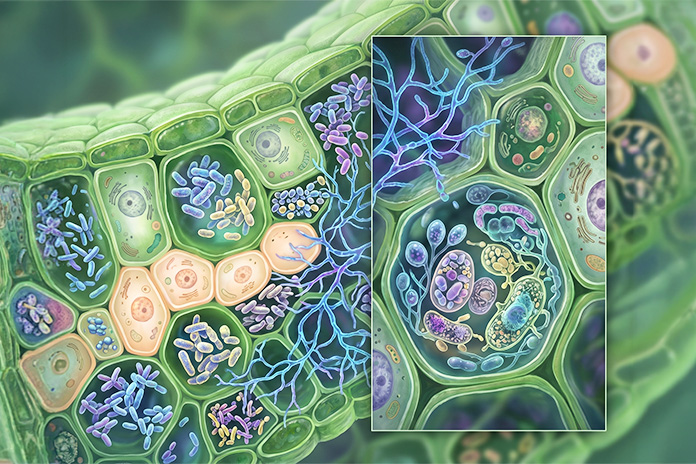
Plants are not solitary organisms. Hidden within their tissues lives a fascinating community of microorganisms known as endophytes. Plant endophytes are microorganisms—mainly bacteria and fungi—that inhabit the internal tissues of plants for at least a part of their life cycle without producing harmful effects. They can colonize roots, stems, leaves, flowers, seeds, and even fruits. These microscopic organisms establish a close mutually beneficial relationship with their host plants and silently support plant health, growth, and survival without causing disease. These beneficial endophytic microorganisms in plants act as natural biocontrol agents against several plant pathogens. Over the past few decades, plant endophytes have emerged as one of the most promising tools in sustainable agriculture, environmental protection, and biotechnology, highlighting the growing importance of endophytes in modern agriculture.
The increasing interest in plant endophytes in sustainable agriculture stems from their ability to improve nutrient uptake, enhance stress tolerance, and protect crops from diseases. As part of the broader plant microbiome and agricultural sustainability framework, endophytes contribute significantly to maintaining healthy agroecosystems while reducing dependence on chemical inputs. These hidden microbial allies in agriculture are gaining attention among researchers and farmers alike for their potential to support long-term agricultural productivity.
The future prospects of plant endophytes are highly promising due to their immense potential in sustainable agriculture, environmental management, and biotechnology. Researchers are learning more about plant-microbe interactions and discovering new endophytic strains with multiple functions because of developments in genomics, metagenomics, transcriptomics, and bioinformatics. The creation of endophyte-based biofertilizers, biopesticides, and stress-resilient microbial formulations that can boost crop output in the face of shifting climatic conditions is anticipated to be the main focus of future applications. This demonstrates the growing role of plant endophytes in crop production across diverse agricultural systems.
In addition to decreasing reliance on artificial agrochemicals, endophytes may be essential for enhancing resistance to salinity, drought, and new plant diseases. The use of plant endophytes for climate resilient agriculture is particularly important as global climate variability continues to affect crop productivity. Furthermore, their capacity to generate useful secondary metabolites creates new prospects for industrial and pharmacological biotechnology. However, formulation stability, host specificity, field-level consistency, and large-scale commercialization continue to be significant obstacles that call for additional study.
Many studies have shown that endophytic bacteria and fungi in crops can improve nutrient acquisition, stimulate plant growth hormones, and enhance resistance against biotic and abiotic stresses. Consequently, the use of endophytes for improving plant health is becoming an important strategy for developing eco-friendly crop management practices.
Plant endophytes are amazing unseen allies that play a major role in environmental sustainability, stress tolerance, disease resistance, and plant growth. Their versatility makes them useful instruments for contemporary biotechnology and agriculture. Utilizing plant endophytes presents a viable route toward resilient and sustainable farming systems as worries about chemical pollution, soil degradation, and climate change continue to grow. In fact, plant endophytes and sustainable farming systems are increasingly being viewed as complementary approaches for achieving environmentally responsible agricultural development.
We may get closer to a more productive and environmentally friendly agricultural future by comprehending and making use of these unseen partners. Overall, harnessing the beneficial potential of endophytes could significantly contribute to climate-smart agriculture and global food security in the future. The integration of plant endophytes in sustainable agriculture strategies will play a crucial role in shaping the next generation of resilient farming practices worldwide.