Introduction
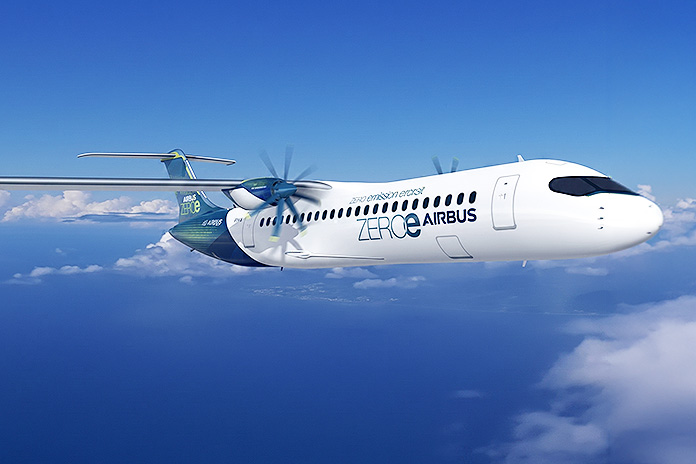
Today, the challenge is no longer just about flying faster or farther—it is about flying cleaner. In response to this urgent global need, Airbus introduced the ZEROe program, an ambitious vision to develop the world’s first airbus zeroe zero emission aircraft and achieve a zero emission commercial aircraft by 2035.
A Shift Bigger Than Jet Engines
Instead of relying on fossil-based jet fuel, ZEROe focuses on hydrogen. When used effectively, hydrogen produces no carbon dioxide (CO₂) emissions at the point of use, making it one of the most promising energy carriers for sustainable aviation and shaping the future of hydrogen powered aviation.
Hydrogen: The Heart of ZEROe
Airbus is increasingly focusing on fuel-cell technology, indicating a future where aircraft propulsion may become predominantly electric while using hydrogen as the primary energy source. This ongoing research is a major milestone in hydrogen fuel cell aircraft development and supports the vision of hydrogen powered commercial aviation.
Aircraft Concepts
These concepts demonstrate that sustainable aviation requires innovation not only in propulsion systems but also in aircraft architecture and design. They highlight the importance of next generation sustainable aircraft design and showcase how the airbus zeroe hydrogen aircraft project is exploring multiple pathways toward cleaner flight.
Engineering Challenges
Despite its enormous potential, the ZEROe program faces several significant engineering challenges. Successfully addressing these obstacles will be critical for advancing sustainable aviation technologies of the future and enabling large-scale adoption of hydrogen-powered aircraft.
A New Propulsion Chain
This represents a complete departure from traditional aircraft propulsion systems. Such an approach opens new opportunities in electric propulsion, hybrid-electric systems, advanced energy management, and smart aircraft design, accelerating the development of zero carbon aviation technology.
Timeline and Future Outlook
Recent advancements in fuel-cell efficiency, lightweight composite materials, cryogenic storage technologies, and electric propulsion systems provide encouraging signs that hydrogen-powered aviation is becoming increasingly feasible. These developments strengthen confidence in the future of clean air transportation and reinforce Airbus’s long-term sustainability goals
Why ZEROe Matters
ZEROe is more than an aircraft—it is a transformation of aviation. It introduces sustainability into one of the world’s most challenging transportation sectors, integrates multiple engineering disciplines, and creates exciting opportunities for innovation and research. As one of the most ambitious aerospace initiatives of this decade, it serves as a benchmark for sustainable aviation technologies of the future.
Final Thoughts
The answer will depend on breakthroughs in hydrogen technologies, propulsion systems, infrastructure development, and engineering innovation. For the next generation of engineers, this is not merely a concept—it is an opportunity to shape the future of flight, advance hydrogen powered commercial aviation, and help build a cleaner, more sustainable world.