
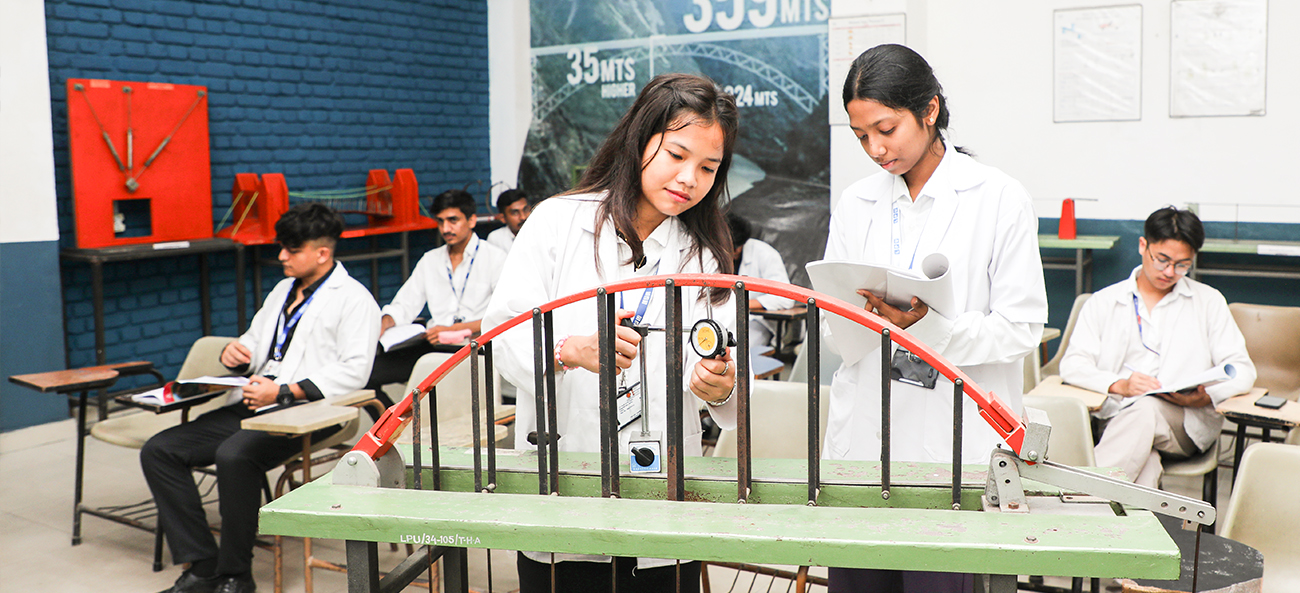
Structural engineering plays a vital role in shaping modern infrastructure, from skyscrapers and bridges to smart cities and earthquake-resistant buildings. As every thriving economy, including India, continues to invest heavily in urban development, transportation networks, and large-scale infrastructure projects, the demand for skilled structural engineers is increasing rapidly. This growing industry demand has made the M.Tech. Structural Engineering course one of the most sought-after postgraduate programmes. An advanced degree in structural engineering not only strengthens technical knowledge but also prepares students to solve real-world engineering challenges using modern technologies, advanced analysis methods, and industry-oriented software tools.
In this article, we’ll explore the complete M.Tech Structural Engineering syllabus, semester-wise subjects, eligibility criteria, course duration, software skills, career opportunities, and why LPU is considered one of the top universities for pursuing M. Tech. Structural Engineering course in India.
M.Tech. Structural Engineering Syllabus: At a Glance
|
What is M.Tech. Structural Engineering?
M.Tech. Structural Engineering is a specialised postgraduate programme in civil engineering that focuses on the analysis, design, planning, construction, and maintenance of structures. The programme equips students with advanced knowledge related to buildings, bridges, dams, tunnels, industrial structures, transportation systems, and other infrastructural components.
The M.Tech. Structural Engineering course is designed to help students understand how structures behave under different environmental and load conditions. The curriculum includes advanced subjects related to reinforced concrete structures, steel structures, earthquake engineering, finite element methods, structural dynamics, composite materials, and sustainable structural design.
At LPU (Lovely Professional University), the programme emphasises both academic excellence and practical application. Learners are given exposure to a specific specialisation by extending their prior knowledge through a meticulous set of advanced courses along with dissertation work that showcases their research potential and develops a strong platform for higher education and industry leadership.
The programme at LPU is designed around the following Program Educational Objectives (PEOs):
- Become successful academicians, consultants, researchers, or solution providers.
- Gain opportunities for project implementation and advanced research exposure using state-of-the-art technologies.
- Professionally advance in industry and academic positions integrating engineering knowledge with practical applications.
The curriculum structure at LPU ensures that students become technically competent, research-oriented, industry-ready, and capable of solving complex structural engineering problems effectively.
Why Choose M.Tech. in Structural Engineering?
Choosing an M.Tech. in Structural Engineering opens the door to advanced technical expertise, strong career growth, research opportunities, and high-paying roles in the infrastructure and construction sectors. With rapid urbanisation and infrastructure expansion across India and globally, structural engineers are becoming increasingly important in modern development projects.
Growing Demand for Structural Engineers
India’s infrastructure sector is expanding rapidly with projects related to metro rail networks, highways, airports, smart cities, green buildings, industrial corridors, and urban housing. This has created a significant demand for qualified structural engineering professionals.
At LPU, students are trained to meet modern industry demands through an updated structural engineering syllabus that integrates advanced technologies, real-world applications, and practical learning methodologies.
Advanced Technical Expertise
The M.Tech. Structural Engineering subjects taught at LPU help students gain specialised knowledge in:
- Structural Dynamics
- Earthquake Resistant Design
- Bridge Engineering
- Finite Element Modelling
- Advanced RCC Design
- Steel Structure Design
- Retrofitting of Structures
- Wind Engineering
The programme builds strong analytical, design, and problem-solving skills essential for handling modern engineering projects.
Promising Career Opportunities
A postgraduate qualification significantly improves employability and career prospects. Students pursuing the M.Tech. Structural Engineering course can work in sectors such as:
- Construction
- Infrastructure Development
- Real Estate
- Transportation
- Smart City Projects
- Industrial Engineering
- Research and Development
- Government Engineering Departments
LPU further strengthens career readiness through internships, industry projects, site visits, guest lectures, and placement support.
Research and Innovation Opportunities
The dissertation-based learning approach at LPU encourages students to participate in advanced research and innovation. Students work on real-life engineering problems and explore sustainable construction technologies, resilient structures, and smart infrastructure systems.
Engineering Trivia: The Ancient Roots of Structural DesignThe Great Pyramids of Giza are often cited as one of the earliest and most enduring examples of sophisticated structural engineering. Their survival over four millennia suggests a profound understanding of load distribution and material durability, even in the absence of modern computational tools. This ancient marvel illustrates the fundamental objective of any advanced Structural Engineering Course: creating resilient designs intended to withstand the test of time. |
M.Tech. Structural Engineering Eligibility Criteria
Understanding the M.Tech. Structural Engineering eligibility requirements is essential for students planning to pursue this advanced programme.
At LPU, the eligibility criteria for admission into the M.Tech. Structural Engineering programme include:
- Pass with 55% aggregate marks in B.Tech. (Civil Engineering), B.Arch., B.Plan., or equivalent.
- Candidates must qualify LPUNEST, CUET, or GATE.
LPUNEST Exemption
LPUNEST will be exempted if the candidate scores 80% or more marks in the qualifying examination.
Relaxation Criteria
A 5% relaxation in aggregate marks is applicable for:
- Candidates from North-East states and Sikkim
- Defence personnel and their dependents
- Wards of Kashmiri migrants
Flexible Examination Options
The LPUNEST examination offers convenient options including:
- Online remotely proctored mode from home
- Test centre-based examination mode
Admission Criteria
Admission is based on merit in LPUNEST, subject to fulfilling the eligibility requirements.
LPU’s transparent admission process, scholarship opportunities, and national-level entrance test make the university accessible to talented students from across India.
M.Tech. Structural Engineering Duration and Course Structure
The M.Tech. Structural Engineering course duration is generally two years, divided into four semesters. At LPU, the academic structure is organised into Autumn and Spring Terms to ensure systematic learning and continuous academic progression.
The programme structure combines:
- Foundation and core courses
- Industry-oriented learning
- Laboratory work
- Research methodology
- Dissertation projects
- Technical electives
- Industry internships
- Professional development courses
The curriculum at LPU is carefully designed to provide a balance between theory, research, and practical implementation.
Foundation and Core Courses
Students build expertise in advanced structural engineering concepts through subjects related to:
- Structural analysis
- RCC design
- Steel structures
- Earthquake engineering
- Composite materials
- Finite element methods
Industry Interface
LPU integrates industry exposure throughout the programme through:
- Industry tie-ups
- Content delivery by industry experts
- Industry-sponsored projects
- Hands-on internships
- Real-life engineering problem-solving
Study Abroad Opportunities
Students can participate in:
- Summer schools
- Winter schools
- International exposure programmes
These initiatives help students gain global perspectives and international learning experiences.
Electives and Specialisations
The programme offers specialised electives that allow students to gain depth in specific areas of structural engineering.
M.Tech. Structural Engineering Syllabus: Semester-Wise Breakdown
The Masters of Technology in Structural Engineering syllabus at LPU is designed to combine academic rigour with industry relevance. The semester-wise curriculum ensures gradual skill development while preparing students for advanced research, industry roles, and professional growth.
Semester 1 Subjects
The first semester focuses on building advanced theoretical and analytical foundations.
- Advanced Steel Structure Design: This subject focuses on the analysis and design of steel structures under different loading conditions. Students learn advanced design methodologies used in industrial and commercial construction projects.
- Advanced Structural Analysis: Students gain expertise in analysing indeterminate structures, complex loading systems, and structural behaviour using advanced computational techniques.
- Composite Materials: This subject introduces modern construction materials and their structural applications in sustainable and high-performance infrastructure.
- Dissertation-I: At LPU, dissertation work begins early to encourage research-oriented learning and innovation. It provides students with an opportunity to design a conceptual framework for problem formulation and framing objectives through extensive literature surveys and data analysis plans to fill existing research gaps.
- Drawing Studio: Students develop advanced drafting and visualisation skills essential for structural planning and execution.
- Finite Element Method: Finite element analysis is one of the most important structural engineering subjects taught at LPU. Students learn numerical modelling techniques for solving complex engineering problems.
- Fundamentals of Research: This course develops research methodology skills required for technical studies and dissertation work.
- Material Testing Laboratory for Structures: Students gain practical exposure to testing construction materials and understanding their mechanical behaviour.
Semester 2 Subjects
The second semester focuses on advanced design, research methods, and practical engineering applications.
- Advanced RCC Structure Design: Students learn advanced reinforced concrete design principles used in high-rise buildings, bridges, and infrastructure projects.
- Analysis and Design of Bridges: Bridge engineering concepts, load analysis, and bridge design methodologies are covered extensively.
- Applications of Indian Knowledge Systems: This course integrates traditional engineering wisdom with modern engineering applications.
- Building Information Modeling: This subject covers BIM technologies that are becoming increasingly important in modern construction management and structural planning.
- Dissertation-II: Students continue research work and begin deeper technical exploration under faculty guidance.
- Research Methods and Design: The course strengthens analytical and research capabilities essential for advanced engineering investigations.
- Soft Skills: LPU places strong emphasis on personality development and employability enhancement. This course helps bridge the gap between campus learning and corporate expectations.
- Structural Dynamics and Earthquake Engineering: Earthquake-resistant design and dynamic structural analysis are critical areas in modern infrastructure development.
- Structure Design Laboratory: Students apply theoretical concepts using practical structural design techniques and software tools.
Semester 3 Subjects
The third semester focuses heavily on research specialisation and advanced electives.
- Department Elective-I: Students choose specialised elective subjects based on career interests and research goals.
- Dissertation-III: Advanced dissertation work helps students conduct detailed research, experimentation, and technical analysis.
LPU’s strong research ecosystem encourages innovation, problem-solving, and independent learning.
Semester 4 Subjects
The final semester is primarily dedicated to dissertation and research completion.
- Dissertation-IV: The final semester is dedicated to the execution of a comprehensive research project under faculty mentorship. By synthesizing previous data analysis into a final dissertation, students demonstrate their ability to apply advanced engineering principles to real-world infrastructure problems, effectively bridging the gap between academia and professional consultancy.
The dissertation component at LPU plays a major role in preparing students for research, doctoral studies, consultancy, and advanced industry roles.
Elective Options in M.Tech. Structural Engineering
LPU offers specialised electives that provide additional expertise in niche areas of structural engineering.
- Prestressed Concrete Design: This course covers prestressing systems, prestress losses, flexural behaviour, shear, torsion, and compression design.
- Retrofitting of Structures: Students understand structural failures, damage identification, rehabilitation methods, and retrofitting techniques for improving structural safety.
- Wind Effect on Structures: The subject focuses on analysing wind loads and designing structures capable of withstanding environmental forces effectively.
These electives strengthen technical depth and improve industry readiness.
Software and Practical Skills Taught in Structural Engineering
Modern structural engineering relies heavily on advanced software tools for analysis, modelling, simulation, and design optimisation.
At LPU, students receive hands-on training in industry-oriented software such as:
- ANSYS: It is an advanced engineering simulation software used for structural analysis, finite element modelling, stress testing, and evaluating how structures perform under different load and environmental conditions.
- STAAD.Pro: It is a widely used structural design and analysis software that helps engineers design buildings, bridges, towers, and industrial structures efficiently according to international design codes.
- MATLAB: It is a powerful computational and programming tool used for numerical analysis, mathematical modelling, data visualisation, and solving complex structural engineering problems.
These tools help students perform:
- Finite element modelling
- Structural simulations
- Dynamic analysis
- Load calculations
- Structural optimisation
The programme outcomes at LPU focus on helping students:
- Apply engineering and management principles effectively
- Use modern engineering tools and mathematical modelling
- Analyse complex structural engineering problems
- Communicate technical concepts confidently
- Prepare detailed reports and research documentation
Practical exposure through laboratories, workshops, demo kits, case studies, and site visits ensures strong industry preparedness.
Career Opportunities after M.Tech. Structural Engineering
Among the various postgraduate Civil Engineering courses available today, Structural Engineering remains the most critical for those interested in the ‘bones’ of our cities, the skyscrapers, bridges, and tunnels that define modern life.
Graduates can pursue roles such as:
- Researcher: Conducts advanced studies and technical investigations to develop innovative solutions in structural engineering and construction technologies.
- Assistant Engineer: Supports senior engineers in planning, designing, testing, and monitoring construction and engineering projects.
- Development and Test Engineer: Tests structural systems, materials, and engineering solutions to evaluate performance, reliability, and safety under different conditions.
- Structural Consultant: Provides technical expertise and structural solutions for construction projects, ensuring safety, compliance, and cost-effectiveness.
- Engineering Technologist: Applies engineering principles and practical technologies to improve construction processes, systems, and project performance.
- Design Engineer: Creates detailed structural drawings, layouts, and technical plans for residential, commercial, and industrial projects.
- Executive Engineer: Manages engineering operations, project execution, budgeting, and technical supervision for large-scale infrastructure developments.
- Product Development Engineer: Develops and improves engineering products, components, and structural systems using design analysis and innovation techniques.
- Site Engineer: Supervises on-site construction activities, coordinates with teams, and ensures projects are executed according to structural plans and quality standards.
- Verification Engineer: Evaluates and verifies structural designs, calculations, and systems to ensure they meet technical specifications and safety standards.
- Structural Designer: Designs safe, durable, and efficient structural systems for buildings, bridges, and infrastructure projects using engineering software and design codes.
Students may also explore careers in:
- Metro rail projects
- Smart city initiatives
- Green buildings
- Infrastructure consultancy
- Government engineering services
- Teaching and research
LPU’s industry-driven curriculum and placement support help students secure opportunities across diverse sectors.
Salary After M.Tech. Structural Engineering in India
The salary prospects after completing the M.Tech. Structural Engineering courses are highly promising.
At LPU, placement achievements for 2025 include:
- ₹15 lakh highest salary package
- ₹9.6 lakh average package
- ₹1.1 lakh highest internship/OJT stipend per month
- 150+ Super Dream and Dream offers
Salary packages generally depend on:
- Skills and technical expertise
- Software proficiency
- Industry exposure
- Research experience
- Organisation type
- Job location
With experience, professionals can move into senior consultancy, project management, and leadership positions.
Top Recruiters for Structural Engineering Graduates
Students graduating from LPU receive placement opportunities from reputed organisations across infrastructure, technology, construction, and engineering sectors.
Top recruiters include:
- Autodesk
- Afcons Infrastructure
- Dharam Consulting
- AL Rakha Group
- Altair
- Ashok Leyland
- Bosch and Siemens Home Appliances
- Volkswagen
- Persistent
- Infosys
- Panasonic Energy India
- Pyramid Consulting
LPU’s strong placement ecosystem, industry collaborations, and career support services help students connect with leading employers.
Why Choose LPU for M.Tech. Structural Engineering?
Choosing the right university is essential for building a successful engineering career. LPU stands out among the leading structural engineering colleges in India for its academic excellence, infrastructure, industry exposure, and placement support.
Accreditation and Recognition
LPU has earned several prestigious recognitions, including:
- NIRF 48th rank among engineering colleges in India
- 5th in World University Rankings among government, IITs, and private institutions in India 2026
- 6th in Times Higher Education rankings among government, private, and IIT institutions
Contemporary Curriculum
The curriculum is regularly updated to include advanced concepts such as:
- Earthquake Resistant Design
- Structural Dynamics
- Finite Element Modelling
- Bridge Engineering
- Sustainable Structures
Industry Immersion
Students gain real-world exposure through:
- Industry projects
- Guest lectures
- Industrial training
- Collaborative learning
- Site visits
Innovative Pedagogy
Teaching methodologies include:
- Audio-visual learning
- Demo kits
- Animations
- Real-life case studies
- Interactive practical sessions
Holistic Development
LPU encourages participation in:
- Technical competitions
- Sports activities
- Cultural programmes
- Innovation challenges
Professional Enhancement
Communication skills, analytical abilities, and soft skills are integrated into the curriculum to improve employability.
Research and Dissertation Focus
Seminars, dissertation work, and technical research activities help students build strong academic and industry-oriented profiles.
Software Skills Training
Students receive hands-on training in modern engineering software used widely in the construction and infrastructure industries.
Future Scope of Structural Engineering in India
The future of structural engineering in India is highly promising due to the country’s expanding infrastructure requirements.
Emerging sectors include:
- Smart cities
- Sustainable infrastructure
- Green construction
- High-speed rail networks
- Urban transportation systems
- Disaster-resistant structures
- Renewable energy infrastructure
Structural engineers will continue to play a crucial role in designing resilient, efficient, and environmentally sustainable infrastructure.
Graduates from LPU are well-positioned to contribute to these future developments through their technical expertise, software proficiency, and practical engineering exposure.
Take the Next Step Towards a Career in Structural Engineering with LPU
Pursuing an M.Tech. in Structural Engineering is an excellent choice for students who want to build expertise in modern infrastructure design, advanced structural analysis, sustainable construction, and research-driven engineering.
The comprehensive M.Tech. Structural Engineering syllabus at LPU combines advanced academics, practical training, research opportunities, industry exposure, software learning, and placement support to prepare students for successful engineering careers.
From advanced RCC design and finite element methods to earthquake engineering and dissertation-based research, the programme equips students with the knowledge and practical skills required to excel in today’s competitive engineering industry.
With strong industry partnerships, modern laboratories, international exposure opportunities, and excellent placement outcomes, LPU continues to emerge as one of the preferred destinations for pursuing a M.Tech. Structural Engineering in India. Ready to advance? View the full program details and enrollment timelines here.
Frequently Asked Questions
Q.1 What are the subjects in M.Tech. Structural Engineering?
The core structural engineering subjects include advanced steel structure design, RCC design, structural dynamics, finite element methods, bridge engineering, composite materials, dissertation work, and earthquake engineering.
Q.2 What is the duration of M.Tech. Structural Engineering?
The duration of M.Tech. Structural Engineering courses are generally two years divided into four semesters.
Q.3 Is GATE required for M.Tech. Structural Engineering admission?
No, GATE is not strictly mandatory. Admission to this course at LPU can be secured through either a valid GATE score or the LPUNEST entrance exam; however, candidates with a B.Arch., B.Tech. (Civil Engineering), B.Plan., or equivalent degree who scored 80% or higher in their qualifying exam are exempted from both tests.
Q.4 What is the salary after M.Tech. Structural Engineering?
Salary packages vary based on experience and skills. LPU recorded placement packages up to ₹15 lakh for engineering programmes.
Q.5 Which software is used in structural engineering?
Commonly used software includes ANSYS, STAAD.Pro, and MATLAB, all of which are taught at LPU.
Q.6 What are the career options after M.Tech. Structural Engineering?
Graduates can work as structural designers, consultants, site engineers, researchers, project engineers, and academicians.
Q.7 Which are the best colleges for M.Tech. Structural Engineering in India?
Several reputed institutions offer this programme, and LPU is recognised among the leading universities for engineering education and industry-oriented learning. LPU has been ranked 48th among engineering institutions in India by NIRF 2025, while also securing strong positions in national and global rankings for academic excellence, research, and placements.
Q.8 Is structural engineering a good career option?
Yes, structural engineering offers strong career growth, excellent salary opportunities, and long-term demand due to expanding infrastructure development globally.