
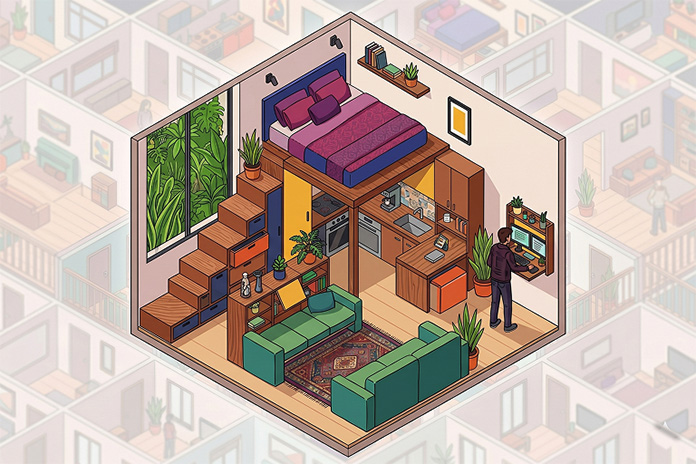
City life comes at a cost and increasingly, that cost is space. As urban populations grow and real estate prices rise, large homes are being replaced by studio apartments, compact flats, and micro-units.
But small space living is not about limitation it’s about rethinking how we live. With the right approach, micro-living ideas and modular interiors can transform compact spaces into efficient, flexible, and comfortable homes.
What is Micro-Living?
Micro-living refers to compact homes, typically ranging between 20 to 40 square meters. Instead of being a compromise, it represents a lifestyle choice focused on functionality and simplicity.
In such spaces:
- A dining table can double as a workstation
- A living room can convert into a bedroom
- Every element serves more than one purpose
This approach aligns closely with minimalism and sustainability, as smaller homes consume fewer resources and promote mindful living.
The Rise of Modular Interiors in India
In India, the demand for modular interiors has seen rapid growth, especially in cities like Mumbai, Bengaluru, and Delhi.
With compact housing formats like studio apartments and 1.5 BHKs, homeowners are shifting from traditional bulky furniture to space-efficient modular solutions.
Key trends include:
- Modular kitchens designed for heavy usage and smart storage
- Box-style furniture for multi-generational living
- Customized units that maximize every inch of space
This shift reflects a broader move toward modern, practical urban living design.
Core Principles of Compact Home Design
Designing small spaces effectively requires a strategic approach. Here are the key principles:
1. Make Every Element Work Harder
Furniture should be multifunctional.
Examples:
- Murphy beds (wall beds)
- Extendable dining tables
- Storage-integrated sofas
These solutions help free up valuable floor space.
2. Think Vertically
When floor space is limited, use the walls:
- Tall wardrobes
- Overhead cabinets
- Wall-mounted shelves
This keeps the space organized and visually open.
3. Design for Perception
Smart design can make a room feel bigger:
- Use light color palettes
- Add mirrors for depth
- Maximize natural light
These elements enhance the sense of space.
4. Maintain Fluidity
Avoid rigid partitions:
- Use curtains or glass dividers
- Create open layouts
This allows different areas to blend, making the home feel larger and more connected.
Why Modular Design is a Game-Changer
Modular design forms the foundation of modern compact living. Unlike fixed furniture, modular systems offer adaptability and efficiency.
Flexibility
Furniture can be rearranged as per need perfect for dynamic lifestyles.
Customization
Units are tailored to fit exact dimensions, ensuring maximum utilization.
Efficiency
- Faster installation due to prefabrication
- Lower labor costs
- Easy maintenance with replaceable parts
Overcoming the Challenges of Small Spaces
One common mistake is overdesigning, which leads to clutter. The solution lies in curation choosing fewer, smarter pieces.
Another key aspect is mental well-being:
- Add indoor plants
- Use open, breathable layouts
- Avoid overcrowding
These elements help create a calm and comfortable environment, even in limited space.
The Future: Smart Tech and Micro-Living
Technology is reshaping compact home design. Smart innovations are making small spaces more functional than ever.
Emerging trends include:
- Smart lighting and temperature control systems
- Motorized foldable beds
- Retractable tables and furniture
These solutions allow spaces to transform effortlessly, maximizing usability.
Conclusion
The future of living is not about having more space it’s about using space intelligently.
By combining micro-living concepts with modular design, we can create homes that are not only efficient but also aesthetically pleasing and highly functional.
In a world where space is becoming scarce, smart design is no longer optional it is essential.