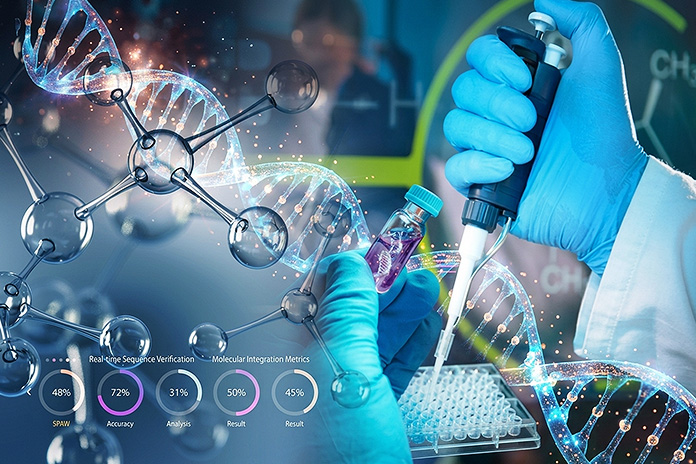
Medical laboratory technology is entering a new phase in 2026, where diagnostics are becoming faster, smarter, and more precise than ever before. From AI-assisted result interpretation and automated sample processing to molecular diagnostics, next-generation sequencing, and digitally connected laboratories, the field is moving far beyond traditional testing. These advances are helping laboratories detect diseases earlier, reduce manual errors, improve turnaround times, and support more personalised treatment decisions.
At the same time, the role of medical laboratory professionals is evolving. Instead of only performing tests, they are increasingly expected to work with advanced instruments, interpret complex data, maintain quality standards, and support clinicians with accurate, timely insights. This shift is making medical laboratory technology one of the most important pillars of modern healthcare, where innovation and human expertise must work together to improve patient care.
Why Medical Laboratory Technology is Changing Faster Than Ever
Diagnostic medicine has always depended on laboratory professionals to turn biological samples into clinically useful information. What has changed is the level of technology now involved between the sample and the result. Today, three major forces are reshaping the field at the same time.
Automation and Smart Lab Systems
Routine testing that once required a technologist’s constant attention, such as blood cell counting, basic chemistry panels, and screening for common pathogens, is increasingly being handled by automated analysers. This does not reduce the need for trained professionals. Instead, it changes their role.
A modern lab technologist must understand how these systems work, identify when an automated result needs manual verification, and troubleshoot instruments that are far more advanced than those used in purely manual laboratories. Quality control and calibration of automated systems have now become just as important as core diagnostic skills.
Molecular Diagnostics Moving Into Mainstream Labs
Molecular techniques such as PCR-based testing, once limited mainly to specialised research settings, are now standard tools in many diagnostic laboratories. This shift requires a different skill set from traditional culture-based microbiology or manual staining.
Lab professionals now need precision in handling genetic material, familiarity with molecular assay protocols, and an understanding of how these results fit with conventional diagnostic findings. Those entering the field need exposure to both classical and molecular methods to stay relevant across modern diagnostic settings.
AI-Assisted Interpretation and Decision Support
Artificial intelligence is increasingly becoming part of diagnostic workflows, from image recognition in pathology and haematology to flagging unusual results in biochemistry panels for human review. This does not replace the judgment of laboratory professionals. It changes how that judgment is applied.
Technologists now often act as the verification layer between an AI-generated alert and a clinical decision. This requires them to understand both the underlying biology and the basic logic of how these instruments and digital systems function.
What This Means for Students Choosing a Career in Medical Laboratory Technology/Science
For students considering a career in Medical Laboratory Technology today, these changes point to one clear reality: the quality and depth of training matter more than ever. A short certificate course may teach the basic steps involved in performing specific tests, but the modern laboratory demands a broader understanding of the entire diagnostic process.
A structured, multi-year programme that covers biochemistry, haematology, microbiology, pathology, immunohaematology, instrumentation, and quality control gives students a stronger foundation. When this training is combined with exposure to automation, AI-assisted systems, and molecular diagnostics, it prepares students to work confidently in laboratories that are becoming more advanced and digitally integrated.
This is where a full Bachelor’s degree in Medical Laboratory Science offers a clear advantage over shorter diploma-only routes. The additional time is not just an extension of the course. It is what helps students move beyond simply learning how to run a test to understanding how results are generated, verified, interpreted, and connected to patient care. As laboratories continue to modernise, this broader foundation can make graduates more adaptable, capable, and relevant in the future diagnostic workforce.
Bachelor of Medical Laboratory Science at LPU
LPU’s Bachelor of Medical Laboratory Science is a 4-year programme, spread across 8 semesters, offered under the School of Medical Laboratory Sciences and Physiotherapy. The programme follows a practice-based learning approach, preparing students to address real diagnostic needs through hands-on training in modern laboratories equipped with advanced infrastructure and up-to-date machinery.
Eligibility
Candidates must have passed 10+2 or equivalent with 60% aggregate marks in English, Physics, Chemistry, and Biology, including Botany and Zoology. Admission is based on CUET.
For candidates who have not studied English as a subject, the English requirement may be waived if the qualifying examination was conducted in English medium.
A 10% relaxation in eligibility marks is available for candidates from North-East states and Sikkim. A 5% relaxation applies to Defence Personnel, their dependants, and Wards of Kashmiri Migrants.
The minimum age for admission is 17 years on or before 31st December 2026. A Medical Fitness Certificate endorsed by a Government medical officer is mandatory at the time of submission.
Students enrolled in the programme receive a stipend of ₹5,000 per month during the 12-month internship period.
Programme Fee and Scholarships
The programme fee for the Bachelor of Medical Laboratory Science is ₹80,000 per semester for Admission 2026. This fee remains fixed throughout the duration of the programme.
Additional charges include:
- Examination Fee: ₹5,000 per semester
- Uniform Fee: ₹4,000, payable one time
Admission to the programme is based on CUET. However, LPUNEST scores are used separately to determine scholarship eligibility. Students may also qualify for scholarships based on their Class 12 percentage, depending on the applicable category.
Curriculum Structure
The curriculum combines Foundation and Core Courses with Open Minor electives, Industry Interface components, Study Abroad opportunities, dedicated Placement Pathways, Specialisation and Electives, Discipline Minor options, Generic Electives, and an Undergraduate Research track.
It also integrates industry certifications, MOOCs, hackathons, co-curricular competitive events, workshops, guest lectures, educational trips, live projects, incubation projects, and community projects with NGOs. These elements are built into the learning experience rather than treated as optional add-ons.
Core Diagnostic Training
The programme covers key diagnostic subjects such as Clinical Biochemistry, Clinical Haematology, Clinical Pathology and Cytology, Immunohaematology, Systemic Microbiology, Histopathology, and Parasitology. Each of these subjects is supported by dedicated laboratory components to help students connect theoretical knowledge with practical diagnostic work.
Students also study Biomedical Instrumentation and Artificial Intelligence as a distinct subject area, reflecting the growing role of automated and AI-assisted systems in modern laboratories. In addition, the curriculum includes Medical Terminology and Medical Records, Entrepreneurship, Ethics and Legal Compliances, and Effective and Professional Communication Skills.
Career-Focused Pathway Electives
LPU also offers Pathway Electives that allow students to build credentials aligned with their career goals. These include tracks oriented towards Study Abroad, Hospital Labs, Marketing and KPOs, Government Jobs, and Higher Studies.
Lateral Entry Route for Diploma Holders
LPU also offers a B.Sc. Medical Laboratory Technology [Lateral Entry] Programme for eligible diploma holders who want to continue their education in Medical Laboratory Science. Students who have completed a Diploma in Medical Laboratory Technology, a Diploma in Pharmacy, or a Diploma in Nursing can apply for direct entry into the programme and complete the remaining qualification in 2 years, spread across 4 semesters.
Eligibility for lateral entry requires 50% marks in the qualifying diploma, along with fulfilment of the English language requirement. Eligible qualifications include a Diploma in Medical Laboratory Technology completed over 3 years after Class 10 or 1 year after Class 12, a 2-year Diploma in Pharmacy after Class 12, or a 3-year Diploma in Nursing after Class 10.
The lateral entry pathway covers the same core diagnostic disciplines, including Clinical Biochemistry, Haematology, Immunohaematology, Microbiology, Pathology and Cytology, Histopathology, and Parasitology, condensed into the final two years. The programme also includes a dedicated internship term, helping students gain practical exposure before entering the workforce.
Placement Outcomes
The School of Medical Laboratory Sciences and Physiotherapy has recorded the following placement outcomes:
| Metric | Figure |
| Highest Salary Package | ₹8.4 Lakh` |
| Average Package of Top 10% | ₹7.52 Lakh |
| Highest Internship/OJT Stipend | ₹35,000 per month |
| Total Recruiters | 20+ |
Graduates of the programme are prepared for career opportunities in diagnostic laboratories, hospital-based laboratory services, academic and teaching roles, and health administration and management. The programme also supports students who wish to build independent career paths, including establishing their own diagnostic laboratory after meeting the required regulatory and professional requirements.
Research Output
The School of Medical Laboratory Sciences and Physiotherapy maintains an active research profile, reflecting its engagement with current developments in diagnostics, laboratory science, and healthcare research.
Key research highlights include:
- 250+ publications
- 400+ book chapters
- 15+ conferences and workshops
- 10+ collaborative research initiatives
For students, this means learning in an academic environment where faculty are actively involved in evolving diagnostic and research practices. This exposure helps connect classroom learning with current developments in the field, rather than limiting education to textbook-based instruction alone.
Conclusion
Medical laboratory technology is no longer a static or purely manual discipline. As diagnostic laboratories adopt automation, bring molecular testing into routine workflows, and use AI-assisted tools for greater accuracy and efficiency, the field now requires professionals who understand the full diagnostic pathway, not just one test, technique, or instrument.
For students planning a career in this field, a structured, multi-year Bachelor’s programme offers the depth needed to build that foundation. Training across biochemistry, haematology, microbiology, pathology, instrumentation, and emerging technologies can help students stay adaptable as laboratories continue to modernise.
Explore the Bachelor of Medical Laboratory Science and B.Sc. Medical Laboratory Technology [Lateral Entry] at LPU and check your eligibility for the 2026 intake.
Frequently Asked Questions
Q: What is medical laboratory technology?
Medical laboratory technology is the field of healthcare focused on analysing biological samples, blood, tissue, and other specimens, to diagnose, monitor, and manage disease. Laboratory professionals in this field work across biochemistry, haematology, microbiology, pathology, and increasingly automated and AI-assisted diagnostic systems.
Q: What is the duration of the Bachelor of Medical Laboratory Science course?
At LPU, the standard Bachelor of Medical Laboratory Science is a 4-year programme (8 Semesters). Diploma holders in Medical Laboratory Technology, Pharmacy, or Nursing can enter through a 2-year Lateral Entry route instead.
Q: What is the eligibility for B.Sc. Medical Laboratory Science at LPU?
Candidates need 60% aggregate marks in 10+2 with English, Physics, Chemistry, and Biology (Botany and Zoology), with admission based on CUET. A 10% relaxation applies for candidates from North-East states and Sikkim, and a 5% relaxation applies for Defence Personnel, their dependants, and Wards of Kashmiri Migrants. Candidates must be at least 17 years old by 31st December 2026 and submit a Medical Fitness Certificate endorsed by a Government medical officer.
Q: What subjects are covered in a medical laboratory technology course?
Core subjects typically include Clinical Biochemistry, Clinical Haematology, Immunohaematology, Systemic Microbiology, Clinical Pathology and Cytology, Histopathology, and Parasitology, alongside Biomedical Instrumentation and Artificial Intelligence, each supported by dedicated laboratory practicals.
Q: Is AI relevant to a career in medical laboratory technology?
Yes. Diagnostic labs increasingly use AI-assisted tools for image recognition in pathology and haematology and for flagging anomalous results in biochemistry panels. Laboratory professionals are expected to understand these systems well enough to verify and interpret AI-generated outputs alongside traditional diagnostic methods.
Q: What career options are available after a Bachelor’s in Medical Laboratory Science?
Graduates can pursue careers in diagnostic laboratories, hospital laboratory services, academic and teaching roles, and health administration and management, with the option to establish independent diagnostic laboratories.