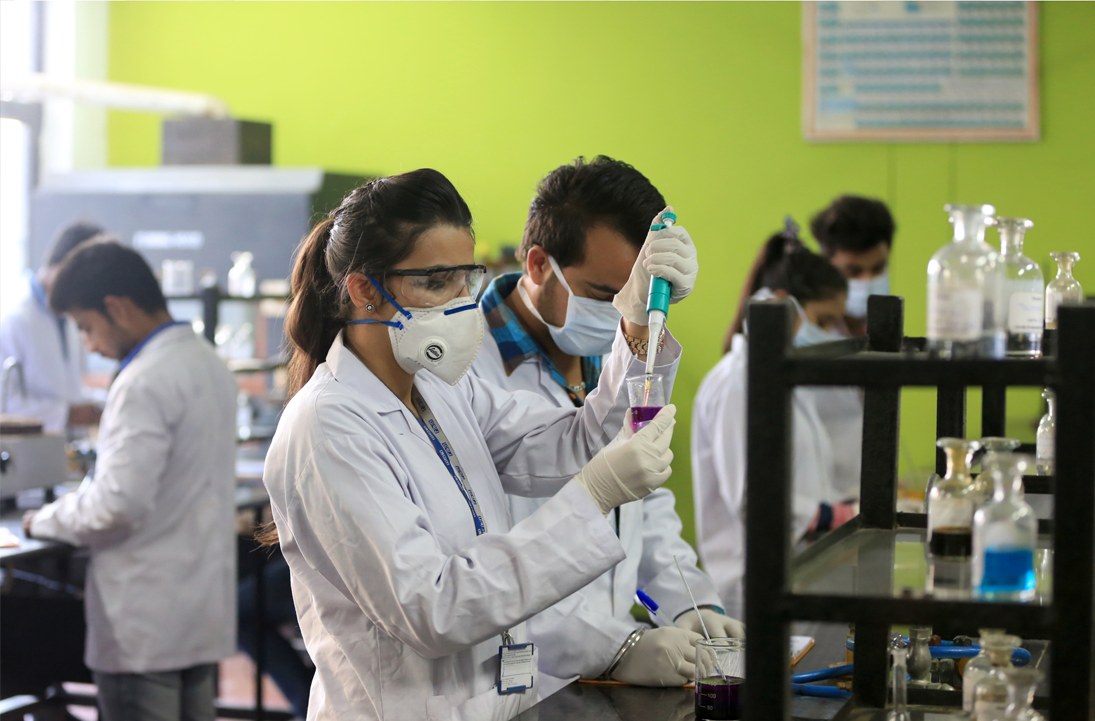
The career opportunities available after a B.Pharm. have expanded considerably over the years. Today, pharmacy graduates can pursue careers across research, pharmaceutical manufacturing, quality management, clinical research, regulatory affairs, pharmacovigilance, medical writing, business development, entrepreneurship, and patient care, reflecting the growing diversity of the pharmaceutical and healthcare ecosystem.
This shift is being driven by the continued growth of India’s pharmaceutical industry, advances in healthcare technology, and an increasing emphasis on medicine quality, regulatory compliance, and patient safety. As pharmaceutical and healthcare organisations continue to grow and diversify, the demand for qualified pharmacy professionals continues to grow across both established and emerging roles.
A Bachelor of Pharmacy prepares students for this evolving landscape by combining scientific knowledge with practical laboratory training and an understanding of pharmaceutical regulations. Whether graduates aspire to work in healthcare, research, manufacturing, or corporate functions within the pharmaceutical industry, the degree provides a strong foundation for building a successful career.
This article explores the career options available after B.Pharm., helping aspiring pharmacy professionals understand where the degree can lead and how they can identify a career path that aligns with their interests and long-term goals.
Career Opportunities After B.Pharm.
A Bachelor of Pharmacy prepares graduates for careers across the pharmaceutical and healthcare sectors. Depending on their interests, skills, and long-term career goals, B.Pharm. graduates can choose to work in patient care, pharmaceutical manufacturing, quality management, research and development, regulatory affairs, drug safety, scientific communication, commercial functions, or entrepreneurship.
The following are some of the major career pathways available after completing a B.Pharm.
1. Patient Care and Clinical Pharmacy
One of the most rewarding career pathways after B.Pharm. involves working directly with patients and healthcare professionals. Pharmacy graduates in this domain help ensure the safe, effective, and appropriate use of medicines while supporting better treatment outcomes. Depending on their role and work setting, they may counsel patients, review prescriptions, monitor medication use, and collaborate with doctors, nurses, and other members of the healthcare team.
Some of the key roles within this domain include:
Hospital and Clinical Pharmacist
Hospital pharmacists manage the safe procurement, storage, dispensing, and monitoring of medicines within healthcare facilities, working alongside doctors, nurses, and other members of the care team. This includes reviewing prescriptions, checking for drug interactions, recommending dosages, and maintaining medication safety standards across the hospital. In larger hospitals or specialised units, this role can extend into clinical pharmacy work, where the pharmacist plays a more active role in medication therapy decisions for complex cases, often working within a specific department such as oncology or critical care.
This path suits graduates who want to stay close to patient care and clinical decision-making without moving into a purely research or industry role.
Community Pharmacist
Community pharmacists serve as one of the most accessible healthcare professionals for the general public. Working in retail pharmacies or independent medical stores, they dispense prescription medicines, counsel patients on dosage and medication use, recommend appropriate over-the-counter products, and promote medication adherence.
As awareness of preventive healthcare continues to grow, community pharmacists also play an increasingly important role in providing basic health guidance and encouraging patients to seek timely medical attention when required.
2. Pharmaceutical Manufacturing
Pharmaceutical manufacturing is one of the largest employment sectors for B.Pharm. graduates. Professionals in this domain are involved in manufacturing pharmaceutical products while ensuring they consistently meet quality, safety, and regulatory standards.
Depending on the organisation and job profile, responsibilities may include production planning, formulation manufacturing, process optimisation, equipment validation, packaging operations, production documentation, and manufacturing supervision. The focus is on producing medicines that consistently meet established quality, safety, and efficacy standards.
With increasing automation and technological advancements in pharmaceutical manufacturing, this domain offers excellent long-term growth opportunities for graduates interested in technical operations and large-scale production.
3. Quality Management
Maintaining the quality of pharmaceutical products is essential throughout the manufacturing process. Pharmacy graduates working in quality management help ensure that medicines consistently meet regulatory requirements and quality standards before reaching patients.
This domain broadly includes two specialised functions.
Quality Assurance (QA)
Quality Assurance focuses on preventing quality issues by establishing systems, processes, and documentation that ensure compliance throughout manufacturing. QA professionals conduct internal audits, validate manufacturing processes, review documentation, implement Good Manufacturing Practices (GMP), and coordinate corrective and preventive actions whenever deviations occur.
Graduates with strong organisational skills, attention to detail, and an interest in compliance often find Quality Assurance to be a rewarding career.
Quality Control (QC)
Quality Control focuses on testing and verifying the quality of pharmaceutical products. QC professionals analyse raw materials, in-process samples, and finished products using sophisticated laboratory techniques to confirm that they meet predefined quality specifications.
This role is particularly suitable for graduates who enjoy laboratory work, analytical testing, and scientific problem-solving.
4. Research and Development (R&D)
Research and Development offers opportunities to contribute to the discovery, development, and improvement of pharmaceutical products. Professionals in this domain work on developing new drug formulations, improving existing medicines, studying drug delivery systems, conducting stability studies, and supporting pharmaceutical innovation.
R&D roles often involve collaboration with formulation scientists, analytical researchers, manufacturing teams, and regulatory professionals. Graduates with strong scientific curiosity and an interest in innovation frequently pursue higher education to build specialised careers in pharmaceutical research.
5. Regulatory Affairs
Every pharmaceutical product must comply with national and international regulatory requirements before it reaches the market. Regulatory Affairs professionals help pharmaceutical companies prepare regulatory submissions, maintain product documentation, coordinate with health authorities, and ensure compliance throughout a product’s lifecycle.
This domain requires a combination of scientific knowledge, regulatory understanding, documentation skills, and attention to detail. As pharmaceutical regulations continue to evolve globally, Regulatory Affairs remains an important career pathway for pharmacy graduates.
6. Drug Safety (Pharmacovigilance)
Drug safety professionals monitor the safety of medicines even after they have been approved for public use. Their work involves collecting and analysing reports of adverse drug reactions, identifying potential safety concerns, maintaining safety databases, and preparing regulatory safety reports.
Pharmacovigilance contributes to patient safety by helping pharmaceutical companies and regulatory authorities continuously evaluate the benefit-risk profile of medicines. Graduates who enjoy analytical work and medical documentation often find this domain particularly rewarding.
7. Scientific Communication (Medical Writing)
Scientific communication combines pharmaceutical knowledge with technical writing skills. Medical writers prepare a wide range of scientific and educational documents, including regulatory submissions, clinical study reports, research publications, product information, patient education materials, and continuing medical education content.
As demand for high-quality scientific communication continues to increase across pharmaceutical companies, healthcare organisations, and clinical research organisations, this field has emerged as an attractive career option for graduates with strong writing and research abilities.
8. Pharmaceutical Sales and Marketing
Pharmaceutical sales and marketing professionals help bridge the gap between pharmaceutical companies and healthcare providers. They communicate scientific information about medicines, understand market needs, support product launches, and contribute to commercial growth while promoting the responsible use of pharmaceutical products.
Career opportunities exist in medical representative roles, product management, brand management, marketing strategy, market research, and business development. Graduates with strong interpersonal and communication skills often thrive in this domain.
9. Entrepreneurship
For graduates interested in building their own ventures, a B.Pharm. can provide the foundation for entrepreneurship within the pharmaceutical and healthcare sectors. Depending on regulatory requirements and professional experience, pharmacy graduates may establish retail pharmacies, pharmaceutical distribution businesses, healthcare consultancies, pharmaceutical manufacturing units, or health-tech ventures.
The growing focus on digital healthcare, preventive health, wellness products, and pharmaceutical services has further expanded entrepreneurial opportunities. While entrepreneurship requires business planning, financial management, and regulatory compliance, it offers the opportunity to create innovative healthcare solutions while building an independent career.
Higher Education Options After B.Pharm.
For graduates looking to build specialised knowledge or advance their careers, higher education can be a valuable next step after completing a B.Pharm. Postgraduate programmes allow students to gain expertise in specific disciplines while preparing for opportunities in research, clinical practice, management, academia, and other specialised areas of the pharmaceutical and healthcare sectors.
Some of the most popular higher education options after B.Pharm. include:
- Master of Pharmacy (M.Pharm.), which allows graduates to specialise in areas such as Pharmaceutics, Pharmacology, Pharmaceutical Chemistry, Pharmacognosy, Quality Assurance, or Pharmaceutical Analysis.
- MBA in Pharmaceutical Management, Healthcare Management, or General Management, for those interested in leadership, marketing, operations, or business development roles.
- Pharm.D (Post Baccalaureate), which offers advanced clinical training and can open opportunities in patient-centred healthcare and clinical pharmacy.
- M.S. or postgraduate programmes abroad, particularly for graduates interested in pharmaceutical sciences, biotechnology, drug development, or regulatory sciences.
- Research programmes such as Ph.D., for those aspiring to work in academia, advanced research, or innovation-driven pharmaceutical organisations.
Pursuing higher education can help graduates develop specialised knowledge, improve career prospects, and access roles that require advanced academic qualifications.
How to Choose the Right Career After B.Pharm.
With numerous career options available, choosing the right path can sometimes feel challenging. Rather than focusing solely on salary or job availability, graduates should evaluate careers based on their interests, strengths, and long-term professional aspirations.
For example, those who enjoy interacting with patients may find satisfaction in hospital or clinical pharmacy. Graduates who prefer laboratory work and scientific investigation may be better suited to research, quality control, or analytical roles. Individuals with strong organisational skills may thrive in regulatory affairs or quality assurance, while those with excellent communication and interpersonal abilities may enjoy careers in pharmaceutical sales, marketing, or medical writing.
Practical exposure through internships, industrial training, research projects, and interactions with industry professionals can also provide valuable insights before making a long-term career decision. Exploring different areas early in one’s career often helps graduates identify where their interests and abilities align most effectively.
Last Word
A successful career in pharmacy begins with choosing a programme that offers more than classroom learning. Along with building a strong foundation in pharmaceutical sciences, students should look for opportunities that provide practical exposure, industry interaction, and skill development.
At Lovely Professional University (LPU), the B.Pharm. programme is designed to prepare students for careers across the pharmaceutical and healthcare sectors through a balanced blend of academic learning and hands-on training. Approved by the Pharmacy Council of India (PCI), the programme combines core pharmaceutical sciences with laboratory learning, industry tie-ups, and internships to help students build the knowledge and practical skills required in today’s pharmaceutical landscape. Students also work on a capstone project designed to build research aptitude, and can choose from ten elective subjects to shape their career direction.
Together with strong placement support, these experiences help prepare graduates for diverse career pathways across patient care, pharmaceutical manufacturing, quality management, research, regulatory affairs, and other emerging domains.
Frequently Asked Questions (FAQs)
1. Can B.Pharm. graduates work in government organisations?
Yes. B.Pharm. graduates may find opportunities in government hospitals, public health departments, regulatory authorities, defence services, pharmaceutical public sector undertakings (PSUs), and government research organisations. Recruitment criteria and selection processes vary depending on the organisation and the role.
2. Is a licence required to work as a pharmacist after completing B.Pharm.?
Graduates who wish to practise as registered pharmacists in India must register with the respective State Pharmacy Council after meeting the applicable eligibility requirements. Registration enables them to practise in accordance with the relevant regulations.
3. Can B.Pharm. graduates pursue careers abroad?
Yes. B.Pharm. graduates can explore employment opportunities in the pharmaceutical and healthcare sectors abroad. Depending on the country and the role, they may need to meet additional requirements such as licensing examinations, credential evaluation, language proficiency tests, or professional registration before becoming eligible to practise.
4. Which industries hire B.Pharm. graduates besides pharmaceutical companies?
In addition to pharmaceutical companies, B.Pharm. graduates may find opportunities in biotechnology firms, clinical research organisations (CROs), healthcare technology companies, medical device manufacturers, hospitals, healthcare consultancies, and health insurance organisations.
5. What certifications can help improve career prospects after B.Pharm.?
Depending on the chosen career path, certifications in areas such as Good Manufacturing Practices (GMP), Good Clinical Practice (GCP), pharmacovigilance, clinical research, regulatory affairs, quality management, or medical writing can help strengthen a candidate’s professional profile.
6. Can B.Pharm. graduates switch to management or business roles?
Yes. Many pharmacy graduates move into management, marketing, business development, product management, or healthcare administration after gaining industry experience or pursuing postgraduate qualifications such as an MBA.
7. Does a B.Pharm. degree prepare students only for jobs in the pharmaceutical industry?
No. While the pharmaceutical industry remains a major employer, the knowledge and skills gained during a B.Pharm. programme can also support careers in healthcare, research, academia, biotechnology, clinical research, regulatory organisations, and entrepreneurship.
8. What should students consider while choosing a B.Pharm. programme?
Students should evaluate factors such as curriculum, faculty expertise, laboratory infrastructure, practical training, industry exposure, research opportunities, internships, accreditations, and placement support. These aspects can significantly influence learning outcomes and future career prospects.