
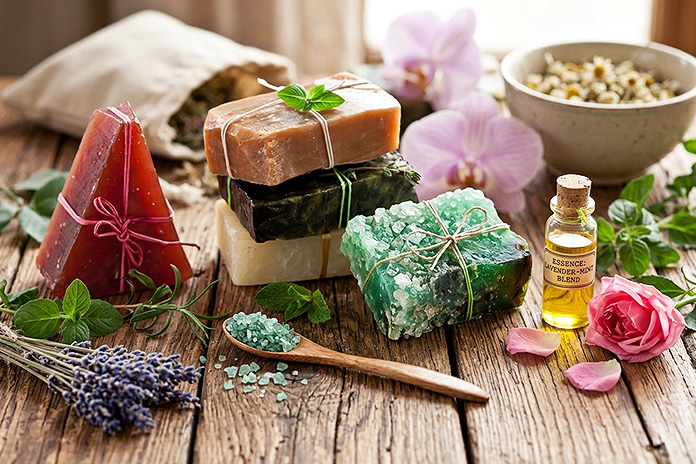
Introduction
From the moment we brush our teeth in the morning to washing our face before bed, chemistry plays an important role in our daily lives. Toothpaste, shampoos, perfumes, moisturizers, soaps, cosmetics, and even many foods are products of modern chemistry. Among these everyday essentials, bathing soaps are perhaps the most commonly used personal care products.
Choosing the right soap, however, is not as simple as picking one with a pleasant fragrance or attractive packaging. The best bathing soap for different skin types depends on your skin’s needs, environmental conditions, and any existing skin concerns. This scientific guide to selecting bathing soaps explains how soaps work, what they contain, and how to choose the right bathing soap for healthy, comfortable skin.
What Are Bathing Soaps Made Of ?
Understanding the composition of soaps is the first step in making an informed choice.
Bathing soaps are produced through a chemical reaction called saponification, in which fats or oils react with an alkali.
The most commonly used oils include:
- Coconut oil
- Palm oil
- Olive oil
- Castor oil
- Animal fats (used less frequently in premium soaps)
The alkali used determines the type of soap:
- Sodium hydroxide (NaOH) produces hard bar soaps.
- Potassium hydroxide (KOH) produces soft or liquid soaps.
Besides oils and alkali, manufacturers add several ingredients to improve the soap’s quality and performance:
- Glycerin – Helps retain moisture and keeps the skin soft.
- Water – Used during manufacturing and shaping.
- Fragrances – Natural essential oils or synthetic perfumes provide a pleasant scent.
- Colorants – Give soaps their attractive appearance.
- Preservatives – Prevent microbial growth and increase shelf life.
- Hardeners – Ingredients like sodium chloride improve the durability of soap bars.
- Herbal or medicinal additives – Neem, aloe vera, turmeric, tea tree oil, charcoal, and other botanical extracts offer additional skincare benefits.
How Do Bathing Soaps Clean the Skin?
The cleansing action of soap is based on its unique molecular structure.
Every soap molecule contains two parts:
- A hydrophilic (water-loving) head
- A hydrophobic (oil-loving) tail
The hydrophobic end attaches to oils, dirt, and grease on the skin, while the hydrophilic end binds with water. During rinsing, the dirt attached to the soap molecules is washed away, leaving the skin clean.
This simple yet effective mechanism makes soap one of the most important products for maintaining personal hygiene and bathing soap selection.
Types of Bathing Soaps
Today, consumers can choose from a wide range of bathing soaps, each designed for different skin needs.
Some common categories include:
- Moisturizing soaps
- Herbal soaps
- Transparent soaps
- Antibacterial soaps
- Medicated soaps
- Beauty soaps
Each type contains ingredients formulated to address specific skincare concerns.
How to Choose the Right Bathing Soap
One of the most important aspects of choosing a bathing soap for healthy skin is identifying your skin type.
The same soap may work well for one person but cause dryness or irritation for another. Understanding your skin helps you make the right decision.
Best Bathing Soap for Dry Skin
Dry skin often feels tight after bathing and may show flaking or roughness.
Look for soaps containing:
- Glycerin
- Shea butter
- Aloe vera
- Coconut oil
- Almond oil
- Milk cream
Cream-based or moisturizing soaps with a balanced pH are generally the best choice.
Avoid:
- Strong deodorant soaps
- Highly perfumed soaps
- Harsh cleansing formulations
Common recommendations:
- Dove Beauty Bar
- Cetaphil Cleansing Bar
- Sebamed Cleansing Bar
Best Bathing Soap for Oily Skin
Oily skin usually feels greasy and may be more prone to acne and excessive sweating.
Choose soaps containing:
- Neem
- Tea tree oil
- Activated charcoal
- Salicylic acid
These ingredients help remove excess oil while keeping the skin clean.
Avoid:
- Heavy cream-based soaps
- Excessively moisturizing formulations
Common recommendations:
- Medimix
- Pears Oil Control variants
- Dettol Fresh variants
Best Bathing Soap for Sensitive Skin
Sensitive skin may develop itching, redness, irritation, or allergic reactions after using unsuitable products.
Choose:
- Fragrance-free soaps
- Dye-free formulations
- Hypoallergenic products
- Dermatologist-tested cleansing bars
Avoid:
- Strong perfumes
- Harsh exfoliating ingredients
- Artificial dyes
Common recommendations:
- Aveeno
- Cetaphil
- Sebamed
Best Bathing Soap for Normal Skin
If you have normal skin, you can generally use most mild soaps without difficulty.
Your choice can be based on:
- Preferred fragrance
- Moisturizing level
- Herbal ingredients
Common recommendations:
- Lux
- Pears
- Mysore Sandal
How to Identify the Best Soap for Your Skin
Reading the ingredient list is often more useful than relying on advertising claims.
Ingredients that are generally beneficial include:
- Glycerin
- Aloe vera
- Coconut oil
- Shea butter
- Oatmeal
- Neem (especially for acne-prone skin)
Be cautious if the soap contains:
- Excess sulfates
- Very strong artificial fragrances
- High alcohol content
Understanding ingredients is one of the easiest ways of bathing soap selection based on skin type.
Consider the Weather Before Choosing a Soap
Climate also affects your skin and should influence your soap selection.
During summer
Hot and humid weather often causes sweating and excess oil production. Refreshing or antibacterial soaps may feel more comfortable.
During winter
Cold weather reduces skin moisture, making moisturizing soaps a better option.
People living in hot regions, such as Rajasthan, often benefit from adjusting their soap according to seasonal changes.
Choosing Soap for Specific Skin Concerns
Certain skin conditions require specialized cleansing products.
| Skin Concern | Recommended Soap Type |
| Body acne | Salicylic acid or neem-based soaps |
| Fungal infections | Medicated antifungal soaps (after medical advice) |
| Eczema or dermatitis | Syndet bars or dermatologist-recommended cleansers |
If symptoms persist, consulting a dermatologist is always recommended.
Soap Bar or Body Wash?
Many people wonder whether they should use a soap bar or a body wash.
Soap bars are:
- Affordable
- Long-lasting
- Easy to carry
- Effective for everyday cleansing
Body washes are generally:
- More moisturizing
- Gentler on very dry or sensitive skin
- Better suited for individuals with compromised skin barriers
The right choice depends on your skin type and personal preference.
A Simple Rule for Selecting a Good Bathing Soap
A good bathing soap should:
- Clean your skin effectively.
- Remove dirt and excess oil without over-drying.
- Leave your skin feeling soft and comfortable.
- Not cause itching, redness, or irritation.
- Match your skin type and seasonal needs.
Conclusion
Selecting the right bathing soap is an important part of maintaining healthy skin and good personal hygiene. Rather than choosing products based solely on fragrance or marketing, understanding your skin type and the ingredients used in soaps helps you make a more informed decision.
Whether you have dry, oily, sensitive, or normal skin, following a complete guide to bathing soaps and skincare can help you choose products that cleanse effectively while protecting your skin’s natural barrier. Ultimately, skin-friendly bathing soaps for daily use are those that suit your individual skin needs, keep your skin comfortable after bathing, and contribute to long-term skin health.