
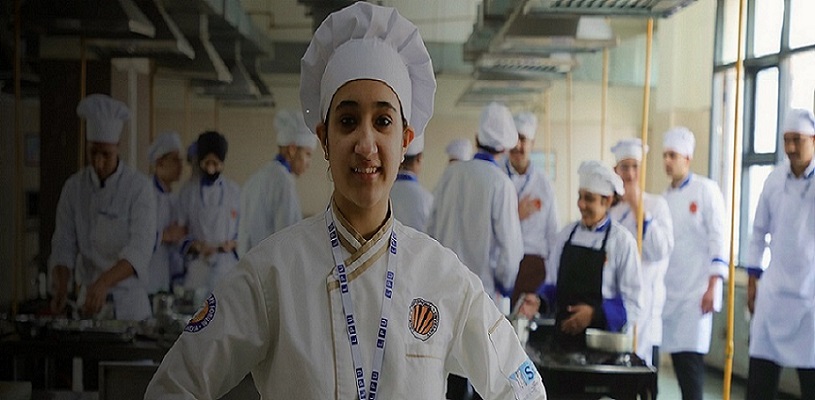
If you have a natural inclination towards the world of hospitality, a B.Sc. in Hotel and Hospitality Management could be the perfect way to turn your interest into a highly rewarding career. Lovely Professional University (LPU) offers the B.Sc. in Hotel and Hospitality Management programme with an industry-aligned curriculum, hands-on training, and strong placement support, giving students the kind of foundation that prepares them for the real world. If you have been considering pursuing B.Sc. in Hotel and Hospitality Management, this article is for you. Read on as we walk you through everything you need to know about B.Sc. in Hotel and Hospitality Management, including key aspects such as eligibility, curriculum, and career scope.
What is B.Sc. Hotel and Hospitality Management?
A B.Sc. in Hotel and Hospitality Management is a 3-year undergraduate programme spread across six semesters, designed for students who want to build a professional career in the hospitality industry. It covers everything from the operational side of running a hotel to the finer aspects of food production, guest relations, and event management.
Unlike a short-term diploma or a generic management degree, this programme goes deeper. It combines theoretical knowledge with practical, hands-on training, giving students a well-rounded understanding of how the hospitality industry actually functions. The curriculum is structured to cover core areas like Front Office Management, Food and Beverage Service, Housekeeping, and Food Production, alongside broader business and management concepts that are relevant across industries.
Eligibility Criteria
Before applying for the B.Sc. in Hotel and Hospitality Management, it is important to understand whether you meet the basic requirements. The eligibility criteria are fairly straightforward, but worth going through carefully before beginning the application process.
| Criteria | Details |
| Qualifying Examination | 10+2 or equivalent from a recognised board |
| Minimum Aggregate | 50% marks |
| Required Subjects | English (Can be waived off if the qualifying exam was completed in English as the medium of instruction) |
| Scholarship | LPUNEST, NCHM JEE |
| Relaxation in Marks | 5% for candidates from North-East states and Sikkim, Defence Personnel and their dependents, and Wards of Kashmiri Migrants |
Admission Process
The admission process for the B.Sc. in Hotel and Hospitality Management is fairly simple and can be completed in a few straightforward steps. At LPU, the process is online and designed to be as hassle-free as possible for students applying from anywhere in the country.
Step 1: Online Registration
It starts with registering online through the university’s official admissions portal and filling out the application form with the required details.
Step 2: Scholarship Assessment
Once registered, candidates can apply for scholarship assessment based on LPUNEST or NCHM JEE scores. LPU’s own test, LPUNEST, offers the flexibility of appearing either from home through an online remotely proctored format or at a designated test centre.
Step 3: Online Counselling and Seat Preferences
After the exam, eligible candidates are invited to participate in the online counselling process, where they can update their seat preferences based on available options.
Step 4: Seat Allotment
Seat allotment is done based on scholarship exam scores and availability, with results announced online. Admissions are conducted across multiple phases throughout the year, so even if one window is missed, there is usually an opportunity to apply in a subsequent phase, subject to seat availability.
Step 5: Confirm Admission and Scholarship Assessment
Once a seat is allotted, candidates must complete the admission formalities within the given timeframe to confirm their place in the programme. Scholarship eligibility is also assessed at this stage, based on entrance exam performance and applicable criteria.
Course Duration and Structure
The B.Sc. in Hotel and Hospitality Management at LPU is a full-time undergraduate programme with a duration of 3 years (6 semesters). Each semester builds on the previous one, gradually moving students from foundational concepts to more advanced, specialised areas of hospitality management.
Foundation and Core Courses
The early semesters focus on building a strong base. Students are introduced to the fundamental areas of hospitality, covering everything from food production and front office operations to housekeeping and food and beverage service. These core hotel management courses form the backbone of the programme and ensure every student has a thorough understanding of how the industry works from the ground up.
Specialisations and Electives
As the programme progresses, students get the opportunity to choose from a range of specialisation and elective courses that allow them to focus on areas they are most interested in, whether that is hotel operations, event management, or food and beverage management.
Industry Interface and Live Projects
One of the more distinctive aspects of the programme is its strong emphasis on real-world exposure. Industry certifications, live projects, guest lectures, educational trips, workshops, and community projects are all woven into the curriculum, ensuring students are not just exam-ready but industry-ready.
Curriculum and Subjects
Year 1
The first year is all about getting students comfortable with the core pillars of the hospitality industry. From understanding how a hotel kitchen operates to learning the basics of guest-facing roles, Year 1 gives students a broad but solid introduction to the world of hospitality.
Autumn Term
The autumn term kicks things off with subjects that cover the operational fundamentals of the industry, including:
- Fundamentals of Food Production
- Fundamentals of Front Office
- Fundamentals of Front Office Laboratory
- Fundamentals of Food and Beverage Service
- Fundamentals of Food and Beverage Service Laboratory
- Basics of Food Production Laboratory
- Communication Skills
- Hotel French
- Food Waste Management
- Orientation I
Spring Term
The spring term builds on the foundation laid in the first half of the year, introducing students to more operational depth through subjects like:
- Food and Beverage Service Operations
- Food and Beverage Operations Laboratory
- Housekeeping Operations
- Housekeeping Operations Laboratory
- Food Safety and HACCP
- Fundamentals of Bakery and Patisserie Laboratory
- Environmental Studies
- Guided Learning I
- Program Orientation II
- Traditional Indian Food
The second year is where things start to get really interesting. Students move beyond the basics and begin exploring more specialised and industry-specific areas of hospitality management.
Year 2
Autumn Term
The 2nd year autumn term introduces a mix of operational, business, and creative subjects, including:
- Accounting for Hospitality
- Event Management
- Food Photography and Styling
- Gastronomic Tourism
- Property Management System
- Room Division Operations
- Wines, Spirits and Liqueurs
- Wines, Spirits and Liqueurs Laboratory
- Environmental Studies
- Guided Learning II
Spring Term: Industrial Internship
The spring term of Year 2 is entirely dedicated to an Industrial Internship. This is one of the most valuable parts of the programme, giving students the opportunity to step into a real hospitality environment and apply everything they have learned over the past year and a half. It is not just work experience, it is a chance to understand how the industry actually operates, build professional connections, and figure out which area of hospitality genuinely excites them the most.
Year 3
The final year is where everything comes together. Students move into advanced territory, tackling subjects that are directly aligned with senior-level roles in the hospitality industry. By this point, the programme shifts from building awareness to developing genuine expertise.
Autumn Term
The autumn term of Year 3 is heavily focused on advanced operations and management, including:
- Accommodation Management
- Accommodation Management Lab
- Advanced Food Production
- Advanced Food Production Lab
- Advanced Food and Beverage Service
- Advanced Food and Beverage Service Lab
- Front Office Management
- Front Office Management Lab
- Facility Planning and Management
- Research Methodology
Spring Term
The spring term wraps up the programme with a strong mix of specialised, contemporary, and business-focused subjects, including:
- Asian Cuisine Lab
- Banquet and Bar Operations
- Cloud Kitchen Operations
- Digital Marketing
- Field Project
- Guest Relationship Management
- Hospitality Ethics and Law
- Linen and Laundry Management
- Linen and Laundry Management Lab
- Materials Management
Skills You Will Develop
One of the strongest arguments for pursuing a B.Sc. in Hotel and Hospitality Management is the sheer range of skills you walk away with. This is not a degree that leaves you with just theoretical knowledge. By the time students complete the programme, they have a genuinely well-rounded skill set that is valued across multiple industries, not just hospitality. Some of the key skills developed during this course include:
- Guest Handling: Ability to manage guest interactions professionally, ensuring comfort, satisfaction, and a positive experience.
- Communication Skills: Strong verbal and written communication for dealing with guests, teams, and international clientele.
- Operations Management: Understanding how hotels, restaurants, and hospitality services are planned, run, and coordinated.
- Food & Beverage Basics: Knowledge of service standards, menu planning, and restaurant operations.
- Problem Solving: Quick thinking to handle complaints, unexpected situations, and service challenges smoothly.
- Team Coordination: Working effectively with different departments to ensure seamless service delivery.
Career Scope After B.Sc. Hotel and Hospitality Management
A B.Sc. in Hotel and Hospitality Management opens doors to a surprisingly wide range of career options. Most people assume it leads only to hotel jobs, but the reality is quite different. Graduates find opportunities across hotels, airlines, cruise lines, event companies, hospitals, and even corporate catering setups. Here is a look at some of the most popular career paths:
| Job Role | Industry | Key Responsibilities |
| Front Office Executive | Hotels, Resorts | Managing reservations, guest check-ins, and day-to-day front desk operations |
| Food and Beverage Manager | Hotels, Restaurants, Airlines | Overseeing restaurant and banquet services, menu planning, and kitchen coordination |
| Housekeeping Supervisor | Hotels, Cruise Lines | Maintaining cleanliness standards, managing housekeeping teams, and ensuring guest comfort |
| Event Coordinator | Event Management Companies | Planning and executing weddings, corporate events, conferences, and large-scale functions |
| Guest Relations Executive | Luxury Hotels, Resorts | Handling VIP guests, managing feedback, and ensuring personalised guest experiences |
| Chef / Sous Chef | Hotels, Restaurants, Cloud Kitchens | Menu creation, kitchen management, and food production |
| Sales and Marketing Executive | Hotel Chains, Tourism Boards | Developing marketing strategies, managing corporate accounts, and driving occupancy |
| Catering Officer | Airlines, Institutional Catering | Managing food service operations, coordinating catering logistics, and ensuring quality standards |
Conclusion
A B.Sc. in Hotel and Hospitality Management is not just a degree, it is a career decision that can take you places, quite literally. The curriculum is designed to ensure that by the time students graduate, they are not just equipped with textbook knowledge but with real industry exposure, practical skills, and the kind of professional confidence that employers actually look for. LPU’s B.Sc. in Hotel and Hospitality Management brings all of this together under one roof, with a structured curriculum, strong placement support, and an environment that pushes students to grow both professionally and personally. If hospitality has been on your mind, there has never been a better time to pursue it. Visit the LPU admissions office, enquire about the programme, and take the first step towards a career that is as exciting as it is rewarding.
Frequently Asked Questions
1. Is B.Sc. Hotel and Hospitality Management recognised internationally?
Yes. A B.Sc. in Hotel and Hospitality Management is a globally recognised qualification. The hospitality industry is one of the few sectors where a degree from a reputed institution can open doors in virtually any country. Many graduates go on to work with international hotel chains, cruise lines, and airlines across the world.
2. Can students from a Science or Commerce background apply?
Yes. Students from any stream, Science, Commerce, or Arts, can apply for this programme, provided they meet the minimum eligibility criteria set by the institution they are applying to. The course does not require a specific academic background as much as it requires genuine interest in the hospitality field.
3. What is the scope of this degree for students who want to work abroad?
The scope is significant. Hospitality is a truly global industry and trained professionals are in demand across the Middle East, Europe, South East Asia, and beyond. Countries like the UAE, Singapore, Switzerland, and Australia are known for actively hiring hospitality graduates from India. Having a structured degree with practical training and internship experience makes a considerable difference when applying for international roles.
4. Can a hospitality graduate start their own business?
Absolutely. In fact, the programme equips students with a well-rounded understanding of food operations, event management, marketing, accounting, and customer service, all of which are directly relevant to running a hospitality business. Many graduates go on to open restaurants, catering companies, event management firms, or boutique stays.
5. Is hotel and hospitality management a good career for women in India?
Very much so. The hospitality industry in India and globally has a strong culture of welcoming women across all levels, from front office and guest relations to food and beverage management and senior leadership. Many of the top hotel chains actively prioritise diversity in their hiring, and women have consistently risen to prominent positions within the industry.
6. What postgraduate options are available after this degree?
Graduates can pursue an MBA in Hospitality Management, an MSc in International Hospitality Management, or postgraduate diplomas in specialised areas like Revenue Management, Luxury Brand Management, or Culinary Arts. Several universities abroad also offer one-year master’s programmes specifically designed for hospitality graduates.
7. Is prior experience in hospitality required before joining this programme?
No prior experience is required. This is an undergraduate programme designed for students coming straight out of Class 12. The curriculum is structured to take students from the very basics all the way through to advanced, specialised knowledge by the time they graduate.
8. What is the difference between B.Sc. Hotel and Hospitality Management and BHMCT?
BHMCT, or Bachelor of Hotel Management and Catering Technology, is a 4-year programme with a strong focus on catering technology, primarily offered through government-affiliated institutions like the Institute of Hotel Management. A B.Sc. in Hotel and Hospitality Management is a 3-year programme with a broader scope, covering areas beyond just hotel and catering operations, including event management, digital marketing, and guest relationship management. Both are well-regarded, but the B.Sc. offers more flexibility in terms of career pathways and duration.