
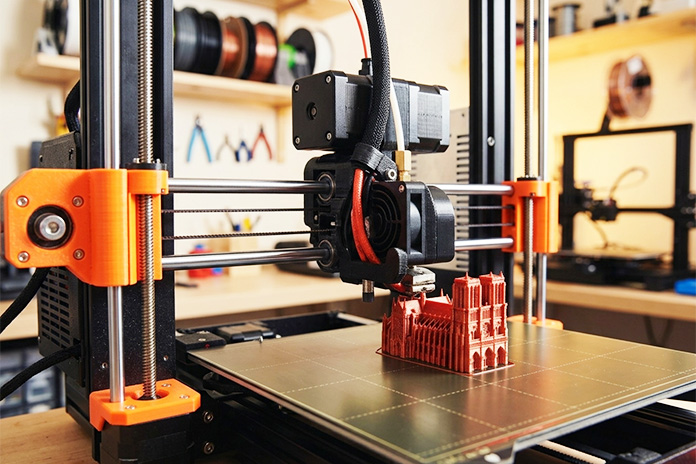
Over the past few years, the 3D printing industry has grown rapidly, transforming how products are designed and manufactured. From healthcare to aerospace and automotive sectors, businesses are increasingly adopting this technology to improve efficiency and reduce production time.
What was once known as rapid prototyping technology has now become a core part of modern manufacturing. Today, it is not just about creating prototypes—it is about faster production, smarter processes, and better innovation.
WHAT IS 3D PRINTING?
3D printing, also known as additive manufacturing, is a process where objects are created layer by layer using digital designs. This method allows complex and detailed structures to be built easily, offering designers greater freedom.
In the context of additive manufacturing India, this technology is gradually gaining importance as industries look for efficient and cost-effective production methods.
FASTER PRODUCTION AND RAPID PROTOTYPING
One of the biggest 3D printing benefits is speed. Parts that traditionally took days or weeks to manufacture can now be produced in just a few hours.
This makes rapid prototyping technology extremely useful in product design. Companies can quickly test ideas, make improvements, and launch products faster in the market. It also reduces delays in the overall production cycle.
COST-EFFECTIVE AND EFFICIENT PROCESS
3D printing reduces the need for expensive tools like molds and jigs. Since the process is mostly automated, it also lowers labour costs.
These advantages make it one of the most effective product development tools available today. Businesses can experiment with designs without taking major financial risks.
REDUCED MATERIAL WASTE AND SUSTAINABILITY
Unlike traditional methods that cut away material, 3D printing uses only what is required. This leads to minimal waste and better resource utilization.
Such efficiency supports sustainable manufacturing practices and aligns with modern industrial automation tech trends focused on reducing environmental impact.
PRINT-ON-DEMAND AND FLEXIBILITY
Another important advantage is print-on-demand production. Companies can produce items only when needed, reducing storage costs and inventory issues.
This flexibility is one of the key 3D printing benefits, especially for industries dealing with customized or small-batch production.
REAL-WORLD APPLICATIONS
3D printing is already being used in many industries:
- Footwear companies like Adidas are producing lightweight and flexible shoe soles.
- During the pandemic, 3D printing helped produce medical equipment quickly and efficiently.
- Aerospace companies have reduced complex components into single parts, saving time and cost.
These examples show how the 3D printing industry is becoming an essential part of modern manufacturing.
FUTURE OF 3D PRINTING
The future of 3D printing looks promising, especially with advancements in AI and automation. As industrial automation tech continues to evolve, 3D printing will play a bigger role in smart factories and digital manufacturing.
In India, the growth of additive manufacturing India is expected to increase as more industries adopt this technology for innovation and efficiency.
CONCLUSION
3D printing is changing the way industries approach production. It offers speed, flexibility, and cost efficiency, making it one of the most powerful product development tools today.
With continuous advancements and wider adoption, the 3D printing industry is set to redefine manufacturing—making production not just faster, but smarter and more sustainable.