
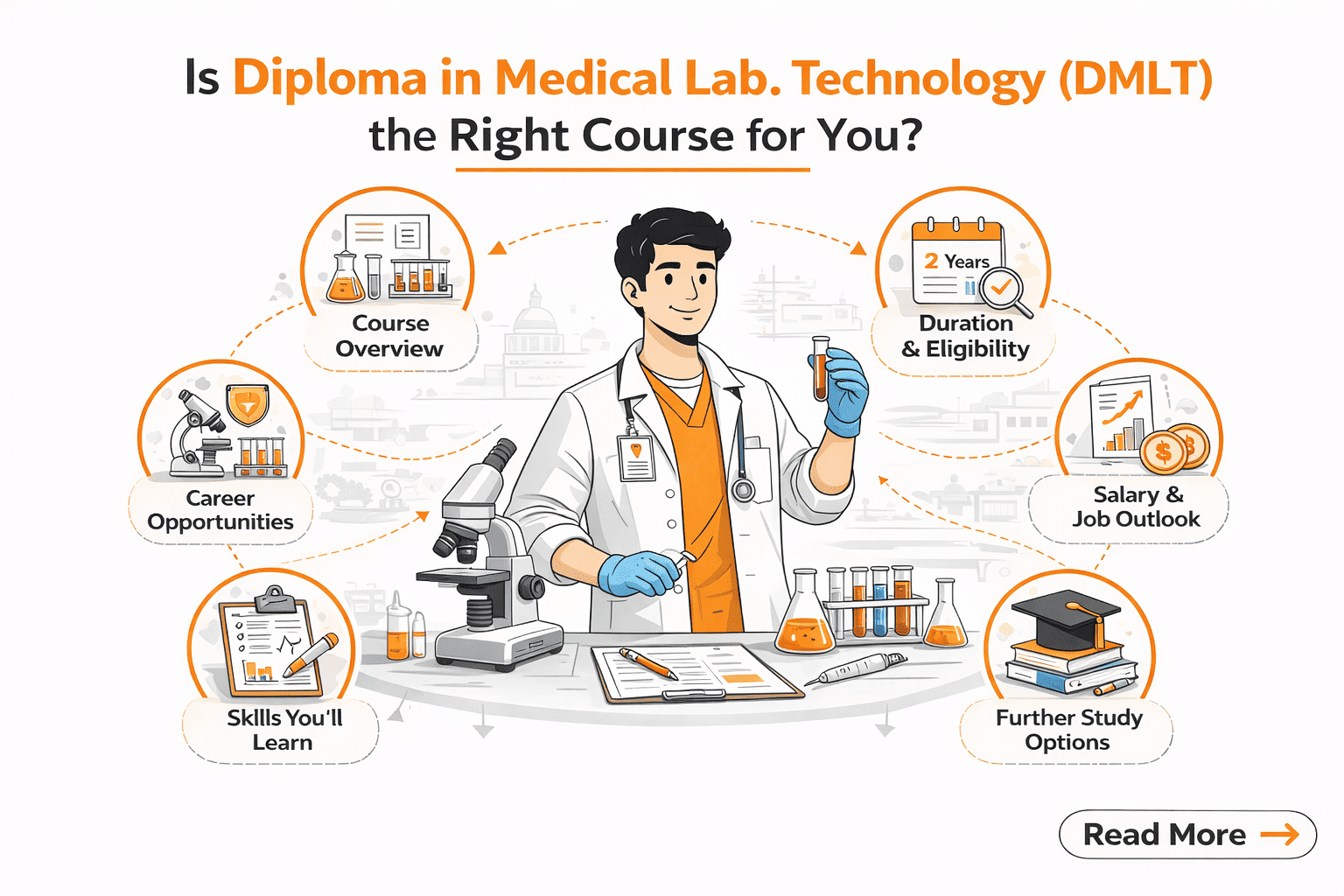
- What Is Diploma in Medical Lab. Technology All About?
- Who Should Choose a Career in Medical Laboratory Technology?
- Skills and Aptitude Required for DMLT Students
- Academic Eligibility and Entry Pathways
- Work Environment and Professional Responsibilities
- Challenges Faced by Medical Lab Technicians
- Long-Term Career Stability in the Healthcare Sector
- Comparison with Other Paramedical Diploma Programmes
- Alumni Success Stories: Career Journeys after DMLT
- Real-World Impact of Medical Lab Professionals
- Future Scope of Medical Laboratory Technology
- Final Words
- Frequently Asked Questions (FAQs)
What Is Diploma in Medical Lab. Technology All About?
If you’re interested in the healthcare field but don’t necessarily want to become a doctor, then a Diploma Medical Lab. Technology (DMLT) can be a smart and practical career option. In simple terms, this course prepares you to work behind the scenes in hospitals and diagnostic labs, where accurate testing plays a major role in patient treatment. A clear DMLT course overview explains that students learn how to collect samples, perform laboratory tests, and assist doctors by providing reliable medical reports that help in diagnosing diseases correctly.
The medical lab technology programmes mainly focuses on skill-based learning along with theory. Students get trained to handle modern laboratory equipment, understand blood testing, microbiology, pathology, and safety procedures used in professional labs. The course duration is generally 3 years in LPU, making it a great choice for students who want to enter the healthcare sector faster without committing to long medical degrees. Practical exposure is an important part of the course, helping students build real-world confidence.
Many reputed universities, including Lovely Professional University, design the programme to match current industry requirements by combining classroom learning with hands-on lab training. With the advancement of healthcare technology, institutes are also introducing AI-guided paramedical course insights, allowing students to understand how automation and smart diagnostic systems are shaping modern laboratories. Overall, this diploma offers a balanced path for students looking for a stable, respected, and skill-oriented healthcare career.
| Did You Know ?
A significant portion of medical decisions made by physicians is supported by laboratory test results, demonstrating the indispensable role of trained lab professionals. |
Who Should Choose a Career in Medical Laboratory Technology?
Choosing the right career often depends on your interests, skills, and the kind of work environment you see yourself in, and this field is perfect for students who enjoy science but prefer practical, technical roles rather than direct patient treatment. When we talk about the ideal candidates for DMLT, it usually includes students who are curious about how diseases are diagnosed, enjoy laboratory work, and have a strong attention to detail. Since even a small mistake in testing can affect medical reports, this career suits individuals who are responsible, focused, and comfortable working with equipment and scientific procedures.
Understanding the career suitability for medical lab technology also means knowing that this profession is best for students who like structured work environments such as hospitals, diagnostic centers, research labs, and healthcare facilities. If you have studied biology or medical science in school and often wondered how blood tests, infection reports, or health screenings actually work, then this field can feel very engaging. Many students ask who should study medical lab technology, and the simple answer is – anyone who wants a stable healthcare career without spending many years in medical school but still wants to contribute meaningfully to patient care.
Today, career decisions are becoming smarter with technology, and many institutions are introducing AI career assessment healthcare tools that help students understand whether their skills and personality match paramedical careers. Universities like Lovely Professional University also guide students through counseling sessions and industry exposure so they can confidently decide if this path aligns with their future goals. Overall, medical laboratory technology is a great option for students who want a respected, skill-based profession with growing demand and long-term career stability in the healthcare sector.
| Did You Know ?
Nearly 70% of medical diagnoses depend on laboratory test results, making lab professionals a crucial part of healthcare. Modern programmes at Lovely Professional University also introduce students to AI-based diagnostic tools used in today’s smart laboratories. |
Skills and Aptitude Required for DMLT Students
To succeed in a Diploma in Medical Lab Technology (DMLT), students need a combination of technical knowledge, practical abilities, and the right mindset. Since laboratory professionals work with medical samples and diagnostic equipment, having the proper technical skills for medical lab technicians is just as important as understanding theory. The course not only teaches laboratory procedures but also helps students develop professional habits that ensure accuracy, safety, and efficiency in real healthcare environments.
Below are some important skills and aptitudes every DMLT student should develop:
- Strong Analytical and Lab Skills
Medical laboratory work involves testing samples, observing results, and interpreting data carefully. Good analytical and lab skills help students understand patterns in reports and assist doctors in accurate diagnosis. During training, students learn how to handle microscopes, testing equipment, and laboratory instruments while following proper scientific procedures. - Attention to Detail and Accuracy
One of the most important qualities in this field is attention to detail. Even a small error in labeling samples or recording results can impact a patient’s treatment. DMLT students are trained to work carefully, follow protocols step by step, and maintain precision while performing tests in busy lab environments. - Technical Knowledge and Equipment Handling
Modern laboratories rely on advanced machines and diagnostic tools. Students must become comfortable operating automated analyzers, maintaining hygiene standards, and managing laboratory workflows. These technical abilities build confidence and prepare students for real hospital or diagnostic lab settings. - Adaptability to AI Tools in Medical Lab Training
Healthcare technology is evolving rapidly, and many institutes now include AI tools in medical lab training to help students understand automated testing and digital reporting systems. Universities like Lovely Professional University introduce students to modern lab technologies so they can easily adapt to smart laboratories and future healthcare innovations.
Overall, developing these skills helps DMLT students become reliable healthcare professionals who can work efficiently, maintain accuracy, and support doctors through precise laboratory diagnostics.
Academic Eligibility and Entry Pathways
Choosing the right healthcare course starts with understanding whether you meet the academic qualifications and how the admission process works. The DMLT eligibility criteria are designed to make this programme accessible for students who want to enter the medical field through a practical and skill-focused route. Since this is a paramedical diploma, the admission process is generally simpler than medical degree programmes, allowing students to begin their professional journey soon after completing school. Understanding the admission pathways medical lab technology programmes follow helps students plan their career steps with clarity and confidence.
Most institutions keep the entry requirements for paramedical diploma programmes straightforward so that students with an interest in healthcare can easily apply. The common eligibility and admission requirements include:
- Completion of 10 education from a recognized board.
- Preference for students from the Science stream (Physics, Chemistry, Biology), as it builds a strong foundation for laboratory learning.
- Minimum qualifying marks may vary depending on the college or university guidelines.
- Admission is often merit-based, depending on 12th-grade academic performance.
- Some universities provide counseling sessions or screening processes to guide students toward suitable healthcare programmes.
- Introduction of AI-guided admission insights in modern institutions helps students understand career suitability and make informed decisions before enrollment.
Universities like Lovely Professional University further simplify the admission journey by offering structured guidance, academic counseling, and support throughout the application process. This ensures students not only meet eligibility requirements but also choose a career path aligned with their long-term goals in the healthcare industry.
| Did You Know ?
Many institutes now use AI-based admission guidance to help students evaluate their skills and choose the right paramedical course, making career decisions more informed and future-focused. |
Work Environment and Professional Responsibilities
Medical laboratory technology offers a professional and well-structured career where accuracy, discipline, and scientific understanding are essential. The medical lab technician work environment is usually clean, organized, and technology-focused, as laboratories must follow strict hygiene and safety standards. Professionals typically work in hospitals, diagnostic centers, pathology labs, blood banks, and research facilities, where most responsibilities revolve around testing, analysis, and maintaining reliable medical records rather than direct patient interaction.
To understand the importance of this role, it is essential to look at the professional duties in lab technology, as each responsibility directly contributes to patient diagnosis and treatment.
Key Professional Responsibilities:
- Sample Collection and Preparation
Medical lab technicians carefully collect, label, and prepare samples such as blood, urine, and tissue. Proper handling is important because even a small mistake can affect test accuracy and final medical reports. - Performing Diagnostic Tests
Technicians conduct various laboratory tests using microscopes, analyzers, and other equipment. These tests help detect infections, diseases, and health conditions, supporting doctors in making correct medical decisions. - Accurate Reporting and Documentation
Recording results with precision is a major responsibility. Lab professionals ensure that reports are clear, error-free, and delivered on time so healthcare providers can begin treatment without delays. - Maintaining Laboratory Equipment and Safety Standards
Regular cleaning, calibration, and maintenance of instruments are necessary to ensure reliable results. Technicians must also follow sterilization procedures and safety guidelines to maintain a secure work environment. - Collaboration with Healthcare Teams
Although lab technicians work behind the scenes, they actively support doctors, nurses, and other medical staff by providing essential diagnostic information, reflecting their broader healthcare sector responsibilities. - Adapting to Modern Technology and AI Systems
With advancements in healthcare, laboratories now use automation and smart diagnostic tools. Training increasingly includes AI insights on lab careers, helping professionals understand digital reporting systems and automated testing processes used in modern labs.
Overall, this profession provides a stable and professional environment for individuals who enjoy technical work, attention to detail, and contributing to healthcare through scientific accuracy and responsible laboratory practices.
Challenges Faced by Medical Lab Technicians
A career in medical laboratory technology is highly respected and plays a crucial role in the healthcare system, but like every professional field, it comes with its own set of challenges. Medical lab technicians work in environments where accuracy, responsibility, and time management are extremely important because their work directly supports disease diagnosis and patient treatment. The healthcare work environment can sometimes be fast-paced and demanding, especially in hospitals and diagnostic centers where large numbers of tests must be completed within limited timeframes. Understanding these challenges helps students develop realistic expectations and prepares them to handle professional responsibilities with confidence.
The most common medical lab technician challenges arise from the need to balance speed with precision. Laboratory professionals must remain focused for long periods while performing repetitive yet highly sensitive tasks. Since even a small error can impact medical decisions, technicians must maintain concentration and follow strict procedures at all times. Along with technical knowledge, strong laboratory problem-solving abilities are essential to manage unexpected situations, technical issues, and workflow pressures that occur in daily laboratory operations.
Major Challenges Faced in Medical Laboratory Technology:
- Maintaining High Accuracy and Responsibility
One of the biggest challenges is ensuring complete accuracy in every test performed. Medical reports guide doctors in diagnosing illnesses, prescribing medicines, and planning treatments. Because of this, technicians must carefully handle samples, double-check results, and follow standardized procedures without shortcuts, even during busy working hours. - Working in a Fast-Paced and Pressure-Driven Environment
Hospitals and diagnostic labs often require urgent test results, particularly during emergencies or health outbreaks. Technicians may need to manage multiple samples simultaneously while meeting deadlines. Maintaining calmness and efficiency under pressure becomes an important professional skill. - Exposure to Biological and Chemical Risks
Daily work involves handling blood samples, body fluids, chemicals, and sometimes infectious materials. Strict safety measures such as gloves, masks, sterilization, and proper disposal methods must always be followed. Staying alert and disciplined is necessary to reduce health risks and maintain a safe workplace. - Handling Advanced Laboratory Equipment
Modern laboratories use automated analyzers, digital reporting systems, and precision instruments. Learning to operate these machines correctly and troubleshooting minor technical issues can be challenging, especially for new professionals. Continuous practice and technical understanding are required to ensure smooth laboratory functioning. - Emotional and Mental Fatigue
Although lab technicians may not always interact directly with patients, they are aware that their work affects real lives. Long working hours, repetitive tasks, and responsibility for accurate reporting can sometimes lead to mental fatigue, making stress management an important aspect of the profession. - Adapting to Continuous Technological Changes
Healthcare technology evolves rapidly, and professionals must constantly upgrade their knowledge. New diagnostic methods, automated systems, and digital workflows require ongoing learning and adaptability to stay relevant in the field. - Problem-Solving During Laboratory Issues
Situations such as sample contamination, unclear test results, or equipment malfunction can occur unexpectedly. Strong laboratory problem-solving skills help technicians identify errors, correct procedures, and maintain workflow without affecting report quality.
Today, educational institutions are addressing these challenges by introducing AI-assisted training for lab issues, where students learn through simulations and technology-based scenarios. This approach helps future professionals understand real laboratory situations before entering the workforce, improving decision-making skills and preparing them to handle complex challenges more efficiently. Overall, while the profession demands responsibility and dedication, overcoming these challenges builds strong expertise and long-term career growth in the healthcare industry.
| Did You Know ?
Medical lab technicians often work behind the scenes, but their reports influence a major portion of medical decisions. Modern training now uses AI-based simulations to help students practice handling real laboratory challenges before entering the workforce. |
Long-Term Career Stability in the Healthcare Sector
Choosing a career is not only about interest – it is also about security, growth, and long-term opportunities. One of the strongest advantages of pursuing a Diploma Medical Lab. Technology (DMLT) is the career stability in medical lab technology, as healthcare services remain essential in every stage of society. Hospitals, diagnostic centers, research laboratories, blood banks, and public health organizations continuously require skilled professionals who can support accurate diagnosis and patient care. Unlike many industries affected by economic fluctuations, the healthcare sector continues to expand, ensuring strong healthcare sector job security for trained laboratory professionals.
Medical laboratory technicians play a critical role in disease detection, preventive healthcare, and treatment monitoring. With the increasing number of diagnostic tests, lifestyle-related diseases, and technological advancements, the demand for trained technicians continues to rise. Institutions such as Lovely Professional University prepare students through industry-oriented training, practical exposure, and technology-integrated learning, helping them build sustainable careers in modern laboratories. Additionally, AI-informed career outlook reports show that diagnostic services will remain one of the fastest-growing areas within healthcare.
Why Medical Laboratory Technology Offers Strong Career Stability
- Consistent Demand Across Healthcare Facilities
Medical laboratories operate 24/7, and every hospital depends on diagnostic testing. This ensures continuous employment opportunities in both private and government sectors. - Growing Diagnostic Industry
Preventive healthcare awareness and advanced testing methods have increased the number of laboratory investigations, creating long-term growth for lab technicians across cities as well as smaller towns. - Multiple Career Pathways
After DMLT, professionals can work as lab technicians, pathology assistants, lab supervisors, quality analysts, or diagnostic coordinators. With experience and higher education, career advancement becomes even stronger. - Technology-Driven Opportunities
Modern laboratories now integrate automation and artificial intelligence. AI-informed career outlook studies indicate that technicians trained with digital tools and automated systems will have better career progression and specialization options. - Global Employment Scope
Healthcare skills are universally required. Experienced lab technicians can explore opportunities in international hospitals, research centers, and diagnostic chains after gaining expertise.
Career Growth Stages for Medical Lab Technicians
| Career Stage | Typical Role | Experience Level | Growth Opportunities |
| Entry Level | Lab Technician / Sample Collection Executive | 0–2 Years | Skill development and practical exposure |
| Mid Level | Senior Technician / Lab In-Charge | 3–6 Years | Specialization in pathology, microbiology, or biochemistry |
| Advance Level | Lab Supervisor / Quality Controller | 6–10 Years | Management roles and higher salary growth |
| Expert Level | Lab Manager / Diagnostic Specialist | 10+ Years | Leadership positions, research roles, or teaching careers |
Overall, DMLT Course provides a future-secure healthcare career where stability meets professional growth. As diagnostics become more advanced and healthcare systems expand, trained laboratory professionals will continue to remain essential contributors to medical decision-making. For students seeking a reliable, respected, and evolving profession, medical laboratory technology offers both long-term security and meaningful career progression.
Comparison with Other Paramedical Diploma Programs
Choosing the right paramedical course can sometimes feel confusing because students are presented with multiple healthcare career options. Understanding DMLT vs other paramedical diplomas helps students clearly evaluate which programme aligns best with their interests, skills, and long-term career goals. While all paramedical courses contribute to patient care, each specialization focuses on a different area of healthcare services. The Diploma Medical Lab. Technology (DMLT) stands out because it is strongly connected to diagnostics – the foundation of modern medical treatment.
Among various paramedical diploma options, some programmes focus on direct patient care, while others emphasize technical or emergency support roles. DMLT is ideal for students who prefer analytical work, laboratory procedures, and scientific investigation rather than bedside clinical duties. A proper career prospects comparison shows that laboratory technology offers stable employment opportunities due to the constant need for diagnostic testing in hospitals, pathology labs, and research centers. With the advancement of automation and digital diagnostics, AI-assisted course comparison tools also highlight DMLT as a future-oriented field where technology and healthcare intersect.
Universities such as Lovely Professional University help students understand these differences through career counseling, practical exposure, and industry-focused training, allowing learners to choose a course that suits their strengths and professional vision.
Comparison of DMLT with Other Paramedical Diplomas
| Course | Primary Focus Area | Nature of Work | Career Opportunities |
| DMLT (Diploma in Medical Laboratory Technology) | Diagnostic testing and laboratory analysis | Sample testing, report preparation, lab operations | Lab technician, pathology assistant, lab supervisor |
| Diploma in Radiology Technology | Medical imaging and scanning | X-rays, CT scans, imaging procedures | Radiology technician, imaging specialist |
| Diploma in Operation Theatre Technology (OTT) | Surgical assistance | Supporting surgeons during operations | OT technician, surgical assistant |
| Diploma in Nursing Assistant | Patient care and support | Bedside care, monitoring patients | Nursing assistant, ward assistant |
| Diploma in Physiotherapy Assistant | Physical rehabilitation | Exercise therapy and recovery support | Rehab assistant, therapy technician |
Overall, when students compare DMLT with other paramedical programmes, they often find it suitable for those who enjoy science, precision, and analytical work. With growing diagnostic demand and increasing use of smart laboratory systems, DMLT continues to emerge as a balanced option offering stability, technical expertise, and long-term career growth in the healthcare industry.
Alumni Success Stories: Career Journeys after DMLT
When exploring “Is Diploma in Medical Lab. Technology (DMLT) the Right Course for You?”, looking at alumni outcomes from Lovely Professional University (LPU) provides clear direction. The true strength of LPU’s DMLT program is reflected in the career growth of its graduates across the healthcare sector.
Many LPU DMLT alumni are currently working as Medical Laboratory Technicians, Pathology Lab Technologists, and Diagnostic Lab Executives in reputed hospitals and diagnostic centers. With strong hands-on laboratory training, exposure to modern diagnostic equipment, and industry-aligned curriculum, students graduate with practical confidence and technical competence.
LPU emphasizes skill-based learning through advanced lab infrastructure and clinical exposure, which helps students adapt quickly to real healthcare environments. As a result, graduates are able to secure roles in multi-specialty hospitals, private diagnostic labs, blood banks, and research facilities soon after completing the diploma.
Several alumni also choose to continue their academic journey by pursuing higher studies such as B.Sc. Medical Lab Technology or related healthcare programs at LPU, further enhancing their specialization and career prospects. The structured academic pathway allows students to transition smoothly from diploma to degree level education.
In addition, with evolving healthcare technologies and AI-guided career awareness, LPU supports students in identifying suitable specialization domains like microbiology, hematology, clinical biochemistry, and pathology, ensuring long-term career progression.
The success stories of LPU DMLT alumni clearly show that the program offers more than foundational training – it provides a strong starting point for a stable, skill-driven, and progressive career in medical laboratory technology.
| Did You Know ?
Many DMLT graduates start their careers within months of completing the course, as diagnostic laboratories continuously require skilled professionals to support accurate medical testing and patient care. |
Real-World Impact of Medical Lab Professionals
Medical laboratory professionals play a vital yet often unseen role in modern healthcare systems. The contribution of medical lab technicians goes far beyond conducting tests – they support doctors in making accurate medical decisions, help detect diseases at early stages, and ensure patients receive the right treatment at the right time. The healthcare impact of DMLT graduates is visible across hospitals, diagnostic laboratories, emergency care units, and research facilities, where precision and reliability directly influence patient outcomes. With the integration of modern technology and AI-assisted healthcare insights, laboratory professionals are now contributing to faster, smarter, and more accurate diagnostic services.
Key Contributions of Medical Lab Professionals
- Supporting Accurate Disease Diagnosis
Medical lab technicians perform blood tests, urine analysis, microbiology examinations, and biochemical investigations that help doctors confirm diseases. Their accurate reporting forms the foundation of medical treatment plans. - Early Detection and Preventive Healthcare
Routine screenings conducted by laboratory professionals help identify infections, diabetes, thyroid disorders, and other health conditions at an early stage, allowing timely medical intervention and improved patient recovery. - Critical Role in Emergency and Intensive Care
In emergency situations, rapid laboratory testing becomes essential. Technicians work under pressure to deliver quick and reliable results that assist doctors in making life-saving decisions. - Ensuring Quality and Safety in Healthcare
Lab professionals follow strict safety protocols, sterilization procedures, and quality control standards to maintain accuracy and prevent contamination, ensuring trustworthy diagnostic outcomes. - Supporting Public Health and Disease Control
During outbreaks and public health emergencies, laboratory technicians assist in large-scale testing and disease monitoring, helping healthcare systems track and control infections effectively. - Contribution to Medical Research and Innovation
Many DMLT graduates work in research laboratories where they assist scientists in clinical trials, sample analysis, and data documentation, contributing to advancements in medical science and treatment development. - Integration of Technology and AI in Diagnostics
Modern laboratories use automated analyzers and AI-supported systems to analyze samples faster and reduce human error. Technicians trained in digital tools play a key role in managing these advanced diagnostic technologies. - Behind-the-Scenes Healthcare Heroes
Although patients may rarely meet them directly, laboratory professionals influence a major percentage of medical decisions. Their work ensures doctors receive reliable data to provide accurate care. - Improving Healthcare Efficiency
By delivering timely and precise reports, lab technicians reduce treatment delays, improve hospital workflow, and enhance overall healthcare service quality.
Overall, DMLT graduates serve as an essential bridge between medical science and patient care. Their diagnostic support roles strengthen the healthcare system by combining scientific expertise, technical precision, and modern technological insights to improve patient outcomes every day.
| Did You Know ?
Nearly 70% of medical decisions are influenced by laboratory test results, showing how crucial medical lab professionals are in accurate diagnosis and effective patient treatment. |
Future Scope of Medical Laboratory Technology
The healthcare industry is evolving rapidly, creating strong future opportunities in medical lab technology for skilled professionals. Diagnostic services are becoming more advanced, technology-driven, and essential for modern treatment planning. As hospitals and diagnostic centers continue to expand, the demand for trained laboratory professionals is steadily increasing, ensuring consistent paramedical career growth. With innovations in testing methods and digital healthcare systems, DMLT has emerged as a future-ready career path for students who want stability along with professional advancement.
Institutions such as Lovely Professional University prepare students to adapt to these changes through hands-on laboratory exposure, updated curriculum, and training aligned with emerging trends in healthcare diagnostics. The integration of automation and AI-driven lab innovations is further transforming laboratory operations, allowing technicians to work with smarter and more efficient diagnostic systems.
Future Outlook and Career Opportunities
| Future Area | What Is Changing in Healthcare | Career Benefit for DMLT Graduates |
| Expansion of Diagnostic Centers | Increasing number of hospitals and pathology labs | Higher job availability and stable employment |
| Advanced Diagnostic Technologies | Use of automated machines and precision testing | Opportunity to work with modern equipment |
| AI & Digital Laboratory Systems | Smart data analysis and automated reporting | Development of future-ready technical skills |
| Preventive Healthcare Growth | Rise in routine health checkups and screenings | Continuous demand for lab professionals |
| Specialized Laboratory Fields | Growth in microbiology, pathology, and molecular testing | Better career advancement and salary potential |
| Research & Clinical Trials | Increase in medical research and pharmaceutical studies | Opportunities beyond hospital laboratories |
| Global Healthcare Demand | Need for skilled technicians worldwide | International career possibilities |
Overall, the future of medical laboratory technology is highly promising. With healthcare becoming more diagnostic-focused and technology-enabled, DMLT graduates can expect long-term career stability, professional growth, and opportunities to contribute meaningfully to modern healthcare systems.
Final Words
Choosing the right career path is an important decision, and many students often ask themselves, “Is DMLT right for me?” The answer depends on your interest in healthcare, willingness to work with scientific procedures, and desire to contribute meaningfully to patient care behind the scenes. A Diploma Medical Lab. Technology (DMLT) offers a balanced combination of practical skills, technical knowledge, and real-world healthcare exposure, making it a suitable option for students who want a professional career without pursuing long-duration medical degrees.
The career prospects in medical lab technology continue to grow as diagnostic services become a central part of modern healthcare. From hospitals and pathology laboratories to research centers and preventive healthcare facilities, trained lab professionals are required everywhere. The long-term benefits of DMLT include early career entry, stable job opportunities, skill-based growth, and pathways for higher education or specialization. With experience, professionals can move into senior technician roles, laboratory management, or specialized diagnostic fields.
Institutions like Lovely Professional University further strengthen this journey by providing industry-oriented training, modern laboratory facilities, and exposure to advanced diagnostic technologies. Such academic environments help students build confidence and become job-ready professionals.
In today’s rapidly evolving healthcare landscape, diagnostic accuracy and technology-driven testing are more important than ever. DMLT prepares students for future-ready healthcare careers by combining scientific learning with practical application. If you are looking for a career that offers stability, growth, and the opportunity to make a real difference in people’s lives, DMLT can be a smart and rewarding choice for your future.
Frequently Asked Questions (FAQs)
1. What is DMLT, and what does the course cover?
One of the most common DMLT FAQs among students is about what they actually learn during the course. A Diploma Medical Lab. Technology (DMLT) focuses on diagnostic testing and laboratory science used in healthcare. The programme includes subjects such as pathology, microbiology, hematology, and biochemistry, along with practical training in sample testing, equipment handling, and report preparation. This combination of theory and hands-on learning prepares students for real clinical laboratory environments.
2. What are the admission requirements for DMLT at LPU?
For admission to DMLT at Lovely Professional University, you need to have passed 10th with at least 50% aggregate marks (including English) or an equivalent qualification.
3. Is DMLT a good career option for long-term growth?
Yes, DMLT offers strong career stability because diagnostic testing is an essential part of healthcare services. Hospitals, pathology labs, and diagnostic centers continuously require trained professionals. Addressing common student doubts, the course allows early career entry and provides opportunities for advancement through experience or higher education.
4. What career opportunities are available after completing DMLT?
After completing the diploma, graduates can work as medical lab technicians, laboratory assistants, pathology technicians, or diagnostic lab professionals. With experience, they can specialize in different laboratory departments or move into supervisory roles. These growing opportunities highlight the expanding scope of medical laboratory careers.
5. How is technology and AI changing medical laboratory education?
Modern programmes now include AI-powered healthcare education questions and technology-based training to help students understand automated diagnostic systems. AI-supported tools improve accuracy, data analysis, and reporting processes in laboratories, making students better prepared for future healthcare environments.