- Turning Creativity and Passion into a Profession
- What Does a B.Design Fashion Degree Involve?
- Who Should Pursue B.Design Fashion?
- How to Know If You’re the Right Fit for Fashion Design?
- Creative, Technical, and Analytical Skills Needed for Success
- B.Design Fashion vs Other Creative Fields – Key Differences
- Career Scope and Growth Potential in the Fashion Industry
- Emerging Trends Shaping the Global Fashion Industry
- Alumni Journeys: From LPU Classrooms to Global Fashion Platforms
- Final Words: Making the Right Career Choice
- Frequently Asked Questions (FAQs)
Turning Creativity and Passion into a Profession
Choosing the right academic path is one of the most important decisions in a student’s life, especially for those who are passionate about creativity and self-expression. A B.Design fashion introduction helps students understand how artistic talent can be transformed into a professional career. Today, fashion is not limited to designing clothes; it is a dynamic industry that blends creativity, technology, and business. This fashion design career overview highlights how students can explore diverse roles such as designers, stylists, merchandisers, and digital fashion specialists, making it one of the most promising creative careers in fashion.
With the growing influence of technology, AI-generated fashion insights are reshaping how designers learn, create, and innovate. From trend forecasting to virtual sampling, artificial intelligence is helping students make smarter design and career decisions. At the same time, fashion education explained through structured academic programmes ensures that learners gain both theoretical knowledge and practical exposure. This balanced approach enables students to build strong foundations, adapt to industry changes, and develop professional confidence.
Institutions like Lovely Professional University (LPU) play a significant role in nurturing creative talent. LPU provides an inspiring environment with a modern campus, advanced design studios, well-equipped laboratories, and experienced faculty dedicated to fashion education. Through industry-oriented training, live projects, internships, and fashion events, students gain valuable real-world exposure. This supportive academic ecosystem helps transform passion into purpose, preparing graduates to succeed in the competitive global fashion industry.
| Did You Know ?
Many fashion students today use AI-generated tools to predict trends and improve their designs. At universities like LPU, students also gain early industry exposure through fashion shows, internships, and live projects. |
What Does a B.Design Fashion Degree Involve?
A B.Design in Fashion is a well-structured academic programme designed to develop students into skilled and confident fashion professionals. The B.Design Fashion curriculum focuses on building both creative and technical abilities while introducing learners to real-world industry practices. This complete design education overview ensures that students understand how ideas are transformed into market-ready products through systematic learning and hands-on experience.
The programme covers a wide range of fashion design subjects that help students gain in-depth knowledge of the fashion ecosystem. These subjects include fashion illustration, textile science, pattern making, garment construction, fashion styling, fashion marketing, merchandising, and portfolio development. The fashion degree structure is planned in a progressive manner, starting with basic design principles and gradually moving toward advanced specialization, research projects, and professional internships. This step-by-step learning model allows students to develop strong foundations before entering advanced stages of design practice.
Modern fashion education also integrates technology through AI-assisted fashion learning, which enhances creativity and efficiency. Students are trained to use digital design software, virtual sampling tools, and trend forecasting platforms powered by artificial intelligence. These tools help in analyzing market demands, predicting fashion trends, and improving design accuracy. By combining traditional craftsmanship with advanced digital methods, the programme prepares students to adapt to changing industry requirements.
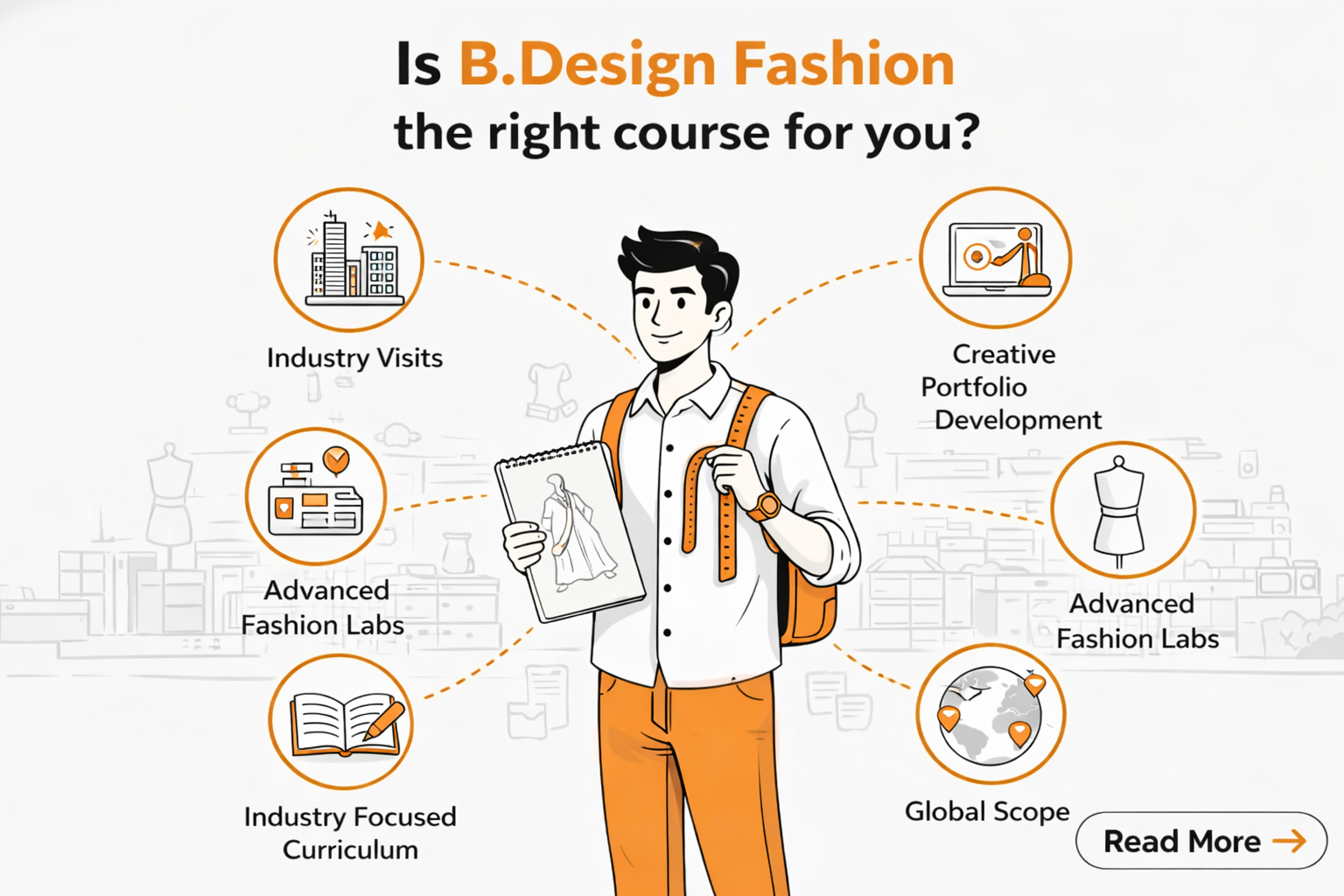
In addition to academic learning, the programme emphasizes practical exposure through workshops, fashion shows, design exhibitions, industry visits, and collaborative projects. Students are encouraged to build strong portfolios and professional networks during their academic journey. This holistic learning approach ensures that graduates are well-prepared to pursue diverse career opportunities in the global fashion industry with confidence and competence.
Who Should Pursue B.Design Fashion?
Choosing the right academic programme is essential for building a successful career in fashion. Understanding who should study fashion design helps students evaluate whether this field matches their interests, skills, and long-term goals. A B.Design Fashion is best suited for individuals who are passionate about creativity, innovation, and self-expression, and who are willing to continuously adapt to industry changes.
Ideal Candidate for Fashion Design
An ideal candidate for fashion design usually possesses a combination of creative talent and practical thinking. Students who consider this programme should have:
- A strong interest in clothing, textiles, and styling
- Creative thinking and originality in design concepts
- Good observation and visual communication skills
- Patience and attention to detail
- Willingness to learn new technologies and techniques
- Ability to work under deadlines and handle constructive feedback
Understanding Your Fashion Aptitude
Having the right fashion aptitude is important for long-term success in this field. This includes artistic ability, color sense, trend awareness, and problem-solving skills. Students who enjoy experimenting with designs, fabrics, and patterns often find this programme highly rewarding.
Today, many students use fashion career guidance AI and career suitability analysis tools to assess their strengths and interests before choosing a career path. These digital platforms analyze personality traits, creative abilities, and market trends to provide personalized career recommendations. Such tools help students make informed decisions and confidently pursue fashion education.
Overall, B.Design in Fashion is ideal for motivated learners who are ready to transform their creative passion into a professional and sustainable career.
| Did You Know ?
Many students now use AI-based career tests to analyze their fashion aptitude before choosing B.Design. These tools help identify creative strengths and suitable fashion career paths early on. |
How to Know If You’re the Right Fit for Fashion Design?
Choosing fashion design as a career requires self-awareness, commitment, and the right skill set. Before enrolling in a B.Design programme, students should evaluate their interests, abilities, and long-term goals. Using tools like a fashion design aptitude test and AI career assessment for fashion can provide valuable insights and act as effective fashion career decision support systems.
You may be the right fit for fashion design if you possess the following skills required for fashion designers:
- Strong Creative Ability:
You enjoy sketching, designing, and experimenting with colors, fabrics, and silhouettes. - Visual and Aesthetic Sense:
You have a good eye for style, balance, and visual presentation. - Interest in Fashion Trends:
You actively follow fashion shows, designers, social media trends, and global styles. - Technical Learning Ability:
You are willing to learn pattern making, garment construction, digital designing, and textile science. - Problem-Solving Skills:
You can find creative solutions when designs do not work as planned. - Time Management and Discipline:
You can handle deadlines, multiple projects, and long working hours. - Communication Skills:
You are comfortable presenting ideas and collaborating with teams. - Adaptability to Technology:
You are open to using AI tools, digital platforms, and virtual design software.
In addition to self-evaluation, many students benefit from taking a fashion design aptitude test and using AI career assessment for fashion platforms. These tools analyze creativity, personality traits, learning styles, and market trends to offer personalized guidance. Such digital resources provide reliable fashion career decision support, helping students understand whether fashion design aligns with their strengths and ambitions.
By honestly assessing these factors, aspiring designers can make confident and informed decisions about pursuing a career in fashion.
Creative, Technical, and Analytical Skills Needed for Success
Success in the fashion industry requires more than just a passion for clothes and styling. A strong foundation in fashion design skills, combined with creativity and innovation in fashion, advanced technical fashion skills, and smart analytical thinking in design, is essential for long-term growth. Today, modern designers also rely on AI tools for fashion designers to improve efficiency, accuracy, and market understanding.
A B.Design programme helps students develop a balanced skill set that prepares them for real-world challenges. Through practical training, industry exposure, and digital learning platforms, students learn how to transform ideas into commercially successful designs while adapting to changing fashion trends.
Key Skill Areas Required in Fashion Design
To build a successful career, fashion professionals must master the following three core skill categories:
1. Creative Skills
These skills help designers generate original ideas and develop a unique design identity.
- Strong imagination and visual thinking
- Ability to create innovative concepts and collections
- Understanding of color theory, textures, and patterns
- Skill in mood boards, theme development, and storytelling
- Application of creativity and innovation in fashion projects
2. Technical Skills
Technical expertise ensures that creative ideas can be converted into wearable and market-ready garments.
- Pattern making and draping techniques
- Garment construction and stitching methods
- Knowledge of fabrics, textiles, and material behavior
- Digital designing using CAD software
- Use of AI tools for fashion designers for virtual sampling and prototyping
3. Analytical Skills
Analytical thinking helps designers make informed decisions and stay competitive in the industry.
- Market research and trend analysis
- Consumer behavior understanding
- Costing and production planning
- Evaluation of design performance
- Strategic application of analytical thinking in design
Role of AI and Digital Tools in Skill Development
With technological advancement, fashion education now integrates AI-powered systems and digital platforms. These tools help designers analyze trends, predict customer preferences, optimize designs, and reduce production errors. By learning to use AI tools for fashion designers, students gain a competitive advantage and become future-ready professionals.
AI-based applications assist in:
- Forecasting fashion trends
- Creating virtual garments and 3D models
- Improving fabric selection
- Reducing material wastage
- Enhancing design accuracy
Summary of Essential Skills for Fashion Designers
| Skill Category | Key Focus Areas | Industry Benefits |
| Creative Skills | Concept creation, innovation, visual storytelling | Builds strong brand identity and originality |
| Technical Skills | Pattern making, garment construction, digital tools | Ensures quality production and fit |
| Analytical Skills | Trend analysis, costing, market research | Supports smart business and design decisions |
| Digital & AI Skills | Virtual designing, AI forecasting, data analysis | Improves efficiency and global competitiveness |
By mastering creative, technical, and analytical abilities, students develop strong fashion design skills that meet modern industry standards. The combination of artistic talent, technological proficiency, and strategic thinking enables designers to adapt to evolving markets and achieve sustainable career success.
This balanced approach prepares fashion graduates to excel in diverse roles across design houses, retail brands, and global fashion platforms.
| Did You Know ?
Many leading fashion brands now use AI tools to test designs digitally before production, helping designers improve quality and reduce fabric waste. This makes strong creative, technical, and analytical skills even more important for modern fashion professionals. |
B.Design Fashion vs Other Creative Fields – Key Differences
Choosing the right creative career path is an important decision for students who are passionate about design and innovation. While many creative fields offer exciting opportunities, understanding the differences between them helps in making an informed choice. A comparison between B.Design fashion vs fine arts, fashion design vs textile design, and other related disciplines highlights how each field focuses on different skill sets, career goals, and industry applications.
With the support of AI-powered career comparison tools and digital assessment platforms, students can now analyze their strengths, interests, and future goals more accurately. Such systems provide personalized insights into various design career paths, making the creative fields comparison process more reliable and data-driven. Among these options, B.Design Fashion stands out for its strong balance between creativity, technology, and commercial application.
Unlike many traditional creative programmes, B.Design Fashion integrates design thinking, technical training, business awareness, and digital tools into one comprehensive learning experience. This multidisciplinary approach prepares students for diverse roles in the global fashion and lifestyle industry.
Comparison of B.Design Fashion with Other Creative Fields
| Creative Field | Main Focus | Skill Development | Career Opportunities | Industry Orientation |
| B.Design Fashion | Garment design, styling, branding, trend analysis | Creative design, technical skills, AI-based tools, market research | Fashion designer, stylist, merchandiser, brand manager | Highly industry-oriented and commercial |
| Fine Arts | Painting, sculpture, visual expression | Artistic techniques, visual storytelling, conceptual thinking | Artist, illustrator, art educator, gallery curator | More individual and exhibition-focused |
| Textile Design | Fabric creation, surface design, weaving | Material science, textile printing, fabric engineering | Textile designer, fabric developer, quality analyst | Production and manufacturing-focused |
| Graphic Design | Visual communication and branding | Digital illustration, typography, layout design | Graphic designer, UI/UX designer, creative director | Media, advertising, and digital platforms |
| Interior Design | Space planning and decoration | Spatial design, material selection, project management | Interior designer, space consultant, project planner | Architecture and real estate-oriented |
Understanding the Career Impact
When comparing fashion design vs textile design or other creative disciplines, it becomes clear that B.Design Fashion offers broader exposure to both creative and business aspects of design. Students not only learn how to create visually appealing garments but also understand consumer behavior, production processes, and brand development.
Through AI-powered career comparison platforms, learners can explore multiple design career paths and assess long-term growth potential. These tools evaluate factors such as salary trends, industry demand, global opportunities, and skill requirements, making career planning more structured and effective.
Overall, B.Design Fashion provides a dynamic and future-ready pathway for students who want to combine artistic creativity with technological innovation and commercial success. Its integrated learning model makes it one of the most versatile options in today’s competitive creative industry.
Career Scope and Growth Potential in the Fashion Industry
The fashion industry continues to expand globally, creating diverse and high-growth opportunities for skilled professionals. With evolving consumer preferences, digital transformation, and sustainability trends, the fashion design career scope has become broader and more promising than ever before.
- The demand for skilled designers, stylists, merchandisers, and brand managers is increasing across domestic and international markets, strengthening overall fashion industry jobs availability.
- The AI impact on fashion industry has transformed design, production, and marketing processes by enabling trend prediction, virtual sampling, and personalized customer experiences.
- Emerging technologies are creating new future jobs in fashion, such as fashion data analysts, virtual fashion designers, and digital fashion consultants.
- Strong fashion career growth trends indicate that professionals with both creative and technical expertise have higher chances of career advancement and leadership roles.
- Lovely Professional University (LPU) offers a well-structured B.Design Fashion programme that focuses on industry-relevant skills, digital tools, and experiential learning through live projects and internships.
- LPU’s fashion programme is supported by advanced design studios, modern textile labs, CAD laboratories, and access to professional software, helping students gain hands-on experience.
- The university regularly organizes fashion shows, industry workshops, expert lectures, and design exhibitions that provide students with real-world exposure.
- LPU collaborates with leading fashion brands and export houses to offer internships and placement opportunities, enhancing students’ employability.
- Students at LPU also benefit from mentorship by experienced faculty members who guide them in portfolio development and career planning.
- With strong academic support, practical training, and career counseling services, LPU helps students align their skills with current and future industry demands.
Overall, the combination of expanding global markets, technological innovation, and strong institutional support makes the fashion industry a highly rewarding and sustainable career option for aspiring designers.
Emerging Trends Shaping the Global Fashion Industry
The fashion industry is rapidly changing due to technological advancements, sustainability efforts, and digital transformation. These fashion industry trends are creating new opportunities for designers and reshaping how fashion is created, marketed, and consumed.
1. Artificial Intelligence in Fashion Design
- The growing use of AI in fashion design helps designers study trends and customer behavior.
- AI tools support faster design creation, fabric selection, and demand forecasting.
- Generative AI in fashion allows designers to develop digital sketches, prints, and patterns automatically.
- Virtual try-ons and 3D design simulations improve customer experience and reduce return rates.
2. Sustainable Fashion Technology
- Sustainable fashion technology focuses on reducing waste and environmental impact.
- Brands are using organic fabrics, recycled materials, and eco-friendly dyes.
- Water-saving and energy-efficient production methods are becoming standard practices.
- Technology is helping brands track supply chains for ethical sourcing.
3. Digital and Smart Fashion
- Digital and smart fashion includes wearable technology and smart fabrics.
- Clothing with temperature control, fitness tracking, and interactive features is gaining popularity.
- Virtual fashion shows and online showrooms are expanding global reach.
- Digital clothing for social media and virtual platforms is emerging as a new trend.
4. Technology-Driven Fashion Marketing
- AI tools are used for personalized advertising and customer recommendations.
- Social media platforms and influencers play a major role in brand promotion.
- Data analytics helps brands understand customer preferences more accurately.
5. Customization and Personalization
- Consumers now prefer customized clothing and made-to-order designs.
- AI systems help create personalized styles based on body type and fashion taste.
- This trend improves customer satisfaction and brand loyalty.
These emerging trends are making the fashion industry more innovative, sustainable, and digitally advanced. Designers who understand and adapt to these changes can build strong and successful careers in the global market.
| Did You Know ?
Many fashion brands now use AI to design and test collections digitally, speeding up the process and reducing waste. This makes strong creative, technical, and analytical skills crucial for today’s designers. |
Alumni Journeys: From LPU Classrooms to Global Fashion Platforms
Lovely Professional University provides strong academic and practical support to students through its industry-oriented B.Design Fashion programme. With modern design studios, CAD labs, textile facilities, and guidance from experienced faculty, LPU helps students develop creative, technical, and professional skills. Regular fashion shows, internships, workshops, and live projects prepare students for real industry challenges and contribute to many successful fashion design alumni success stories.
Through structured training and placement assistance, LPU fashion design placements connect students with reputed brands and organizations. Exposure to digital tools and AI-driven fashion careers enables graduates to adapt to changing industry demands and explore diverse global fashion career pathways.
Some notable alumni achievements include:
- Sweety Dutta (B.Design Fashion, 2024)
Successfully placed with Trident, securing a prestigious position with a competitive package of ₹18 LPA, reflecting exceptional creative and technical expertise. - Tamanna Rout (B.Design Fashion, 2024)
Placed with the renowned fashion label Shantanu & Nikhil, earning a package of ₹4 LPA, showcasing strong design sensibility and professional readiness. - Richa Gupta (B.Design Fashion, 2024)
Selected by Skill in a Box Learning Solutions, with a package of ₹3.6 LPA, demonstrating versatility in design, training, and digital fashion applications. - Gurleen Kaur (B.Design Fashion, 2024)
Placed with the esteemed brand Suvasa, securing a valuable position with a competitive package of ₹4.2 LPA, highlighting excellence in styling and brand-oriented design.
These achievements reflect LPU’s commitment to providing quality education, personalized mentoring, and continuous industry engagement. Many alumni are now contributing to leading fashion brands, export houses, retail chains, and digital platforms, while others are exploring innovative roles in trend analysis, virtual styling, and fashion consultancy.
By combining creative training, technological exposure, and strong placement support, LPU continues to empower students to transform their passion for fashion into successful global careers.
Final Words: Making the Right Career Choice
Choosing the right career path is crucial, and many students wonder, “Is B.Design Fashion worth it?” This programme offers a unique combination of creativity, technical knowledge, and industry insights that prepares students for the diverse opportunities in the fashion world. Beyond just learning to design, students gain skills in trend analysis, digital tools, and market understanding, which are essential for a successful career.
With the rise of AI-guided career planning, fashion education has become more personalized and strategic. These technologies help students assess their strengths, preferences, and future market trends, making fashion career decision making more informed and confident. Such tools ensure that learners choose pathways aligned with their skills and ambitions, increasing their chances of success.
The fashion industry today demands professionals who are adaptable and innovative. Future-ready fashion careers require a blend of artistic creativity and technological proficiency. B.Design Fashion graduates, especially from reputed institutions like LPU, are well-equipped with these qualities. LPU’s comprehensive curriculum, state-of-the-art facilities, and experienced faculty support students in becoming industry-ready professionals who can thrive in a rapidly changing global market.
In conclusion, pursuing B.Design Fashion is a valuable investment for those passionate about fashion and design. With the right guidance, tools, and education, students can confidently build fulfilling and sustainable careers in this exciting and evolving industry.
Frequently Asked Questions (FAQs)
What is B.Design Fashion, and what does the course cover?
B.Design Fashion is an undergraduate design programme focused on garment creation, styling, and fashion business. The course includes creative design, technical skills, digital tools, and industry exposure to prepare students for diverse fashion careers.
How does AI-powered fashion education benefit students?
AI-powered tools help students analyze trends, customize designs, and plan careers more effectively. These technologies enhance learning by providing data-driven insights and personalized guidance, making fashion education more dynamic and future-ready.
What career opportunities are available after completing a B.Design Fashion course?
Graduates can explore roles such as fashion designer, stylist, merchandiser, textile designer, trend analyst, and digital fashion consultant. The course prepares students for both creative and technical positions in the fashion industry.
Is B.Design Fashion suitable for someone without prior design experience?
Yes, the programme is designed for beginners and creative individuals who want to build foundational skills. The curriculum gradually introduces design concepts, technical knowledge, and industry practices to ensure comprehensive learning.
How can B.Design Fashion help resolve common career doubts in fashion?
The course offers practical training, mentorship, and AI-driven career planning tools that guide students through their career choices. This helps clarify doubts, build confidence, and align skills with market demands for a successful career.