The Internet of Things (IoT) is changing the way we live, work, and interact. From switching on lights with voice commands to managing entire factories remotely, IoT is everywhere. It connects everyday devices to the internet, allowing them to collect and share real-time data.
As industries adopt more IoT technologies, the demand for professionals with IoT skills is on the rise. Healthcare, transport, supply chains, and smart home devices need skilled engineers to develop, manage, and secure their networks. So, what is IoT exactly, and how can one build a career in this field?
What Is the Internet of Things (IoT)?
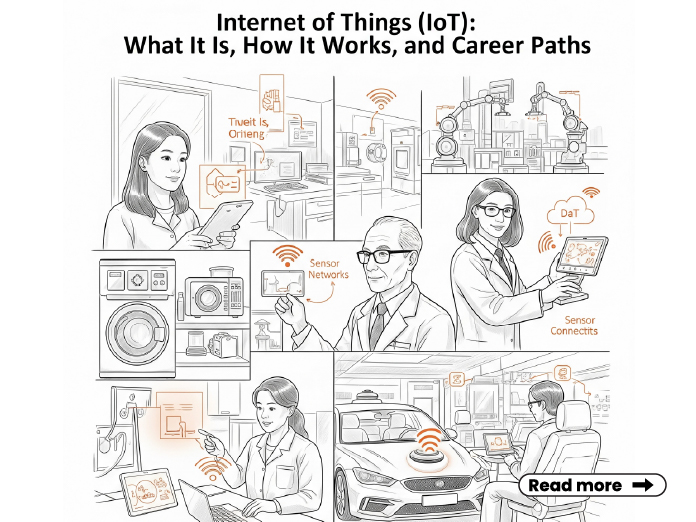
The Internet of Things (IoT) refers to a network of devices that connect and communicate through the Internet. These devices can collect, send, and receive real-time data without human intervention. They include everything from smartwatches and smart thermostats to industrial sensors.
The basic structure of IoT involves:
- Sensors: These gather data like temperature, motion, or location.
- Connectivity: Devices use Wi-Fi, Bluetooth, or cellular networks to transmit data.
- Cloud Platforms: Data gets stored and analysed here.
- Automation: Based on the data, the system can trigger actions, like sending alerts or adjusting settings.
IoT devices aim to make systems more energy efficient and responsive. From smart home tech to large-scale industrial setups, their influence is wide-ranging and growing.
How Does IoT Work?
At the heart of IoT lies a mix of hardware and software. Here’s a simple breakdown:
- Sensors and Microcontrollers: These collect data from the surroundings.
- Gateways: They transmit data from devices to the cloud.
- Protocols: Communication happens through standard methods like MQTT or HTTP.
- Cloud Processing: Once in the cloud, analysts analyse the data and make decisions.
- Action and Response: The system might notify users or take automated action.
Behind the scenes, embedded systems work to manage data flow, ensure security, and respond in real time.
Real-World Applications of IoT
| Sector | Examples |
| Smart Homes | Smart locks, lighting systems, and voice assistants |
| Healthcare | Wearables, remote monitoring, and connected devices |
| Agriculture | Automated irrigation, climate monitoring, and soil sensors |
| Industry 4.0 | Predictive maintenance, robotic process automation |
| Transport | Vehicle tracking, traffic management, and smart parking |
From managing a home remotely to transforming cities into smart environments, IoT makes life smoother and smarter. Smart home devices are just the beginning — its applications include smart cities, energy-efficient buildings, and optimised supply chains
Career Opportunities in IoT
The IoT sector offers a wide range of exciting roles. Companies need experts who understand both hardware and software systems.
Popular roles include:
- IoT Developer
- Embedded Systems Engineer
- IoT Architect
- Firmware Engineer
To thrive in these roles, students should learn:
- Programming (C, C++, Python)
- Microcontroller integration
- Cloud platforms like AWS or Azure
- Networking and security basics
Understanding embedded systems is crucial. These form the backbone of most IoT technologies and smart home devices.
IoT Engineer Salary Trends in India and Abroad
IoT engineering is a rewarding career, both intellectually and financially.
In India:
- Entry-level IoT engineers can earn ₹4–6 LPA.
- Mid-level professionals earn ₹8–12 LPA.
- With 5+ years of experience, salaries can cross ₹20 LPA.
Abroad:
- In the US, IoT engineers make $90,000 to $140,000 annually.
- In the UK, they earn £40,000 to £70,000 on average.
Salaries increase based on skills in cloud computing, real-time data handling, and AI integration.
Sources:
Academic Pathways to Start an IoT Career
To enter the IoT industry, students need a strong grasp of electronics, programming, and system integration.
Many universities now offer specialised engineering degrees in IoT technologies. At Lovely Professional University (LPU), students can explore two major pathways:
B.Tech CSE (IoT Specialisation)
This course focuses on:
- IoT systems design and development
- Cloud and edge computing
- Data analytics and machine learning for IoT
- Hands-on projects with smart home devices and smart thermostats
Students gain practical experience by building prototypes and connecting them with cloud services. This makes them ready for startups and large tech firms alike.
B.Tech ECE (IoT Specialisation)
This programme builds expertise in:
- Embedded systems and hardware control
- Sensor networks and communication protocols
- Automation and firmware development
Students learn how hardware and software work together in real time. This prepares them for jobs in energy-efficient systems, healthcare devices, supply chains, and wearable technology.
Future of IoT and Industry Demand
The future of IoT looks promising. It is set to power smart cities, connected vehicles, and sustainable living. As we integrate more devices into our surroundings, the demand for skilled professionals in IoT technologies will only grow.
From reducing waste in farming to making transport safer, IoT is becoming a vital part of the digital economy. Engineers who can design secure, energy efficient, and reliable systems will remain in high demand.
LPU’s focus on industry-relevant training helps students stay ahead of the curve. The curriculum reflects current trends and encourages innovation with smart home devices and real-time data systems.
Conclusion
The Internet of Things is more than a tech trend, it’s shaping the future. From how we live to how we work, its impact is wide-ranging. Students gain a head start in building meaningful careers by understanding what IoT is, how it works, and where it’s applied.
If you’re interested in a field that blends electronics, data, and intelligent systems, IoT offers the right mix. With the right education, students can enter the fast-growing IoT industry. Hands-on experience with IoT technologies is important. This experience helps students feel confident in their skills.
Also Read: Hack-IoT 2024
FAQs
Q1: What skills do I need to start a career in IoT?
You need to learn programming (C/C++, Python), electronics basics, cloud computing, and networking protocols.
Q2: How is IoT used in daily life?
You see IoT in smart home devices, wearable health trackers, GPS systems, smart thermostats, and automated lighting or irrigation systems.
Q3: Is IoT a good career in 2025?
Yes, with growing demand across industries and new IoT technologies emerging, IoT offers long-term career growth.
Q4: Does LPU offer IoT-specialised engineering programmes?
Yes, LPU offers both B.Tech CSE and B.Tech ECE with IoT specialisations focusing on software and hardware aspects.
Q5: What’s the difference between IoT in CSE and ECE at LPU?
CSE (IoT) focuses more on software, cloud, and real-time data analytics. ECE (IoT) focuses on embedded systems, sensors, and smart device integration.