- Fashion as a Creative and Career-Driven Field
- What Is B.Design (Fashion)?
- Understanding the Core Curriculum of B.Design (Fashion)
- Key Design, Technical, and Industry Skills You Gain
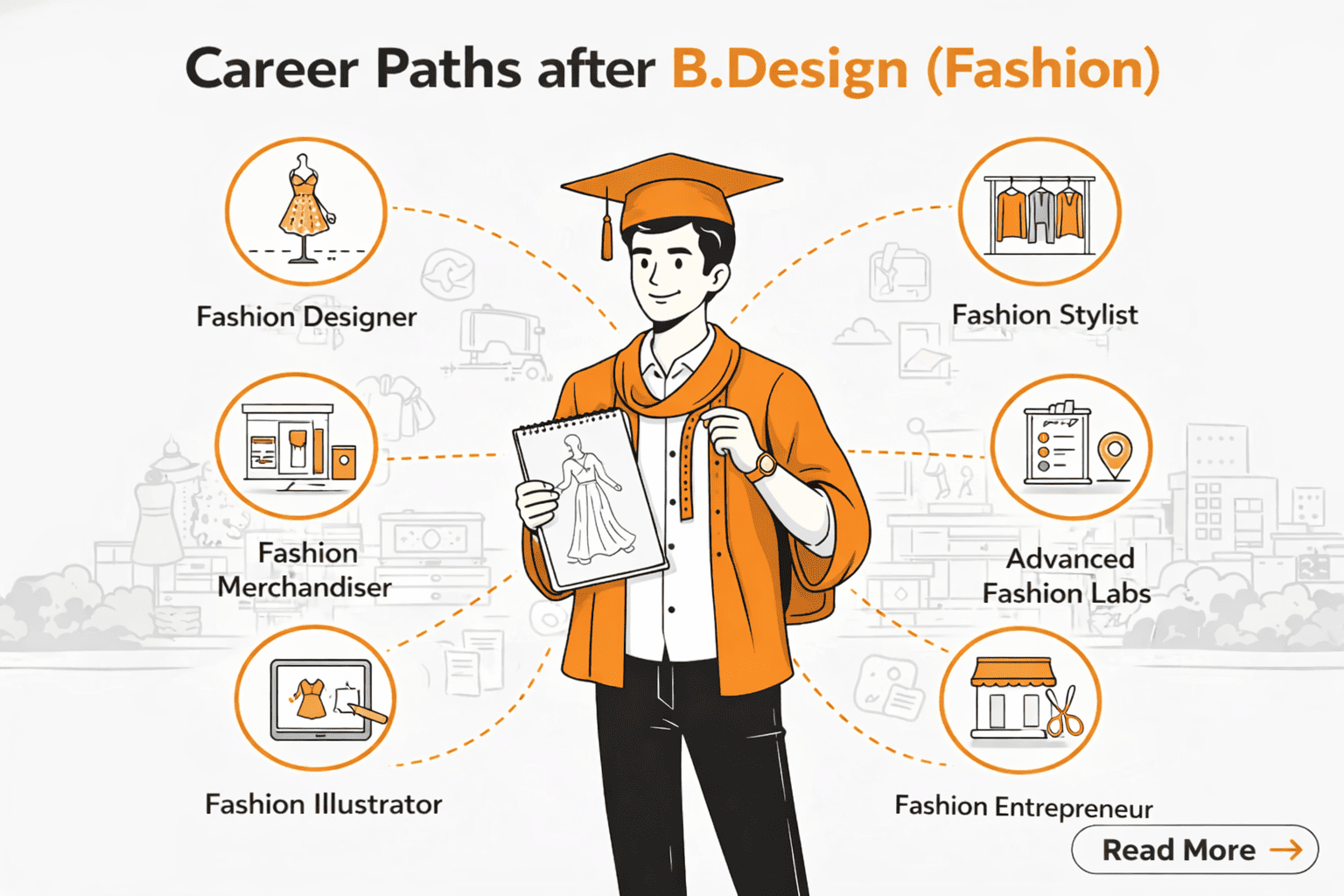
- Career Paths after B.Design (Fashion)
- Top Job Roles in the Fashion and Lifestyle Industry
- Fashion Entrepreneurship: Launching Your Own Brand or Label
- Opportunities in Apparel, Textile, and Fashion Styling
- Careers in Fashion Forecasting, Merchandising, and Trend Analysis
- Exploring Global Opportunities for Fashion Design Graduates
- Conclusion
- Frequently Asked Questions (FAQs)
Fashion as a Creative and Career-Driven Field
The fashion industry has evolved into a dynamic and multi-dimensional field that blends creativity, technology, and business expertise. Today, fashion as a career offers diverse opportunities beyond traditional designing, including styling, merchandising, branding, and digital fashion platforms. With multiple career paths after B.Design Fashion, students can explore various roles based on their interests and skills, making it one of the most promising creative careers in fashion.
With the integration of technology and AI-driven career insights, aspiring professionals can now understand industry trends, market demands, and emerging job roles more effectively. This helps students make informed career decisions and develop relevant competencies for long-term success in the fashion industry. The growing demand for innovative and skilled professionals has further strengthened the global appeal of fashion-related careers.
Lovely Professional University (LPU) provides a strong academic foundation for students pursuing fashion education through modern infrastructure, advanced design studios, experienced faculty, and industry-oriented training. Ranked 5th in India among all government and private universities, LPU ensures quality learning through practical exposure, internships, and professional development opportunities. This supportive environment enables students to transform their creative passion into sustainable and rewarding careers.
| Did You Know ?
Fashion graduates today can build careers in design, styling, branding, and digital fashion? With AI-driven insights and hands-on training at LPU, students gain practical skills for long-term success. |
What Is B.Design (Fashion)?
The Bachelor of Design (B.Design) in Fashion is a specialized undergraduate Program aimed at preparing students for creative and professional roles in the fashion industry. This B.Design fashion course overview covers essential areas such as fashion illustration, garment construction, textile studies, pattern making, and trend forecasting. Through this fashion design degree explained, students develop both artistic vision and technical expertise required for modern fashion careers.
As an undergraduate fashion design Program, B.Design in Fashion is generally offered as a four-year full-time course. The curriculum is structured to include theoretical knowledge, practical studio work, workshops, and industry-oriented projects. Students are introduced to fashion education basics that help them understand fabric behavior, design processes, digital tools, and market dynamics.
Throughout the course, learners are encouraged to build strong portfolios, participate in fashion shows, and engage in internships and design competitions. This hands-on approach enhances creativity, problem-solving abilities, and professional confidence. By the end of the Program, graduates are well-equipped to pursue diverse career opportunities or further studies in the global fashion industry.
Understanding the Core Curriculum of B.Design (Fashion)
The B.Design fashion curriculum is carefully designed to provide students with a balanced combination of creativity, technical knowledge, and industry-oriented skills. It focuses on building a strong foundation in design principles while gradually introducing advanced concepts and practical applications. This structured approach ensures that learners gain a clear understanding of the design education structure followed in leading fashion institutions.
The curriculum includes a wide range of fashion design subjects, such as:
- Fashion Illustration and Design Fundamentals
- Textile Science and Fabric Studies
- Pattern Making and Garment Construction
- Fashion Technology and Digital Designing
- Fashion Marketing and Merchandising
- Trend Analysis and Forecasting
- Sustainable and Ethical Fashion Practices
- Portfolio Development and Professional Presentation
In recent years, many institutions have integrated AI-enabled fashion learning into their academic framework. This includes the use of digital design software, virtual sampling, trend-prediction tools, and data-based market analysis platforms. Such technological integration helps students understand real-time industry trends, improve design accuracy, and enhance decision-making skills, preparing them for future-ready careers in the global fashion industry.
| Did You Know ?
Modern B.Design Programs now use AI-enabled tools for trend forecasting and digital design? This helps students learn faster and stay aligned with global fashion industry demands. |
Key Design, Technical, and Industry Skills You Gain
A B.Design in Fashion equips students with a blend of creative, technical, and business skills essential for a successful career. Students develop strong fashion design skills such as sketching, draping, and fabric selection that help bring original ideas to life. Alongside creativity, the program focuses on technical skills in fashion, including garment construction, pattern making, and use of digital design tools. These technical abilities ensure designs are both practical and innovative.
In addition to design and technical expertise, the course also emphasizes industry-ready fashion skills like marketing, merchandising, and portfolio development, preparing graduates to thrive in real-world environments. Moreover, the integration of AI tools for fashion designers enhances skills in trend forecasting, virtual sampling, and data analysis, making students future-ready in a tech-driven industry.
| Skill Category | Description | Relevence |
| Fashion Design Skills | Creative abilities like sketching, draping, fabric selection, and concept development. | Essential for crafting original and trendsetting designs. |
| Technical Skills in Fashion | Knowledge of garment construction, pattern making, sewing techniques, and fabric technology. | Critical for translating designs into wearable products. |
| Industry-Ready Fashion Skills | Understanding fashion marketing, merchandising, branding, and sustainability practices. | Prepares students to meet real-world fashion business demands. |
| AI Tools for Fashion Designers | Use of digital design software, virtual prototyping, trend forecasting, and data analytics. | Enhances precision, creativity, and market adaptability. |
These skills collectively prepare students to become versatile professionals ready to excel in the fast-paced fashion industry.
| Did You Know ?
Fashion designers today use AI tools to create virtual prototypes and predict trends, speeding up the design process. These tech skills make graduates highly sought after in the industry. |
Career Paths after B.Design (Fashion)
Graduates of B.Design Fashion can explore a wide range of career options in the fashion industry that blend creativity, technical knowledge, and business acumen. Some of the prominent jobs after B.Design Fashion include:
- Fashion Designer: Crafting innovative clothing, accessories, and footwear designs, combining artistic vision with market needs.
- Stylist: Creating appealing looks for individuals, brands, fashion shows, and media campaigns, focusing on aesthetics and trends.
- Merchandiser: Planning product assortments, managing inventory, and analyzing consumer demand to maximize retail success.
- Brand Manager: Developing brand identity, marketing strategies, and campaigns to strengthen a fashion label’s presence.
- Fashion Marketer: Utilizing market research and creative advertising to promote fashion products and engage target audiences.
- Fashion Illustrator: Producing detailed sketches and visuals that communicate design concepts clearly to manufacturers and clients.
- Sustainable Fashion Expert: Leading initiatives for eco-friendly materials, ethical production processes, and sustainable business models.
- Digital Fashion Specialist: Working with 3D design, virtual prototyping, e-commerce platforms, and augmented reality to innovate fashion presentation.
- Fashion Journalist or Blogger: Writing and reporting on fashion trends, events, and industry developments for print and digital media.
- Retail Manager: Overseeing store operations, sales strategies, and customer experience in fashion retail outlets.
In today’s tech-driven world, AI-powered career mapping tools are revolutionizing how graduates approach their future. These tools analyze personal skills, market demand, and emerging trends to recommend tailored career paths. This enables students to make informed choices, improve employability, and stay competitive in an ever-changing industry.
Overall, the versatility of a B.Design Fashion degree combined with AI insights empowers graduates to pursue fulfilling and dynamic careers across various sectors of the fashion world. Institutions like Lovely Professional University (LPU) support students in this journey by providing industry-aligned curriculum, modern labs, and expert faculty, ensuring that graduates are well-prepared to meet the demands of the global fashion industry.
| Did You Know ?
AI-powered career mapping helps fashion graduates find the best job matches based on their skills and industry trends. This technology is reshaping how students plan their future in fashion. |
Top Job Roles in the Fashion and Lifestyle Industry
The fashion and lifestyle industry offers a variety of rewarding career options across creative and business domains. Here are some of the top roles aligned with current fashion industry employment trends:
- Fashion Designer: Focuses on creating apparel, accessories, and collections that set new trends and styles. Expertise in fabric selection and garment construction is essential for these roles.
- Apparel Designer: Specializes in designing clothing lines with attention to fit, fabric, and manufacturing feasibility. This role combines creativity with technical skills.
- Fashion Stylist: Curates looks for individuals, brands, and media, helping shape visual fashion narratives.
- Textile Designer: Creates patterns and prints for fabrics, contributing to the unique aesthetic of garments.
- Fashion Marketing Manager: Develops strategies to promote fashion brands and products, targeting the right customer base.
- Visual Merchandiser: Designs attractive retail displays to enhance customer experience and drive sales.
- Brand Strategist: Works on building and maintaining the identity and market presence of fashion labels.
- Fashion Journalist: Reports on fashion trends, events, and industry news through various media channels.
- Sustainable Fashion Expert: Focuses on eco-friendly and ethical fashion solutions, an increasingly important niche.
- Digital Fashion Specialist: Uses technology for 3D design, virtual shows, and e-commerce innovations.
These roles highlight the diverse opportunities available for fashion graduates, reflecting both creative passion and evolving industry needs.
Fashion Entrepreneurship: Launching Your Own Brand or Label
Fashion entrepreneurship is an exciting and rewarding path for B.Design graduates who want to start your own fashion brand and shape their creative vision independently. Building a successful fashion startup requires not only strong design skills but also business acumen, market understanding, and strategic planning. As the industry evolves, entrepreneurs can leverage innovative tools, including AI support for fashion business, to optimize product development, trend forecasting, customer insights, and marketing strategies.
Launching a fashion label involves several key steps that aspiring entrepreneurs should consider:
- Identify your niche: Focus on a specific segment such as sustainable fashion, activewear, or luxury apparel to stand out in a competitive market.
- Develop a business plan: Outline your brand’s vision, target audience, budget, and growth strategies.
- Design and production: Use your fashion design skills alongside AI-powered tools to streamline product development and improve efficiency.
- Marketing and branding: Create a strong brand identity and use digital marketing platforms to build customer engagement.
- Sales channels: Explore multiple avenues such as online stores, boutiques, and fashion events to reach your audience.
- Networking and mentorship: Connect with industry experts, participate in fashion incubators, and seek guidance to navigate challenges.
With the rise of technology, fashion startup careers are becoming more accessible and data-driven, enabling young entrepreneurs to make smarter decisions and accelerate growth. Combining creativity with modern business practices empowers graduates to transform their passion into thriving fashion ventures.
Opportunities in Apparel, Textile, and Fashion Styling
The fashion industry offers many exciting career options in areas like the apparel industry jobs, textile design careers, and fashion stylist opportunities. Whether you enjoy working with clothes, designing beautiful fabrics, or helping people look their best, there are plenty of paths to choose from. Knowing about these different roles can help you decide which suits your skills and interests best.
Here’s a closer look at some popular roles in these fields:
| Career Area | Key Roles | What you do |
| Apparel Industry Jobs | Garment Technologist, Production Manager, Quality Controller | Work on making sure clothes are made properly, managing the production process, and checking quality. |
| Textile Design Careers | Textile Designer, Surface Designer, Fabric Developer | Create patterns, colors, and textures for fabrics used in clothing and home products. |
| Fashion Stylist Opportunities | Personal Stylist, Editorial Stylist, Celebrity Stylist | Help people choose outfits for daily wear, photoshoots, events, or media appearances. |
| Fashion Styling as a Career | Visual Storyteller, Wardrobe Consultant, Fashion Consultant | Use your creativity and knowledge of trends to style looks that tell a story or fit a brand’s image. |
Each of these areas has plenty of room for growth and creativity. Whether you want to design clothes, work behind the scenes in fabric development, or become a fashion stylist helping others express themselves, the fashion industry has opportunities for you to build a rewarding career.
| Did You Know ?
Fashion stylists play a key role in shaping trends seen in magazines, movies, and social media. Meanwhile, textile designers create the fabrics that bring those designs to life. |
Careers in Fashion Forecasting, Merchandising, and Trend Analysis
In the competitive and ever-evolving fashion industry, understanding consumer preferences and predicting upcoming trends are crucial for success. This creates strong demand for professionals in fashion forecasting careers, fashion merchandising jobs, and trend analyst roles. These experts play a vital role in guiding brands and retailers to stay relevant and meet market expectations efficiently.
Fashion forecasters study past and current fashion trends, cultural influences, and global events to predict future popular styles, colors, fabrics, and accessories. Their insights help designers and brands create collections that resonate with customers and drive sales. This career demands a mix of creativity, analytical skills, and a deep understanding of consumer psychology.
Fashion merchandisers focus on product planning and promotion. They work closely with design teams, buyers, and marketing professionals to select product ranges, set pricing, and develop campaigns that attract customers. Good merchandising balances supply and demand, reduces waste, and maximizes profits, making it a key aspect of fashion business success.
Trend analysts monitor consumer behavior, social media, fashion shows, and cultural movements to spot emerging trends early. Their role is to provide actionable data-driven insights that allow brands to innovate and adapt quickly. This ensures brands remain competitive in a market where consumer tastes can change rapidly.
In recent years, AI-driven trend analysis in fashion has revolutionized these roles. Artificial intelligence uses big data from online platforms, social media, and sales records to identify patterns and forecast trends more accurately and faster than traditional methods. By combining human expertise with AI tools, fashion companies gain a strategic advantage, allowing them to make smarter decisions and reduce risks.
Key aspects of these careers include:
- Analyzing large sets of data and consumer feedback to predict fashion trends.
- Collaborating with designers, marketers, and retailers to ensure product relevance.
- Using AI and digital tools for enhanced accuracy and efficiency in forecasting.
- Understanding cultural, economic, and social factors that influence fashion cycles.
- Developing marketing strategies and product assortments based on trend insights.
Careers in fashion forecasting, merchandising, and trend analysis offer a unique blend of creativity, business knowledge, and technology, making them ideal for professionals eager to shape the future of the fashion industry.
Exploring Global Opportunities for Fashion Design Graduates
In today’s interconnected world, the scope for global fashion careers has expanded significantly for fashion design graduates. The global fashion industry is no longer confined to traditional fashion capitals but has grown into a diverse and vibrant ecosystem spanning continents. Cities like Paris, Milan, New York, London, and Tokyo continue to be major hubs, offering a wealth of opportunities for aspiring designers to work with renowned brands, luxury houses, and innovative startups.
However, with the rise of digital technology, social media, and e-commerce, international fashion jobs are increasingly accessible in emerging markets as well. Fashion professionals can find rewarding roles not just in established cities but also in growing fashion scenes across Asia, Africa, and South America. This has broadened the horizon for graduates seeking overseas opportunities for fashion designers to gain international exposure and experience.
Some key benefits of pursuing a global fashion career include:
- Exposure to diverse fashion cultures and trends: Working internationally helps designers understand and incorporate global aesthetics and consumer preferences.
- Access to larger markets: International brands and retailers often provide wider platforms for creative expression and business growth.
- Networking opportunities: Global roles facilitate connections with industry leaders, mentors, and peers worldwide.
- Competitive salaries and benefits: Many international fashion jobs offer attractive compensation packages and career advancement prospects.
- Personal and professional growth: Living and working abroad encourages adaptability, cross-cultural communication skills, and a broader worldview.
Graduates aiming for overseas careers should also be prepared to navigate challenges such as work permits, cultural differences, and competitive job markets. However, with the right skills, global mindset, and passion, these global fashion careers can be deeply rewarding and transformative.
| Did You Know ?
The global fashion industry is worth over $2.5 trillion and offers thousands of international job opportunities every year. Many fashion graduates find success by working in fashion capitals like Paris, Milan, and New York. |
Conclusion
Building a long-term career in fashion requires more than just creativity—it demands adaptability, continuous learning, and a forward-thinking approach. Today’s fashion industry values future-ready fashion professionals who can blend artistic talent with technological skills and business insight. Graduates with a B.Design in Fashion are well-positioned to become leaders in this evolving landscape, especially when they embrace sustainable practices and leverage cutting-edge tools.
Lovely Professional University (LPU) supports this vision by providing a vibrant campus environment equipped with state-of-the-art design studios, advanced technology labs, and experienced faculty dedicated to nurturing creative talent. The university’s fashion Program emphasizes hands-on learning, industry exposure, and sustainable fashion practices, helping students develop skills that are relevant and future-focused.
The rise of sustainable fashion careers reflects a growing awareness of the environmental and social impacts of the industry. Designers and professionals committed to ethical sourcing, eco-friendly materials, and responsible production are increasingly in demand. This shift not only benefits the planet but also opens exciting new career avenues for fashion graduates who prioritize sustainability in their work.
Moreover, AI-guided career growth is transforming how fashion professionals plan and navigate their career paths. By harnessing artificial intelligence, graduates can access personalized insights, identify emerging opportunities, and refine their skills to meet industry demands. This powerful combination of creativity, sustainability, and technology equips aspiring fashion designers to build resilient, impactful, and rewarding careers.
In summary, turning your passion for fashion into a sustainable and successful career is achievable with the right education, mindset, and tools. With institutions like LPU offering cutting-edge facilities and a supportive learning environment, students are well-prepared to thrive as future-ready fashion professionals in a global and ever-changing industry.
Frequently Asked Questions (FAQs)
1. What is B.Design Fashion and what does the course cover?
The B.Design Fashion Program is an undergraduate degree focusing on creative and technical skills needed in the fashion industry. The curriculum covers design fundamentals, garment construction, textile studies, digital tools, and fashion marketing. It aims to prepare students for diverse fashion career questions by blending creativity with practical knowledge.
2. What are the career opportunities after completing B.Design Fashion?
Graduates can explore various roles such as fashion designer, merchandiser, stylist, textile designer, and fashion marketer. With evolving technology, new opportunities in digital fashion and AI-powered tools are also emerging. This answers many common fashion career questions about job prospects in the industry.
3. How is AI integrated into fashion education?
AI is transforming fashion education by providing data-driven insights for design, trend forecasting, and personalized learning paths. AI-powered fashion education queries often focus on how technology enhances creativity and decision-making, helping students stay ahead in a competitive market.
4. Can B.Design Fashion graduates work internationally?
Yes, graduates have plenty of global fashion careers opportunities, including working with international brands and participating in overseas projects. The program equips students with skills and exposure that prepare them for international fashion jobs across various markets.
5. What should I consider before choosing B.Design Fashion as a career?
Before choosing this path, consider your passion for creativity, willingness to learn new technologies, and interest in sustainable fashion. The course requires dedication to both artistic skills and business understanding. These points address common B.Design fashion FAQs and help clear common doubts for aspiring students.