- Turning Passion into Profession
- What Does a B.Sc. Fashion Design Degree Involve?
- Who Should Pursue Fashion Design?
- How to Know If You’re the Right Fit for Fashion Design?
- Creative and Analytical Skills Needed for Success
- Fashion Design vs Other Creative Fields – What’s the Difference?
- Career Scope and Industry Growth Potential
- Emerging Trends in the Global Fashion Industry
- Alumni Success Stories: From LPU Classrooms to Global Runways
- Final Words
- Frequently Asked Questions (FAQs)
Turning Passion into Profession
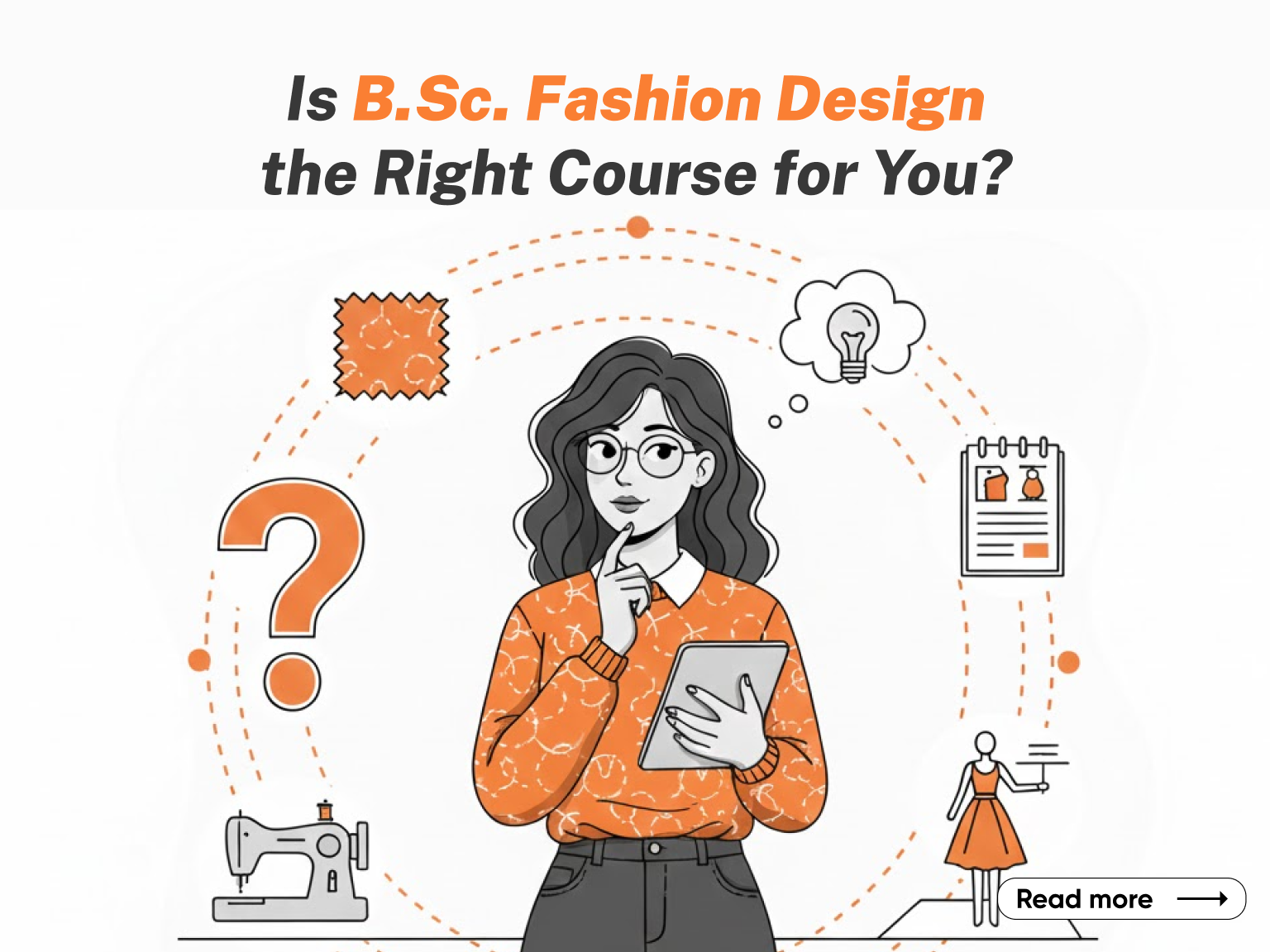
Choosing a career in fashion design begins with an honest look at your interests, strengths, and long-term goals.
Fashion design is more than sketching garments or keeping up with trends it’s a field that demands creativity, patience, problem-solving, and the perseverance to bring ideas to life.
If you find yourself constantly drawn to fabrics, colors, styling, or imagining new clothing concepts, your passion may already be pointing you toward this industry. But passion alone isn’t the only indicator.
A career in fashion design also requires attention to detail, the ability to adapt to fast-changing trends, and the willingness to learn technical skills such as pattern-making, sewing, digital design, and fashion marketing.
Turning your passion for fashion into a profession means taking deliberate steps: exploring different areas of the industry, developing your skills, building a strong portfolio, and gaining exposure through internships or competitions.
Fashion is a competitive field, but it is also incredibly diverse, offering opportunities in apparel design, accessory design, styling, merchandising, costume design, and even sustainable fashion. When your creativity aligns with discipline and continuous learning, fashion design can become a rewarding career where your personal expression has a place in the world.
Fashion design blends creativity with technical expertise. You don’t need to be perfect from the start, but you should be willing to learn and practice.
Fashion is a vast industry—meaning you’re not limited to becoming only a fashion designer like- Apparel Designer (menswear, womenswear, kidswear), Accessory Designer (bags, shoes, jewelry), Costume Designer (film, theater, TV), Textile Designer etc.
Turning your fashion passion into a profession is absolutely possible. It takes dedication, skill-building, and a willingness to grow, but the journey can be incredibly rewarding. Whether you aspire to design runways, create sustainable clothing, or express yourself through unique styles, the fashion industry offers endless possibilities.
With dedication, discipline, and a willingness to continually grow, your love for fashion can evolve into a fulfilling career where your creativity finds a meaningful place in the world.
What Does a B.Sc. Fashion Design Degree Involve?
A B.Sc. Fashion Design course is a three-year undergraduate programme designed to develop students into skilled designers by combining artistic creativity with strong technical and industry-oriented training.
The curriculum covers a wide range of subjects including fashion illustration, basic and advanced drawing, color theory, principles of design, garment construction, pattern making, draping, textile science, fabric identification, dyeing and printing techniques, and surface ornamentation such as embroidery and embellishment.
Students also learn digital design tools like Adobe Illustrator, Photoshop, CorelDRAW, and 3D fashion software to prepare them for modern industry practices.
Alongside creative subjects, the course includes fashion history, world costumes, trend forecasting, consumer behavior, merchandising, marketing, visual display, brand management, and retail operations to provide a complete understanding of how the fashion business functions.
Practical learning is a major component, involving studio-based design projects, fabric research, accessory development, fashion photography, styling assignments, and hands-on workshops with industry experts.
Throughout the programme, students work on individual and group collections, participate in exhibitions and fashion shows, and complete internships with brands, boutiques, export houses, or design studios to gain real, professional exposure.
A B.Sc. Fashion Design degree at LPU is a three-year programme that blends creativity with technical training to prepare students for careers in the fashion and apparel industry.
The course covers fundamental areas such as fashion illustration, design principles, textile science, pattern making, draping, and garment construction. Students also learn digital skills through computer-aided design (CAD) and study topics like fashion history, surface ornamentation, accessory design, merchandising, and quality management.
Throughout the programme, LPU emphasizes practical exposure through studio work, workshops, live projects, and internships, helping students build a strong professional portfolio. By the end of the degree, students develop skills in sketching, styling, fabric selection, garment production, digital design, and fashion marketing.
This prepares them for roles such as fashion designer, stylist, merchandiser, textile designer, illustrator, or even for launching their own fashion label.
Who Should Pursue Fashion Design?
Fashion Design is best suited for individuals who have a blend of creativity, technical skills, and a passion for clothing and style. Those who enjoy sketching, experimenting with fabrics, and bringing ideas to life through garments will find the field fulfilling.
A good sense of color, texture, proportion, and trends, along with attention to detail, is important. Fashion Design also requires patience and precision, as skills like draping, sewing, and pattern-making demand careful craftsmanship.
Eligibility Criteria for B.Sc. Fashion Design in LPU- Pass with 50% aggregate marks in 10+2 (with English) or equivalent, subject to qualifying LPUNEST or UCEED or Under Graduate NID or Under Graduate NIFT.
Who Can Study Fashion Design?
- Creative Individuals:
- Students who love drawing, sketching, or painting.
- Those who enjoy visualizing ideas and bringing them to life through garments or accessories.
- Detail-Oriented People:
- Fashion design involves precise measurements, pattern making, and sewing. Attention to detail is critical.
- Textile and Fabric Enthusiasts:
- People who are interested in fabrics, textures, prints, and textile science.
- Curiosity about how materials behave and how to combine them creatively is essential.
- Trend-Conscious and Observant:
- Ideal candidates follow fashion trends, both globally and locally.
- They notice colors, cuts, styles, and cultural influences in everyday life.
Any student with a blend of creativity, technical skills, attention to detail, and a passion for fashion can pursue this field successfully. The course is suitable for someone aiming for a dynamic, versatile career in the fashion industry, whether as a designer, stylist, merchandiser, or entrepreneur.
How to Know If You’re the Right Fit for Fashion Design?
Pursuing a career in fashion design requires more than just a love for clothes it demands a combination of creativity, technical skills, and a professional mindset. A successful fashion designer has a natural aptitude for design, a keen eye for colors, fabrics, and trends, and the ability to bring ideas to life through meticulous craftsmanship and digital tools.
Fashion design aptitude refers to your natural inclination and skills that make you suitable for the field. Key indicators include:
- Artistic Ability: Strong skills in sketching, drawing, and visualizing concepts.
- Color Sense & Aesthetic Judgment: Ability to choose colors, patterns, and textures that harmonize well.
- Fabric & Material Knowledge: Understanding how different textiles behave and how they can be used creatively.
- Garment Construction Skills: Aptitude for pattern-making, draping, sewing, and finishing.
A fashion designer’s creativity is not just about drawing; it’s about thinking differently and innovating. Traits include:
- Imagination: Can conceptualize unique garments, styles, and collections.
- Curiosity: Interested in cultures, art, textiles, and global fashion trends.
- Experimentation: Willing to try new fabrics, techniques, and designs, even if they fail initially.
- Attention to Detail: Notices subtle differences in texture, fit, and finish.
The designer mindset is the way successful fashion designers think, approach work, and interact with the industry. Characteristics include:
- Visionary Thinking: Sees beyond the present trend and envisions the future of fashion.
- Discipline & Perseverance: Combines creativity with technical rigor, completing projects on time.
- Open to Feedback: Uses critiques constructively to refine and improve designs.
Success in this career comes from a mix of natural aptitude, a creative personality, and a designer mindset that embraces innovation, precision, and adaptability.
| Did You Know ?
Fashion tech innovations like 3D printing and AI-generated patterns are helping designers produce highly customized garments at scale. |
Creative and Analytical Skills Needed for Success
A successful fashion designer combines hands-on skills, creative flair, trend awareness, and strong visualization abilities. This blend allows designers to create garments that are not only innovative and aesthetically appealing but also market-ready and aligned with current trends.
Creative and Analytical Skills Needed for Success are-
1. Creative Skills
These skills allow a designer to innovate and express unique ideas:
- Artistic Vision: Ability to sketch, illustrate, and conceptualize original designs.
- Color and Aesthetic Sense: Understanding of color combinations, patterns, textures, and proportions.
- Imagination and Innovation: Capacity to think outside the box and create designs that stand out.
- Experimentation: Willingness to try new fabrics, techniques, and styles.
2. Analytical Skills
These skills help in turning creative ideas into wearable, practical, and marketable products:
- Pattern Making & Draping Analysis: Translating sketches into accurate, well-fitting garments.
- Fabric and Material Understanding: Evaluating suitability, durability, and behavior of textiles.
- Problem-Solving: Overcoming construction challenges or design limitations.
3. Why Both Are Needed
- Creativity alone may lead to impractical designs that are difficult to produce.
- Analytical skills alone may result in functional but uninspired garments.
- Successful designers merge imagination with execution, creating clothing that is innovative, wearable, and commercially viable.
A combination of creative flair and analytical thinking is what separates a good designer from a great one. Being able to dream boldly while planning meticulously ensures your designs are both artistic and successful in the real world.
Successful designers merge imagination with execution, creating clothing that is innovative, wearable, and commercially viable.
Fashion Design vs Other Creative Fields – What’s the Difference?
Fashion design, fine arts, and interior design all belong to the creative world, but each field expresses creativity in a different way.
The difference between fashion design and fine arts are-
| Category | Fashion Design | Fine Arts |
| Purpose | Create wearable items that blend aesthetics and function | Create expressive works without functional requirements |
| Primary Focus | Body, movement, fit, trends, usability | Concept, emotion, ideas, interpretation |
| Output | Garments, accessories, collections | Paintings, sculptures, installations, performance art |
| Constraints | Fit, comfort, fabric behavior, production limits | Minimal constraints; guided by artistic vision |
The difference between Interior Design and Fashion Design are-
| Category | Interior Design | Fashion Design |
| Purpose | Design functional, aesthetic interior spaces | Design wearable clothing and accessories |
| Primary Focus | Space planning, environment, ergonomics | Body shape, movement, fit, style |
| Output | Room layouts, material boards, furniture plans | Garments, collections, textiles |
| Constraints | Building codes, safety, lighting, spatial flow | Fabric behavior, comfort, construction limits |
Fashion design stands at the intersection of art, function, and the human body—it transforms ideas into wearable forms that respond to movement, trends, culture, and practicality. Fine arts, on the other hand, is centered on unrestricted expression, where the primary goal is to communicate concepts and emotions without the need for functional use. Interior design focuses on shaping livable, functional spaces, blending aesthetics with safety, comfort, and spatial planning.
Career Scope and Industry Growth Potential
The scope of fashion design today is bigger than ever because the industry is expanding across physical retail, e-commerce, digital fashion, sustainability, branding, and entertainment. Fashion designers are no longer limited to just creating clothes—there are opportunities in technology, media, business, and global markets.
From designing garments and textiles to managing brands, creating digital content, or working in film and entertainment, the fashion industry provides diverse career paths suited to different skill sets and interests.
Fashion Industry Career Opportunities are-
| Category | Career Goals |
| Design & Creative Roles | Fashion Designer, Assistant Designer, Textile/Print Designer, Accessories Designer, Costume Designer, Fashion Illustrator, Fashion Stylist, Creative Director |
| Technical & Production Roles | Patternmaker, Garment Technician, Production Manager, Quality Controller, Fabric Technologist, Sampling Coordinator, CAD/3D Fashion Designer |
| Business, Buying & Retail Roles | Fashion Buyer, Merchandiser, Retail Planner, Brand Manager, Product Developer, Sourcing Manager, Fashion Entrepreneur |
| Fashion & Digital Media Roles | Fashion Photographer, Content Creator, Social Media Manager, Fashion Journalist, Visual Merchandiser, Fashion Blogger/Influencer |
| Sustainable Fashion Roles | Sustainable Fashion Designer, Upcycling Specialist, Ethical Production Manager, Eco-friendly Material Researcher, Slow Fashion Entrepreneur |
| Entertainment & Styling Roles | Celebrity Stylist, Wardrobe Supervisor, Costume Assistant, Fashion Consultant for Films/Ads, Runway Coordinator |
Fashion design is a dynamic industry with strong growth potential, making it an excellent choice for individuals who are creative, adaptable, and passionate about innovation. Whether one aims to be a designer, stylist, technologist, entrepreneur, or fashion media professional, the industry offers a broad platform for long-term career development and global opportunities.
Emerging Trends in the Global Fashion Industry
The global fashion industry is undergoing a transformative shift, driven by the convergence of advanced technology, sustainability, and innovative design practices. On the technological front, tools like 3D garment design software (CLO3D, Browzwear) and virtual prototyping allow designers to create realistic samples digitally, drastically reducing material waste and speeding up the product development process.
Artificial intelligence is being leveraged to forecast trends, optimize inventory, and even generate design ideas, while augmented reality (AR) fitting rooms and virtual try-ons are revolutionizing the e-commerce experience, enabling consumers to visualize garments without physical trials. Meanwhile, digital fashion and metaverse clothing are creating entirely new markets where virtual garments can be bought, worn by avatars, or even traded as NFTs, signaling a shift toward digital ownership and creative experimentation.
Sustainability has emerged as a core priority across the fashion ecosystem. Brands are adopting eco-friendly and innovative materials such as organic cotton, recycled polyester, mushroom leather, and lab-grown silk. Circular fashion models—including resale, rental, repair, and upcycling—are becoming mainstream, emphasizing longevity and resource efficiency over traditional fast fashion cycles.
Ethical production practices, fair wages, and transparent supply chains, often supported by blockchain technology, are helping consumers make more informed and responsible choices. Additionally, techniques like zero-waste pattern-making, waterless dyeing, and plasma finishing are reducing the environmental footprint of garment production.
On the global design front, innovation is thriving through cultural fusion, modular garments, and adaptive fashion. Designers are blending traditional crafts with modern aesthetics, reviving indigenous textiles while creating multifunctional clothing that caters to diverse lifestyles and abilities.
Success in this dynamic landscape requires designers and brands to be innovative, digitally savvy, environmentally conscious, and globally aware, creating garments that resonate with both consumers and the planet.
| Did You Know ?
Virtual fashion shows in the metaverse allow designers to reach millions globally without a single physical runway. |
Alumni Success Stories: From LPU Classrooms to Global Runways
Lovely Professional University has consistently produced fashion design alumni who have transitioned from classrooms to global runways and high-profile industry placements.
LPU students frequently participate in major fashion weeks, presenting hundreds of original garments and collaborating with established designers, with celebrity showstoppers adding further visibility to their work.
Beyond design, LPU alumni are making their mark in modeling, winning accolades in competitions like the Phoenix Mega Model Hunt and participating in campaigns for leading brands such as Tommy Hilfiger, Superdry, and Calvin Klein.
These success stories highlight LPU’s holistic approach to fashion education, combining creative training, industry exposure, and international opportunities, empowering students to thrive in both national and global fashion arenas.
The success stories of LPU fashion alumni demonstrate the university’s ability to nurture talent capable of excelling on both national and international platforms.
Through a combination of rigorous creative training, industry exposure, and global placement opportunities, LPU equips its students not only with technical skills but also with the confidence and versatility required to thrive in the competitive fashion world.
From high-profile fashion weeks and celebrity collaborations to placements with top global brands, these achievements reflect how LPU transforms aspiring designers into industry-ready professionals, bridging the gap between education and real-world fashion success.
Some of the student achievements-
Students secured 1st and 3rd positions in a National design competition organized by Autodesk.
A student won the 1st prize at IIT Bombay’s MEDHA 2023 Design Hackathon.
30% of final-year B.Design students are interning with the highest stipend of Rs. 30,000 per month.
20% of students are freelancing for International and National firms, earning up to ₹ 1 Lakh per project during their studies.
Final Words
Choosing fashion design as a career is ideal for individuals who are creative, trend-conscious, and passionate about style, aesthetics, and self-expression. A career in fashion design allows you to work in a highly dynamic and global industry, combining art, technology, business, and culture.
Designers have the opportunity to influence trends, innovate with textiles and techniques, and create garments that impact how people express themselves.
With the growth of digital fashion, e-commerce, sustainable fashion, and lifestyle branding, the scope of a fashion career is broader than ever, offering roles in design, styling, merchandising, media, and global brand management.
Fashion also provides avenues for entrepreneurship, allowing creative individuals to launch their own labels or consult for international clients.
The growth of digital fashion, e-commerce, sustainable fashion, and lifestyle branding has expanded career possibilities, including roles in design, styling, merchandising, marketing, fashion media, and global brand management, as well as opportunities for entrepreneurship.
It fosters creative confidence, encourages innovation, and helps students build a professional network of mentors, alumni, and industry professionals. Additionally, fashion education equips students with business knowledge and a global perspective, preparing them to work internationally or launch their own labels.
Choosing fashion design as a career offers a unique blend of creativity, technology, business, and global opportunities.
A structured fashion education equips aspiring designers with the technical skills, industry insights, and professional confidence needed to succeed in a competitive and evolving global market.
It not only prepares students for diverse career paths but also empowers them to innovate, influence trends, and make a meaningful impact on the fashion industry.
Frequently Asked Questions (FAQs)
1. What is a Fashion Design course?
A Fashion Design course trains students in garment creation, textile design, fashion illustration, pattern making, draping, styling, and fashion business. It combines creativity with technical skills, preparing students for careers in design, merchandising, fashion media, and entrepreneurship.
2. What skills are required for Fashion Design?
Creativity & artistic skills, Knowledge of fabrics, textiles, and garment construction, Fashion illustration & sketching, Technical skills like CAD, 3D design software
Trend awareness and styling etc.
3. What career opportunities are available after a Fashion Design course?
Design & Creative Roles: Fashion Designer, Textile Designer, Costume Designer, Stylist, Creative Director, Technical & Production Roles: Pattern Maker, Garment Technologist, CAD Designer, Quality Controller, Business & Marketing Roles: Merchandiser, Brand Manager, Fashion Buyer, Product Developer, Entrepreneur.
4. Do I need a creative background to pursue Fashion Design?
No prior experience is strictly necessary, but artistic skills, sketching ability, and a passion for fashion are highly advantageous. Most colleges provide foundational training in design and illustration.
5. Can Fashion Design be pursued online?
Yes, several institutes offer online courses and certification programmes in fashion design, styling, textile design, and fashion business. However, hands-on workshops, fabric handling, and runway projects are best experienced in on-campus programmes.