
The B.Sc Interior and Furniture Design overview presents a creative, skill-oriented, and industry-focused undergraduate programme that seamlessly blends art, functionality, technology, and human psychology. While many people often assume interior design is limited to decoration, the reality is far more complex. This discipline is a multidisciplinary field that involves spatial planning, ergonomics, material selection, sustainability, lighting design, and user experience, all working together to shape meaningful and efficient spaces.
This interior design degree introduction equips students with the knowledge and practical skills required to design a wide range of environments, including residential, commercial, and institutional spaces. At the same time, it focuses strongly on furniture design, where students learn to create pieces that strike the right balance between aesthetics, comfort, durability, and cost efficiency. The curriculum emphasizes understanding how design decisions impact everyday life, teaching students how well-planned spaces can influence human behaviour, productivity, comfort, and overall lifestyle.
So, what is interior and furniture design? It is the professional art and science of enhancing interior spaces and designing functional furniture to create environments that are not only visually appealing but also healthy, practical, and user-centric. In today’s world of rapid urbanisation, the rise of smart homes, co-working spaces, luxury housing, and sustainable architecture has significantly increased the demand for trained designers. As a result, this degree has emerged as a powerful career option for creative minds seeking artistic freedom, industry relevance, and long-term professional stability.
What Is the Scope of B.Sc. (Interior and Furniture Design) in Today’s Industry?
The scope of interior design has expanded significantly over the last decade. Earlier limited to homes and offices, interior designers today work across hospitality, healthcare, retail, education, transportation, and even virtual environments.
The career scope in furniture design is equally strong. As people increasingly prefer customised, ergonomic, and sustainable furniture, skilled furniture designers are in high demand. Modular kitchens, smart storage systems, office furniture, and luxury handcrafted pieces have created new opportunities for designers.
The demand for interior designers is growing rapidly due to:
- Urban housing expansion
- Commercial real estate growth
- Hospitality and tourism development
- Rise of smart cities and co-living spaces
The interior design industry growth is also fueled by social media, lifestyle branding, and increased spending on aesthetics and comfort. According to industry estimates, the Indian interior design market is expected to grow at over 8–10% annually.
Looking at the future of interior design, trends such as sustainable materials, biophilic design, AI-assisted planning, and eco-friendly furniture ensure long-term relevance and career security for graduates.
Why Choose a Career in Interior and Furniture Design?
One of the biggest benefits of interior design career is creative satisfaction combined with professional recognition. Unlike routine desk jobs, this field allows designers to see their ideas come to life.
Many students ask why choose interior design as a career. The answer lies in its flexibility, demand, and global relevance. Designers can work independently, with firms, or even start their own studios.
If you’re wondering is interior design a good career, the answer is yes—especially for individuals who enjoy creativity, problem-solving, and human-centric design. With experience, designers gain strong earning potential and professional freedom.
The furniture design career prospects are also promising. From industrial furniture manufacturing to bespoke luxury furniture, designers can work with global brands, artisans, and manufacturers.
Key reasons to choose this field:
- Creative freedom
- Entrepreneurial opportunities
- Global career scope
- Growing industry demand
- High job satisfaction
Specializations in Interior and Furniture Design
Modern design education offers multiple interior design specializations, allowing students to focus on niche areas based on industry demand and personal interests. These specializations help designers build expertise, stronger portfolios, and clearer career paths.
Among the popular furniture design specializations, areas like product-based furniture, sustainable furniture, and modular systems are highly in demand. These fields emphasize functionality, innovation, material knowledge, and efficient design solutions.
Key specialization areas include residential design, covering homes, apartments, villas, and housing projects, where designers create personalized living spaces. Commercial interior design focuses on offices, retail stores, malls, and restaurants, blending aesthetics with branding and functionality. Product & furniture design involves furniture concepts, prototypes, and manufacturing, combining creativity with technical execution.
Other emerging specializations such as hospitality interiors, healthcare design, exhibition and set design, and sustainable and green interiors are growing rapidly. Choosing the right specialization helps designers align their skills with industry demand and achieve long-term career growth.
Key Skills Required for Interior and Furniture Design Professionals
To build a successful career in this field, mastering the skills required for interior design is absolutely essential. Interior and furniture designers are expected to balance creativity with technical accuracy while also understanding client needs and project constraints. Professionals who develop a strong mix of creative, technical, and managerial skills tend to grow faster and handle more complex projects confidently.
Among the most important technical and creative competencies, strong design software skills (AutoCAD, SketchUp, Revit, 3ds Max) are a must. These tools help designers create detailed drawings, 3D visualizations, and realistic presentations for clients and execution teams. Along with this, high-level creativity skills for designers are required to conceptualize unique spaces that are both functional and visually appealing. Designers must also possess excellent CAD skills for preparing accurate technical drawings, layouts, and working details used during execution.
For those interested in furniture and product-based roles, advanced furniture design technical skills are crucial. Knowledge of materials, joinery techniques, ergonomics, and manufacturing processes allows designers to create furniture that is durable, comfortable, and production-ready.
In addition to core design abilities, several other essential skills play a major role in professional success. Space planning ensures efficient use of areas, while a strong understanding of colour theory and lighting design helps create balanced and impactful interiors. Sound material knowledge enables informed design decisions, while client communication is key to understanding requirements and presenting ideas clearly. Project management skills help designers meet deadlines, coordinate teams, and control budgets.
Designers who successfully combine creativity with technical precision gain faster career growth, better opportunities, and long-term success in the interior and furniture design industry.
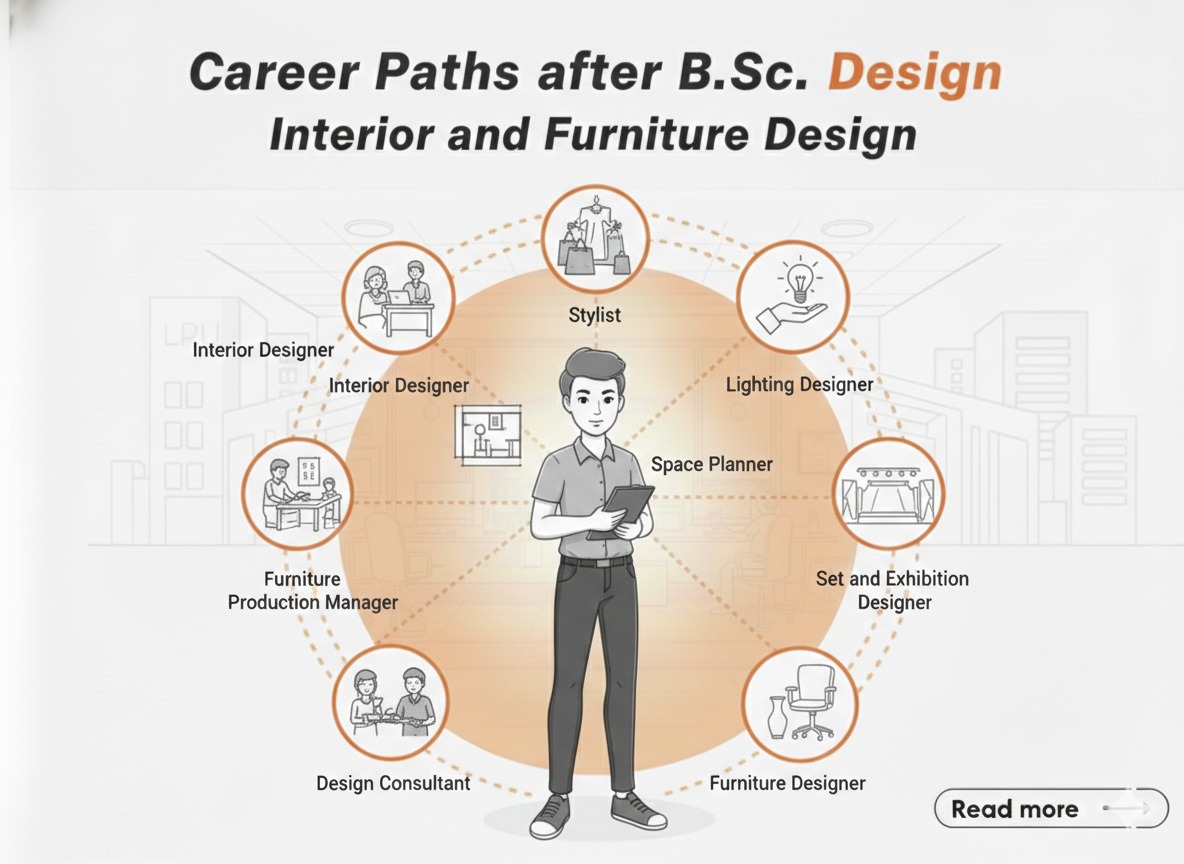
Career Options After B.Sc. (Interior and Furniture Design)
There are diverse jobs after interior design, making this degree highly versatile.
Popular interior designer job roles include:
- Interior Designer
- Space Planner
- Lighting Designer
- Set and Exhibition Designer
In furniture designer careers, graduates can work as:
- Furniture Designer
- Product Designer
- Design Consultant
- Furniture Production Manager
The job opportunities in interior and furniture design extend to:
- Architecture firms
- Design studios
- Construction companies
- Furniture brands
- Freelance consulting
Graduates can also become entrepreneurs by launching their own studios or online design services.
Scope and Salary Trends for Graduates
The interior design salary largely depends on multiple factors such as skills, experience, location, specialization, and portfolio strength. Graduates who combine strong technical knowledge with creativity and practical exposure tend to grow faster in the industry. With the rising demand for well-designed residential, commercial, and luxury spaces, the career scope for interior and furniture designers has expanded significantly in recent years.
When it comes to average furniture designer salary trends, fresh graduates usually begin their careers at an entry level: ₹3–6 LPA, where they work on basic design execution, drafting, and site coordination. As professionals gain hands-on experience, industry exposure, and client-handling skills, they move to the mid-level: ₹7–12 LPA, taking up responsibilities such as independent project management, concept development, and client consultations. Highly experienced designers, studio leads, and experts in niche domains can reach the senior professionals: ₹15–25 LPA or more, especially when working with premium brands, large projects, or international clients.
The salary after B.Sc interior design grows steadily with a strong portfolio, practical experience, and a solid client base. Designers who continuously upgrade their skills, adopt new design technologies, and stay updated with trends tend to command higher pay. Freelancers and studio owners have even greater earning potential, as their income depends on project size, brand value, and repeat clientele rather than fixed salaries.
Top Companies and Recruiters for Interior Designers
Many established interior design companies actively seek graduates who possess strong design concepts, practical knowledge, and execution skills. Among the most preferred top recruiters for interior designers are Livspace, Godrej Interio, Asian Paints (Interior Solutions), and Design Café. These organizations provide designers with hands-on exposure to real residential and commercial projects, allowing them to work closely on space planning, material selection, budgeting, client coordination, and on-site execution. Such exposure helps young professionals understand the complete design lifecycle from concept to completion while building confidence and industry-ready skills.
In addition to interior design firms, several leading furniture brands hiring designers play a crucial role in shaping design careers. Brands like IKEA, Pepperfry, Urban Ladder, and Durian offer roles in furniture design, product development, visual merchandising, and space planning. Working with these brands gives designers insight into large-scale manufacturing, user-centric design, market trends, and quality control, which are essential for long-term growth in the furniture and lifestyle sector.
Apart from large brands, top interior design firms and boutique studios also offer valuable opportunities for emerging designers. These studios often provide roles in design development, execution, styling, and consulting, enabling designers to work on diverse and creative projects. Such environments allow close mentorship under senior designers, faster skill enhancement, and the chance to build strong portfolios and meaningful industry exposure, laying a solid foundation for a successful interior design career.
Higher Studies and Global Certifications After B.Sc. (Interior and Furniture Design)
Many graduates opt for higher studies after B.Sc Interior and Furniture Design to gain deeper subject knowledge and specialize in a specific area of design. Popular academic options include Masters in interior design, which focuses on advanced design concepts and professional practice, M.Des (Furniture Design) for students interested in product innovation and furniture systems, and M.Arch (Interior Architecture) for those who want to work on large-scale spatial and architectural projects.
Along with higher education, pursuing certification courses for interior designers helps improve technical and industry-relevant skills. Courses such as AutoCAD Professional Certification strengthen drafting abilities, while LEED Certification and Sustainable Design Courses are useful for careers in eco-friendly and green building projects. BIM Certification is also highly valued for working on commercial and infrastructure-based projects. Additionally, earning global interior design certifications enhances international employability and builds professional credibility, opening doors to global career opportunities.
Government Opportunities and Relevant Exams
There are increasing government jobs for interior designers, especially with the rise of public infrastructure, housing schemes, and smart city projects across India. Interior and furniture designers are now being involved in planning functional, accessible, and well-designed public spaces such as offices, hospitals, schools, and government housing.
Common government exams after interior design
Many graduates enter the public sector through SSC, where design-related and technical posts are offered in various government departments. State Public Service Commissions also recruit designers for state-level roles in public works, housing, and urban development departments. Another important option is CPWD recruitment, where designers contribute to planning and upgrading interiors of central government buildings and facilities.
Public sector opportunities for designers
Several public sector opportunities for designers exist in urban development authorities, where professionals work on city planning and public spaces. Government housing boards hire designers for large-scale residential and affordable housing projects. Additionally, smart city missions provide opportunities to work on modern, technology-driven public infrastructure. These roles offer job stability, steady growth, and the chance to contribute to meaningful public projects.
Final Thoughts
The interior design career future is not just strong but also continuously evolving, making it one of the most exciting creative professions today. As lifestyles change and people place greater importance on comfort, functionality, aesthetics, and sustainability, the role of interior and furniture designers is becoming more significant than ever. From smart homes and sustainable buildings to luxury spaces and functional work environments, designers are at the center of shaping how people live, work, and interact with spaces.
If you’re questioning is interior design worth it, the answer is a confident yes. This field offers much more than creative satisfaction—it provides long-term career stability, diverse opportunities, and the ability to grow professionally with experience and specialization. Designers who stay updated with new materials, technologies, and global trends often enjoy faster career growth and higher earning potential, both in India and abroad.
What truly makes this path special is that it is a future-proof career in design. Unlike many traditional roles that may become obsolete, interior and furniture design adapts with time, technology, and human needs. This degree offers flexibility to work with firms, take up freelance projects, start your own design studio, or explore international markets. Most importantly, it gives you the creative freedom and professional platform to design meaningful spaces that directly impact everyday lives, making it both a rewarding and fulfilling career choice.
Frequently Asked Questions (FAQs)
Interior design FAQs
Q1. What are the best jobs after B.Sc. Interior and Furniture Design?
Some of the best career options include Interior Designer, Furniture Designer, Space Planner, Design Consultant, Visual Merchandiser, and Set or Exhibition Designer. The roles you choose depend on your skills, specialization, and creative interests.
Furniture design FAQs
Q2. Can I work abroad after this degree?
Yes, with the right certifications, a strong portfolio, and practical experience, graduates can explore global opportunities in countries like the UAE, Europe, Australia, and Canada where skilled designers are in demand.
Q3. What industries hire furniture design graduates?
Furniture designers are hired by furniture manufacturing companies, interior design firms, real estate developers, retail brands, and luxury furniture studios. Many also work with architects and product design companies.
Q4. Is furniture design more technical or creative?
Furniture design is a balance of both. While creativity is essential for designing unique products, technical knowledge of materials, ergonomics, joinery, and manufacturing processes is equally important.
Q5. Can I start my own furniture or interior design studio after graduation?
Yes, many graduates choose entrepreneurship. With industry exposure, client understanding, and a strong design portfolio, starting a small studio or freelance practice is a popular and successful career path.
Q6. Do furniture designers need advanced software skills?
Yes, proficiency in design tools like AutoCAD, SketchUp, and 3D modeling software is highly recommended, as these skills help in visualizing, presenting, and executing design concepts professionally.
Common questions about interior design degree
Q7. Is freelancing possible in this field?
Absolutely. Freelancing is one of the biggest advantages of this degree. Many designers earn well through independent residential, commercial, and furniture design projects or by collaborating with architects and builders.