- The Power of Creativity in Fashion
- What Is B.Sc. Fashion Design?
- Understanding the Core Curriculum of Fashion Design
- Essential Skills You Gain During the Course
- Career Paths After B.Sc. Fashion Design
- Top Job Roles in the Fashion Design Industry
- Fashion Entrepreneurship: How to Start Your Own Label?
- Opportunities in Textile, Apparel, and Styling
- Fashion Forecasting and Trend Analysis Careers
- Exploring Global Opportunities for Fashion Graduates
- Conclusion
- Frequently Asked Questions (FAQs)
The Power of Creativity in Fashion
A B.Sc. Fashion Design opens the door to a wide spectrum of professional paths across design, retail, media, and entrepreneurship. Graduates can work in established fashion houses, start their own labels, or enter related creative industries.
Popular Career Options Include-
1. Fashion Designer- Create clothing lines, work with brands, or launch your own label.
2. Fashion Illustrator-Develop artistic sketches for designers, magazines, and marketing campaigns.
3. Textile Designer- Design prints, patterns, and fabrics for clothing, interiors, and accessories.
4. Fashion Stylist- Curate looks for photoshoots, celebrities, brands, or fashion shows.
5. Fashion Merchandiser- Analyze trends, plan collections, and manage product development and retail strategies.
Creativity is the driving force that keeps the fashion industry alive, evolving, and endlessly inspiring. It transforms simple fabrics into powerful expressions of identity, culture, and innovation.
Through creativity, designers challenge conventions, experiment with form and function, and introduce new perspectives that shape the way society dresses and communicates.
It allows fashion to be more than clothing—it becomes a language of individuality and storytelling. From sustainable design solutions to digital fashion innovations, creativity fuels progress and keeps the industry relevant in a constantly shifting world. Ultimately, the power of creativity in fashion lies in its ability to spark change, celebrate uniqueness, and turn imagination into wearable art.
It drives experimentation with new silhouettes, fabrics, and techniques, enabling designers to explore sustainability, digital design, and inclusivity in meaningful ways. Beyond aesthetics, creativity influences marketing, visual storytelling, and brand identity, helping fashion communicate emotions, values, and messages that resonate worldwide.
The power of creativity in fashion lies in its ability to inspire change, celebrate diversity, and continuously redefine what is possible in an industry that thrives on imagination and reinvention.
What Is B.Sc. Fashion Design?
B.Sc. Fashion Design is a three-year undergraduate degree programme that focuses on the creative, technical, and professional aspects of the fashion industry. It provides students with a strong foundation in subjects like garment construction, textile science, pattern making, fashion illustration, computer-aided design (CAD), fashion marketing, and merchandising.
The programme focuses on developing essential skills in designing garments, understanding fabrics, and creating fashion collections, while also providing exposure to business, marketing, and technology used in modern fashion.
Throughout the course, students learn to translate ideas into sketches, transform designs into patterns, construct garments, and present collections professionally. Practical work such as studio sessions, workshops, internships, and fashion shows forms a major part of the curriculum, allowing students to gain hands-on experience and build a strong portfolio.
The programme emphasizes both artistic expression and practical skills, helping students develop strong portfolios along with an understanding of fabrics, production processes, and brand communication.
Open to students from any stream after 10+2, this degree is ideal for those who want to explore their creativity and build careers as designers, stylists, merchandisers, entrepreneurs, and other fashion professionals.
Key Subjects Covered- Fashion Illustration & Drawing, Textile Science & Fabric Studies, Pattern Making & Garment Construction, Fashion CAD / Computer-Aided Design, Draping Techniques.
By the end of the degree, students build a professional portfolio, gain industry exposure through internships, and develop skills required for roles such as fashion designer, stylist, merchandiser, textile designer, and more.
Graduates emerge with strong portfolios, hands-on experience, and the confidence to pursue diverse careers—from designing and styling to merchandising and entrepreneurship. Ultimately, this degree not only nurtures artistic talent but also opens the door to a dynamic and innovative future in fashion.
The course introduces students to key areas such as fashion illustration, textile science, pattern making, garment construction, draping, and computer-aided design (CAD), while also covering fashion marketing, merchandising, and trend forecasting.
Understanding the Core Curriculum of Fashion Design
The core curriculum of fashion design is carefully structured to build both creative and technical expertise, giving students a complete understanding of how the fashion industry functions.
It typically begins with foundational subjects such as fashion illustration, color theory, and textile science, which help students understand fabrics, textures, and visual aesthetics.
As they progress, students learn essential technical skills like pattern making, draping, and garment construction, enabling them to turn sketches into fully developed outfits. Modern programmes also integrate computer-aided design (CAD), 3D design tools, and digital illustration, preparing students for today’s technology-driven fashion environment.
Alongside practical studio work, the curriculum includes fashion history, trend forecasting, merchandising, and brand communication, helping students understand market behavior and the cultural influences behind fashion.
The B.Sc. Fashion Design programme at Lovely Professional University (LPU) is designed to provide a comprehensive blend of creativity, technical expertise, and industry exposure. The curriculum begins with foundational courses in fashion illustration, color theory, and design principles, helping students develop a strong visual and creative sensibility.
Students then learn essential technical skills such as pattern making, draping, and garment construction, along with hands-on experience in fabric studies and textile science, which equips them to choose and work with materials effectively.
Practical exposure through workshops, live projects, internships, and fashion shows allows students to apply their learning in real-world settings while building strong portfolios. The curriculum also focuses on professional development, soft skills, and industry collaboration, making graduates well-rounded, innovative, and ready to succeed in diverse careers within the global fashion industry.
With opportunities for practical experience, portfolio development, and professional growth, students emerge confident, skilled, and capable of turning their creative visions into successful fashion careers.
Essential Skills You Gain During the Course
During a B.Sc. Fashion Design course, students develop a wide range of essential skills that are crucial for success in the fashion industry. Creative and artistic skills are honed through fashion illustration, sketching, and designing unique garments and collections.
Technical skills include pattern making, draping, garment construction, and working with different fabrics and textiles, enabling students to turn ideas into wearable designs. Digital proficiency is also emphasized, with training in computer-aided design (CAD), 3D fashion tools, and digital portfolio creation.
Students gain trend analysis and research skills, learning to predict consumer behavior and develop market-relevant collections. In addition, the programme nurtures fashion marketing, merchandising, and communication skills, preparing students to present ideas, work with brands, and manage projects professionally.
Essential Skills Gained During B.Sc. Fashion Design
- Creative and Conceptual Skills- Fashion illustration, sketching, and color theory, Designing original garments and collections.
- Technical and Practical Skills- Pattern making, draping, and garment construction, Stitching techniques and fabric handling.
- Digital and Technological Skills- Computer-Aided Design (CAD) and digital rendering, 3D fashion design and virtual garment creation.
- Research and Analytical Skills- Trend forecasting and market research, Consumer behavior analysis, Integrating sustainability and ethical practices into designs.
- Business and Marketing Skills- Fashion marketing, merchandising, and brand management, Presentation and communication of design ideas.
These skills enable graduates to transform innovative ideas into real-world fashion solutions, adapt to industry trends, and thrive in diverse roles such as designers, stylists, merchandisers, and entrepreneurs.
By fostering both artistic vision and practical competence, the course prepares students to excel in the dynamic and ever-evolving global fashion industry.
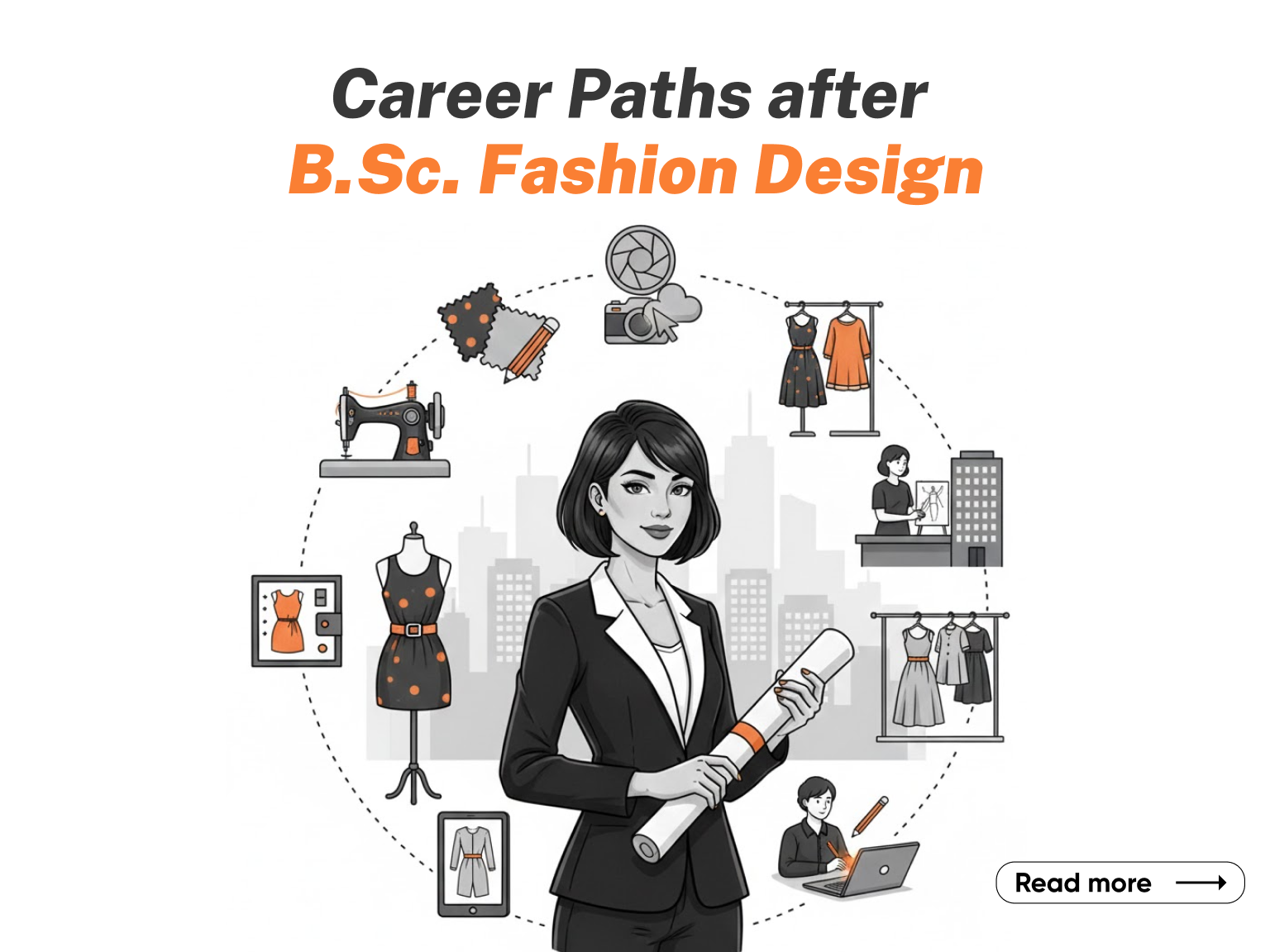
Career Paths after B.Sc. Fashion Design
A B.Sc. Fashion Design opens up a wide range of career opportunities in the creative and commercial sectors of the fashion industry. Graduates can work as fashion designers, creating clothing lines, accessories, or couture collections for brands, boutiques, or their own labels.
Additionally, entrepreneurial-minded students can start their own fashion labels or boutiques, while others may venture into fashion journalism, content creation, or education, making B.Sc. Fashion Design a versatile degree with numerous pathways for creative and professional growth.
Career options and job opportunities after a B.Sc. Fashion Design:
| Career Option | Description / Responsibilities |
| Fashion Designer | Design clothing, accessories, and collections for brands, boutiques, or personal labels. |
| Textile/Fabric Designer | Create patterns, prints, and fabrics for apparel, interiors, or industrial use. |
| Fashion Illustrator / Concept Artist | Produce sketches and visual concepts for designers, magazines, and campaigns. |
| Fashion Stylist / Personal Stylist | Curate outfits for photoshoots, celebrities, events, or individual clients. |
| Fashion Merchandiser / Buyer | Plan collections, analyze trends, manage inventory, and source products for retail. |
| Costume Designer | Design costumes for films, theatre, television, and entertainment productions. |
| Fashion Technologist / Garment Technologist | Work on garment construction, fabric innovations, quality control, and production techniques. |
| Digital / 3D Fashion Designer | Create virtual garments, 3D clothing designs, and digital fashion presentations. |
| Fashion Entrepreneur | Start your own fashion label, boutique, or online store. |
| Fashion Content Creator / Blogger | Produce digital fashion content, styling tips, and trend analysis on social media platforms. |
With diverse career paths and the potential for innovation, a fashion design degree provides a strong foundation for building a successful and fulfilling career.
Top Job Roles in Fashion Design Industry
The fashion design industry offers a wide range of exciting and creative job roles for graduates, each requiring a unique combination of artistic, technical, and business skills.
Fashion Designers lead the creation of clothing, accessories, and complete collections for brands, boutiques, or personal labels. Textile or Fabric Designers focus on developing prints, patterns, and innovative materials.
Fashion Illustrators and Concept Artists create sketches and visual representations of design ideas, while Fashion Stylists curate looks for photoshoots, celebrities, fashion shows, and personal clients.
- Merchandisers and Buyers plan collections, manage inventory, and analyze trends to ensure commercial success.
- Costume Designers work in films, television, and theatre, bringing characters to life through clothing.
- Fashion Technologists or Garment Technologists handle technical aspects such as garment construction, fabric innovations, and quality control.
- With the rise of digital platforms, roles like Digital Fashion Designers and 3D Apparel Designers are gaining prominence, creating virtual garments and digital collections.
Other important roles include Visual Merchandisers, Fashion Content Creators, Fashion Journalists, and Entrepreneurs, providing opportunities in retail, media, and brand management. These diverse roles make the fashion industry a dynamic field, offering avenues for creativity, innovation, and professional growth.
The fashion design industry offers a diverse range of career opportunities that combine creativity, technical expertise, and business acumen.
From designing garments and textiles to styling, merchandising, digital fashion, and entrepreneurship, each role allows graduates to apply their skills in unique and dynamic ways.
With the industry continuously evolving through trends, technology, and global markets, a career in fashion design not only provides avenues for artistic expression but also promising professional growth, making it a rewarding and versatile field for aspiring professionals.
Fashion Entrepreneurship: How to Start Your Own Label?
Launching a fashion startup allows designers to transform creative ideas into a unique brand presence.
With a combination of innovation, market understanding, and strategic planning, entrepreneurship in fashion can lead to a rewarding career, giving designers the freedom to express their creativity while building a sustainable business in the global fashion industry.
The fashion industry offers immense opportunities for creative minds to turn their ideas into successful businesses through fashion startups.
Entrepreneurship in fashion involves combining design talent with business strategy to create a brand that resonates with a target audience. Launching your own fashion brand requires a clear vision, careful planning, and a mix of creativity and management skills.
Key Steps to Launch a Fashion Brand:
Identify the type of fashion you want to focus on: streetwear, luxury, sustainable fashion, accessories, or digital fashion.
Study consumer behavior, emerging trends, and competitor strategies.
Create a collection or signature pieces that reflect your brand ethos.
Prepare a detailed business plan covering finances, marketing, production, and sales.
Decide whether to produce in-house, partner with manufacturers, or use sustainable methods.
Expand your product range, enter new markets, or explore collaborations.
Skills Required for Fashion Entrepreneurs: Creativity, trend forecasting, business management, marketing, networking, financial planning, and leadership.
LPU’s B.Sc Fashion Design programme gives budding fashion entrepreneurs a strong foundation to start their own brand.
With its focus on practical learning, industry connections, and entrepreneurial projects, students are well-positioned to convert passion into a business.
The runway exposure, mentorship, and global insights from LPU not only develop design skills but also empower students to think like entrepreneurs enabling them to build a meaningful and scalable fashion label.
Opportunities in Textile, Apparel, and Styling
The fashion ecosystem offers diverse opportunities — from designing textiles, creating and styling looks, to managing apparel production and merchandising.
Each role combines creativity, technical expertise, and business insight, making careers in fashion design dynamic and rewarding.
Opportunities at LPU: Textile Design, Styling & Apparel Industry-
- Textile Design & Technical Roles- Infrastructure: LPU’s School of Fashion Design has labs for textile testing, dyeing, printing, as well as advanced pattern-making labs.
Role: Create patterns, prints, textures, and designs for fabrics used in fashion, interiors, or industrial products. - Fashion Styling / Image Consultancy- Specialized Training: LPU offers a dedicated short course called “Fashion Styling According to Body Type” which teaches students how to style different body shapes — a key skill for stylists.
Role: Curate looks for individuals, photoshoots, celebrities, advertisements, or fashion shows. - Apparel Industry (Production, Merchandising, Quality, Technology)- LPU’s fashion design students are hired by “garment export and manufacturing houses” as production managers, merchandisers, and quality roles.
Role: Work in manufacturing, production, merchandising, quality control, and marketing of garments.
LPU’s B.Sc. Fashion Design programme offers comprehensive training and industry exposure that prepares students for diverse roles in textile design, fashion styling, and the apparel industry.
With well-equipped labs, live projects, fashion shows, and strong placement support, students gain both technical expertise and practical experience.
The curriculum’s integration of digital tools, garment construction, and industry-relevant skills empowers graduates to pursue careers as textile designers, stylists, merchandisers, production managers, and more.
By combining creativity, technical knowledge, and professional exposure, LPU equips aspiring fashion professionals to confidently enter and thrive in the dynamic fashion and apparel sectors.
| Did You Know ?
Digital textile printing has reduced production time by up to 70% compared to traditional methods. |
Fashion Forecasting and Trend Analysis Careers
Fashion forecasting is the art and science of predicting upcoming trends in clothing, accessories, colors, fabrics, and styles. It helps brands, designers, and retailers make informed decisions about product development, marketing, and merchandising. Trend analysis goes hand-in-hand, focusing on interpreting cultural, social, and consumer behavior patterns that influence fashion.
Key Career Roles
- Fashion Forecaster / Trend Analyst- Role: Predict upcoming fashion trends by analyzing consumer behavior, market reports, runway shows, social media, and cultural movements.
- Color & Material Specialist- Role: Focuses on predicting trending colors, fabrics, and textures for the next season.
- Fashion Researcher / Consumer Insight Analyst-Role: Conducts research to understand consumer preferences, market gaps, and competitive analysis.
- Fashion Marketing Strategist- Role: Uses trend data to plan marketing campaigns, product launches, and collection themes.
- Runway / Show Consultant- Role: Helps designers and brands align runway presentations with predicted trends and consumer expectations.
Key Skills for Fashion Forecasting Careers
- Strong research and analytical abilities.
- Creativity and visual imagination.
- Knowledge of fashion cycles, history, and cultural influences.
The demand for fashion forecasters is growing as brands increasingly rely on data-driven decisions.Online platforms, social media analytics, and AI-based forecasting tools have expanded career opportunities in digital trend analysis.
Careers in fashion forecasting and trend analysis blend creativity, research, and strategic thinking. By predicting trends before they hit the market, professionals in this field play a crucial role in shaping collections, guiding marketing strategies, and helping brands stay relevant.
| Did You Know ?
Companies like WGSN and Trendstop provide forecasting reports that influence designs for major global fashion brands months in advance. |
Exploring Global Opportunities for Fashion Graduates
Fashion is a global industry, offering graduates opportunities to work, innovate, and influence trends worldwide.
With a B.Sc Fashion Design or related degree, students can explore careers across continents in design, production, marketing, and styling. The rise of digital platforms, e-commerce, and sustainability initiatives has expanded international prospects.
1. International Fashion Houses- Opportunities: Designers, textile specialists, merchandisers, and stylists can work with brands like Chanel, Gucci, Prada, Zara, and H&M.
- Fashion Capitals- Opportunities: Internships, assistant designer roles, runway styling, and trend analysis positions.
3. Global Apparel & Textile Industry- Opportunities: Product development, textile R&D, quality control, and supply chain management in multinational companies. - Fashion Forecasting and Trend Analysis- Opportunities: Working with global forecasting agencies like WGSN, Trendstop, or Fashion Snoops.
- E-Commerce and Digital Fashion- Opportunities: Roles in digital styling, online merchandising, virtual fashion shows, and digital marketing for global fashion brands.
- Fashion Entrepreneurship Abroad- Opportunities: Starting your own brand or boutique in markets with high demand for niche fashion segments, like sustainable wear, luxury, or ethnic fusion.
Skills That Boost Global Opportunities
- International design sensibilities and knowledge of global trends.
- Digital skills: CAD, 3D design software, and e-commerce platforms.
- Cultural awareness and adaptability to work in diverse markets.
- Strong communication, networking, and marketing abilities.
Fashion graduates today have unprecedented global opportunities. From international fashion houses and forecasting agencies to digital platforms and entrepreneurship, careers are no longer confined by geography. With creativity, technical expertise, and adaptability, graduates can contribute to, and thrive in, the dynamic global fashion industry, making a mark on worldwide fashion trends and markets.
By combining creativity, technical expertise, and market awareness, fashion graduates can shape trends, influence global fashion, and succeed in an increasingly interconnected industry.
Conclusion
The future of fashion design is bright, dynamic, and full of opportunities for creative, skilled, and adaptable professionals. As the industry embraces technology, sustainability, and global trends, fashion designers are no longer limited to traditional roles; they can explore careers in textile innovation, digital fashion, styling, forecasting, marketing, and entrepreneurship.
Career growth in fashion is increasingly multidisciplinary, combining creativity with technical expertise, analytical skills, and business acumen. Globalization and digital platforms have expanded the reach of fashion professionals, enabling them to work across international markets, e-commerce platforms, and virtual environments.
The creative industries, including fashion, are expected to remain one of the fastest-growing sectors, offering ample opportunities for innovation, self-expression, and entrepreneurial ventures. For students and professionals, staying updated with trends, leveraging technology, and nurturing creativity will be key to thriving in this ever-evolving, highly competitive field.
The future of fashion design is innovative, sustainable, and globally connected. Career growth is no longer linear but multidimensional, offering opportunities in design, technology, styling, marketing, forecasting, and entrepreneurship. The creative industries as a whole are evolving, with fashion at the forefront of cultural, technological, and social trends. For aspiring professionals, continuous learning, adaptability, and a balance of creativity and strategic thinking are the keys to building a successful and impactful career.
Career growth in fashion is now multidimensional, blending creativity, technical skills, marketing, and business acumen, with pathways from entry-level design or merchandising roles to senior positions such as creative directors or international brand consultants.
Globalization has expanded opportunities to work with international fashion houses, e-commerce platforms, and trend forecasting agencies, while the growing intersection of fashion with media, entertainment, gaming, and lifestyle industries has created roles in costume design, digital content creation, and virtual styling.
Entrepreneurship and freelance opportunities have also increased, enabling designers to launch independent brands or work as consultants.
Frequently Asked Questions (FAQs)
- Can fashion graduates start their own brand?
Absolutely! With the growth of e-commerce, social media marketing, and fashion incubation programmes, graduates can launch independent brands in apparel, accessories, footwear, or sustainable fashion.
- Are there opportunities abroad for fashion graduates?
Yes, global fashion capitals like Paris, Milan, London, New York, Tokyo, and Los Angeles offer opportunities in: Fashion houses (design and merchandising), Trend forecasting agencies, Fashion marketing and PR etc. - How are placements for fashion design graduates?
Leading fashion schools like LPU, NIFT, Pearl Academy, and JD Institute report high placement rates, often above 90–100% for top students.
Placement opportunities include fashion houses, apparel brands, textile companies, e-commerce platforms, and trend agencies. - What is the job scope in the fashion industry?
The fashion industry offers a wide range of opportunities: Design & Creativity: Apparel, accessories, footwear, jewelry, textile prints, and digital fashion.
Styling & Image Consultancy: Celebrity styling, editorial shoots, fashion shows, and e-commerce styling.
Merchandising & Marketing: Product development, market research, brand campaigns, retail management. - What career options are available after B.Sc. Fashion Design?
Graduates can pursue roles such as: Fashion Designer, Textile Designer, Fashion Stylist, Fashion Illustrator, Merchandise, Fashion Forecaster / Trend Analyst, Apparel Production Manager.