
- Introduction
- What Is the Scope of B.Design Graphics in Today’s Industry?
- Why B.Design Graphics Is a Smart Career Choice Today?
- Key Domains and Subjects Covered in B.Design Graphics
- Essential Skills to Succeed in B.Design Graphics
- Career Options After B.Design Graphics
- Scope and Salary Trends for B.Design Graphics Graduates
- Top Recruiters Hiring B.Design Graphics Graduates
- What After Graduation? Higher Studies & Certifications for B.Design Graphics Students
- Final Thoughts
- FAQs
Introduction
A career in graphic design today is not just about creating appealing visuals—it is about shaping the way the world communicates. In a world dominated by digital platforms, businesses, media houses, startups, and even educational institutions rely on striking designs to engage audiences, build trust, and establish powerful brand identities. This is why professional designers are no longer seen as optional, but as essential partners in every industry.
Pursuing a B.Design Graphics course is the stepping stone into this dynamic, creative world. It equips students with an in-depth understanding of design thinking, visual storytelling, and cutting-edge digital tools. From mastering typography and colour psychology to learning user interface and experience design, the course ensures learners are not just artists but strategic thinkers capable of solving real-world communication problems.
At Lovely Professional University (LPU), the introduction to graphic design career begins with a holistic approach. Students are trained to think critically, experiment with creativity, and merge functionality with aesthetics. What makes this journey more exciting is the fact that graphic designers today are shaping everything from advertising campaigns and product packaging to mobile app interfaces and immersive brand experiences.
In essence, choosing a career in graphic design through a structured and industry-aligned B.Design Graphics course at LPU is not only about learning a profession—it is about unlocking a gateway to innovation, storytelling, and global opportunities.
What Is the Scope of B.Design Graphics in Today’s Industry?
The scope of B.Design Graphics has grown tremendously in recent years, fuelled by the rise of digital platforms, social media, and global branding. Today, every sector—from retail and entertainment to IT and healthcare—requires visually engaging content to connect with audiences. This has made skilled designers some of the most sought-after professionals in the job market.
The graphic design industry opportunities are no longer limited to creating posters or logos. With the rapid growth of the digital economy, graphic designers are involved in developing interactive websites, mobile applications, digital advertisements, motion graphics, and even immersive virtual experiences. As technology integrates deeper into everyday life, the demand for visually appealing and user-friendly design will only continue to rise.
For students graduating from a B.Design Graphics course, the career scope in graphics offers flexibility across multiple industries. Some choose traditional roles in advertising agencies, branding studios, or print houses, while others move into modern spaces like UI/UX design, animation, gaming, and social media marketing. Many graduates also pursue freelancing or entrepreneurship, using their creativity to collaborate with global clients or launch their own design studios.
At LPU, the programme is specifically curated to prepare students for this wide-ranging industry exposure. With access to state-of-the-art design labs, industry-oriented projects, and collaborations with top recruiters, students are empowered to explore the full spectrum of graphic design industry opportunities—from corporate design roles to independent creative ventures.
| Did You Know? According to industry reports, the global graphic design market is expected to cross $250 billion by 2030, making it one of the fastest-growing creative industries worldwide. This highlights the immense career scope graphics professionals enjoy after completing their degree. |
Why B.Design Graphics Is a Smart Career Choice Today?
Opting for a B.Design Graphics course is much more than an academic decision—it is an investment in a creative career with global relevance. In today’s highly visual and fast-paced world, organizations thrive on designs that can capture attention, convey messages instantly, and inspire action. This is where the benefits of studying B.Design Graphics become evident, as it equips students with the right mix of creativity, technical mastery, and industry-ready skills.
Key Benefits of Studying B.Design Graphics
- Industry-Relevant Learning: Students gain exposure to design principles, digital tools, and real-world projects that match the demands of today’s creative industries.
- Creative Freedom: Unlike many traditional careers, this path allows learners to experiment with imagination and originality, offering a perfect balance between art and technology.
- High Career Demand: Every company—be it in IT, media, e-commerce, education, or entertainment—requires visual communication specialists.
- Global Opportunities: Since design is a universal language, professionals can explore work opportunities across countries and cultures.
The question often arises—why choose graphic design as a career? The answer lies in its versatility and relevance. A degree in design does not restrict you to a single job profile; instead, it opens doors to multiple avenues such as advertising, branding, web design, gaming, animation, and even entrepreneurship. Whether you aspire to work with multinational corporations, start your own design studio, or freelance for international clients, the scope is endless.
Another important factor is the advantages of B.Design Graphics in today’s competitive environment. Graduates are not just trained to use design software but also to think strategically. They learn how to solve communication problems through creativity—whether it’s designing a brand identity, enhancing user experience on digital platforms, or producing visually rich multimedia content.
At Lovely Professional University (LPU), these benefits are amplified by the university’s strong industry connections, internships, live projects, and mentorship from experienced faculty. By combining academic excellence with practical exposure, LPU ensures its design graduates are not just job-ready but future-ready.
| Did You Know? A recent survey by LinkedIn revealed that creativity and design thinking are among the top five skills employers seek worldwide, proving the long-term advantages of B.Design Graphics as a career path. |
Key Domains and Subjects Covered in B.Design Graphics
The strength of any professional course lies in its academic depth and industry alignment, and the B.Design Graphics subjects are carefully curated to balance creativity with technology. The programme equips students with a holistic understanding of design—starting from the fundamentals of visual communication to advanced digital applications that define the modern creative world.
At Lovely Professional University (LPU), the graphic design curriculum goes beyond just software training. It integrates design theory, creative problem-solving, user-centred approaches, and hands-on projects to ensure that students not only become skilled designers but also critical thinkers who can innovate across industries.
Core Domains in Design Studies
The course is divided into specialized domains in design studies, each focusing on a critical area of visual communication and digital creativity:
- Visual Communication: Fundamentals of colour, form, and typography.
- Digital Design & Illustration: Learning tools like Adobe Photoshop, Illustrator, and Procreate.
- Branding & Identity Design: Creating logos, packaging, and corporate brand identities.
- UI/UX & Interaction Design: Designing user-friendly websites, mobile apps, and digital platforms.
- Motion Graphics & Animation: Developing engaging animated content for media and advertising.
- Photography & Image Editing: Exploring visual storytelling through lenses and digital tools.
- Advertising & Campaign Design: Crafting integrated campaigns across digital and print platforms.
B.Design Graphics Curriculum – Semester-wise Overview
1st Year – Foundation in Design
Basics of drawing, sketching, colour theory, visual composition, typography, and digital illustration. Students also learn professional communication and visual design tools.
2nd Year – Core Design Skills
Focus on branding, photography, videography, UI/UX principles, human-computer interaction, and motion graphics. Courses like design thinking and corporate identity projects strengthen creative problem-solving.
3rd Year – Specialization & Industry Exposure
Advanced subjects like advertising design, web design, information graphics, media studies, and research projects. Students also take electives for specialization.
4th Year – Professional Readiness
Emphasis on research methods, portfolio development, internships, and a final major industry project to prepare for careers in design.
This structured graphic design curriculum ensures that by the end of the programme, students are not just proficient in technical tools but are also capable of blending creativity with strategy. The exposure to varied domains in design studies makes graduates adaptable to careers in advertising, branding, UI/UX, animation, publishing, and beyond.
| Did You Know? Many design recruiters focus more on the portfolio students create during their course than their resume, making the diverse B.Design Graphics subjects a vital stepping stone for real-world success. |
Essential Skills to Succeed in B.Design Graphics
While a degree provides the academic framework, true success in the design industry comes from mastering the right graphic design skills. These skills bridge the gap between raw creativity and professional execution, helping graduates transform ideas into impactful visuals that connect with audiences.
The B.Design Graphics course is designed not only to train students in technical expertise but also to build the creative confidence required to excel in real-world projects. From digital tools to problem-solving, these capabilities define the career trajectory of a modern designer.
Key Creative Skills for Designers
- Imagination & Innovation: The ability to think differently and craft original design solutions.
- Visual Storytelling: Using imagery, colour, and typography to communicate powerful messages.
- Aesthetic Sense: Understanding balance, proportion, and harmony in design.
- Adaptability: The confidence to work across media—print, digital, motion, and interactive.
Core Technical & Professional Skills
- Software Proficiency: Adobe Creative Suite (Photoshop, Illustrator, InDesign, After Effects), Figma, CorelDRAW, and emerging tools like Blender.
- Typography & Layout Mastery: Crafting engaging compositions with readability and design flow.
- Colour Theory Application: Creating designs that resonate emotionally with viewers.
- UI/UX Fundamentals: Designing intuitive user experiences for websites and apps.
- Time & Project Management: Meeting deadlines while ensuring creative quality.
- Communication Skills: Presenting design ideas effectively to clients, teams, and stakeholders.
Together, these form the essential skills for B.Design Graphics graduates to thrive in competitive industries. Beyond software and tools, employers value designers who can empathize with users, adapt to changing technologies, and bring originality to every project.
At Lovely Professional University (LPU), these graphic design skills are cultivated through a mix of classroom learning, industry-driven assignments, internships, and live projects. Students graduate not only as capable designers but also as problem-solvers ready to take on global challenges.
| Did You Know? Studies reveal that companies hiring designers consider soft skills like creativity, collaboration, and critical thinking equally important as technical proficiency, highlighting the balance of both in successful careers. |
Career Options After B.Design Graphics
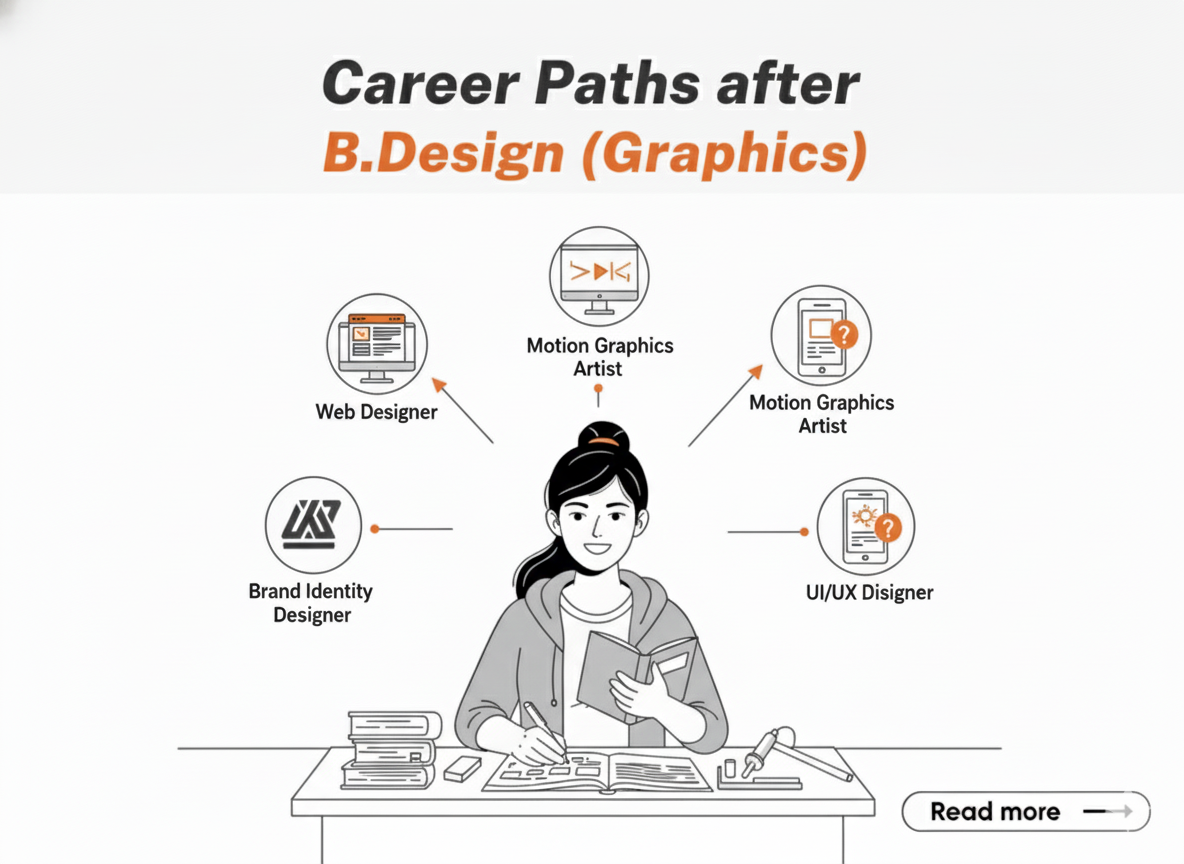
One of the biggest attractions of pursuing this programme is the wide range of career options in graphic design. Unlike traditional degrees that may lead to narrowly defined roles, this field offers creative graduates the flexibility to work across industries and explore both traditional and modern opportunities.
The jobs after B.Design Graphics are not confined to print or advertising anymore. With the boom in digital platforms, designers are shaping the future of branding, entertainment, user experience, and even immersive technologies like AR/VR. Whether you want to work with a multinational company, join a creative agency, or start your own studio, the design career paths available are vast and dynamic.
Career Options in Graphic Design – Roles & Descriptions
| Job Role | Role Description | Industries Hiring |
| Graphic Designer | Creates visual concepts such as logos, posters, brochures, and branding material. | Advertising, Media, Print, Corporate Branding |
| UI/UX Designer | Focuses on designing user-friendly websites, apps, and digital platforms with seamless navigation. | IT, E-commerce, Tech Startups, FinTech |
| Motion Graphics Artist | Develops animated visuals, explainer videos, and digital ads for storytelling. | Film, OTT, Marketing Agencies, Gaming |
| Illustrator | Produces custom hand-drawn or digital illustrations for publishing, advertising, and media. | Publishing, Fashion, E-learning, Entertainment |
| Art Director | Leads creative teams, overseeing campaigns and ensuring design consistency across platforms. | Advertising, Media Houses, Creative Agencies |
| Brand Identity Designer | Specializes in crafting corporate identities, packaging, and visual branding strategies. | FMCG, Startups, Luxury Brands, Retail |
| Web & Digital Designer | Creates interactive websites, social media visuals, and digital campaigns. | E-commerce, Tech, Marketing Firms |
| Game Designer Graphics | Works on character design, environments, and interfaces in video games and AR/VR platforms. | Gaming Studios, AR/VR Startups, Media Companies |
| Freelance Designer | Works independently on projects ranging from logos to digital campaigns with global clients. | Cross-Industry (Global Freelance Marketplaces) |
| Creative Entrepreneur | Starts own design agency or studio, offering customized design services for multiple clients. | Startups, Global Markets, Digital Branding |
Why These Design Career Paths Stand Out
- Flexibility: You can work full-time, freelance, or start your own venture.
- Diverse Industry Reach: Every sector—from healthcare to hospitality—requires design expertise.
- Global Opportunities: With remote work and freelancing platforms, B.Design graduates can connect with clients worldwide.
| Did You Know? According to Glassdoor, UI/UX Design ranks among the Top 5 most in-demand creative careers globally, making it one of the fastest-growing jobs after B.Design Graphics. |
Scope and Salary Trends for B.Design Graphics Graduates
The creative industry is evolving rapidly, and with it, the scope of graphic design jobs has grown significantly. Graduates with strong portfolios and advanced technical expertise are in high demand across sectors such as IT, advertising, animation, gaming, and e-commerce. Companies are no longer hiring designers just for “artwork” but for strategic roles that impact branding, user experience, and customer engagement.
The salary after B.Design Graphics varies depending on role, specialization, and experience. Entry-level designers may start with modest packages, but the potential for growth is immense as professionals build portfolios and industry exposure. At Lovely Professional University (LPU), design graduates have secured placements with leading recruiters and impressive salary packages.
LPU Placement Highlights in Design:
- Highest Salary Package: ₹23.25 LPA
- Average Package (Top 10% students): ₹11.48 LPA
- Top Recruiters: Technicolor, Virohan, Green Gold Animation, Tech Mahindra, TASI Animation, OPTMYZR, Kony, Mobilize the Enterprise, Capgemini, Cognizant, and more.
These figures demonstrate the remarkable career growth in design, especially for students who combine creativity with advanced software skills and industry exposure.
Average Salary After B.Design Graphics (India & Global)
| Job Role | Average Salary (India) | Global Salary Range | Growth Potential |
| Graphic Designer | ₹3 – 6 LPA | $40,000 – $60,000 | Rapid growth with specialization in branding & digital media. |
| UI/UX Designer | ₹5 – 12 LPA | $60,000 – $95,000 | High demand in IT, e-commerce, and startups. |
| Motion Graphics Artist | ₹4 – 8 LPA | $45,000 – $70,000 | Increasingly valuable in advertising & OTT content. |
| Art Director | ₹8 – 15 LPA | $80,000 – $120,000 | Leadership roles in global creative teams. |
| Game & Animation Designer | ₹5 – 10 LPA | $55,000 – $90,000 | High growth with AR/VR & gaming expansion. |
| Freelance Designer | Project-Based | $20 – $100 per hour | Global projects via platforms like Upwork & Fiverr. |
Why Salaries Are Rising in This Field
- Globalization of Design Services: With remote work, Indian designers are now working for international brands.
- Digital Transformation: Every business requires a strong digital presence, boosting the scope of graphic design jobs.
- Emerging Fields: AR/VR, motion graphics, and UI/UX design have seen exponential demand growth in the last five years.
| Did You Know? A report by IBISWorld predicts that the graphic design industry will grow at a CAGR of 7–8% globally through 2030, ensuring strong career growth in design for graduates entering the field today. |
Top Recruiters Hiring B.Design Graphics Graduates
One of the strongest reasons to pursue this programme is the excellent placement support and the wide range of opportunities available after graduation. The demand for creative professionals is no longer limited to advertising agencies or publishing houses. Today, some of the biggest names in IT services, animation, entertainment, e-commerce, and consulting are counted among the leading recruiters for B.Design Graphics graduates.
At Lovely Professional University (LPU), students gain exposure to both national and international companies. Over the years, companies hiring graphic designers from LPU have included some of the most reputed organizations across diverse industries. Firms like Technicolor and Green Gold Animation look for graduates with strong storytelling and animation skills to bring characters and visuals to life. IT and consulting giants such as Capgemini and Cognizant hire designers for their expertise in branding, digital experiences, and user-friendly interfaces. Even technology-driven companies like Tech Mahindra and OPTMYZR seek design graduates for roles in UI/UX, product visualization, and digital campaigns.
What makes these opportunities so valuable is that they are not confined to a single sector. E-commerce leaders, media houses, advertising agencies, and even EdTech companies like BYJU’S regularly appear among the top employers in design. This shows the wide scope of graphic design jobs—whether it’s creating compelling visuals for global marketing campaigns, designing digital platforms, or working in the fast-growing animation industry.
| Did You Know? More than 200 companies hiring graphic designers have partnered with LPU in recent years, providing students with opportunities that range from creative start-ups to global corporations. |
What After Graduation? Higher Studies & Certifications for B.Design Graphics Students
Completing a bachelor’s degree in design opens multiple pathways for students who want to expand their knowledge, specialize further, or move into leadership roles. For those aiming to strengthen their academic profile, there are excellent higher studies after B.Design Graphics that can enhance both creative expertise and career opportunities.
Among the most sought-after postgraduate options is the Master of Design (M.Des.), which allows graduates to specialize in areas such as Animation, Visual Communication, UI/UX, and Interaction Design. This programme helps students build advanced creative and technical skills while also preparing them for industry leadership roles. Another strong academic pathway is pursuing an MBA in Design Management, which bridges creativity with business strategy, perfect for those who aspire to become creative directors, brand managers, or design entrepreneurs.
Apart from full-time degrees, short-term and skill-specific programmes also play an important role in building career readiness. Globally recognized certifications in graphic design help students stay updated with the latest tools and industry standards. Credentials such as the Adobe Certified Expert (ACE) validate mastery over software like Photoshop, Illustrator, and InDesign, while the Google UX Design Certificate is highly valued in the digital design and product development sectors. Additionally, the Interaction Design Foundation Certifications provide specialized training in usability, design thinking, and user experience, making graduates highly competitive in global job markets.
What makes LPU stand out is the strong mentorship and academic guidance provided to every student. At the university, faculty and career advisors ensure that learners are well-informed about both postgraduate options and professional certifications, enabling them to make choices that align with their career goals—whether in industry, research, or academia.
| Did You Know? Students who combine a bachelor’s degree with certifications in graphic design or a master’s programme often witness faster career advancement and higher salary growth compared to those who rely only on undergraduate qualifications. |
Final Thoughts
In today’s digital-first world, design has become the language of communication. Completing a Bachelor of Design in Graphics is not just about learning how to use software or create visuals—it is about shaping ideas, solving problems, and building meaningful experiences for people. A well-rounded conclusion on B.Design Graphics shows that this degree is more than an academic qualification; it is a gateway to a dynamic and ever-evolving career.
The future of the graphic design career is full of possibilities. With industries increasingly relying on digital branding, user experience, animation, and multimedia storytelling, skilled designers are in higher demand than ever before. Whether graduates choose to step directly into the workforce, pursue higher studies, or earn specialized certifications, the opportunities are diverse and rewarding. From working with global design studios to launching independent creative ventures, the scope of this field is limitless.
What sets apart a successful designer is not just creativity but adaptability, innovation, and continuous learning. As technology continues to merge with art, graphic designers will remain at the heart of innovation, influencing how brands, products, and experiences connect with people across the world.
With the right mix of skills, knowledge, and passion, students of B.Design Graphics can truly shape the future of the design industry while building impactful, global careers.
In conclusion, the future of graphic design careers is dynamic, global, and promising. With exposure to advanced subjects, skills, and placement opportunities, the conclusion on B.Design Graphics is clear: it is not just a degree but a launchpad for innovation.
FAQs
Q1. What is the career scope that graphics graduates can expect after this course?
The career scope after B.Design Graphics is vast and versatile. Graduates can build careers in branding, digital marketing, UI/UX design, animation, film production, advertising, and publishing. With the rising demand for digital creatives, opportunities also extend to emerging fields like AR/VR, gaming, and e-commerce platforms.
Q2. What are the benefits of studying B.Design Graphics at LPU?
The benefits of studying B.Design Graphics at LPU include access to advanced design labs, live industry projects, global exposure through internships, and strong placement support. Students also get mentorship from experienced faculty and opportunities to showcase their creativity in national and international competitions.
Q3. What kind of jobs after B.Design Graphics are most popular?
Some of the most popular jobs after B.Design Graphics include Graphic Designer, UI/UX Designer, Motion Graphic Artist, Visual Illustrator, Creative Strategist, and Art Director. These roles are highly in demand across industries like IT, advertising, gaming, and entertainment.
Q4. Can I pursue higher studies after completing a B.Design Graphics course?
Yes, there are multiple higher studies after B.Design Graphics. Popular options include Master of Design (M.Des) for specialization, MBA in Design Management for leadership roles, and certifications in graphic design, such as Adobe Certified Expert (ACE), Google UX Design Certificate, and Interaction Design Foundation courses.
Q5. Why choose graphic design as a career in today’s world?
Choosing graphic design as a career is an excellent decision in today’s digital era. The industry is rapidly expanding with the rise of social media, e-commerce, and digital advertising. This creates a high demand for creative professionals who can deliver innovative designs with a global impact.